
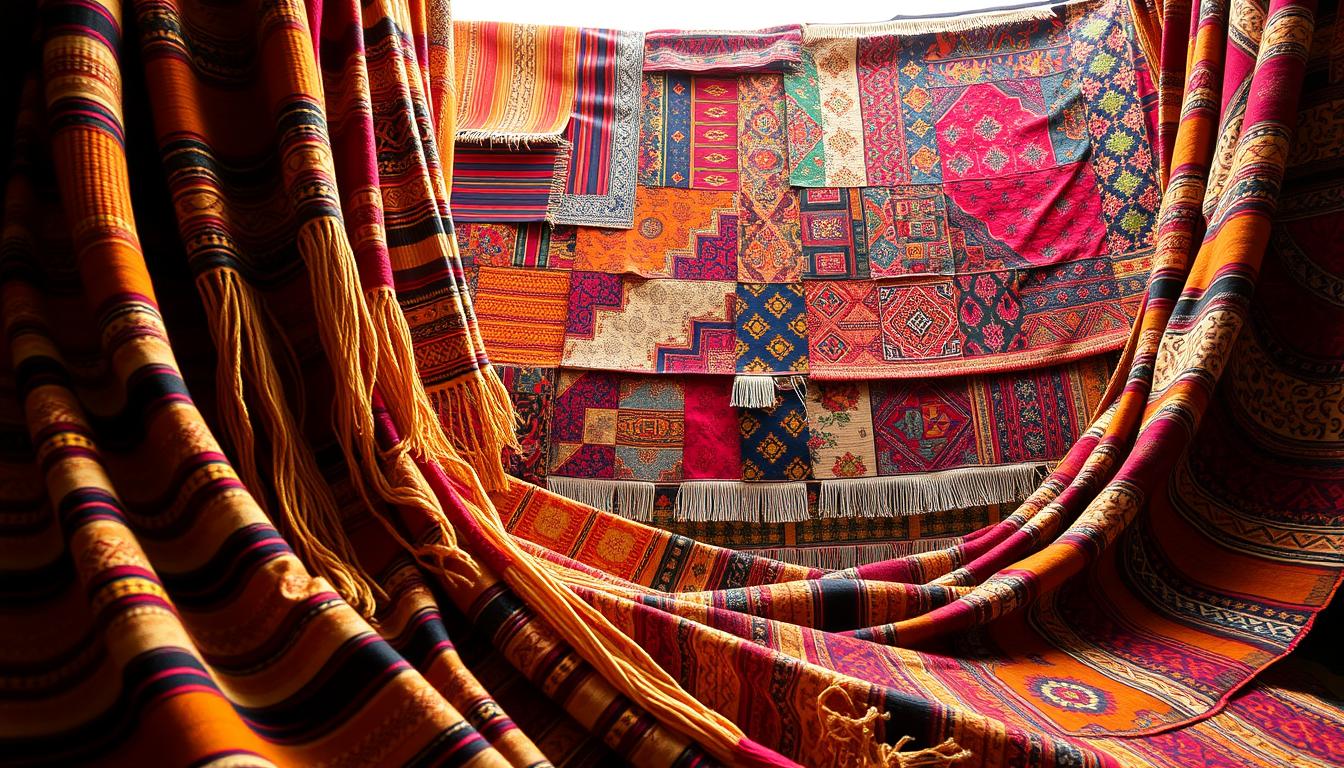
Cultural fabrics are key in many cultures worldwide. They are not just clothes but also a way to share cultural identity and stories.
Choosing clothes made from special fabrics like African wax prints, Indian khadi cotton, or Japanese Shibori adds unique style and meaning to business casual outfits. These fabrics carry history and cultural heritage with them.
The importance of cultural fabrics is huge. They help keep cultural traditions and values alive. By using these fabrics in our daily lives, we celebrate the rich cultural diversity and significance they bring.
The Significance of Textiles in Culture
Textiles have always been key in human culture. They show what societies value and who they are. They carry the history, traditions, and beliefs of communities worldwide.
Cultural symbolism is deeply embedded in textiles. For example, Persian carpets from the Safavid period are famous for their detailed designs. These designs symbolize Persian culture and heritage. They are more than just decorations; they represent the art and values of the Persian people.
Traditional Japanese kimonos also hold deep cultural meaning. Their designs, colors, and patterns tell different stories. They are worn at special ceremonies, showing their importance in Japanese culture.
Textiles play a big role in storytelling and keeping history alive. They tell the tales of ancestors, historical events, and myths. This makes them a direct link to the past.
In many cultures, textiles are used in rituals and ceremonies. This shows their importance. For instance, certain fabrics and designs can mean status, spirituality, or belonging to a community. This highlights the many roles textiles play in cultural practices.
By understanding the cultural importance of textiles, we can see the rich diversity of human culture. We learn how fabrics add to our shared heritage.
Different Types of Textiles Around the World
Textiles from around the world show the richness of cultures. Traditional textiles are key to many societies’ identity. They symbolize status, spirituality, and community.
These textiles are more than just pretty. They carry deep cultural significance. For example, naturally dyed fabrics are not only stunning but also eco-friendly.
African wax prints are a great example of textiles with deep meaning. They are fashionable but also carry messages, myths, and proverbs. This makes them a big part of African culture.
Making African wax prints is a long tradition passed down through generations. The designs often symbolize life’s aspects, like fertility and wisdom.
The cultural significance of African wax prints goes beyond looks. They are used in cultural and ceremonial events. This shows their importance in African societies.
Textile Techniques and Crafts
Textile techniques range from natural dyeing to detailed embroidery, varying across cultures. These crafts have been shared for generations, each with its own tale and importance in textile production.
Naturally dyed fabrics and handwoven ikats showcase the beauty of traditional crafts. Natural dyeing uses plants and minerals to create colors. Handwoven ikats, needing skill and patience, weave yarn into detailed patterns.
Fiber art tells stories through techniques like quilting and embroidery. Quilting has been a way to share stories and create warmth for centuries. Embroidery adds to the story with its detailed stitches and patterns.
These traditional crafts are more than just beautiful. They connect us to our heritage and traditions. Keeping these crafts alive helps preserve our cultural identity.
In summary, the variety of textile techniques and crafts shows human creativity and skill. By valuing these traditional methods, we honor the cultural fabrics they represent.
Cultural Symbolism in Textiles
Textiles have long been a canvas for cultural expression. Various cultures have infused their fabrics with symbolic meanings. These meanings go beyond their beauty, reflecting the history, values, and beliefs of their creators.
Persian carpets from the Safavid period are famous for their beauty and symbolic meanings. Their designs often show spiritual and philosophical themes. For example, they might depict the battle between good and evil, or the bond between heaven and earth.
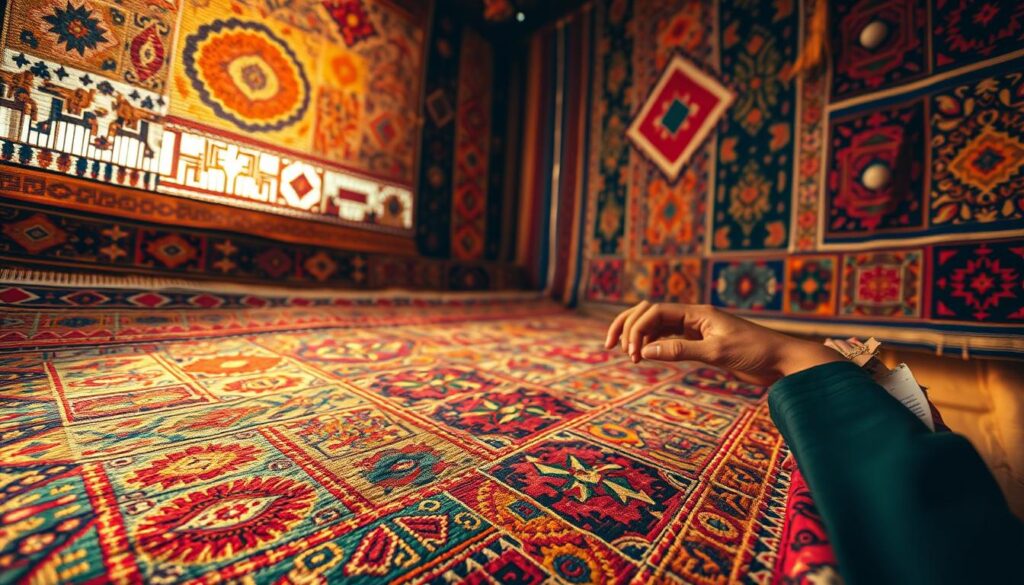
Japanese kimonos from the Edo period are also filled with cultural symbolism. The colors, patterns, and how they are worn tell about the wearer’s status and the occasion. A kimono with a cherry blossom pattern means life is short. A kimono with a crane motif means long life and good luck.
Symbolic Meanings Across Cultures
Symbolic meanings in textiles are not just found in Persian carpets and Japanese kimonos. Textiles worldwide carry symbolic messages. In Africa, Adinkra cloth represents proverbs and sayings. In India, the Pochampalli saree has geometric patterns that symbolize life and nature.
Understanding the cultural symbolism in textiles deepens our appreciation for these fabrics. It also gives us a glimpse into the cultural heritage of their creators. As we explore these traditional textiles, we discover the rich tapestry of symbolic meanings woven into human culture.
Sustainable Practices in Textile Production
The textile industry is growing fast. It’s vital to use sustainable practices to lessen its harm to the environment. Textile production affects the planet a lot, from growing raw materials to making clothes and dealing with waste.
Using eco-friendly dyes is a big focus for making textiles better. Natural dyes are a green choice compared to synthetic ones. They don’t pollute water or harm animals. More and more makers are turning to natural dyes.
Eco-printing is another cool way to make clothes. It uses plants like leaves and flowers to make cool patterns. This method cuts down on synthetic dye use and makes unique, green fabrics.
Using green methods in making clothes helps the planet and sets makers apart. Eco-friendly choices attract customers who want sustainable products. This is a win-win for both the planet and businesses.
In short, the textile world must do better for the environment. By using natural dyes and eco-printing, makers can create clothes that are good for the planet and loved by people.
The Evolution of Textile Design
Textile design has always been changing, showing off cultural exchange and historical influences. The patterns and motifs in textiles are not just pretty. They also carry deep cultural and symbolic meanings.
The Bayeux Tapestry from the 11th century is a great example of historical textile art. It tells the story of the Norman Conquest of England through its detailed embroidery. This tapestry is not just a work of art but also a historical document. It gives us a glimpse into the events and culture of that time. As historical influences keep shaping textile design, we see how different cultures have made it evolve.
“The art of textile design is a reflection of the cultural heritage and historical context in which it is created.”
Ancient Andean textiles have also left a mark on today’s Peruvian textiles. The traditional techniques and motifs have been passed down through generations. They influence modern textile design. The cultural exchange between communities has made textile design more diverse, with many styles and patterns.
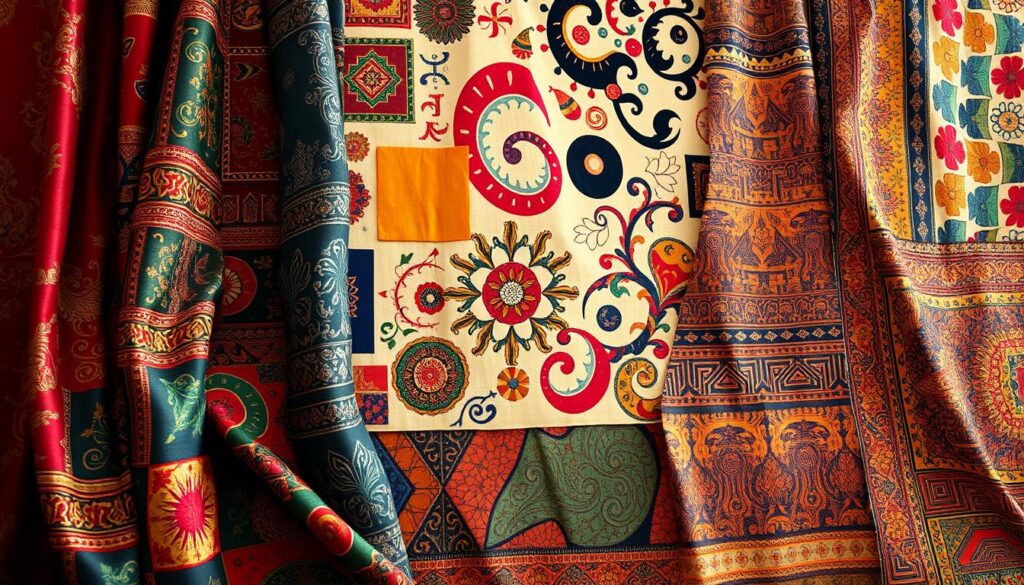
The evolution of textile design shows the power of cultural exchange and the importance of keeping traditional techniques alive. As we move forward, it’s key to value the historical influences that have shaped textile design. They continue to inspire today’s designers.
Understanding the historical context and cultural significance of textile design helps us appreciate the artistry and craftsmanship. The story of textile design is one of continuous change. It’s influenced by many factors, including cultural exchange and historical events.
Iconic Textile Regions and Their Heritage
The world is full of iconic textile regions, each with its own rich heritage. These places have shaped the textile industry with their unique fabrics and techniques. These traditions have been passed down through generations.
Peru is known for its vibrant textiles that show the country’s rich cultural heritage. Peruvian textiles are famous for their detailed patterns and bright colors. They often tell stories of Peru’s history and myths. The use of natural dyes and traditional weaving makes these textiles highly valued worldwide.
The Gee’s Bend community in Alabama, USA, is famous for its quilting traditions. These traditions have been kept alive by generations of women. The quilts from Gee’s Bend are not just beautiful but also hold deep cultural significance, showing the community’s history and strength.
These textile heritage sites are important for preserving cultural traditions. By keeping traditional textile techniques alive, communities worldwide can keep their cultural identity. They can also pass it on to future generations.
There are many other iconic textile regions around the world. Each has its own unique textile traditions. From Indonesia’s batik to Scotland’s wool weavings, these regions add to the global textile heritage. They also help promote cultural understanding and appreciation.
By celebrating and preserving these cultural traditions, we help the art of textile production thrive. Supporting local textile industries also benefits the communities involved. It helps sustain their livelihoods and preserve their cultural heritage.
The Role of Fashion in Promoting Textile Culture
Mixing old textiles with today’s fashion is a great way to cultural promotion. Designers use fabrics with deep cultural meaning in their clothes. This makes cultural heritage alive for today’s people.
Fashion shows us culture, and textiles are key. They share stories of history and today’s culture. Using these fabrics in modern clothes helps us understand and value different cultures. It also helps keep these traditions alive.
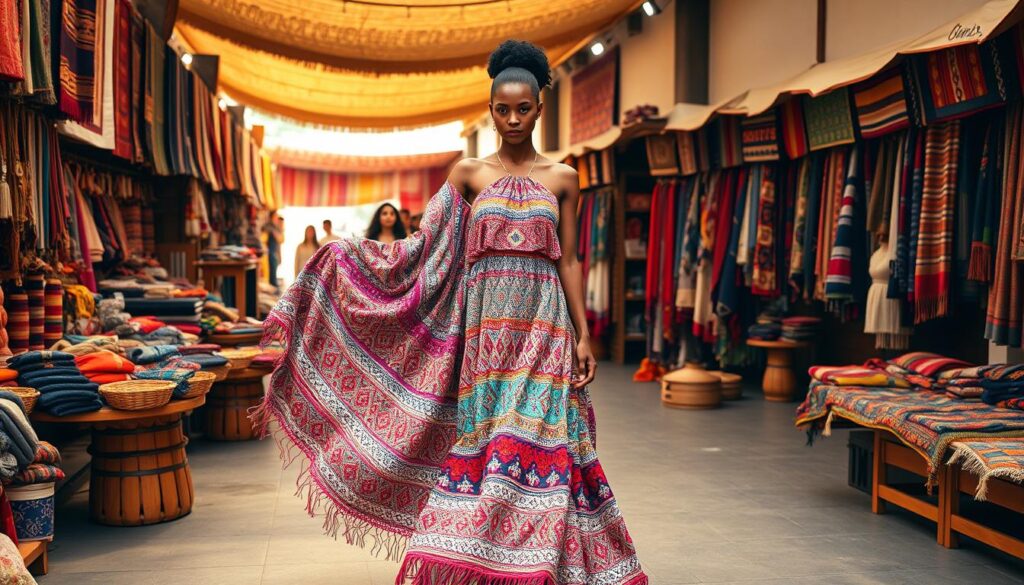
ClothRoads Studio is a great example of fashion promoting textiles. They show off textiles from all over, making them known worldwide. This helps people see and value these fabrics.
Fashion’s role in promoting textiles is big. It’s not just about using old fabrics in new clothes. It’s also about caring for the planet and supporting local makers. As people think more about what they buy, they want clothes that are good for the earth and show cultural pride.
Using culturally significant fabrics in fashion can connect cultures. It helps us understand and respect different cultures. This mix of old and new in fashion is key to promoting textile culture.
In short, fashion is very important for promoting textile culture. By using traditional fabrics in modern clothes, the industry supports cultural heritage and local makers. As fashion keeps changing, using cultural textiles will always be a big part of telling our stories and connecting cultures.
Textile Preservation Efforts
Textile conservation is key to protecting our cultural heritage for the future. It’s not just about keeping old fabrics. It’s about saving the history, techniques, and cultural value in these materials.
Preserving “ancient Andean textiles” is a great example. These textiles, made from delicate materials with detailed designs, need careful handling. Also, “quilts from the Gee’s Bend community” are saved as part of American textile history. They show the value of traditional quilting and the stories they tell.
Conservation Efforts include cleaning, repairing, and storing textiles in controlled environments. This slows down their deterioration. Advanced methods, like digital analysis, help understand ancient textiles without harming them.
Traditional techniques are also being saved through conservation. By documenting and teaching these methods, we ensure future generations can appreciate and learn from the past.
“The art of textile preservation is not just about the physical act of conserving fabrics; it’s about keeping cultural heritage alive.”
Supporting textile preservation helps save our cultural heritage. You can donate to projects or learn about traditional techniques. Everyone can help preserve the rich global textile culture.
The Future of Textiles
The textile industry is on the verge of a big change. This is thanks to innovations in how things are made and a focus on sustainability. As people care more about the environment, they want sustainable textiles more than ever.

Today’s fiber artists are leading this change. They’re making textile art more exciting by using culturally significant fabrics in new ways. This keeps old traditions alive and introduces them to new fans.
The future of textiles is looking good. Technology and old-fashioned skills are coming together to make green, innovative products. As the industry keeps growing and changing, we can expect even more cool things in textiles.
By going green and honoring cultural traditions, the textile world can have a bright future. This future will be good for both people and the planet.
How to Incorporate Cultural Textiles into Your Life
Cultural textiles bring depth and meaning to your home. They celebrate cultural diversity and richness. By adding traditional fabrics to your decor or clothes, you honor different cultures.
Using cultural textiles in home decor is a great idea. For example, you can use African prints or Indian embroidery for throw pillows or blankets. ClothRoads Studio has many fabrics that can add cultural significance to your home.
You can also wear cultural textiles in your outfits. Mixing traditional fabrics with modern clothes is a good idea. Like using Japanese kimono fabric for a modern dress. This adds cultural heritage to your look and helps keep traditional textile techniques alive.
Embracing cultural textiles makes your daily life more unique and meaningful. Whether in your home decor or fashion, it’s a wonderful way to celebrate cultural diversity.
Resources for Further Exploration of Textiles
If you’re excited to dive deeper into textiles, there are many resources to explore. ClothRoads Studio is a great place to start. It offers a wide range of content and inspiration related to textiles.
For hands-on learning, check out Carolina Oneto’s quilting classes. They cover textile art in-depth. Classes are available for all skill levels, from beginners to experts.
Looking to learn more? Check out books and online forums about textile production and design. These resources can help you understand the cultural importance of textiles. They also show how textiles shape our identities.
Using these resources, you can keep exploring the complex world of textiles. You’ll also stay up-to-date with the latest trends and techniques.