
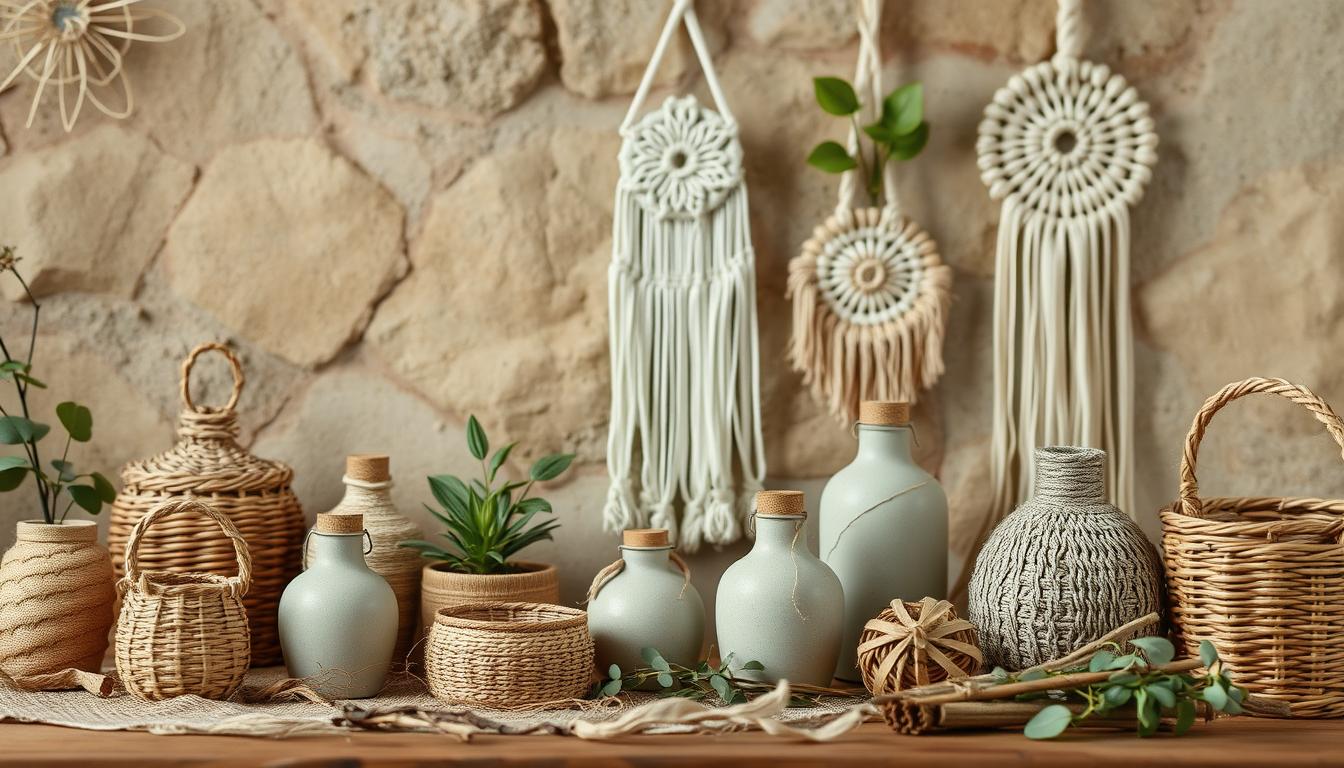
Making crafts from recycled materials is a smart choice. It’s not only environmentally friendly but also budget-friendly. By using items that would be thrown away, we can cut down on waste and help the planet.
This creative method sparks innovative thinking. It helps us leave a smaller mark on the environment. It also promotes a culture of sustainability and supports green practices.
Choosing to create with recycled items is a big step for the environment. It’s a simple yet powerful way to make a positive change.
Understanding Recycling Art
Recycling art is a creative way to cut down on waste. It turns old items into something new. This process is all about creative reuse of things we might throw away.
This art form is not just good for the planet. It also sparks creativity and imagination. By making something new from old items, we help the environment and create unique art.
The terms recycling, upcycling, and downcycling are key in recycling art. Recycling breaks down materials for new products. Upcycling makes old items into something better. Downcycling makes them into something less valuable.
Knowing these terms helps us see the value of recycling art. It’s more than just reusing old things. It’s about giving them a new purpose and saving resources.
Recycling art lets us help the environment and show our creativity. We can upcycle furniture or make art from recycled materials. The possibilities are endless.
Types of Materials Used in Recycling Art
Recycling art uses a wide range of materials. Recycled materials are everywhere, just waiting to be turned into something new and beautiful.
Items like plastic bottles, tin cans, and old newspapers are often used in DIY recycling. For example, plastic bottles can be made into chandeliers or planters. Tin cans can become pen holders or decorative lanterns.
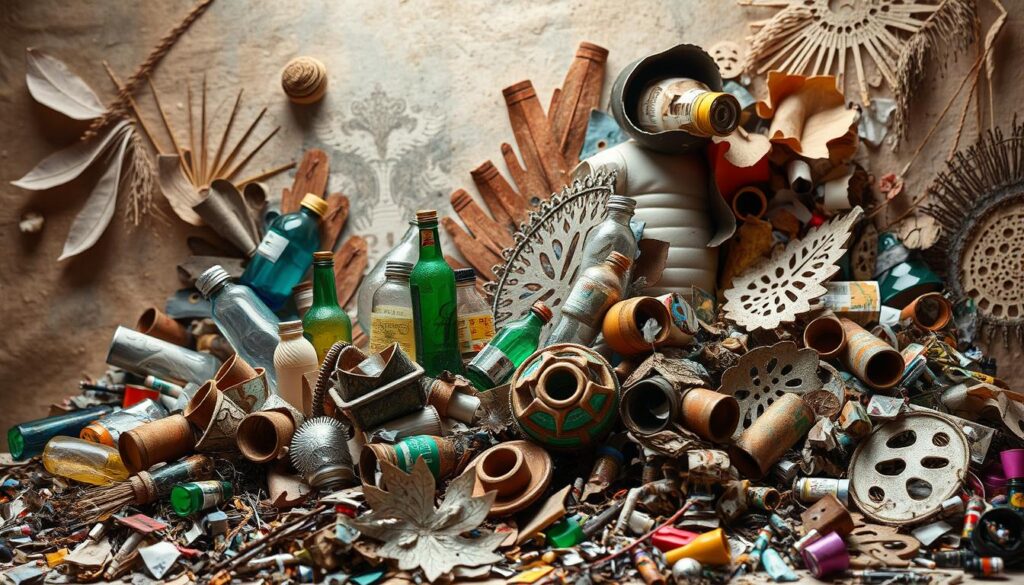
Getting ready is key to making recycling art work. Cleaning and preparing the materials well can greatly improve the final result. As
“The earth has enough for everyone’s need, but not enough for everyone’s greed.” – Mahatma Gandhi
, being creative and mindful of our use is vital.
Common Materials and Their Uses
Cardboard and paper products are great for recycling art. They can be used for papier-mâché or detailed cut-out designs.
Plastic materials are also used, despite being hard to break down. They are turned into jewelry, decorative items, and even furniture.
Textile scraps are another eco-friendly material used in recycling art. They are often made into quilts, bags, or other fabric crafts.
By doing DIY recycling and using eco-friendly materials, we help reduce waste. This way, we contribute to a more sustainable future. As we keep exploring recycling art, the possibilities and impact are endless.
Popular Techniques in Recycling Art
Creative transformation is key in recycling art. It turns old materials into new, unique pieces. Artists and crafters use many methods to do this.
Painting and decorating old items is a common recycling technique. This can be anything from painting furniture to decorating glass bottles.
Upcycling is a big part of recycling art. It makes materials more valuable or useful. For example, old pallets can become garden planters or coffee tables. Plastic bottles can turn into self-watering planters.
Assembling different materials is another creative transformation technique. It can make jewelry from recycled metal or sculptures from scrap wood or metal.
Gluing and bonding are also key recycling techniques. They help hold materials together. This creates complex structures or designs that wouldn’t be possible with the original materials.
These and other methods make recycling art both sustainable and creative. Whether you’re an artist or a hobbyist, there’s no limit to what you can create from trash.
Inspiring Recycling Art Examples
Recycling art shows us that being creative can also be good for the planet. Artists and DIY fans are making unique pieces from things we usually throw away. This helps make our world a bit greener.
Recycling art is very versatile. For example, old jar lids can become lovely photo frames. This DIY project breathes new life into old items and makes our homes more personal.
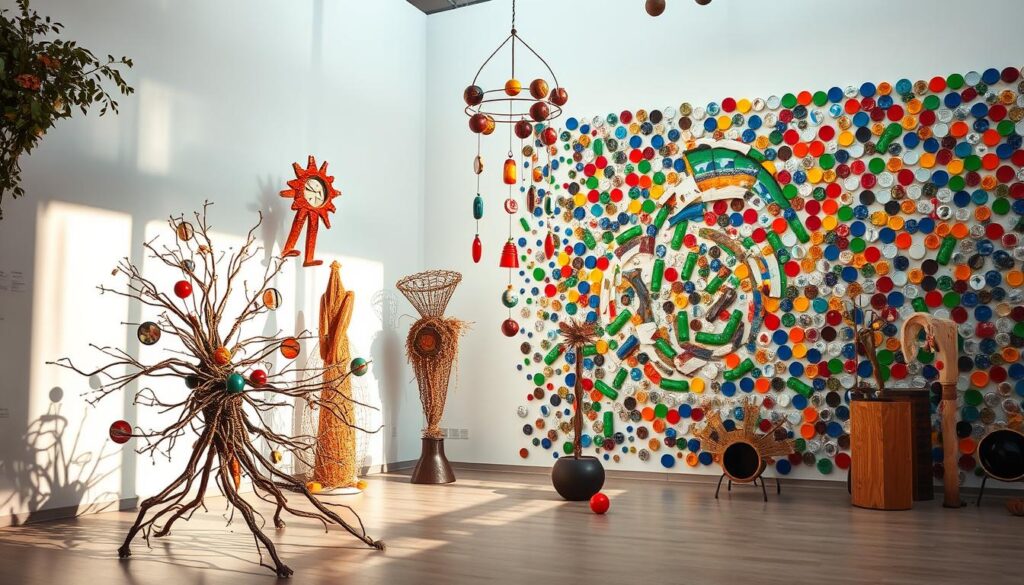
Another cool idea is making art from bottle caps. Artists glue caps onto a surface to create amazing patterns. It’s a fun and green way to decorate.
Turning tin cans into planters is also a hit DIY project. With some creativity, tin cans can hold small plants. This adds a green touch to any space.
These examples show how recycling art can spark creativity and help the planet. By choosing eco-friendly art, we support a greener community.
Getting Started with Your Own Recycling Art
Starting your recycling art journey is simple. First, collect materials like old newspapers, cardboard tubes, and fabric scraps. Look at waste with a creative eye, seeing the possibilities in each item.
Beginner Tips: Start by thinking of ideas. Use the materials you’ve collected to create something new. You could make a collage, a wind chime, or a planter. Your imagination is the only limit.
As you try different techniques, you’ll find what works for you. Try decoupage, papier-mâché, or upcycling. The process is just as important as the final product. It lets you explore your creativity and reduce waste.
For a better recycling art experience, follow these eco-friendly crafting tips:
– Use natural materials whenever possible.
– Avoid harsh chemicals or non-recyclable materials.
– Share your work to inspire others.
By following these steps, you’ll start your recycling art journey and help the environment. So, take that first step today. Watch your creativity turn into something unique and green.
Tips for Crafting with Recycled Items
Exploring crafting with recycled items opens up a world of possibilities. It’s a rewarding journey, turning trash into art.
Cleaning and Preparing Materials is key. Make sure everything is clean and dry before starting. This makes your crafting process smoother and keeps your creations safe.
Being flexible with your designs is vital. Recycled materials can surprise you. Embracing these surprises can lead to amazing, new ideas.
“The earth has enough for everyone’s need, but not enough for everyone’s greed.” – Mahatma Gandhi
Learning to see value in unexpected items takes time. Think outside the box. For example, old pallets can be garden planters, and tin cans can hold pens.
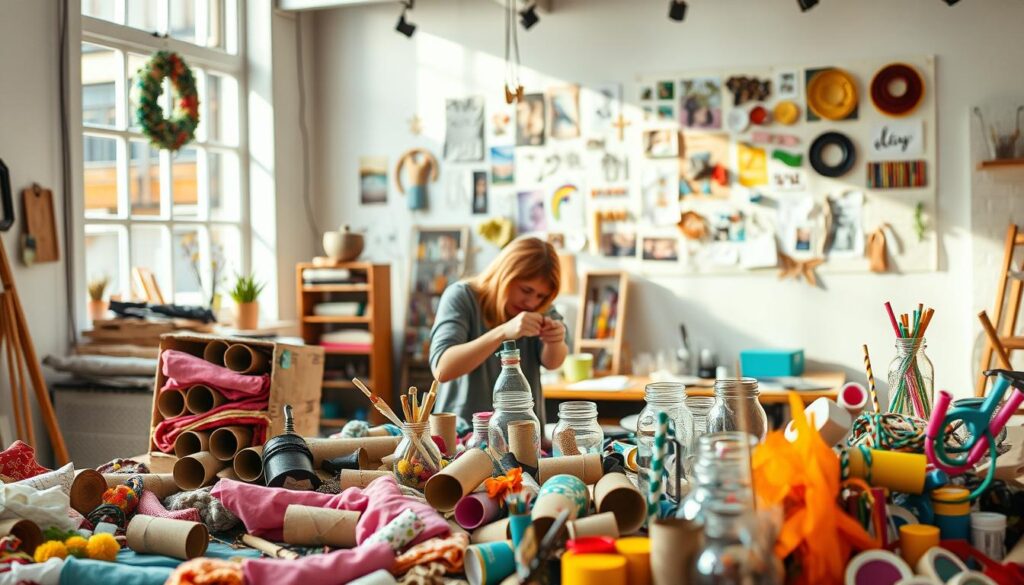
By following these crafting tips, you can make unique items. It’s a way to be creative and help the planet. The art of creative reuse boosts your creativity and cares for the environment.
Engaging with the Community through Art
Sharing your recycling art can inspire others and make your community stronger. It promotes sustainability and brings people together. This unity is built through art and cooperation.
Posting your art on social media is a great way to connect. It shows off your work and teaches others about recycling. Using hashtags can help more people see your posts and share their own art.
Joining local art events is another good idea. These events let you show your art, get feedback, and learn from others. You can also work together on new projects, making your community even stronger.
Teaching others about recycling art is very rewarding. By sharing your skills, you help others create eco-friendly art. This grows your community’s creativity and sustainability.
By doing this, you help create a vibrant, eco-friendly community. Engaging with the community through art is a powerful way to positively impact the environment. It inspires others to join in and make a difference too.
Teaching Recycling Art to Children
Engaging kids in recycling art projects boosts their creativity and teaches them about the environment. They learn about sustainability while showing off their imagination.
Benefits of Recycling Art for Kids
Recycled crafts help kids develop creativity, fine motor skills, and problem-solving. These activities make them think differently and explore various textures and materials.
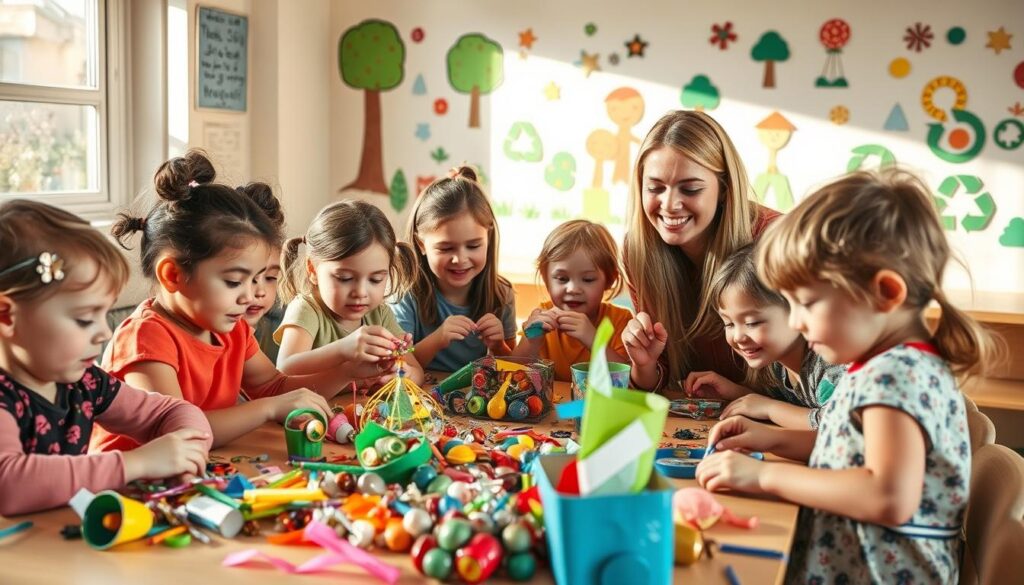
Eco-friendly education through recycling art teaches kids the importance of reusing and recycling. It’s a fun way to learn about the environment.
Tips for Teaching Recycling Art
To start teaching recycling art, collect recyclable materials like cardboard, plastic bottles, and fabric scraps. Encourage kids to look around and find materials for their projects.
Helping kids turn old items into art shows them recycling’s creative side. It’s important to praise their work and encourage them to try new things.
Teaching recycling art to kids boosts their creativity and teaches them eco-friendly values. These values will help future generations.
Promoting Sustainability through Art
By using recycled materials in art, people can help the environment and show their creativity. This art form gives old items a new life. It also teaches us about the need to cut down on waste.
Creating art from recycled stuff makes us see waste in a new light. It shows that trash can become something valuable and lovely. This encourages living in a way that’s good for the planet.
Recycling art also inspires others to live more sustainably. Seeing the beauty in reused materials makes people want to recycle more. It’s a big step towards a greener future.
Supporting recycling art helps build a sustainable culture. This culture is key to solving environmental problems. It ensures a better world for those who come after us.
In short, recycling art is a strong way to promote eco-friendly art and sustainability. It makes us think differently about waste. It encourages us to find new ways to protect our planet.
Conclusion: The Impact of Recycling Art
Recycling art lets people help the environment and show their creativity. It cuts down on waste and pushes for a greener way of living.
Recycling art uses many creative ways to reuse old stuff. It turns trash into cool decorations or useful items. This encourages people to see waste in a new light.
As we deal with environmental issues, recycling art’s role grows. It helps us live more sustainably. By recycling, we can lessen our impact on the planet and express ourselves.
It’s a great time to dive into recycling art. You can turn old materials into something fresh and meaningful. Join others who are making a difference, one piece at a time.