

The history of Lifeguarding started in the 1700s. Back then, shipwrecks were a big danger at sea. Lifesavers were sent to rescue those in trouble, starting a long tradition of protecting our coastlines.
As time went on, lifeguards faced new challenges and used new tools. Now, Water Safety is a top priority. Lifeguards are key in stopping accidents and helping in emergencies. Their work shows how important it is to stay alert and ready to keep beachgoers safe.
This story shows the amazing work of lifeguards in Beach Rescue. It highlights how vital their job is in making our shores safe.
A Perfect Day Gone Wrong
The ocean’s power is not to be underestimated. A perfect day can turn wrong in an instant. Many beachgoers don’t realize the risks of the ocean, leading to Beach Accidents and Water Emergencies. A day that starts with sunbathing and swimming can quickly become a disaster if you’re not ready.
Deceptive Calm Before the Storm, Summer Plans Interrupted
The water’s calm surface can be misleading. It hides strong currents and riptides that can pull even the strongest swimmers away. It’s important to be aware of your surroundings and watch for warning signs to ensure Summer Safety.
Being informed and cautious can make a big difference. Knowing the dangers and taking the right steps can prevent accidents. This way, everyone can have a safe beach experience.
The First Signs of Trouble
Under the calm ocean surface, warning signs were growing. These signs were a big deal for people at the beach. Knowing them is key to a safe day at the beach.
Flag Systems and Their Meanings
Beach safety flags are very important. They come in different colors, each with a special meaning. For example, a red flag means it’s too dangerous to swim. A yellow flag warns of conditions that need extra care.
Knowing what these flags mean helps people make safer choices. It’s all about staying safe at the beach.

Weather patterns greatly affect ocean conditions. Changes in wind and pressure can make the ocean rough. Keeping up with weather forecasts helps predict these changes.
Being smart about these signs can make your beach visit safer. By knowing the flag meanings and watching the weather, you can have a great time at the beach. And you’ll be safer too.
When Waves Become Weapons
Waves can turn dangerous and need our respect and understanding. They are often seen as beautiful, but can become deadly under the right conditions.
Ocean dangers aren’t just about strong currents. The waves themselves can be deadly. The science behind this danger is in how waves form and grow.
The Science Behind Ocean Dangers
Wind speed, distance, and how long the wind blows all play a part in wave formation. When these come together in a certain way, they can create powerful waves that can destroy things.
According to Beach Safety Statistics, water emergencies are a big worry. “About 4,000 people die each year in the U.S. from drowning, with many happening at beaches,” a study on water safety found.
Statistics on Water-Related Emergencies
Water emergencies are more common than people think. It’s very important to understand ocean dangers to prevent such incidents.
“The power of the ocean is awe-inspiring, but it demands our respect. Understanding the dynamics of waves and being aware of the conditions can save lives.” – A lifeguard’s testimony.
Knowing about ocean dangers and following beach safety statistics can help keep beachgoers safe from water emergencies.
The Call for Help Echoes Across the Sand
As panic set in, the need for a swift and coordinated Emergency Response became clear.
The lifeguards quickly assessed the situation. They knew what steps to take next. Effective Communication Systems were key to share this info with the rescue team.
Initial Assessment Protocol
The lifeguards first checked how bad the situation was. They figured out what they needed to save everyone.
Thanks to good communication, the lifeguards could call for help fast. They worked together to rescue everyone quickly and safely.
This teamwork saved lives on the shore that day.
Heroes in Red and Yellow
Behind the iconic red and yellow colors lies a story of dedication, rigorous training, and cutting-edge rescue technology. Lifeguards are the backbone of beach safety. Their role is key in preventing accidents and saving lives.
Lifeguards go through rigorous training and certification programs. These programs teach them the skills needed for emergencies. They learn CPR, first aid, and lifeguarding techniques, making them ready for any situation.
Evolution of Rescue Technology
The evolution of rescue technology has greatly improved lifeguard effectiveness. Modern equipment, like drones and rescue boats, helps lifeguards respond fast and well. This tech has been key in boosting beach safety.
With well-trained lifeguards and advanced technology, beaches are safer for all. These beach heroes are always ready to help. They make sure the beach is a safe place for everyone to enjoy.
Against the Clock: The Beach Rescue Operation Unfolds
When the emergency hit the beach, a quick rescue was the only hope. The situation needed fast action, showing how key an emergency command structure is.
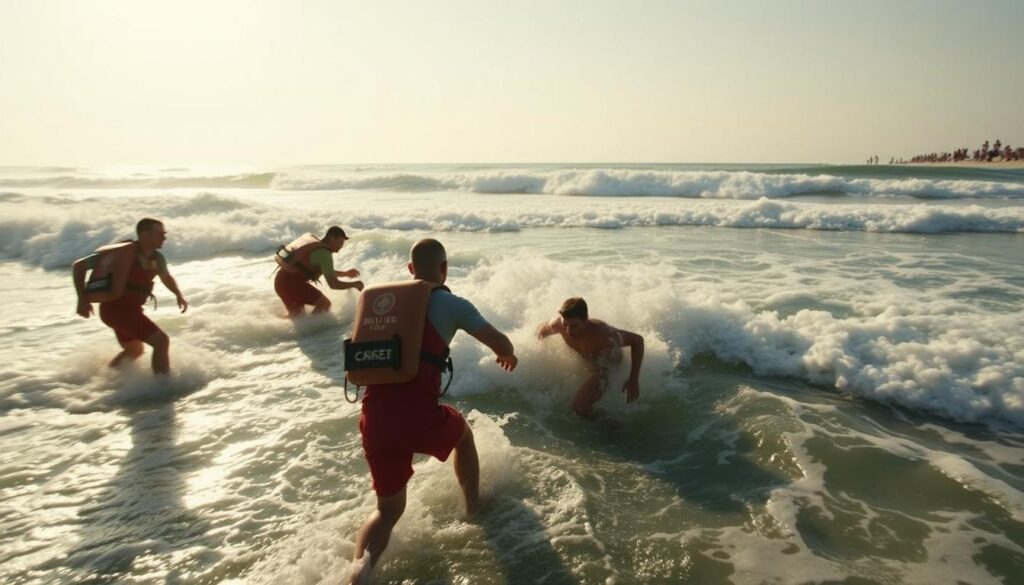
The command structure is vital in such emergencies. It makes sure all teams work together well. This boosts the chances of a good outcome. The command structure during emergencies helps in making quick decisions and using resources well.
Command Structure During Emergencies
A strong command structure is key for rescue success. It has a clear chain of command, defined roles, and good communication. This setup lets rescue teams act fast and work together smoothly.
Triage in Water Rescue Situations
Triage is very important in water rescues. It’s about checking who needs help most and saving them first. Good triage means those in the worst shape get help right away, making the most of what’s available.
The water rescue on the beach was a big challenge. It needed careful planning and hard work. The rescue teams used their skills to control the situation.
The beach rescue’s success showed how good the emergency plan was. It proved the value of being ready and working together in emergencies.
Ordinary People, Extraordinary Actions
When disaster hits the shore, it’s not just experts who can help. Many times, regular people play a big role in emergencies. They offer support right away until the pros get there.
When and How Civilians Should Help
Civilians can help in many ways, like giving first aid or calling for help. Civilian response is key in the early stages of a crisis. They are often the first to see what’s happening.
But, it’s important to know when and how to step in. Civilians should help in safe ways. For example, if someone is drowning, a trained person can help a lot by using a flotation device or calling for help.
Community Cooperation in Crisis
Community cooperation is essential in a crisis. When people work together, they can respond better. This teamwork can mean helping rescue teams, sharing information, or supporting those hit by the crisis.
Good crisis management isn’t just about professionals. It’s also about the community working together. By knowing their roles, civilians can really help in beach emergencies.
The Critical Moments
The moments after a water emergency are key to a near-drowning victim’s survival. Prompt and proper first aid can greatly affect their outcome.

After a near-drowning, the golden hour — the first 60 minutes — is vital. Medical help during this time can make a big difference.
First Aid for Near-Drowning Victims, Golden Hour in Water Emergencies
Starting first aid right away is important. This includes CPR if the person is not breathing. The CPR method should match the victim’s age and health.
The golden hour in water emergencies is critical. It shows the urgency of acting fast to save lives.
In near-drowning cases, time is everything. Quick action can improve recovery chances. It’s key for people to know basic first aid and act quickly.
When Minutes Feel Like Hours
In high-pressure situations like beach rescues, every minute is critical. The stress on first responders is huge. It’s key to manage this stress for a successful rescue.
First responders deal with intense stress often. Having support is essential. Good stress management techniques are vital to handle the pressure.
Stress Management for First Responders, Support Systems During Crisis
Support systems are just as important during a crisis. They include peer support groups, mental health resources, and training to build resilience.
As one first responder said,
‘The support of my team got me through the toughest moments; we relied on each other to stay focused.’
This shows how vital a strong support network is.
By focusing on stress management and using support systems, first responders can do better under pressure. They can also keep their well-being in check.
Aftermath of the Beach Rescue
After the waves calm down, the real work starts. Those involved in a beach rescue face a long journey to recovery. The danger may have passed, but the healing has just begun.
The Post-Rescue Care is complex, covering both physical and emotional healing. Victims and responders may need medical help for injuries from the rescue.
Physical and Emotional Healing
Emotional Healing is as important as physical recovery. Being in a life-threatening situation can leave lasting scars. Support from loved ones and the community is key in this healing process.
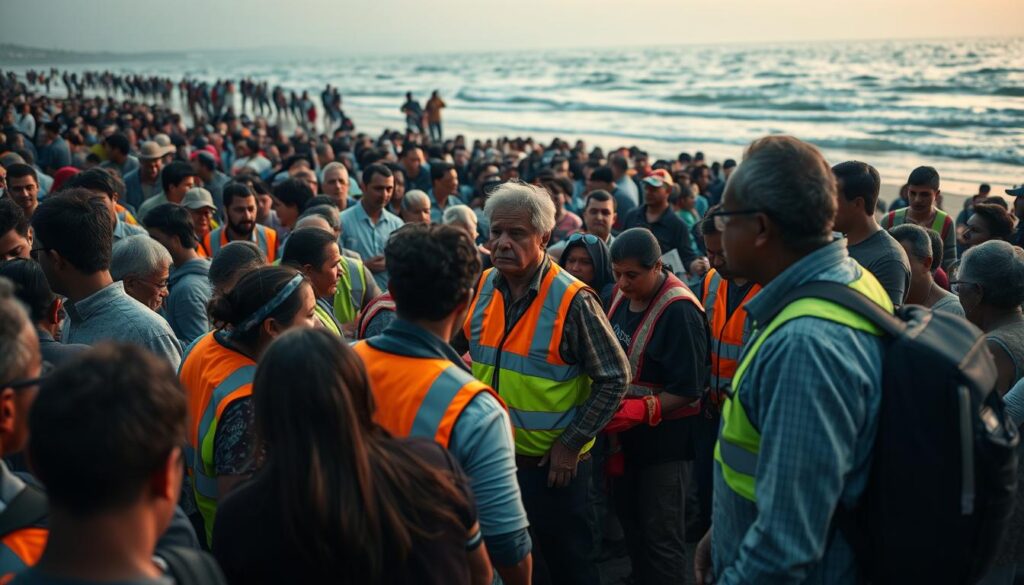
Tragedies like these bring people together. The Community Response is a powerful force for healing. It creates a sense of unity and support.
When the community comes together, it helps those affected recover. This shows the strength of the human spirit and the power of unity in hard times.
Lessons Written in Sand
Preventative measures can greatly lower the chance of emergencies at the beach. By knowing the risks and taking steps ahead of time, people can have fun at the beach safely. This way, they can enjoy the shore without worrying about accidents.
Preventative Measures for Beachgoers
Education is a key to better beach safety. Beachgoers should know about the current conditions, like rip currents and weather. Swimming at beaches with lifeguards and listening to their advice can also help a lot.
“Knowledge is power,” and in beach safety, it means knowing about dangers and how to act. Educational efforts in coastal areas help spread this knowledge.
Coastal areas can start educational initiatives to boost beach safety. They can hold workshops, run safety campaigns, and give out info materials. These efforts help create a safe and ready community.
“The key to preventing beach emergencies lies in education and preparedness.”
By taking preventative measures and backing educational efforts, we can make beaches safer for all. It’s a team effort that needs everyone’s help, from beachgoers to local groups and authorities.
The Shore’s Enduring Promise
The shore is where memories are made. Lifeguards work hard to make sure every beach day is fun. Beach Safety is a team effort, and lifeguards are key to keeping everyone safe.
Lifeguarding is more than a job; it’s a way to protect the community. Lifeguards show their dedication by keeping the shore safe for everyone. They make the beach a place for fun and relaxation.
As our community grows, so does our understanding of Beach Safety. Programs help teach people about the dangers and joys of the beach. This creates a safer and more respectful beach environment.
The shore’s promise to us is strong. It shows the power of community and the hard work of those who keep it safe. Looking ahead, the shore will always be a special place for making memories with loved ones.