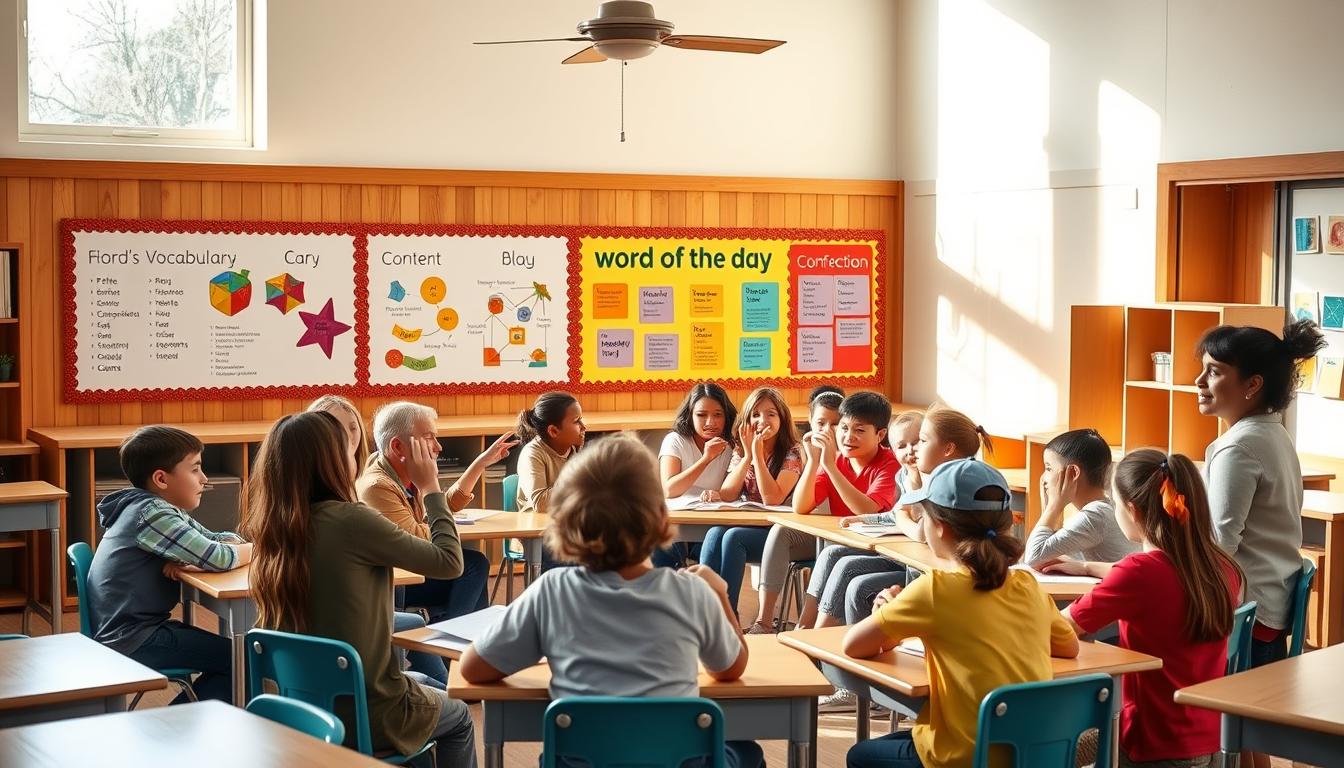
Building vocabulary is key in language learning. A great way to grow your vocabulary is through language exchange. This is when people learn new words and phrases from each other.
This approach boosts vocabulary building. It also helps you practice how to say words correctly. Plus, it makes you more confident when using new words.
Through language exchange, learners get to explore many different words. This helps them understand the language in a deeper way.
What is Language Exchange?
Language exchange is about improving your language skills by practicing with a partner. It’s when two people, often native speakers of different languages, practice speaking with each other.
This setup helps both people learn more about each other’s languages. You can learn better pronunciation, add to your vocabulary, and understand more. You can do this face-to-face or online, making it easy for learners everywhere.
For example, websites like Rewordify.com can make hard English texts easier to read. This is great for discussing tough topics or improving reading skills during an exchange.
Language exchange not only boosts your language skills but also lets you learn about different cultures. It helps you make friends with people from all over the world. This way, you get to know more about the language and its culture.
In short, language exchange is a great way to improve your language skills in a fun and interactive way.
How to Find a Language Exchange Partner
Starting a language learning journey is better with a partner. A partner can help improve your skills by talking, correcting pronunciation, and sharing culture.
Many online platforms and apps help find language exchange partners. They make it easy to find someone who wants to learn your language too.
Language Exchange Apps
Language exchange apps have changed how we find partners. Apps like Tandem, HelloTalk, and iTalki connect learners globally. They make language exchange easy.
Using these apps is very helpful. They let you practice your language and connect with others. For example, Tandem lets you pick languages and talk with native speakers.

In summary, finding a language exchange partner is easier online. Using these tools can really boost your learning.
Tips for Effective Language Exchange
Effective language exchange is more than just talking. It’s about making learning meaningful. To do this, set clear language learning goals and plan your exchange to reach them.
One key language exchange tip is to stick to a regular schedule. Being consistent helps you improve your language skills. By setting a regular time, you keep getting better.
Creating a Language Exchange Schedule
Setting up a language exchange schedule means deciding how often and long to meet. It’s important to find a schedule that works for both people. Starting with 30 minutes, twice a week, is a good start.
To make language exchange more effective, use tools like Membean. It’s a platform that helps you learn new words in a fun and structured way. It’s great for improving your vocabulary alongside your language exchange.
Varying activities in your language exchange sessions is also important. You can talk about current events, cultural differences, or practice scenarios like ordering food. This keeps things interesting and helps you become well-rounded in your language skills.
By sticking to these effective language exchange tips and staying committed to your language learning goals, you can really improve your language skills. The main thing is to stay consistent, open to feedback, and adjust your exchange as you grow.
The Role of Cultural Exchange
Learning a language is more than just knowing grammar and words. It’s also about cultural exchange. When you talk with native speakers, you learn about the culture behind the language. This makes your learning more rich and meaningful.
Cultural exchange adds depth to language learning. It helps you understand cultural references and expressions unique to a culture. This can happen through sharing meals, celebrating festivals, or talking about cultural practices.

One big language learning benefit of cultural exchange is a deeper understanding of the language. By exploring different cultures, you see the language’s diversity. This includes various dialects, expressions, and how they’re used in different situations.
You can add cultural exchange to your language learning in many ways. For example, you can share stories about your culture, cook traditional meals, or go to cultural events. This boosts your language skills and helps you appreciate the culture tied to the language.
Also, cultural exchange makes learning more immersive. By experiencing the culture and traditions of the target language, you can get a real accent. You’ll understand how to use colloquial expressions correctly and feel more confident in speaking.
Language Learning Techniques
Learning a new language needs a mix of techniques. It’s not just about knowing grammar or memorizing words. It’s about using the right methods to get good at it.
Vocabulary building is key. You can use flashcards, apps, and books in the target language to learn new words. For example, apps like Letter Tiles help you build words and break them down into syllables. This makes it easier to remember new words.
Pronunciation is also very important. Pronunciation practice means listening to native speakers and trying to mimic them. Tools that give feedback on your pronunciation are also helpful. Regular practice helps improve your accent and makes you more confident in speaking.
Language exchange programs are great for practicing pronunciation. Talking with native speakers or other learners helps improve your speaking. You also get feedback on your pronunciation. This interactive way of learning not only helps with pronunciation but also boosts your confidence in speaking.
In summary, techniques like building vocabulary and practicing pronunciation are vital for mastering a new language. By using these methods, learners can reach their goals more easily.
Common Challenges in Language Exchange
Language exchange is a great way to learn a new language, but it comes with its own set of challenges. One big issue is overcoming language barriers. When people have very different language skills, talking can be tough.
Managing different language levels is key for a good exchange. To tackle this, you can plan your sessions carefully. Focus on things like chatting or learning grammar. This way, everyone gets something out of it, no matter their skill level.
Managing Different Language Levels
To deal with different skills, start by setting clear goals for your exchange. For example, a more skilled learner can use easier words and speak slower. On the other hand, a beginner can ask questions and help the advanced learner explain things in simple terms.

Another good idea is to switch between languages or pick a topic you both like. This keeps the conversation interesting and helps everyone learn. Being open and patient helps you overcome language barriers and enjoy your exchange more.
It’s important to understand and work on language level differences for a successful exchange. This way, you create a space where everyone can learn and grow together.
Profiling Popular Language Exchange Apps
Language learning is now easier than ever, thanks to language exchange apps. These apps connect people worldwide, helping them learn languages and understand cultures.
These apps are popular because they are easy to use and effective. Tandem, HelloTalk, and iTalki are well-known for their features that meet various learning needs.
One big benefit of using language exchange apps is speaking with native speakers. This helps improve how you speak and understand better.
Language learning expert says, “Language exchange apps offer a chance to have real conversations. These conversations are both meaningful and challenging.”
“The key to language learning is consistent practice, and language exchange apps make it possible to practice regularly, even for those with busy schedules.”
Many apps also have extra features like language exercises, grammar checks, and cultural insights. This makes them a great tool for learners.
Learning at your own pace is another big plus. Whether you’re starting out or already know a lot, language exchange apps can be adjusted to fit your needs. This gives you a personalized learning experience.
Success Stories from Language Exchange
Many people have seen big improvements in their language skills through language exchange. This method not only boosts language skills but also helps understand and share cultures.
Language exchange success stories show how well it works. For example, Alex, a young professional, got better at Spanish by talking with a native speaker. This helped him land a job in a Spanish-speaking country, a long-held dream.

Emily, a student, learned French through language exchange. She practiced with a Parisian, reaching fluency. Her story is a clear example of the language learning benefits from language exchange.
These stories show how language exchange can change lives. It lets people improve their language skills, feel more confident, and reach their goals.
“Language exchange has been a game-changer for me. I’ve not only improved my language skills but also made lifelong friends.” – Rachel, Language Learner
The success stories of language exchange prove its worth as a learning tool. It’s great for both beginners and advanced learners. It offers a chance to practice with native speakers, get feedback, and learn about different cultures.
In conclusion, language exchange offers many benefits. It improves language skills and enriches culture. By using language exchange, people can open new doors and reach their language learning dreams.
Strategies for Longer Sessions
To get the most out of language learning, plan longer sessions well. These sessions let you dive deeper into conversations. This makes learning more meaningful.
Start by setting clear objectives for what you want to achieve. Maybe you want to improve your pronunciation or learn new words. Having a goal keeps you focused.
There are many ways to make these sessions fun and productive. Role-plays are great for practicing real-life situations, like ordering food or booking a hotel room.
Debates and discussions on various topics are also beneficial. They boost your speaking skills and help you think critically. You’ll learn to respond quickly in the target language.
Storytelling is another effective method. Telling personal stories or a narrative helps you use different tenses and vocabulary. It also encourages your partner to share their stories, making the session more interactive.
“The more you practice speaking, the more fluent you become.”
To keep sessions lively, try language learning games or quizzes. These are both fun and educational. They help make long conversations more enjoyable.
By using these strategies and activities, you can greatly improve your language skills. The most important thing is to stay engaged, be consistent, and make the most of your sessions.
The Importance of Feedback
Feedback is key in language exchange. It helps learners find areas to improve and see their progress. This is vital for success.
Giving feedback is more than just pointing out mistakes. It’s about giving helpful, specific advice. Start with something positive, then offer ways to get better, and end on a high note. This keeps the learning environment supportive.
Receiving feedback well is just as important. Learners should welcome it as a chance to grow. Asking for feedback on specific areas, like pronunciation, helps focus on what needs work.
Feedback has many benefits for language learners. It not only makes their language skills better but also boosts their confidence. Regular feedback makes learners more confident in speaking the target language.
There are many ways to include feedback in language learning. You can have regular review sessions or use apps that give feedback. The important thing is to make feedback a regular part of learning.
By accepting feedback, learners can improve their experience, tackle challenges better, and reach their goals faster.
Celebrating Your Progress
Celebrating your language learning progress is key to staying motivated. It helps you feel encouraged and keeps you committed to learning. Acknowledging your achievements is important.
Celebrating Language Learning Milestones
Tracking your language learning is vital to see how far you’ve come. Setting milestones helps you celebrate your successes. This could be mastering a new grammar rule or improving your pronunciation.
Keeping a language learning journal or using a mobile app to track your progress is helpful. Seeing how far you’ve come can motivate you to keep going. It encourages you to reach your language learning goals.
By celebrating your progress regularly, you stay motivated and develop a positive mindset. This mindset is essential for overcoming challenges and achieving fluency in a new language.