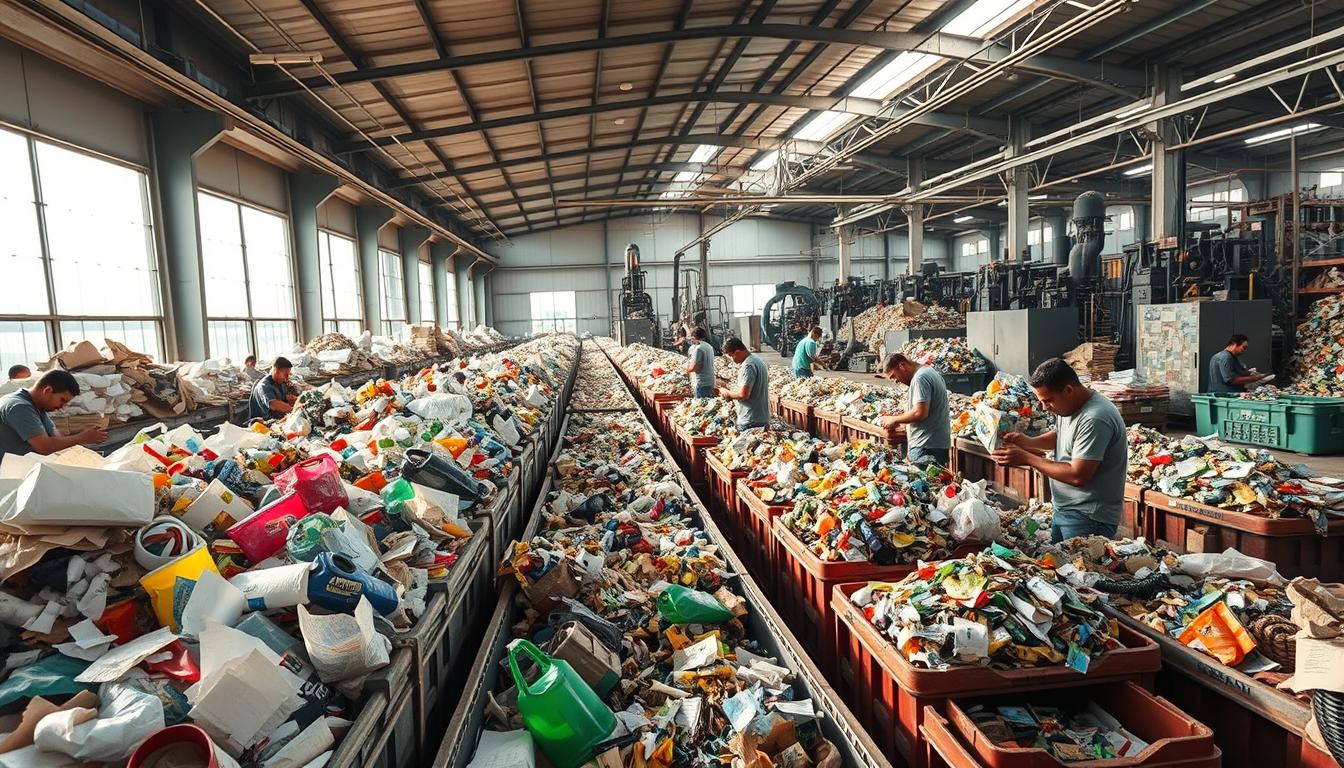
Every day, we can help the environment by choosing to recycle. Recycling gives items a second chance, letting them have new uses and save natural resources.
This simple choice helps a lot with sustainability. It cuts down on the need for raw materials. This way, we lessen the environmental impact of our actions, keeping ecosystems safe for the future.
We aim to teach you how to recycle right every time. With the right knowledge, we can all make a difference, one item at a time.
Understanding the Importance of Recycling
Recycling is key for our planet and communities. It cuts down on the need for raw materials. This saves energy and lessens our environmental impact.
Recycling also helps reduce landfill waste. Landfills are bad for the environment and contribute to climate change. Recycling means less waste in landfills, which lowers harmful emissions.
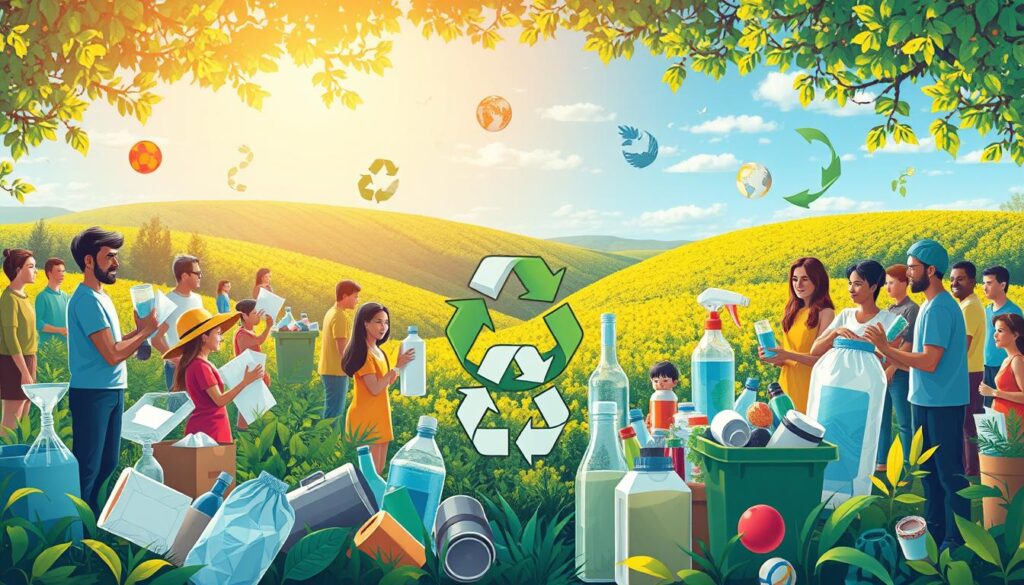
Recycling makes our communities more sustainable. It saves natural resources for the future. This action reduces greenhouse gas emissions and saves energy.
Recycling makes America more self-sufficient and beautiful. By recycling, we work towards a cleaner, healthier world. This effort is vital for a sustainable future.
Common Misconceptions About Recycling
Recycling is simple, but myths surround it. Many are unsure about what can and cannot be recycled. This confusion leads to contamination in recycling.
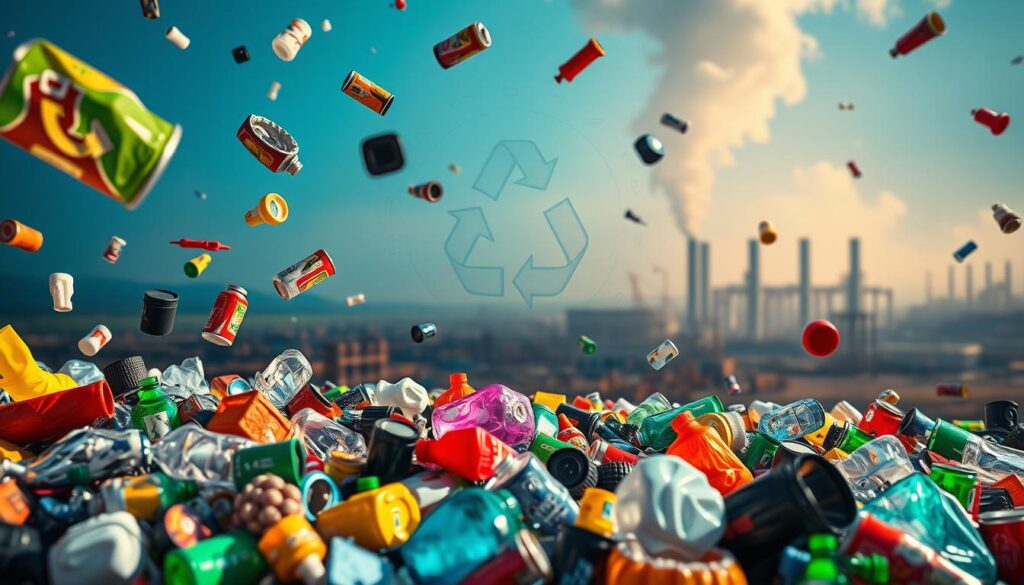
One big recycling myth is that all plastics are recyclable. But, not all plastics are the same. Some types are not accepted by recycling facilities. For example, plastic bags and certain packaging are often not recyclable in curbside programs.
Another myth is that recycling isn’t worth it if it’s not perfect. Jane Smith, a recycling expert, says, “Every piece of material that is recycled correctly counts, even if the overall process isn’t flawless.” This shows the value of our efforts, even if we can’t control everything.
“The greatest threat to our planet is the belief that someone else will save it.”
To fight these misconceptions about recycling, education is essential. Knowing what can be recycled and how to prepare it helps a lot. Take our interactive quiz to test your recycling smarts and learn more.
By clearing up these myths and improving our recycling education, we can move towards a greener future. Every small action matters, and making smart recycling choices is a big step forward.
How to Start Recycling at Home
Starting to recycle at home is easy. It’s all about understanding the basics of recycling at home.
Setting Up Your Recycling System
The first step is to set up a designated recycling bin next to your trash bin. This makes it easy to sort recyclables from trash.
To make recycling a habit, educate all household members on what can and cannot be recycled. Know what your local recycling program accepts.
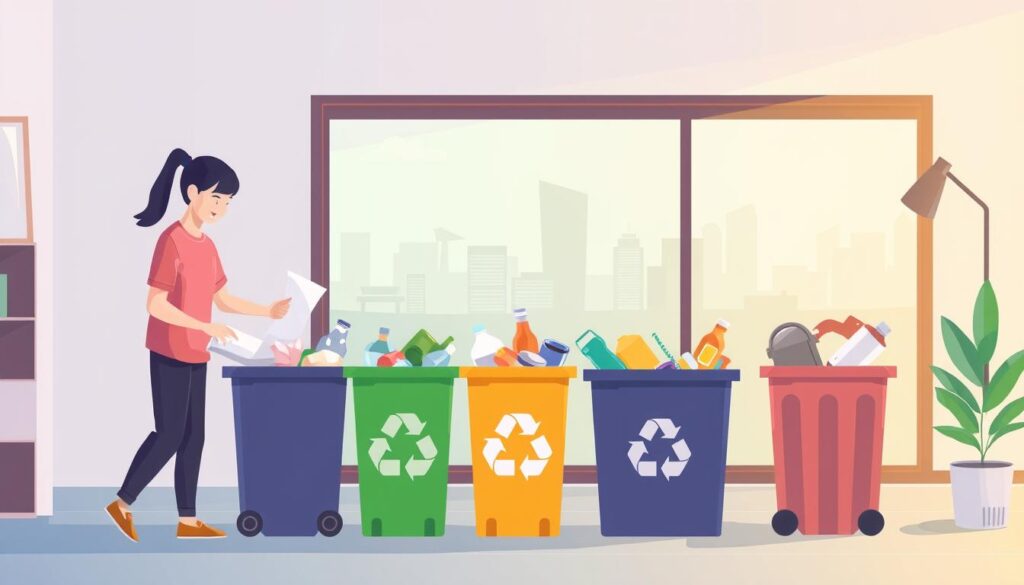
Start by identifying the materials you use most that can be recycled. These include paper, plastic, glass, and metal. Sort these materials into your recycling bin. Make sure to clean them first to avoid contamination.
Another important home recycling tip is to reduce waste. Choose products with minimal packaging or those made from recyclable materials.
By following these simple recycling steps, you can greatly reduce your household’s waste. This helps make our environment more sustainable.
The Role of Schools in Promoting Recycling
Schools are key in teaching future generations about recycling. They do this by adding recycling to their lessons. This helps create a green culture among students.
Programs like the K-12 Recycling Challenge by Keep California Beautiful are very successful. They get schools involved in recycling. Students learn why recycling is important and get to do hands-on activities to cut down on waste.
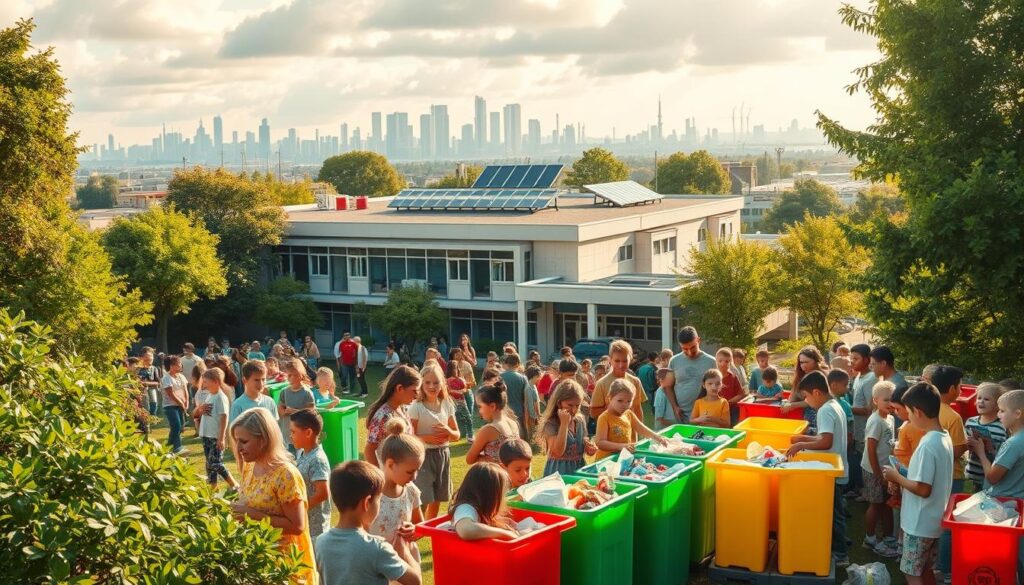
Promoting recycling in schools is more than just teaching about it. It’s about making a big change for the environment. Schools can start recycling programs, have environmental clubs, and make eco-friendly choices every day.
“Education is the most powerful tool which you can use to change the world.” Nelson Mandela’s words highlight how important education is. It shapes how we see the world, including our role in recycling.
Teaching students about recycling has a big effect on their communities. As they grow up, they will take these lessons home and to work. This helps make the whole world more environmentally friendly.
Recycling education in schools does more than just reduce waste. It teaches values that help the planet for years to come. So, it’s very important for schools to keep up and get creative with recycling programs.
Community Recycling Programs
Groups like Keep America Beautiful are leading the way in community recycling programs across the country. They work with local leaders to promote recycling and cut down on waste. This includes people from the government, schools, businesses, and the community.
“Recycling is not just about processing materials; it’s about building a culture of sustainability,” said a spokesperson for Keep America Beautiful. This shows how key community involvement is in recycling efforts.
“The success of community recycling programs depends on the active participation of local residents and businesses.”
Good recycling initiatives need education, the right infrastructure, and community support. Teaching people what can and can’t be recycled helps a lot. This way, communities can lower the amount of trash in recycling bins.
Community recycling programs also give local businesses a chance to help the environment. By teaming up with local groups, businesses can encourage recycling and support green projects.
The role of community involvement in recycling is huge. When people come together for recycling, they not only lessen waste. They also build a stronger sense of community and shared environmental responsibility.
What Can and Cannot Be Recycled
Knowing what can and cannot be recycled is key to good recycling. Recycling rules can change based on where you live. But, there are basic rules that most places follow.
Things like paper, cardboard, glass bottles, and some plastics can usually be recycled. But, not all plastics are the same. Some recycling programs accept certain plastics, while others don’t.
Common recyclable materials include:
– Paper and cardboard: Things like newspapers and cardboard boxes can be recycled.
– Glass: Most glass bottles and jars can be recycled, but broken glass might not be accepted everywhere.
– Metals: Aluminum and steel cans are widely accepted for recycling.
But, some things can’t be recycled through regular curbside programs. Plastic bags, for example, can cause big problems in recycling facilities because they get tangled in machines. Always check your local recycling rules to see what they accept.
Things that can’t be recycled include food waste, some plastics (like plastic bags and Styrofoam), and dirty materials. It’s important to recycle without bags. “Plastic bags can shut down a recycling plant, so don’t put them in your recycling bin and never bag your recyclables.”
To recycle better, follow your local recycling rules and think about what you’re recycling. This helps reduce landfill waste and saves natural resources.
The Future of Recycling Technology
New technologies are changing recycling for the better. NASA’s LunaRecycle Challenge is leading the way, making recycling more efficient and green. This challenge is not just for space missions but also helps our planet.
Innovations in recycling are making it possible to recycle materials that were once thought impossible. New sorting and processing methods are being created. These can handle everything from complex electronics to hard-to-recycle plastics.
Sustainable recycling practices are becoming more common. This is thanks to new tech and growing environmental awareness. As recycling tech improves, we’ll see even better ways to reduce waste and save resources.
NASA’s work shows recycling’s importance for space missions too. Recycling is key to using resources wisely, both on Earth and in space. It’s a big step towards a sustainable future.
How Businesses Can Contribute to Recycling
Businesses play a big role in waste generation. They must use good recycling strategies. This helps the environment and makes their brand look good to eco-friendly customers.
One good way is to have a 1:1 recycle bin to waste bin ratio. This encourages everyone to recycle as much as they throw away. It’s also important to keep recyclables clean and separate from non-recyclables.
Sustainable business practices like recycling can save money and follow environmental rules. Companies can teach their teams and customers about recycling through workshops and signs.
Starting recycling practices for businesses means checking how they manage waste now. They can cut down on packaging, use materials that can be recycled, and work with recycling services.
When businesses focus on businesses and recycling, they help the environment a lot. This supports recycling goals in the community and builds a green culture in the company.
The Global Perspective on Recycling
Recycling is a big issue worldwide that needs everyone to work together. The world is facing big challenges with waste, and recycling efforts globally are key.
There are efforts to make recycling better around the world. Countries and groups are teaming up to share ideas, create new tech, and push for green practices.
When we all work together, we can make a better future. Recycling helps save resources, cuts down on trash, and lessens harm to our planet. This makes the world a better place for those coming after us.
The view on recycling globally shows we need to keep innovating and working together. We must focus on green practices and support recycling efforts worldwide. This will help us create a more eco-friendly world.