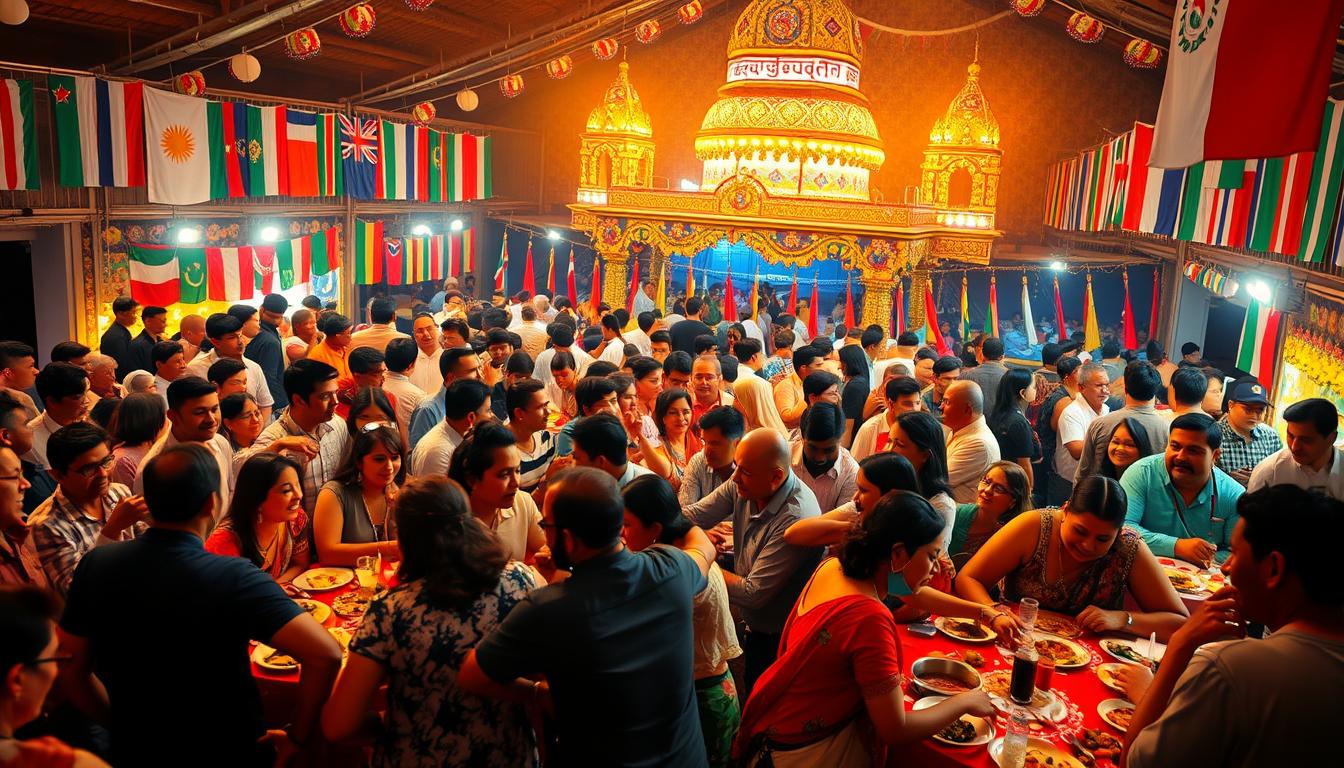
Celebrations bring people together, creating a sense of community. They promote diversity. A grand meal or celebration is often at the heart of these events, showing the richness of various traditions.
These events show the power of food and music in bringing people together. By embracing our differences, we build a more harmonious world. The importance of these celebrations lies in their ability to promote cultural understanding and exchange.
The Power of Shared Cultural Experiences
Cultural feasts are like a universal language, bringing people together from all walks of life. Events like the Festival of Nations in St. Louis, Missouri, show how cultural celebrations unite over 100,000 people. They display a wide range of cultures through food, music, and art.
These events play a big role in creating shared cultural experiences. They encourage cultural exchange and community building. By joining in, people learn more about different cultures, improving cultural understanding.
A Festival of Nations attendee once said, “The festival celebrates our shared humanity. It shows us that, despite our differences, we’re all connected through our cultures.” A cultural anthropologist also noted, “Cultural feasts are key for building communities. They let people come together and celebrate their diversity.”
“Culture is a way of life, and when we share it, we share a part of ourselves.”
In short, shared cultural experiences can unite us, making our society more harmonious and inclusive. By celebrating our cultural diversity, we can create stronger, more united communities.
Understanding the Cultural Feast Phenomenon
The cultural feast phenomenon is a celebration of traditions from around the world. Cultural feasts are not just about food; they show a community’s history, values, and identity.
Cultural celebrations like the Chinese Lunar New Year are filled with traditional cuisine, music, and rituals. Traditional foods have deep meanings and cultural importance. Music and dance make the celebrations lively.
Cultural feasts help keep traditions alive. By joining in, people learn about a community’s values. Cultural feasts foster a sense of community and belonging.
In short, cultural feasts celebrate our differences, promoting understanding and appreciation. They are key in shaping our shared culture.
Cultural Feast Celebrations Around the World
Around the world, cultural celebrations show the diversity of human experience. Cultural feasts are celebrated in many ways. They highlight the unique traditions and values of different societies.
In India, Diwali is a big cultural feast. It’s celebrated with lights, traditional sweets, and family gatherings. Diwali symbolizes the triumph of light over darkness. Its celebration is a vibrant expression of Indian culture. In Mexico, the Day of the Dead is observed with altars and offerings to honor the deceased. It reflects the country’s rich cultural heritage.
These traditional festivals are not just a source of cultural identity. They also promote cultural diversity. They bring people together, fostering a sense of community and social cohesion. By embracing and celebrating our differences, we can create a more inclusive and harmonious global community.
The celebration of cultural feasts around the world shows the complexity and richness of human culture. As we explore and appreciate these diverse celebrations, we can gain a deeper understanding of the values and traditions that shape our world.
America’s Diverse Cultural Feast Landscape
From coast to coast, America’s cultural feasts show off its diversity and richness. The country’s mix of cultures is seen in many celebrations throughout the year.
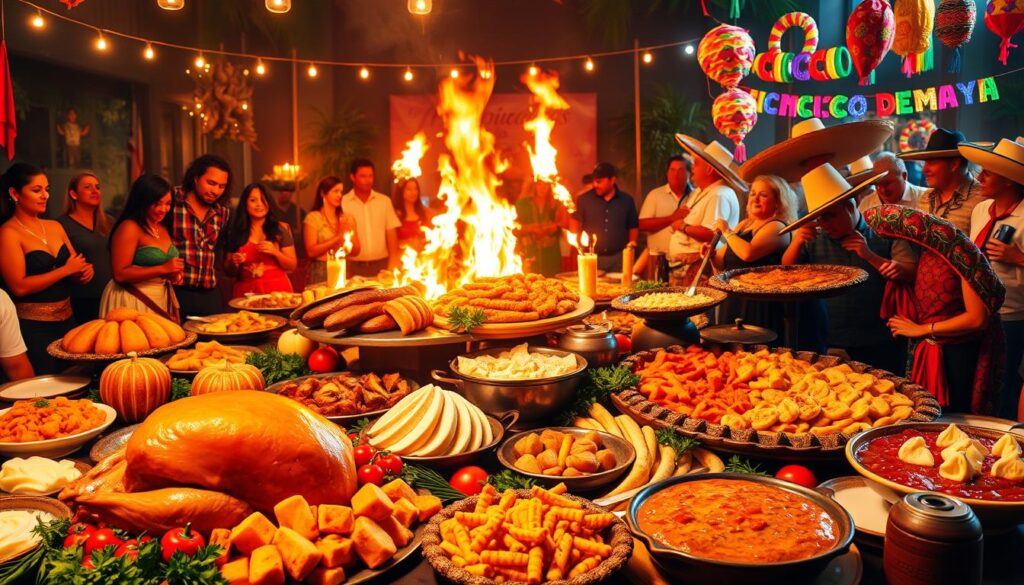
The East Coast is filled with traditional ethnic festivals. Cities like New York and Boston host big cultural events. For example, the St. Patrick’s Day Parade and the Feast of San Gennaro celebrate Irish and Italian cultures. These events show the lasting cultural traditions of generations.
Also, the East Coast has festivals for Chinese, Greek, and Polish cultures, among others. These events unite communities and give a peek into their rich cultural heritage.
West Coast Fusion Events
The West Coast is famous for its fusion events. Here, different cultures mix their traditions to create something new. Cities like Los Angeles and San Francisco host events that blend various cultures, giving a multicultural experience.
For example, the San Francisco Chinese New Year Parade includes elements from other cultures. It’s a celebration of diversity. The LA Multicultural Festival also brings together performers, artists, and food from around the world. It creates a vibrant cultural mosaic.
America’s cultural feast landscape is always changing. It shows the country’s multicultural society. Whether it’s traditional festivals on the East Coast or fusion events on the West Coast, there’s a rich mix of cultural celebrations.
The Culinary Journey of a Cultural Feast
Cultural feasts are a feast for the senses. They showcase the heritage and traditions of a community. At the heart is the cultural cuisine, filled with history and symbolism.
Symbolic Foods and Their Meanings
The dishes at cultural feasts are more than just food. They are symbolic foods with deep meanings and wishes for the future. For example, dumplings in Chinese Lunar New Year symbolize wealth and good fortune.
In many Western cultures, special desserts during holidays are believed to bring luck. This shows how food can unite people and share identity.
Food anthropologist notes, “Food is a symbol of hospitality, generosity, and community bonding.” This underlines the importance of symbolic foods in building community.
Preparation Techniques and Rituals
The making of these symbolic dishes uses traditional preparation techniques passed down through generations. These techniques are not just about cooking. They are cultural rituals that link the present to the past.
For example, making traditional bread during Easter in many Mediterranean countries involves specific rituals. These rituals are believed to purify and bring blessings.
In conclusion, the culinary journey of a cultural feast is a rich exploration of cultural cuisine and traditions. Understanding the importance of symbolic foods and preparation techniques deepens our appreciation of these celebrations.
Music and Dance: The Heartbeat of Cultural Celebrations
Music and dance are the lifeblood of cultural celebrations. They add energy and vibrancy. From the samba parades of the Brazilian Carnival to Native American traditional dances, these performances show the rich cultural heritage and creativity of people.
The role of cultural music and traditional dance in bringing communities together is huge. They create a joyful atmosphere of community spirit. This brings unity and a shared identity to all who watch and participate.
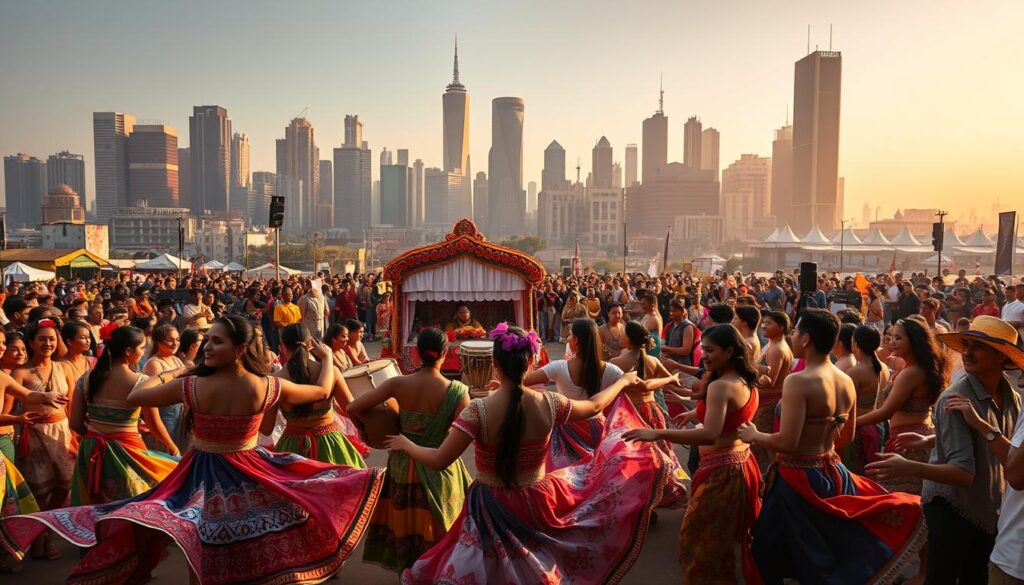
Cultural celebrations are known for their unique music and dance. For example, the Brazilian Carnival’s parades and dances are a global attraction. They showcase Brazil’s cultural diversity.
In many cultures, music and dance are more than entertainment. They are deeply connected to the community’s history and traditions. They help tell stories, pass down legends, and share cultural values from one generation to the next.
By celebrating their cultural music and traditional dance, communities can keep their heritage alive. This also promotes cultural exchange and understanding. This mix of tradition and celebration makes cultural feasts unique and meaningful.
Traditional Attire and Decorative Elements
Traditional attire and decorations are more than just pretty. They carry deep cultural heritage during feasts. The clothes and decorations show a community’s history, values, and identity. This makes them key to the celebration.
Reflecting Cultural Identity through clothes and decorations is common. For example, during India’s Navratri festival, people wear chaniya cholis. Decorations are bright colors and lights, making a festive atmosphere.
Cultural fans say, “The way a community dresses and decorates shows their cultural identity and heritage.” This shows how important cultural decorations and clothes are in celebrations.
By using traditional attire and decorations, communities keep their heritage alive. They also share it with the world. This makes their cultural feasts even more special and engaging.
How to Experience a Cultural Feast in Your Community
Exploring cultural feasts in your area can be incredibly enriching. Many places host events open to everyone. These events let you dive into various cultures.
To dive into cultural feasts, look for local events celebrating different cultures. These might be festivals, fairs, or traditional gatherings. As Julia Roberts once said,
“The more you know, the more you realize you don’t know.”
This quote highlights the value of being open to new experiences and learning about different cultures.
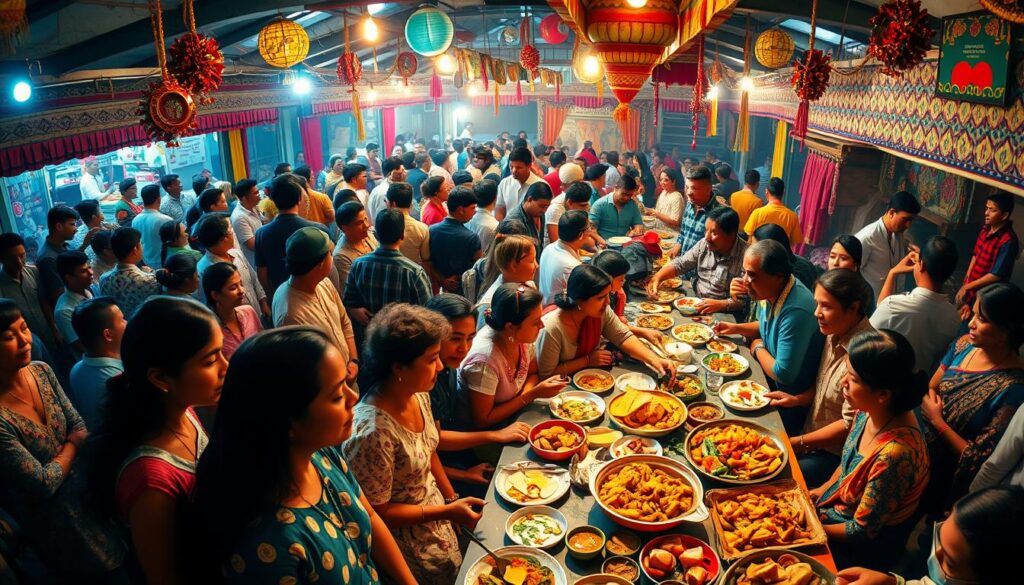
Going to these events lets you taste new foods and enjoy unique music. It’s also a chance to learn about and appreciate local traditions and cultural practices. You can talk to people from different backgrounds, ask them questions, and understand their customs better.
When you go to these events, come with an open mind and a willingness to try new things. As you explore different cultural feasts, you’ll see each community celebrates in its own special way. This shows the rich diversity of cultures in our society.
“Cultural immersion is about being receptive to new experiences and embracing the diversity that surrounds us.” By embracing cultural feasts in your community, you help build understanding and appreciation among everyone.
Planning Your Own Cultural Feast Event
A cultural feast is a great way to celebrate diversity and promote cultural exchange. It brings people from different backgrounds together. This creates a vibrant and inclusive event for everyone.
To start planning your cultural feast, pick a theme or cultural tradition to celebrate. It could be a holiday, cultural heritage, or traditional practice from around the world. For instance, you might host a Diwali celebration with Indian food, decorations, and music.
After choosing a theme, organize the event’s elements. This includes traditional food, music, and decorations that match the culture. Involve local cultural groups or community members in planning to ensure it’s authentic.
As cultural event organizers say, “Community participation is key to the success of any cultural feast.” Encourage attendees to share their cultural practices, food, or music. This helps everyone feel included and promotes cultural exchange.
Engaging the Community
To ensure community engagement, work with local organizations, schools, or places of worship. Promote your event and invite community members to help plan and execute the feast.
By following these steps and focusing on planning cultural events that are inclusive and engaging, you can create a memorable experience. Remember, the true spirit of a cultural feast is in bringing people together to celebrate our shared humanity.
“The cultural feast is a celebration of our diversity and a testament to the power of community.”
The Social and Economic Impact of Cultural Feasts
Feasts are key in showing off cultural heritage and shaping communities. Cultural feasts unite people, creating a sense of belonging and togetherness.
The social impact of these gatherings is wide-ranging. They let people share their traditions and values, boosting cross-cultural understanding. They also get community members involved, making everyone feel part of the event.
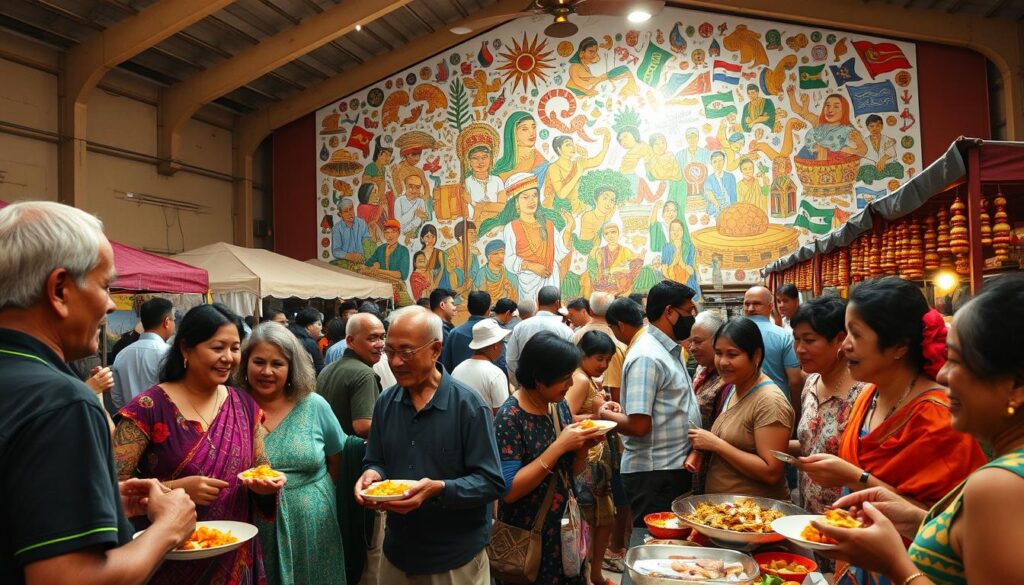
From a financial standpoint, cultural feasts help local businesses a lot. They give local vendors a chance to show off their goods, supporting the local economy. These events also draw tourists, helping the area’s economy grow.
The economic gains from cultural feasts go beyond the event itself. They can lead to more tourism and cultural exchange all year, helping community development. By highlighting local food, crafts, and traditions, these feasts create a unique cultural identity. This can attract visitors and businesses, boosting the area’s appeal.
In summary, cultural feasts have a big impact on society and the economy. They bring people together and support local businesses, playing a key role in community development. They celebrate cultural heritage and help the economy grow.
Embracing Our Shared Humanity Through Cultural Feast Traditions
Cultural feasts show our shared humanity by celebrating what brings us together. They promote cultural exchange and global unity. They also let us experience the rich heritage of different communities.
By joining cultural feasts, we learn about the traditions of various cultures. This exchange makes our lives richer and helps create a more harmonious world. It shows that cultural differences are something to be celebrated and valued.
Food, music, and traditions are the universal language of cultural feasts. They help us feel connected across cultures. As we take part in these celebrations, we build stronger bonds. This makes our global community more unified and inclusive.