
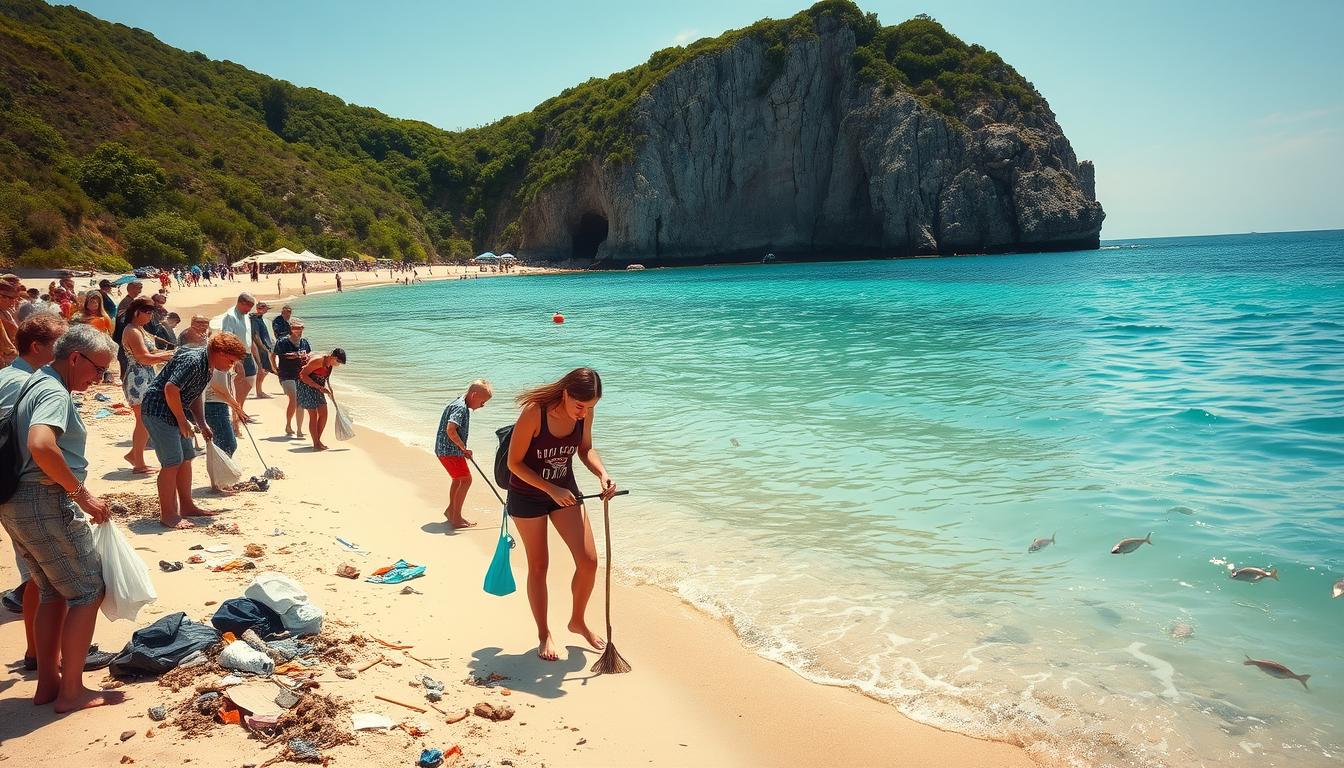
Every year, tons of trash flow into our oceans, harming marine life and ecosystems. This is a big problem that needs our attention now. By joining beach cleanup efforts, we can help keep our oceans and waterways healthy.
Participating in a beach cleanup is a simple way to help. It’s a chance to support ocean conservation and protect our environment for the future. By working together, we can keep our waterways clean and healthy.
Let’s join forces to pick up trash by the water. This way, we can promote a culture of caring for our environment.
The Importance of Clean Beaches
Clean beaches are more than just pretty views; they’re vital for our ecosystem. Trash and pollution harm marine life and human health. With 75 to 199 million tons of plastic in our oceans, clean beaches are more urgent than ever.
Keeping clean beaches is key for coastal conservation. Clean beaches help marine ecosystems thrive. This makes coastlines safe and fun for all. Pollution harms marine life, contaminates food chains, and affects human health.
Our goal to protect our beaches for future generations is essential. Our actions today shape the health of oceans and wildlife. By keeping beaches clean, we help coastal conservation and preserve our coastlines’ beauty.
In summary, clean beaches are critical for our marine ecosystems and planet’s health. Let’s join forces to maintain clean beaches and safeguard our environment.
The Impact of Pollution on Beaches
Pollution on beaches is more than just a cosmetic problem. It has environmental and economic implications. The oceans are filled with plastic waste, harming sea creatures and people’s jobs.
The problem of ocean plastic pollution is alarming. Plastic items like bags, bottles, and microbeads can kill animals. A report says, “marine plastic pollution may be costing the world economy trillions of dollars every year.”
“The health of our oceans is intricately linked to the health of our planet. We must take immediate action to mitigate the effects of pollution on our beaches and marine ecosystems.”
The damage from marine debris goes beyond harming sea life. It affects the food chain and hurts industries like fishing and tourism. Knowing how pollution harms marine life is key to fixing the problem.
By tackling beach pollution, we can lessen the environmental impact of human actions. It needs a team effort from governments, communities, and people to use eco-friendly practices. This way, we can protect our beaches for the next generations.
Effective Trash Collection Strategies
Community-led beach cleanups are key to keeping our coastlines healthy. By organizing or joining local cleanups, people can really make a difference. These efforts not only keep beaches and waterways clean but also teach about waste disposal and pollution.
Effective trash collection strategies rely on community engagement. When people come together to clean beaches, they do more than just pick up trash. They also build a sense of responsibility for their environment. This teamwork can lead to big changes in how we handle waste.
Leading or joining a beach cleanup stops waste from becoming ocean pollution. It’s a simple yet powerful way to protect marine life and keep our beaches beautiful. These events also offer chances to educate and reach out to the community, highlighting the need for trash collection and waste management.
Being part of community engagement activities like beach cleanups helps the environment. It’s a step towards a culture that values and practices sustainability. This leads to cleaner, healthier beaches for all of us.
Tips for Reducing Personal Waste
One of the simplest ways to help the environment is by cutting down on personal waste. Single-use items are everywhere in our lives. But, making a few easy changes can really help reduce waste.
Living sustainably is key to less waste. Start by using reusable bags, water bottles, and coffee cups. For example, switching to cloth bags instead of plastic can greatly reduce plastic waste.
“The earth has enough for everyone’s need, but not enough for everyone’s greed.” – Mahatma Gandhi
By choosing wisely every day, we can reduce waste a lot. Avoiding products with too much packaging, buying in bulk, and picking items that can be recycled helps a lot.
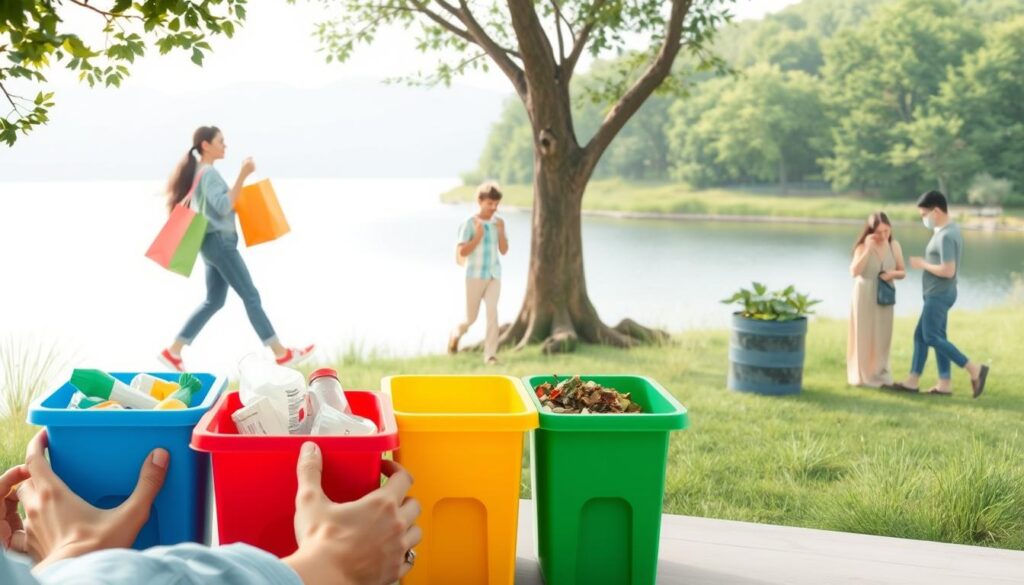
Also, living with less can help reduce waste. This means being careful about what we buy and avoiding buying on impulse. Doing this not only cuts down on waste but also helps our planet for the future.
In short, cutting down on personal waste is a big step towards a greener future. By following these simple tips and being more aware of our choices, we can all make a big difference for the environment.
How Local Communities Can Help
Helping local communities is key in fighting marine debris. Communities across the country face different pollution challenges. This makes local initiatives essential for saving our environment.
One big way communities can help is by hosting community events like beach cleanups. These events not only clean up our spaces but also bring people together. They teach us all to care for our environment.
Through community engagement, we can all make a big difference. There are many ways to help, from school programs to big clean-up events. These activities help us understand the problem and feel ready to act.
Local initiatives let communities focus on their unique needs. Whether it’s cleaning up a beach or starting a recycling program, every action counts. It’s all about making a positive change for our planet.
Supporting and joining local efforts helps us all fight for environmental conservation. Together, we can make a huge difference. We can protect our oceans and coastlines from pollution.
Volunteer Opportunities Near You
Looking to help your local environment? Consider joining a beach cleanup. Many groups organize these events, giving you a chance to help your ecosystem.
Volunteering for beach cleanups helps remove trash that harms marine life. This makes our beaches look better and supports conservation. Whether you’re with a group, school, or just want to help, there’s a cleanup near you.
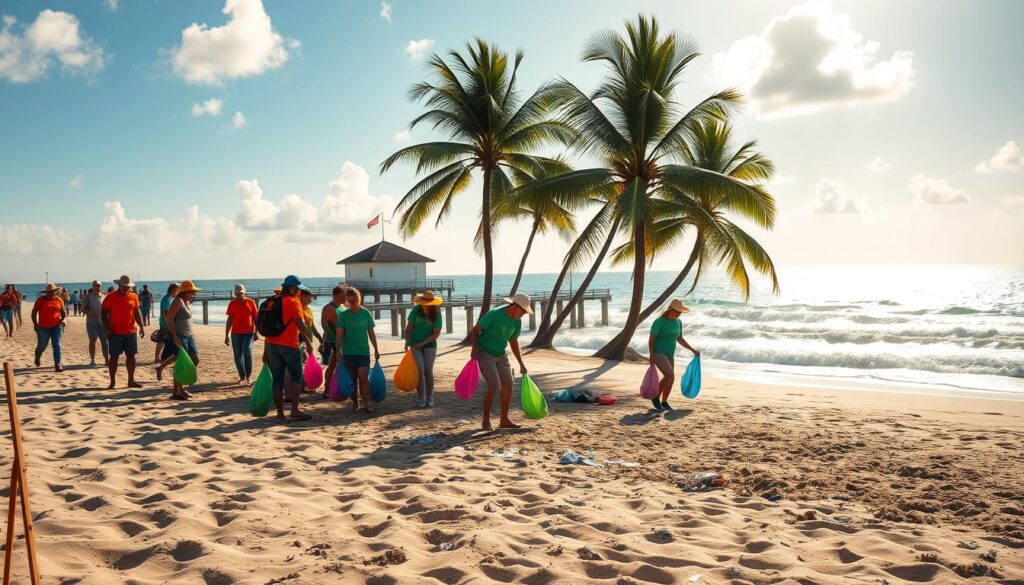
Volunteering lets you meet others who care while helping your community. You can pick events that work for you. There are many activities to choose from, from local cleanups to big conservation projects.
To find volunteer spots, check with local groups, community centers, or online event lists. Just a few hours of your time can make a big difference in beach cleanups or other projects.
Fun Activities After Clean-Up
After collecting the trash, it’s time to celebrate together. The community can enjoy community events that show unity and care for the environment.
Hosting a picnic or BBQ is a great way to celebrate. It lets people relax and get to know each other in the clean environment. It’s a chance to enjoy their hard work and build stronger bonds.
Environmental activities can keep going after the clean-up. Communities can have educational workshops, nature walks, or conservation projects. These activities teach people about the environment and encourage them to keep helping.
A celebration can be simple or big, like a community fair. The goal is to make it fun for everyone. This way, communities can show the good they’ve done and inspire more environmental work.
Government and Policy Support
Government support and policy initiatives are key in fighting ocean plastic pollution. Good policies can greatly cut down plastic waste in our oceans.
Advocacy for environmental policy is vital for a cleaner, healthier world. By backing sustainable efforts, we can push for big changes. This means supporting policies that help clean up, promote recycling, and limit single-use plastics.

The role of government support is huge. Governments can make big changes with the right policies. For example, banning single-use plastics has shown to cut down waste.
Key Policy Initiatives
Some important policy steps include:
- Funding for cleanup and research on plastic pollution
- Rules on single-use plastics
- Boosting recycling programs and infrastructure
- Education on plastic pollution’s effects
By pushing for these policies and supporting government efforts, we can protect our oceans and environment. It’s a team effort that needs everyone’s help.
Together, we can make a difference by pushing for sustainability and less pollution. Government and policy support are key, giving us the tools to tackle ocean plastic pollution.
Real-Life Success Stories
Community-driven conservation shows its power in real-life stories. These tales show how people and groups can change the environment when they work together. They aim for the same goal.
The Ocean Cleanup project is a great example. They’ve removed 220,000 pounds of plastic from the Great Pacific Garbage Patch. This shows big efforts can lead to big changes.
Local cleanups also have a big impact on environmental conservation. They make places look better and teach people why we need to protect nature.
“The greatest threat to our planet is the belief that someone else will save it.” This quote shows why we need community help. Together, we can do amazing things.
Success stories in environmental conservation show the strength of community efforts. As we face environmental challenges, it’s inspiring to see the positive changes we can make. This happens when people and groups work together.
These stories remind us that our actions can lastingly impact the environment. By supporting local conservation and spreading awareness, we can keep making a difference. This helps protect our planet for the future.
How Technology is Innovating Clean-Up Efforts
The arrival of environmental technology has changed how we clean up. Pollution, like in our beaches, is a big problem. New ways to solve it are being found.
Tools like interceptors and bubble barriers catch plastic waste in rivers. This stops it from getting into the ocean. These tools help keep our environment clean and promote sustainable solutions.

New tools like drones and special materials are being used too. Drones with sensors and cameras check pollution levels. They find areas that need help fast. Special materials grab tiny plastics, making clean-up better.
Using these environmental technologies, we can all help more. It’s a step towards a greener future. Technology and community work together to protect our planet.
The future of cleaning up looks bright with these technologies. We need to keep supporting and improving them. This will help us find sustainable solutions for pollution.
Joining the Movement for Clean Beaches
We can make a big difference by working together to reduce marine debris and protect our oceans. Community engagement is key. It helps us feel responsible and work together.
Joining local cleanups and using sustainable practices are important steps. Every person can help keep our beaches clean. Together, we can keep our waterways beautiful for the future.
This movement is more than just picking up trash. It’s about building a culture that cares about the environment. By pushing for policy changes and supporting eco-friendly groups, we can make a real difference.
Join us today to be part of a community that wants to keep our beaches beautiful. Together, we can create a cleaner, healthier world for all.