
Imagine turning a blank wall into a colorful masterpiece with your neighbors. Collaborative painting projects unite people, creating a sense of community and sparking creativity.
Using techniques like sponge painting and ombre, everyone can add their own touch. This way, a beautiful wall art piece is born. It not only makes the area look better but also brings people closer together.
Working on a shared canvas is a joy. It lets people create something beautiful as a team. This article will dive into the perks of Community Art and share tips on successful painting projects.
What is Community Art?
Community Art brings people together to make public art that shows their shared identity and creativity. This teamwork not only builds a sense of community but also makes public spaces more beautiful.
Community Art involves many people, like local residents, artists, and community groups. They work together to create public art. This way, the art truly reflects the community’s character and values.

The role of public art in building communities is huge. It makes neighborhoods look better, celebrates cultural identity, and gets people involved. By joining collaborative projects, people feel more connected and proud of their community.
Also, Community Art can spark positive change. It gives people a chance to share their thoughts and dreams. Through creativity, people can form stronger bonds, making their community more united and lively.
In short, Community Art is a key tool for community growth. It brings people together through public art and collaborative projects, promoting unity, creativity, and social interaction.
The Process of Creating Community Art
Creating community art is a collaborative process that needs careful planning and prep. It brings people from different backgrounds together to work on a shared goal.
The first step is to think of the art project. It’s important to understand what the community wants and needs. This can be done by talking to people through surveys, meetings, or social media.
Gathering Materials and Supplies
After deciding on the project, the next step is to gather materials and supplies. This part is key because it affects the artwork’s quality and how long it lasts. You might need paints, brushes, or even recycled stuff, depending on the project.
The community can help collect materials. This not only saves money but also makes people feel more involved. For example, a mural project might use paints donated by local businesses and materials from recycling centers.
Good planning keeps the project on track and makes sure you have everything you need. It also means working with local businesses, schools, and groups to get support and resources.
By focusing on the collaborative process and getting the community involved, community art can show unity and creativity.
How to Organize a Community Art Project
To successfully execute a community art project, it’s essential to build a diverse team and establish clear communication channels. Organizing such a project involves several key steps that ensure its success and the engagement of the community.
The first step in organizing a community art project is to define its purpose and scope. This involves identifying the theme, the target audience, and the desired outcome. Clear objectives help in guiding the project’s direction and in making decisions throughout its execution.
Building a team is key for the project’s success. This team should include individuals with various skills, such as artists, project managers, and community outreach coordinators. Effective teamwork relies on good communication, so establishing regular meetings and using collaboration tools is vital.
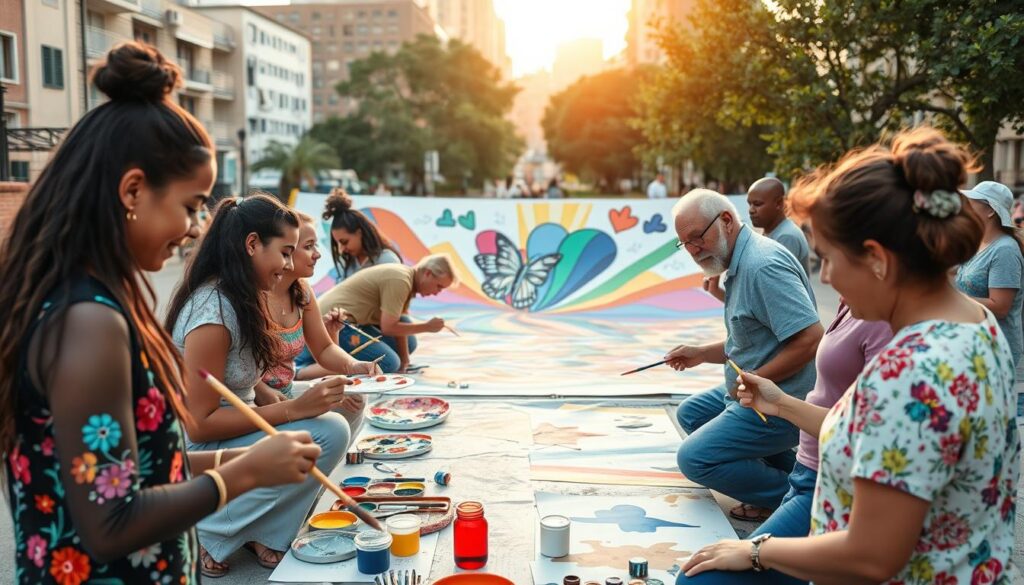
Coordinating efforts is another critical aspect of project organization. This includes scheduling tasks, managing resources, and ensuring that all team members are working towards the same goal. Utilizing project management tools can help streamline these processes and keep the project on track.
Leadership plays a significant role in the success of a community art project. A strong leader can motivate the team, resolve conflicts, and make strategic decisions. Empowering community members to take on leadership roles can also enhance the project’s impact and sustainability.
In conclusion, organizing a community art project requires careful planning, effective team building, and strong leadership. By following these steps and maintaining open communication, community art projects can achieve their goals and bring significant benefits to the community.
Examples of Successful Community Art Projects
Across America, community art projects are bringing people together. They are also making urban landscapes more beautiful. For example, a neglected alleyway in a major city was turned into a vibrant mural. This mural shows the community’s history and culture.
Case Study: Community Mural Project
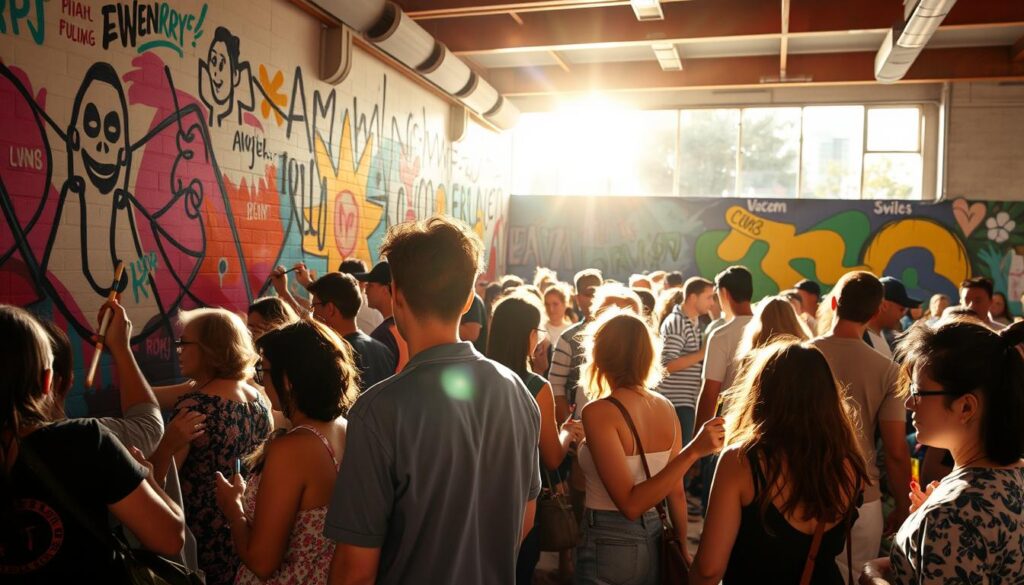
A community mural project in a local neighborhood involved people of all ages. They worked together on the design and painting. The result was a stunning mural that beautified the area and symbolized community unity.
Techniques like sponge painting and ombre wall painting were used. These added depth and texture to the mural.
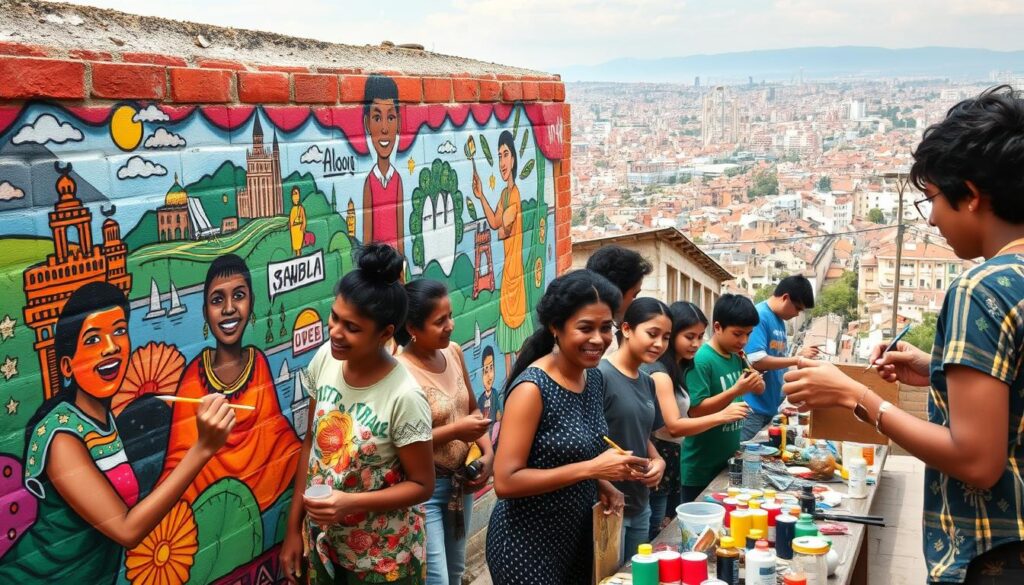
The mural project had a big impact on the community. It made residents proud and became a landmark that drew visitors. It also gave community members a chance to interact and build relationships.
These successful projects show the power of public art. It can transform spaces and bring people together. By participating in such initiatives, communities can create lasting legacies that show their unique character and spirit.
The Role of Murals in Community Art
Murals in community art do more than just decorate walls. They are a way for people to express themselves and bring the community together. These vibrant artworks turn dull walls into living canvases that show off a community’s spirit and values.
Murals are a key part of community art. They let artists and locals share deep messages and feelings. They can tell stories, honor important events, or just make a place look better. This way, murals help people feel connected and part of something bigger.
Community engagement is key when making murals. People from the area, artists, and groups work together. This teamwork makes sure the mural truly represents the community. It also builds unity and a sense of shared pride.
Murals are also a way for communities to speak out. They can share hopes, dreams, and concerns. Murals can tackle big issues like fairness, protecting the environment, and fighting for justice.
To wrap it up, murals are essential in community art. They are a lively and welcoming way for people to share their stories. By bringing folks together and adding to the community’s culture, murals make our society more vibrant and involved.
Engaging Different Age Groups in Community Art
Intergenerational community art projects are special. They let people of all ages work together and learn from each other. This brings the community closer and helps everyone understand each other better.
These projects are great for sharing ideas and experiences. Children can learn from the life experiences of seniors, and seniors can be inspired by the creativity of the young. This mix leads to artworks that show the community’s diversity.
To include all ages, community art projects need to be welcoming and easy to join. For example, sponge painting is fun for everyone. Projects can also be made for specific age groups, like workshops for kids or painting classes for seniors.
Community art also has social benefits. It can fight loneliness in seniors and help kids develop social skills. Working together on art projects makes everyone feel connected to their community.
To really make a difference, we need to spread the word about these projects. We should work with schools, community centers, and senior groups. This way, community art can help build stronger, more united communities.
Overcoming Challenges in Community Art
Successful community art projects face many challenges. Community art brings together diverse groups, leading to creative conflicts. These conflicts arise from different opinions and visions.
Effective communication is key to solving these issues. Project leaders must encourage open discussions. This ensures everyone’s voice is heard.
Finding funding and resources is another hurdle. Grant writing and crowdfunding can help. Also, partnering with local businesses or organizations can provide the needed support.
Setting clear guidelines and expectations from the start helps. This includes defining the project’s goals, roles, and responsibilities. This way, everyone works together more effectively.
Conflict resolution strategies are vital. Techniques like mediation and negotiation can solve disputes. By tackling challenges head-on, community art projects can grow stronger and unite the community.
The Future of Community Art
The future of Community Art looks bright, with new trends and tech opening doors for creativity. Community Art will keep bringing people together and encouraging community involvement.
Digital technologies are changing Community Art. Virtual and augmented reality are making art more immersive and accessible. This opens up new ways for people to get involved and enjoy art.
Community Art is also a powerful tool for tackling social issues and driving positive change. Artists use art to comment on social issues and inspire action. This role is set to grow as communities look for ways to solve problems and unite.
Community Art must evolve to meet changing community needs and tastes. By adopting new trends and tech, it can stay fresh and vibrant. This might mean using digital art and interactive displays in community projects.
In summary, Community Art’s future is full of promise and possibilities. By embracing new trends and tech, it will keep being a key part of building strong, connected communities.
How to Get Involved in Community Art
Getting into Community Art is simple. Look for local projects like mural painting or community exhibitions. The National Endowment for the Arts offers resources on these projects.
To find local projects, check online event calendars and social media. You can also look at community boards at art supply stores, coffee shops, and libraries. Don’t forget to contact local art organizations or community centers for more information.
Being part of Community Art lets you show your creativity. It also helps you connect with others in your area. Joining a local project means you’re part of a team that uses art to bring people together.