
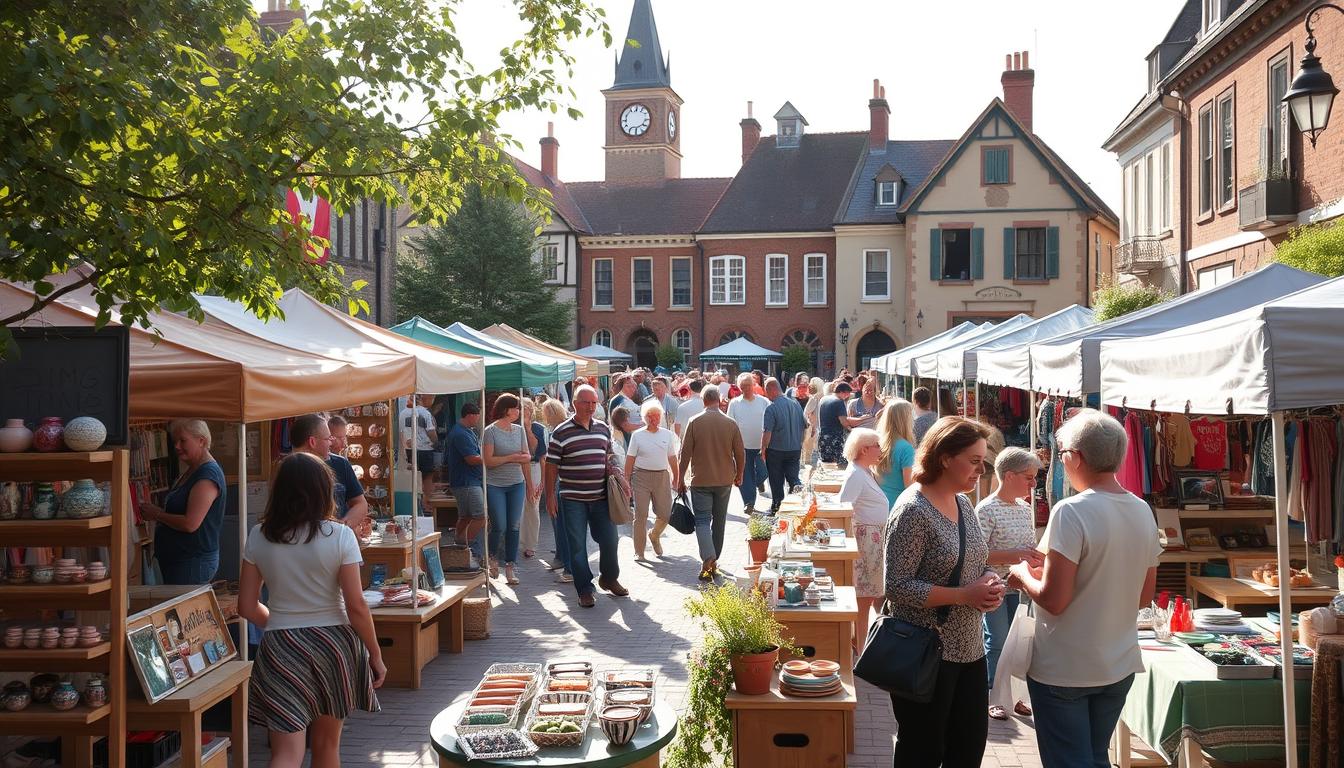
Hosting a mini craft fair is a great way to unite your community. It highlights local artisans and their handmade crafts. These events support small businesses and encourage community spirit.
A community event like a mini craft fair is both enjoyable and fulfilling. It’s a chance to display unique, handmade items. It also helps keep traditional crafting alive.
Organizing a mini cultural event brings the community together. It celebrates local culture and craftsmanship. In this article, we’ll guide you through making your mini craft fair a success.
The Magic of Handmade Creations
Handmade creations add magic to cultural craft fairs. They show off the skill and art of local artisans. These unique crafts are more than just items; they represent a community’s cultural heritage and identity.
The charm of handmade crafts is their uniqueness and the story behind each piece. Every detail, from the stitch to the mold, shows the artisan’s dedication and passion.
Cultural craft fairs celebrating handmade creations are a community event. They bring people together. Local artisans can share their work, meet buyers, and help the local economy.
By supporting local artisans and their handmade crafts, visitors help preserve and promote cultural heritage.
Planning Your Mini Cultural Craft Fair
Organizing a mini cultural craft fair needs careful planning and clear goals. You must decide on the number of vendors, how many people to expect, and the vibe you want. A well-planned event promises a memorable time for everyone.
Setting Clear Objectives
It’s key to set clear goals for your event. You might aim to support local artists, raise funds, or bring the community together. Having clear goals helps guide your planning.
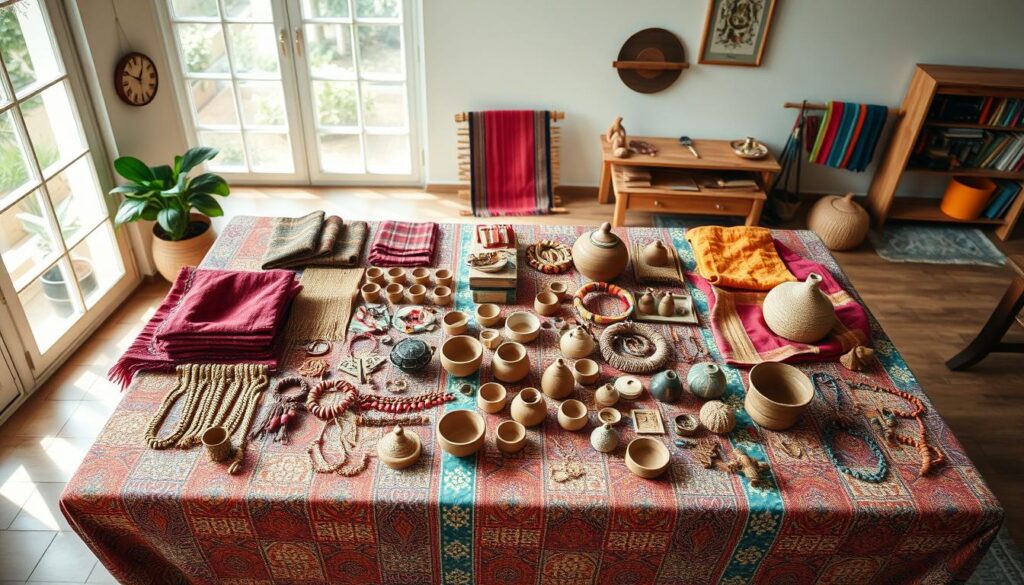
When planning your mini cultural craft fair, think about vendors and attendees. Choose a good venue, arrange for amenities, and handle logistics like parking. Experts say a great event meets its attendees’ high expectations.
“The devil is in the details,” a phrase often used in event management, highlights the need for careful planning in creating a successful community event.
By focusing on these details, you can host a successful community event. It will benefit local artisans and attendees. Good event management ensures your fair is fun and memorable.
Budgeting for Your Craft Fair
Effective budgeting is key for a successful craft fair. It helps you understand your costs and income. This way, you can stay within your budget. Financial planning helps avoid last-minute money worries.
First, make a list of all possible expenses. This includes venue rental, marketing, and supplies. Then, estimate how much each will cost. Don’t forget to save some money for unexpected costs, as unforeseen costs can arise.
“A budget is telling your money where to go instead of wondering where it went.” – Dave Ramsey
To manage costs, look for ways to spend less without lowering your event’s quality. You might talk down prices with vendors or use cheaper marketing. With smart budgeting, your craft fair can be a hit and financially sound.
Finding and Securing the Perfect Venue
Finding the right venue is key to making your craft fair welcoming and engaging. The venue you pick can greatly affect your event’s success.
Think about accessibility and location when choosing a venue. Make sure it’s easy to get to by car, public transport, or on foot. Having plenty of parking and being close to local spots can make things better.
The event space needs to be big enough for your vendors and guests. Check if it can be set up the way you need. Good lighting, air, and facilities like restrooms and food are important too.
The venue’s vibe should match your craft fair’s theme and mood. It could be a sleek gallery or an old building. The venue’s character can really add to your event’s feel.
By looking at venues carefully, you can find one that boosts your craft fair’s success. It will also give your guests a memorable time.
Recruiting Diverse Artisans and Vendors
To make your mini craft fair lively and engaging, it’s important to have a variety of vendors. A mix of vendors makes your event more appealing and enriches the experience for everyone who comes.
Outreach Programs: Starting outreach programs is a key step to attract different artisans and vendors. You can work with local art groups, community organizations, and social media to reach more people. This way, you can find vendors who might not have known about your event.
Incentives for Vendors: Giving vendors reasons to join your craft fair can really help. You could offer lower booth fees for newcomers, free marketing help, or even help setting up their stalls.
It’s also important to connect with the local community. By taking part in local events and promoting your craft fair through community channels, you can build excitement among vendors and attendees.
Diversity and Inclusion: Make sure your vendor recruitment is open and welcoming to all. Be clear about your event’s values and the benefits of joining. Also, offer support when needed.
Designing Your Cultural Craft Fair Layout
The layout of your cultural craft fair is key to a great visitor experience. A well-thought-out layout helps visitors move around easily. They can find new artisans and enjoy the atmosphere.
To plan a good layout, think about how visitors will move. Put popular spots and attractions in easy-to-find places. Use clear signs to help visitors find their way and discover new things.
Vendor placement is very important. Group similar vendors together for a better shopping experience. For example, have a jewelry area or a food section.
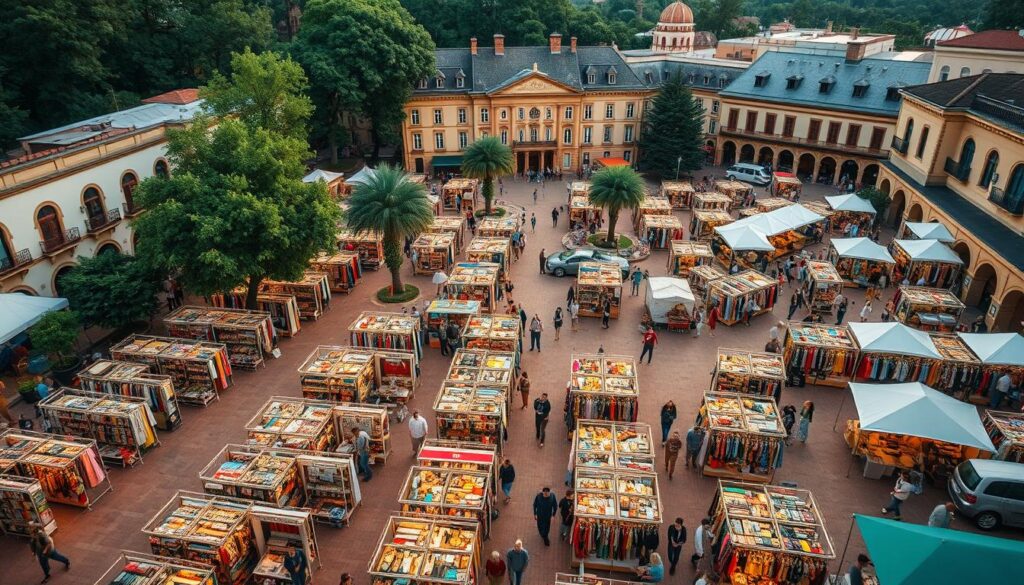
A good layout design also makes the event look nice. Use decorations and lights to make it welcoming. Make sure the layout is easy to get around and comfortable for everyone.
By planning your event layout well, you can make your cultural craft fair unforgettable. It will be a success for everyone involved.
Marketing Your Mini Craft Fair
A good marketing plan is key to a successful mini craft fair. You need a mix of online and offline tactics to draw a big crowd. This will help make your event a hit.
Using social media is a smart way to promote your event. Create a page on Facebook, Instagram, and Twitter for your mini craft fair. Share top-notch photos of the crafts and artisans. Also, talk back to your followers and use hashtags to get more eyes on your posts.
Don’t forget about local advertising. Put up flyers in coffee shops, libraries, and other spots. Team up with local businesses to spread the word. Online ads can also help you reach people interested in crafts and local events.
Community engagement is vital too. Talk to local schools, groups, and charities to get them involved. You could offer workshops or let them sell their items. It’s a great way to give back and draw more people.
By mixing these promotional strategies, you’ll create excitement for your mini craft fair. Make sure to check how well your marketing works. Then, tweak your plan to get the best results.
Enhancing the Visitor Experience
To make your craft fair stand out, focus on creating an unforgettable visitor experience. This means making the atmosphere engaging. It should encourage visitors to explore and interact with the stalls and activities.
Offering a variety of entertainment is key. This could be live music, demonstrations, or workshops. Interactive activities make the event more fun and immersive for everyone.

Food options are also important for a welcoming event atmosphere. Serving local cuisine or refreshments adds to the ambiance. It makes visitors feel at home. Plus, promoting community engagement through the craft fair builds unity among local artisans and vendors.
By focusing on these aspects, you can make a craft fair that showcases local talent. It also provides a memorable experience for visitors. This fosters a stronger sense of community.
Managing Day-of Operations
Effective day-of operations management is key to a successful craft fair. It requires careful planning and execution to keep things running smoothly.
Vendor Setup is a critical part of day-of operations. Make sure vendors arrive early and have everything they need. Clear instructions and a dedicated team to help vendors can make setup more efficient.
Crowd Management is also very important. Plan for crowd sizes and have a strategy for managing them. This might include clear signs, designated paths, and enough staff.
“The key to a successful event is not just in the planning, but in the execution. Being prepared for the unexpected is critical.”
Contingency Planning is vital for unexpected issues like weather changes or last-minute cancellations. Having backup plans can save the day and keep the event going smoothly.
By focusing on these day-of operations aspects, your craft fair can be well-managed and fun for everyone. Good event management and logistics are essential for success.
The Impact of a Cultural Craft Fair on Local Communities
Hosting a cultural craft fair can deeply impact local communities. It promotes community engagement and supports local artisans. These events celebrate the richness of local culture and craftsmanship.

The economic benefits are clear. Local artisans get more visibility and sales, helping the local economy. The fair also draws tourists, boosting local businesses.
A cultural craft fair also boosts community engagement. It gives local artisans a chance to show their talents. This preserves cultural heritage and boosts community pride.
In summary, a cultural craft fair has many benefits. It supports local artisans, boosts community engagement, and helps the local economy. Hosting such events makes communities more vibrant and culturally rich.
Post-Event Evaluation and Follow-Up
Checking how well your cultural craft fair did is key for future events. A detailed post-event evaluation shows what needs work and how the event affected people.
To see how your craft fair did, ask for feedback from those who came, the vendors, and your team. Use surveys, comment cards, or online reviews to get this feedback. Look at the data to find out what was good and what could be better. This helps you plan better for next time.
A good event assessment also looks at money matters. Check how much money you made, spent, and what you earned. This tells you if the event made money and helps you decide on future events.
Lastly, follow-up activities keep the excitement going and build on your event’s success. Share photos and updates on social media, thank everyone involved, and start planning for the next event.
Turning Your Mini Craft Fair into a Beloved Tradition
To make your mini craft fair a lasting tradition, you need to keep working hard and plan ahead. Focus on building a loyal group of fans by always providing a top-notch event experience.
Setting a regular date for your mini craft fair is a smart move. It lets people know when to expect it and helps vendors get ready. This makes your event a big part of the local culture.
To keep your event exciting, mix in new things while keeping its core appeal. This way, your mini craft fair stays fresh and loved by all who attend, year after year.