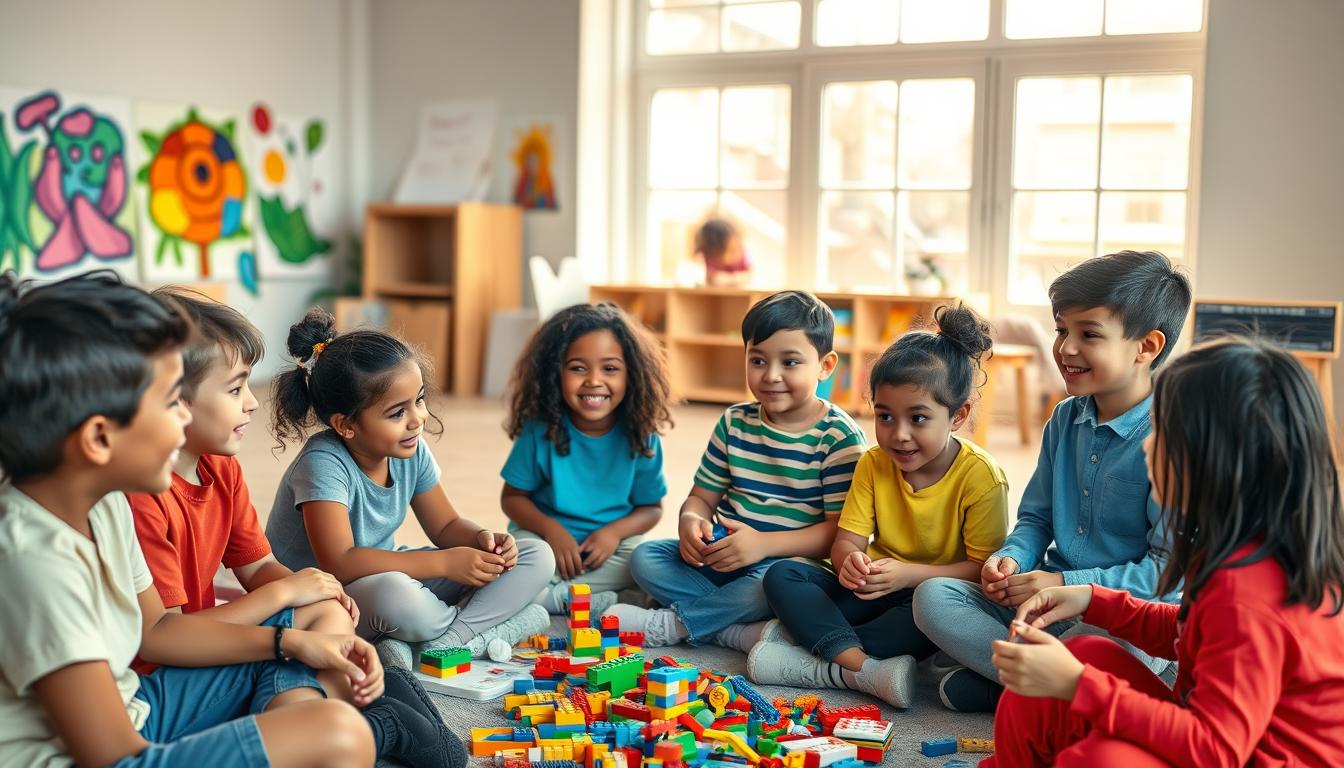
We all want our kids to be active in their communities. We hope they help others and make the world better. Joining a kids community group is a great way to help them achieve this.
Being in a youth council helps kids learn important skills. They learn to lead, work together, and solve problems. They also get to help their community through community service.
Being in a youth council gives kids great experiences. They become more confident and learn to care for their community. It’s a wonderful way for kids to make friends and have a positive impact.
What is a Youth Council?
A Youth Council is a community-driven group that empowers young people to make decisions. It’s a group of young individuals who come together to talk about and solve community issues.
The purpose of a Youth Council is to give young people a voice. They can share their ideas and help shape their community. This helps to grow youth leadership and get more young people involved.
Youth Councils start when local government or community groups see the need for them. Their goals can vary, but often include getting more youth involved in activities. They also support local youth programs and advise on policies that affect young people.
Being part of a Youth Council can really help young people. It boosts confidence, improves leadership skills, and gets them more involved in their community. As mentioned, “77% of young people say programs like 4-H help boost their confidence,” showing the positive effects of such initiatives.
In short, Youth Councils are key in community youth programs. They give young people a chance to make a difference. Through their work, Youth Councils help create a more active, informed, and engaged younger generation.
How Youth Councils Operate
A Youth Council’s success depends on its structure and member commitment. It has a mix of elected and appointed positions. This ensures everyone has a say in decisions.
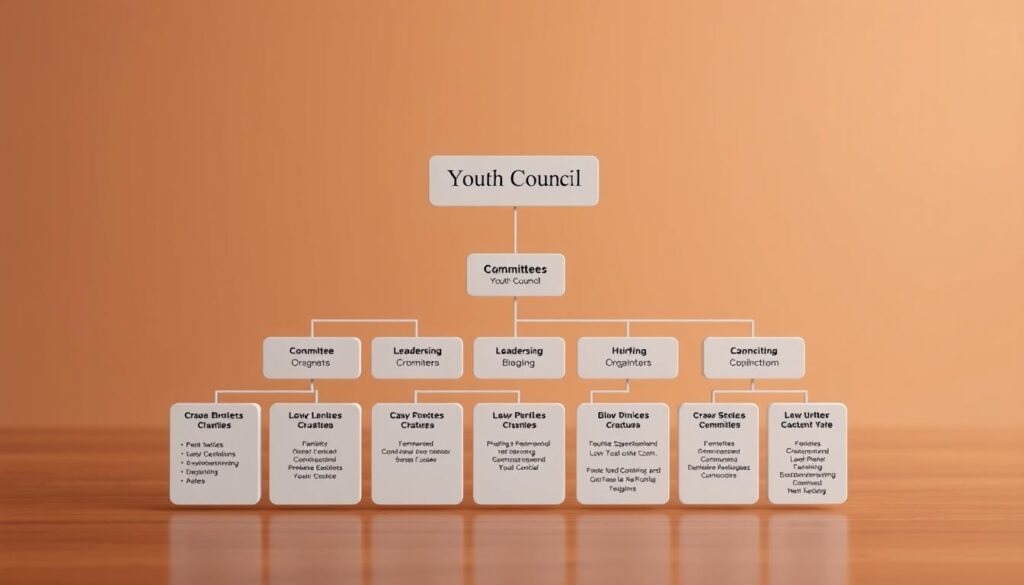
The Youth Council’s setup empowers young people to lead and serve their community. They meet regularly to discuss projects and plan new ones.
Roles and Responsibilities
Members have different roles in a Youth Council. These include chairperson, secretary, project leaders, and committee members. Each role is key to the council’s success.
Research shows that community service helps young people develop important life skills. This is true for Youth Councils, where members learn about leadership, teamwork, and solving problems.
Knowing their roles helps Youth Council members contribute to the council’s goals. They can make a real difference in their communities.
The Importance of Youth Councils
Youth Councils are key in shaping tomorrow’s leaders. They teach important life skills and community values. Young people learn empathy, leadership skills, and a sense of community responsibility through these councils.
Studies show that kids who do community service early on grow up to value it more. This early start helps them grow personally and benefits the community. An expert says, “Getting kids involved in service early is key for a lifelong commitment to helping others.”
“The third source emphasizes the importance of involving children in community service from a young age to establish service as a regular part of their lives.”
Youth Councils offer many benefits. They let young people share their views, learn to lead, and help out in the community. These experiences shape their values and prepare them to be active citizens.
Also, Youth Councils help young people feel connected to their community. They work together to achieve goals. This teamwork builds strong bonds and a better understanding of community needs.
In summary, Youth Councils are vital for growing young leaders and encouraging community involvement. By joining these councils, young people gain experiences that will help them throughout their lives.
Getting Involved with a Youth Council
Joining a Youth Council can be a life-changing experience for young people. It lets you help your community, learn new skills, and meet others with similar interests.
To start, look for Youth Councils in your area. Websites like VolunteerMatch.org and generationOn.org can help. They connect you with groups that match your interests and schedule.
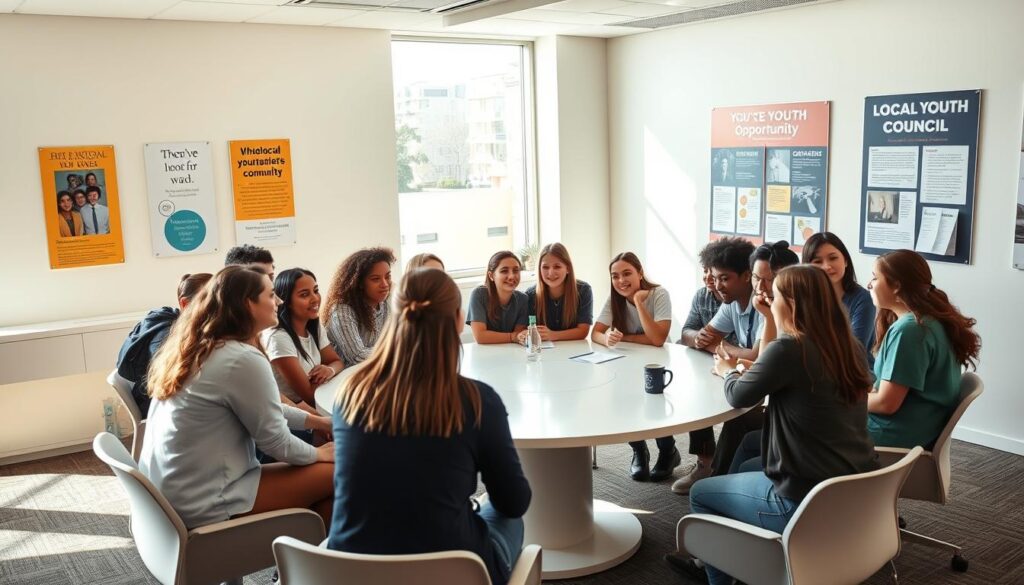
If there’s no Youth Council near you, think about starting one. You’ll need to find others who are interested, figure out what your community needs, and ask for help from local groups. Starting a Youth Council takes effort, but it can lead to real change.
Being part of a Youth Council means you can help with different projects. You might join clean-up events, educational workshops, or campaigns. Your contributions can help shape your community’s future.
Being in a Youth Council is more than just helping out. It’s a chance to develop valuable skills like leadership and teamwork. These skills can help you grow personally and open doors for your future.
Activities and Projects of Youth Councils
Youth Councils do a lot, from cleaning neighborhoods to running food drives. They help different age groups and needs in the community.
These youth council activities help the community and teach young people important skills. For example, cleaning up neighborhoods makes places look better and teaches about keeping areas clean.
Some great youth council projects include charity events, educational programs, and helping the environment. These show how dedicated Youth Councils are to helping others.
For instance, a Youth Council might hold a food drive for local food banks or create workshops on environmental issues. These efforts help the community and teach young people about teamwork and leadership.
Through these activities, Youth Councils help shape the next generation of leaders and citizens.
Skills Developed Through Participation
Joining a Youth Council lets young people gain valuable skills. These skills help them grow personally and professionally. They learn youth leadership skills and teamwork skills for kids that are key for their future.
Leadership is a major skill gained from Youth Councils. Young members learn to lead projects, make decisions, and guide their peers. This experience helps them become effective leaders and team managers.

Teamwork is also a focus in Youth Councils. Members work on projects together, learning to collaborate and support each other. These skills are important in today’s work world and are valued by schools and employers.
Being in a Youth Council also helps young people develop problem-solving, public speaking, and time management skills. These skills are learned through the council’s activities and projects, giving a broad learning experience.
In summary, being part of a Youth Council is a great chance for young people to gain many skills. These skills improve their personal growth and prepare them for their future careers.
How Youth Councils Influence Local Policies
Young people can make a big difference in their communities through Youth Councils. They help shape local policies by working with local government. This lets them have a say in decisions that impact their lives.
Advocacy and Engagement are key for Youth Councils to influence policies. Members learn to share their ideas and work together. They also present their plans to local leaders. This helps them understand how government works and feel responsible for their community.
The power of youth advocacy is clear in the projects and policy changes Youth Councils start. They give young people a voice in making local policies. This ensures their needs and concerns are heard.
In the end, Youth Councils show how important it is for young people to be involved in government. They prove that young people can make a difference by getting involved and speaking up.
Building Relationships in a Youth Council
In a Youth Council, building relationships is more than just working together. It’s about creating a community. Building connections and a sense of purpose among young people is key for their growth.
Effective collaboration and communication are the base of successful Youth Council projects. When members work together seamlessly, they can do more than alone. This teamwork environment lets ideas grow and makes everyone feel important.
“The way to get started is to quit talking and begin doing.” – Walt Disney
Youth Councils that focus on building relationships have stronger teams and projects. By working together, members improve their youth communication skills for life.
Building these relationships also teaches empathy and understanding different views. These skills help in solving conflicts. They are very useful beyond the Youth Council.
In summary, a Youth Council’s success depends on strong, meaningful relationships among its members. This way, they improve their teamwork and communication. They also build a supportive community that can lead to positive change.
Success Stories from Youth Council Members
Inspiring stories of young individuals who have made a difference are at the heart of Youth Council achievements. Through their involvement in various community projects and initiatives, these young leaders have shown the power of youth engagement.
One notable example is a Youth Council member who led a local environmental campaign. This campaign led to a big drop in community waste. This initiative not only improved the local environment but also raised awareness among peers about the importance of sustainability.
Another inspiring story is about a young person who created a mental health program for teenagers. This program has given vital support to many young individuals. It shows the positive impact that Youth Council members can have on their communities.
These success stories highlight the achievements of Youth Council members and show their value. By sharing these inspiring examples, we hope to motivate more young people to get involved and make a difference.
The achievements of Youth Council members prove the effectiveness of youth-led initiatives. They also show the importance of supporting young leaders. As these stories illustrate, even small actions can lead to significant positive change.
Overcoming Challenges in Youth Councils
Effective Youth Councils face challenges but come out stronger. They often hit obstacles that slow them down.
One big challenge in youth councils is the lack of experience among young members. To fix this, mentorship programs and training are key. They give young people the skills and knowledge they need.

Another hurdle is getting the community or local authorities involved. To tackle this, Youth Councils can start outreach programs. They can host community events, use social media well, and work with local groups.
Also, youth council solutions include creating a team environment. This means everyone feels valued and can share their ideas. It’s about being inclusive and respectful, so everyone has a say.
By tackling the challenges in youth councils head-on, these groups can make a bigger difference. They can positively impact their communities.
Resources for Youth Council Participants
Youth Council members can find many resources to improve their experience and skills. Websites like VolunteerMatch.org and generationOn.org offer great tools and chances to help out in the community.
These resources let Youth Council members find new projects and meet others who share their interests. They can also learn important skills. Using these resources, they can have a bigger impact and bring about real change.
Looking into youth development resources can also be very helpful. These resources keep participants informed on the latest methods. They also provide training, mentorship, and connections with other youth-led projects.