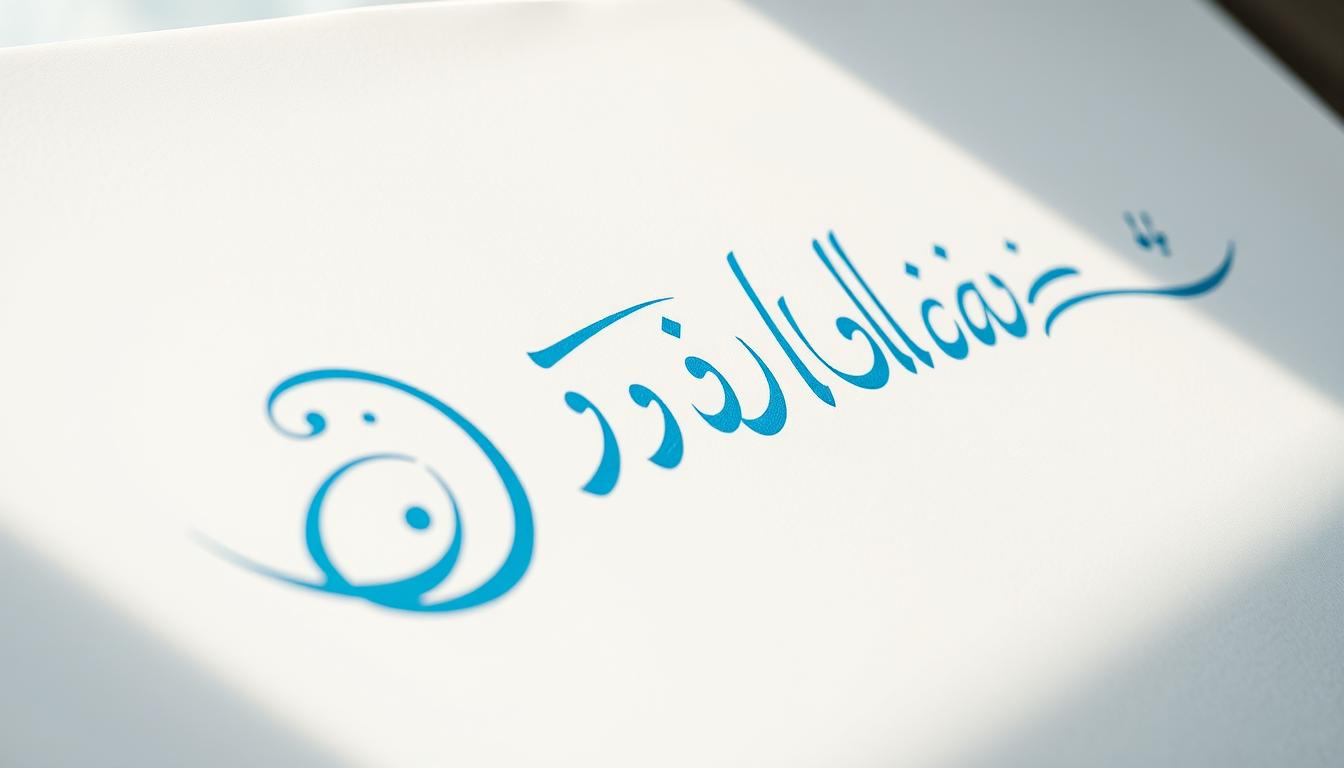
The art of writing has been a cornerstone of human expression for centuries. As writers, we find inspiration in various cultures and forms of artistic expression. One such form is the beautiful lettering that has captivated audiences worldwide.
Beautiful lettering and typography have the power to elevate the written word, making it a visual masterpiece. By understanding the basics of this ancient art form, writers can enhance their storytelling experience. They can create visually appealing text.
The art of writing is not just about conveying a message; it’s also about presenting it in a way that captivates the reader. With the skills learned from this timeless craft, writers can add a new dimension to their work. This makes it more engaging and memorable.
The Art of Calligraphy
Calligraphy lets people share feelings and stories in a beautiful way. It’s more than just writing. It’s a mix of lettering art and typography that makes text look stunning.
Learning calligraphy starts with knowing your tools. This includes different nibs and ink. Nibs come in various sizes and shapes, changing the look of your writing. The ink you use also matters, as it changes how your letters flow.
Getting good at calligraphy takes time and effort. Beginners start with simple strokes and then move to more complex letters. It’s not just about writing letters; it’s about making a visual story that enhances the message.
Calligraphy has been used for centuries to make messages look elegant. It’s used in wedding invites and books. Adding calligraphy to stories makes them more engaging and memorable.
In short, calligraphy is a powerful way to express creativity. By learning calligraphy techniques, you can share emotions and stories in a unique way. It makes storytelling even more special.
Essential Calligraphy Supplies
Getting quality calligraphy supplies is key to mastering this ancient art. You need the right tools to create beautiful lettering.
The nib is the most important part of calligraphy. It’s the metal tip that touches the paper. Nibs vary in shape and size, depending on your calligraphy style. Flexible nibs work well for copperplate and Spencerian scripts. Rigid nibs are better for brush pen calligraphy.
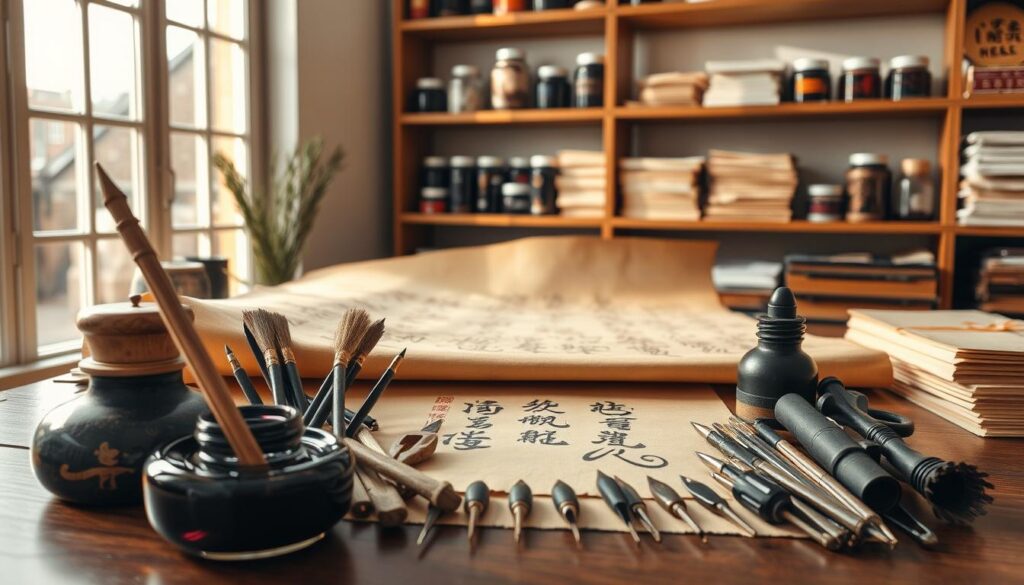
Ink is also vital. The ink you choose affects your lettering quality. Some inks bleed or feather on certain paper. It’s important to try different inks and papers to find the best combination.
Choosing the right paper is also important. Look for high-quality, smooth paper that doesn’t bleed. Many prefer paper with a slight texture for better nib movement.
Other lettering tools can also help. Guides, light boxes, and oblique pens can improve your precision and technique.
Investing in the right calligraphy supplies can boost your skills. Whether you’re new or experienced, the right tools are essential for your journey.
Calligraphy Techniques for Beginners
To start with calligraphy, beginners need to learn basic lettering techniques. Knowing the basics is key to making beautiful and easy-to-read calligraphy.
Basic Lettering Techniques
Basic lettering involves understanding strokes, spacing, and letter size. Proper stroke order is vital for consistent and beautiful lettering. Beginners should practice strokes like vertical, horizontal, and circular to get better.
Spacing is also important. Good spacing between letters and words makes your work look better and easier to read. Keeping letter sizes consistent is also important for a professional look.
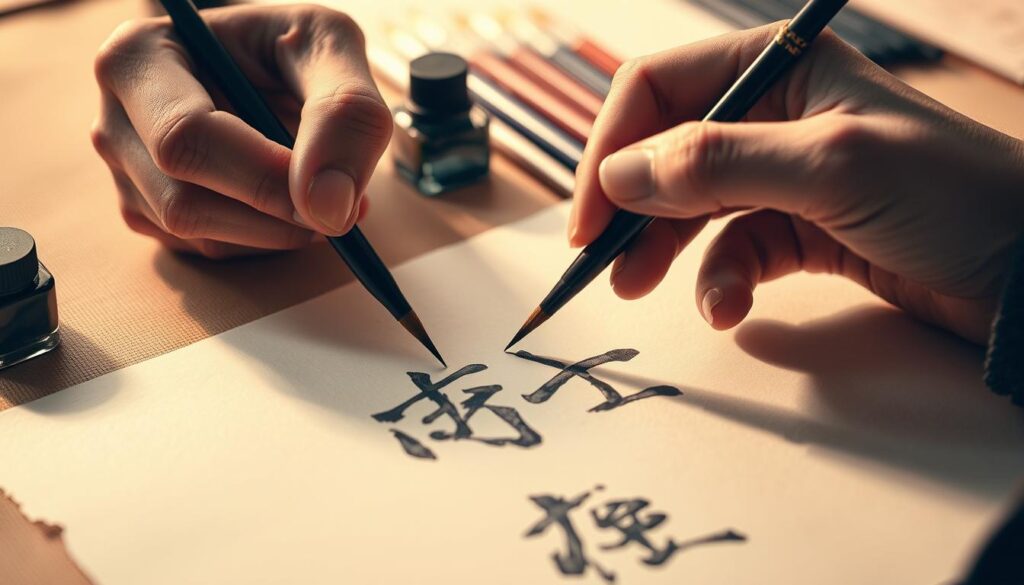
As beginners practice, they should work on having a steady hand and consistent style. Regular practice will improve their skills and boost their confidence in calligraphy.
Mastering basic lettering techniques is the first step to more advanced calligraphy skills. It takes patience, but the results are worth it.
Exploring Calligraphy Styles
Calligraphy styles range from traditional to modern, each with its own flair. They offer a wide range of creative expression. Each style has its unique characteristics.
Copperplate calligraphy is known for its elegant, fluid lettering. It’s often used in formal invitations and certificates. Its sophisticated look makes it stand out.
Brush calligraphy is more expressive and dynamic. It uses brush strokes for varied line widths and textures. This style is loved for its artistic, spontaneous feel.
Modern calligraphy has seen a rise in hand-lettering styles. These styles mix traditional techniques with modern designs. They’re versatile and can be used in branding and personal art projects.
Knowing the different font styles and typography in calligraphy can help artists grow. By trying out various styles, calligraphers can find their unique voice.
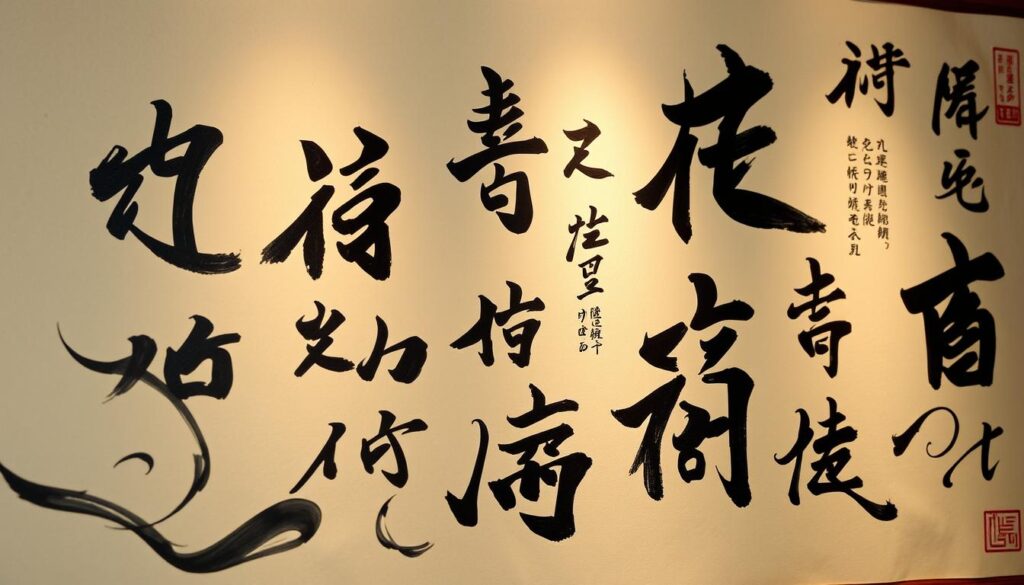
Whether you love traditional elegance or modern flair, exploring calligraphy styles is rewarding. Each style brings its own challenges and creative opportunities. As you explore, you’ll find your own style.
The Cultural Significance of Calligraphy
Calligraphy has always been key in sharing cultural values and traditions. It’s a major part of art, helping cultures keep their heritage alive with stunning lettering.
In many places, traditional Calligraphy is more than just art. It’s a link to the past. For example, Arabic calligraphy is a big part of Islamic culture, seen in mosques and sacred texts. Chinese calligraphy is also highly valued, showing the beauty and history of cultural heritage.
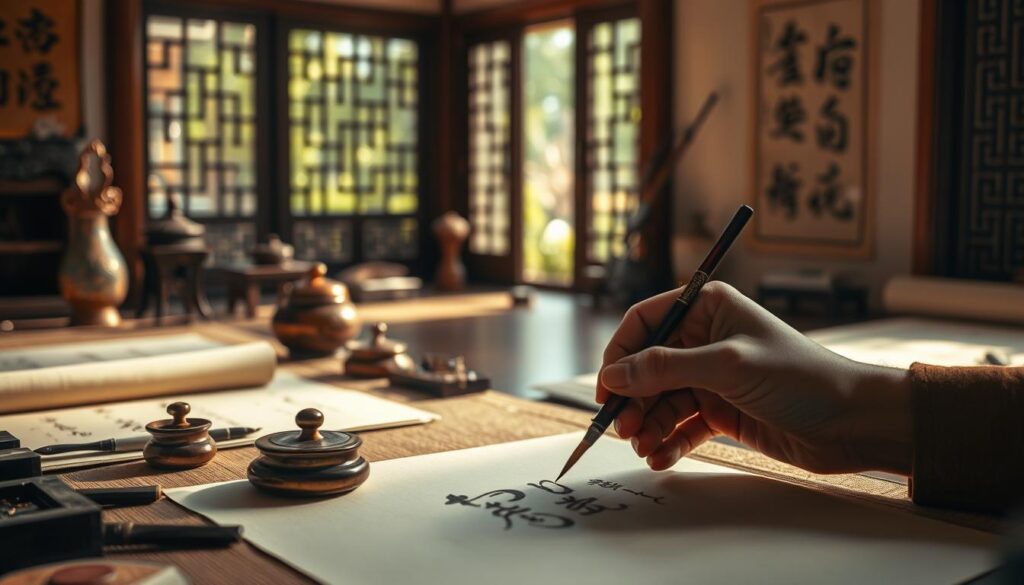
Calligraphy’s role in history is huge. In the Renaissance, it helped spread knowledge through fancy manuscripts. In Japan, “shodou” calligraphy is a symbol of the country’s deep cultural roots.
Calligraphy’s influence on culture is broad. It’s not just for art but also for sharing feelings, telling stories, and keeping history alive. By learning about the historical context and cultural background of calligraphy, fans can see its true beauty.
Today, calligraphy is changing, mixing old ways with new styles. This mix keeps calligraphy alive and relevant, honoring its past while embracing the present.
Calligraphy for Special Occasions
Calligraphy is a timeless art that can make any special occasion stand out. It’s perfect for weddings, anniversaries, or birthdays. Custom calligraphy brings elegance and sophistication to any event.
At weddings, calligraphy is used for wedding invitations, place cards, and signs. It can be made to fit the wedding’s theme, adding a personal touch. Custom calligraphy also makes unique and memorable wedding favors.
Calligraphy is not just for weddings. It’s also great for anniversaries, graduations, and corporate events. It can be used to make custom signs, certificates, and decorations that make the event memorable.
To make beautiful calligraphy for special occasions, you need the right techniques and tools. Practice different styles and try out various techniques. You can also hire a professional calligrapher or use custom services for stunning pieces.
Adding calligraphy to your special occasion brings elegance and sophistication. It makes the event unforgettable. Whether it’s for custom wedding invitations or decorative signs, calligraphy is versatile and can be tailored to your needs.
Tips for Improving Your Calligraphy
Mastering calligraphy is a journey that involves learning various techniques and practicing them regularly. To improve your calligraphy skills, it’s key to practice consistently.
Regular Practice is essential for improving your calligraphy. Set aside a specific time each day to practice, even if it’s just for a few minutes. This consistent effort will help you develop muscle memory and improve your lettering.
One of the most effective ways to improve is by incorporating lettering exercises into your practice routine. These exercises can include basic strokes, alphabet drills, and practicing different lettering styles. By focusing on these exercises, you’ll enhance your overall calligraphy skills.
“The beauty of calligraphy lies not just in the letters themselves, but in the flow and rhythm of the writing.”
Developing a practice routine is vital. Start with simple exercises and gradually move on to more complex lettering. It’s also beneficial to explore different calligraphy styles and techniques to keep your practice sessions engaging.
Also, consider the tools you use. High-quality nibs and ink can make a significant difference in your calligraphy. Experiment with different supplies to find what works best for you.
By following these Calligraphy tips and maintaining a regular practice schedule, you’ll see significant improvement in your skills. Remember, the journey to mastering calligraphy is just as important as the destination.
Calligraphy and Digital Art
The mix of traditional calligraphy and digital art has opened new paths for artists. Using calligraphy software and graphic design, artists can now make amazing digital calligraphy. This was once thought impossible.
Digital calligraphy lets artists edit and change their work easily. They can try out different fonts and colors. It also allows for precision that’s hard to get with traditional methods. Graphic design helps artists put their calligraphy into bigger projects like digital art and illustration.
Digital calligraphy is very versatile. Artists can make custom logos or beautiful digital art for shows. The calligraphy software lets them customize and get precise, making complex designs easier.
Exploring Digital Tools for Calligraphy
Many digital tools are made just for calligraphy and lettering artists. You can find everything from Adobe Illustrator to apps for touch screens. Each tool has special features like pressure sensitivity and customizable brushes.
When picking a digital tool, think about what you need and like. Some artists like familiar drawing software. Others like the freedom of mobile apps.
As tech gets better, so does digital calligraphy. Artists keep finding new ways to mix old and new techniques. They make art that’s both innovative and beautiful.
Resources for Calligraphy Enthuisasts
If you’re eager to learn more about Calligraphy, there are many resources to help you grow. You can find Calligraphy tutorials and online courses for all skill levels. These options cater to different learning styles.
Platforms like Skillshare and Craftsy are great for learning Calligraphy. They offer video tutorials and interactive lessons. Local art schools and workshops also have Calligraphy classes. Here, you can learn from experts.
Don’t forget to join Calligraphy communities and forums. These places are where enthusiasts share their work and discuss techniques. By using these resources, you can keep improving your Calligraphy skills and learn more about this beautiful art.