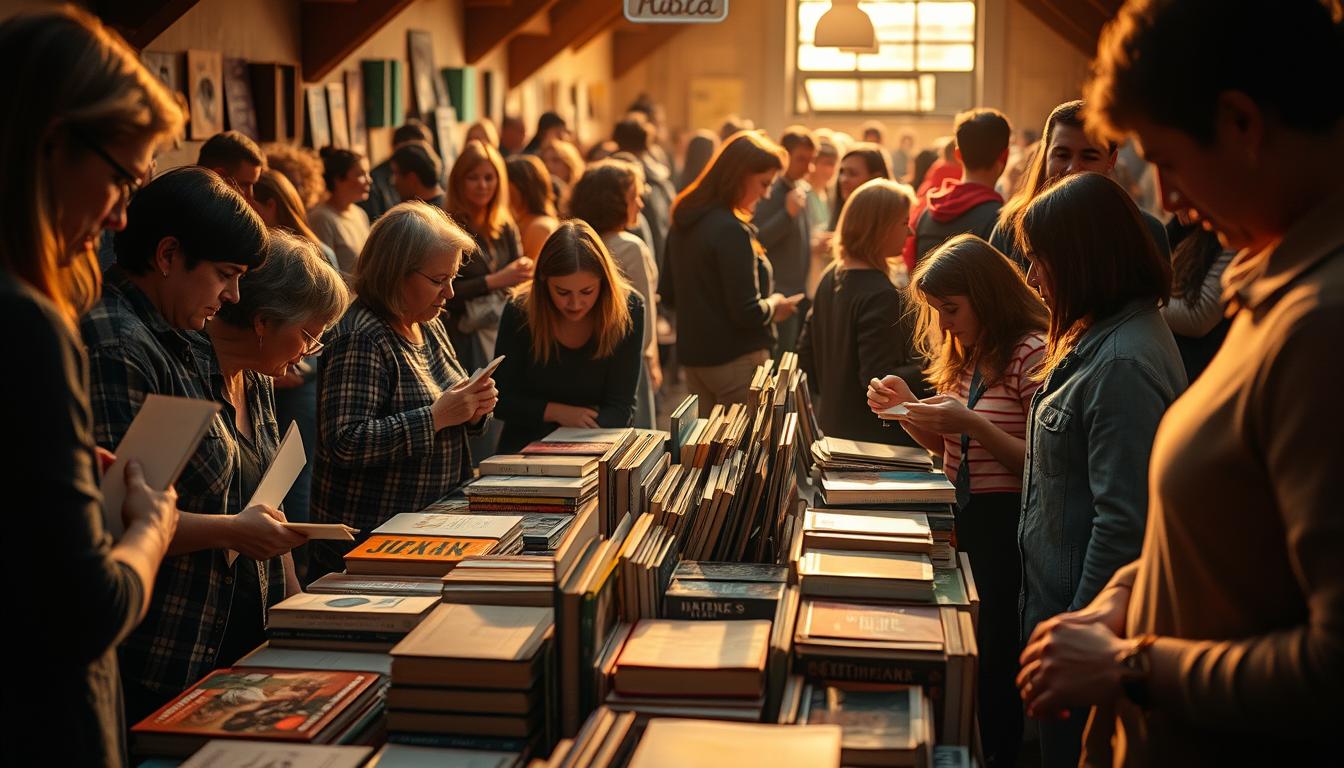
Sharing stories and literature is a special activity in communities. It brings people together, creating a love for reading and strong bonds.
The idea of a community event for sharing stories is old but powerful. It makes people gather, share ideas, and discover new worlds through stories.
In today’s world, where digital media is everywhere, sharing a physical book feels special. It connects us and makes us feel part of a reading community. Here, people share their love for books.
The Magic of Sharing Literature
Literature has a special magic. When we share it, we share a part of ourselves. The personal touches, like personal inscriptions and marginalia, make a book truly special.
Personal Inscriptions and Marginalia
When a book is passed on, the notes and inscriptions reveal the reader’s soul. As “Reading is not just about understanding the text, it’s about understanding the person who wrote it and the person who reads it.” These personal touches can stir emotions, bring back memories, and connect readers.
A well-loved book is more than pages; it’s a keeper of stories, thoughts, and feelings. As it moves from one reader to another, it gathers marginalia and inscriptions. These tell the story of its travels.
“A book is a dream that you hold in your hands,”
and when shared, it becomes a shared dream. It enriches the lives of all who read it.
The magic of sharing literature is in the connections it makes and the stories it tells. Through literature sharing, we exchange not just books but also the emotions, thoughts, and experiences they carry.
What Is a Community Book Swap?
A community book swap is when people come together to exchange books and share stories. It boosts literacy and brings people closer. By swapping, you can find new authors and topics to read about.
One-Time Events vs. Ongoing Exchanges
Book swaps can be either one-time events or ongoing exchanges. One-time events are great for a single day, often with a theme. Ongoing exchanges let you swap books over time, keeping the reading spirit alive.
“The beauty of a book swap lies in its flexibility and the connections it fosters among people,” notes a seasoned book swap organizer. “Whether it’s a one-time event or an ongoing exchange, the goal remains the same: to share the joy of reading.”
Physical vs. Virtual Book Swaps
Book swaps can be physical or virtual. Physical swaps mean meeting in person to exchange books. Virtual swaps happen online, through mail or digital platforms.

Physical swaps offer a real experience, with face-to-face interactions. Virtual swaps are handy for those who can’t meet in person, reaching more people.
As Reading Is Fundamental, a nonprofit, says, “Book swaps are a great way to get books into the hands of readers and build a sense of community.” Whether physical or virtual, one-time or ongoing, community book swaps are key to a reading culture.
The Growing Popularity of Book Swaps Across America
Book swaps are becoming a big hit in American communities. They help people love reading and connect with others. More and more community events are now about swapping books.
Book swaps bring people together, creating a strong sense of community. When people swap books, they share stories and tips. This sharing creates a culture that values books and reading.
“Book swaps are a special way to connect with others,” says a regular participant. “It’s not just about swapping books. It’s about sharing experiences and making new friends.”
Book swaps do more than just bring people together. They make communities more lively. Local groups and libraries use book swaps to attract visitors, promote reading, and welcome everyone.
Book swaps are not just a trend. They show a shift towards activities that build community and love for reading. As they grow in popularity, book swaps will stay a cherished part of American life.
Benefits Beyond the Bookshelf
Book swaps bring many benefits that make reading more exciting. They let you swap books and discover new ones. This opens up a world of new stories and authors.
Finding Out-of-Print and Rare Editions
Book swaps are great for finding out-of-print books and rare editions. These hard-to-find books are often not available in stores. So, book swaps are a treasure trove for book lovers and collectors.
Many people have found rare books through swaps. They had been looking for years. This not only grows their personal libraries but also keeps literary history alive.

Book swaps also help you expand your reading horizons. By swapping books, you meet new authors and genres. This can lead to finding new favorite books and exploring different styles.
Swapping books makes you more adventurous in your reading. It encourages you to try new things and see the world through different stories.
In short, book swaps are more than just swapping books. They help you find rare books and explore new authors. They are a great way for book lovers to grow and discover.
How to Organize Your First Book Swap Event
Want to gather book lovers? Learning to organize a book swap is a fantastic start. Organizing a book swap event is a fun way to encourage reading and foster community.
Choosing a venue is key. Think about whether you prefer an indoor or outdoor setting. Indoor spots are perfect for bad weather, while outdoor ones offer a chill vibe. Indoor events can be in libraries, community centers, or bookstores, providing a cozy spot.
Outdoor events are great for parks or public areas, giving a relaxed feel. But, you must have a backup plan for sudden weather changes.
Space Requirements and Layout Planning
Space planning is vital, no matter the venue. Make sure there’s room for everyone to look through and swap books easily. A good layout includes tables for books, comfy seats, and clear signs.
Good space planning means thinking about the event’s flow. You might want areas for checking in books, browsing, and chatting. This makes the event smooth and fun for everyone.
By thinking about these details, you can host a memorable book swap event. It will be a hit with your guests.
Tips for Book Swap Success
A successful book swap is more than just exchanging books. It’s about creating an experience that leaves a lasting impression. To achieve book swap success, organizers must consider several key factors.
Refreshments and Comfortable Seating
Providing refreshments can make the book swap experience better. It makes participants feel welcome and comfortable. It’s also important to have comfortable seating for everyone to enjoy their books.

The layout and comfort of the venue are key to success. By focusing on these details, organizers can create a warm and inviting atmosphere.
Music and Ambiance Considerations
The ambiance of the book swap venue is important. The right background music can make the atmosphere relaxed and friendly. This encourages participants to stay and chat.
By paying attention to these elements, organizers can make their book swap event memorable. It leaves a lasting impression on participants and builds a sense of community.
Book Swap Etiquette: Giving and Receiving with Grace
Being part of a book swap is more than just swapping books. It’s about building a community based on sharing and respect. When you swap a book, you share a piece of yourself.
The rules of a book swap focus on giving and receiving. It’s important to think about the books you bring and their condition. A well-kept book shows respect for the next reader.
What’s Acceptable to Bring
Choosing books for a swap means considering their condition and quality. It’s best to bring books in good shape, without torn pages or too much wear. Also, bring a variety to please different tastes.
When to Retire a Book from Circulation
Knowing when to stop using a book is key in book swap etiquette. If a book is too worn or has been swapped many times, it’s time to let it go. You can donate it to a library or recycle it.
Being thoughtful about the books we swap helps create a respectful and grateful community. This makes the experience better for everyone and strengthens our bond.
Beyond the Traditional Book Swap: Creative Variations
Traditional book swaps are great, but there’s more to explore. Tailoring swaps to interests or demographics makes them more personal.
Genre-Specific Exchanges
Adding a twist to book swaps is easy. Focus on genre-specific exchanges. This lets fans dive into their favorite genres, like science fiction or romance.
By swapping within a genre, readers find new authors and books. It’s a chance to explore different themes and trends.

Children’s book swaps are fun and educational. They encourage young readers to love books. Parents and teachers can organize these swaps to give kids a wide range of books.
These swaps also help declutter used children’s books. It’s good for the environment and the kids who get the books.
Embracing creative book swaps makes reading more fun and inclusive. Whether it’s through genre-specific swaps or children’s books, there’s a lot to discover.
Real Stories from Book Swap Enthuasiasts
The magic of book swaps is in the stories of those who join them. Across the United States, people and communities come together. They share tales and grow a love for reading.
Book swaps help revitalize neighborhood connections. They let people meet, make friends, and feel part of a community. For example, a suburban resident started a book swap. It became a monthly event where people talked about their favorite books and shared stories.
This effort brought the community closer. It also created a safe place for people to connect over books. A participant said, “The book swap has changed our neighborhood. It’s where I’ve found some of my closest friends.”
Supporting Local Literacy Initiatives
Book swaps also support local literacy initiatives. They help make sure everyone has access to books. Many book swaps work with schools and libraries to help kids and adults learn to read.
“Book swaps have not only enriched my personal library but have also introduced me to a community that values reading and sharing stories. It’s been incredible to see how it has supported our local literacy programs,” said a book swap enthusiast.
These stories show how book swaps can change lives. They strengthen community bonds and promote literacy.
As more people share their book swap stories, it’s clear these events do more than swap books. They build connections and encourage a love for reading. Whether through neighborhood connections or literacy initiatives, book swaps have a big, positive impact.
Keeping the Stories Circulating: Building a Lasting Book Swap Legacy
To build a lasting book swap legacy, you need to keep working and be creative. Try hosting themed book swaps or author readings. This can draw in new people and excite those who already join.
Working with local libraries, schools, or literacy groups can also help. It can spread your book swap’s influence and reach more people.
Creating a sense of community is also key. Ask participants to share their favorite books and talk about their experiences. Use social media, online forums, or in-person talks to do this.
By making everyone feel welcome, you help the love for reading grow. This makes your book swap a special place in the community.
Adapting and changing is also important for a lasting legacy. Be open to new ideas, like digital book swaps or storytime for kids. By embracing change and staying true to your mission, you can make a big difference. You’ll help create a culture of sharing, reading, and community.