
A flash mob is a sudden, brief gathering of people in a public place. It’s often for a performance or protest. Recently, dance flashmobs have become a hit way to unite people and challenge social norms.
The idea of a flash mob has grown into a strong tool for starting a dance revolution. Through dance, people can join together and overcome cultural and social barriers.
This article will dive into the importance of flash mobs in creating a barrier-breaking dance culture. It will also look at their role in shaping the future of performance art.
The Spark That Started a Movement
Flash mobs began in the early 2000s as a new form of entertainment. But they quickly became a strong way to share social commentary. This change came from using performance art to question our norms and rules.
Bill Wasik, a senior editor at Harper’s Bazaar, started the first flash mob in New York City in 2003. He wanted to break up the dullness of city life and bring people together. The event was a hit, and soon flash mobs were popping up all over the world.
Flash mobs started to tackle big issues like inequality and environmental harm. People used dance and performance to make a point. This move made flash mobs even more popular and important in performance art.
The roots of flash mobs are about challenging the usual and building community. Today, they are a key way to share important messages, touching hearts and minds everywhere.
Setting the Stage: Location and Significance
The location of a flash mob is key, not just a backdrop. It’s what makes the event stand out. The significance of location is in its power to grab attention and make a mark.
When picking a venue, organizers think about foot traffic, how easy it is to get there, and the area’s vibe. A well-chosen location can turn a simple dance into a memorable event that touches people’s hearts.
The Importance of Location in Flashmob Success
The flash mob location is essential for success. For example, a mall or public square can draw a big crowd and create excitement. The goal is to pick a spot that fits the theme and message of the flash mob.

Choosing the right venue means knowing your audience and what you want to say. By picking a spot that matches the event’s goal, you can make it more engaging and impactful.
In short, the significance of location in flash mobs is huge. It’s a critical part that needs careful thought to make the event a hit.
Choreography With Purpose: Designing the Dance
The choreography of a flash mob is more than just a dance; it’s a unified message conveyed through movement. When designing the dance for a flash mob, the choreographer’s primary goal is to create a cohesive routine. This routine effectively communicates the intended theme or message.
The process starts with picking music that fits the message. The rhythm, tempo, and lyrics set the tone for the performance. After choosing the music, the choreographer crafts a dance design that matches the music and clearly conveys the message.
A well-designed flash mob choreography considers the skill levels of the participants. It ensures the dance is accessible to everyone involved. It also thinks about the audience’s perspective, making sure the performance is engaging and impactful.
The rehearsal process is key to achieving a unified performance. Through repeated practice, dancers become synchronized. The choreography is refined to maximize its emotional impact. The result is a powerful and moving performance that leaves a lasting impression on the audience.
By carefully crafting the choreography, a flash mob can become a memorable experience. It’s not just for the participants but also for the spectators. It shows the power of dance to bring people together and convey a meaningful message.
Building a Diverse Dance Community
The heart of a great flash mob is its diverse and inclusive dance community. When people from different backgrounds join, they share unique views and stories. These add depth to the event.
Inclusivity is essential for a lively dance community. It makes everyone feel important and respected, no matter their age, ethnicity, or dance skills. A dance organizer said, “Inclusivity is more than just diversity. It’s about making everyone feel at home.”

The “Dance for All” event is a prime example of a diverse flash mob community. It brings together people of all ages and abilities. This event shows how dance can bring people together and foster unity.
“Diversity is the backbone of a vibrant dance community, making flash mob events truly special.”
Flash mob events can be powerful tools for change by embracing diversity and inclusivity. They show that when people share a common passion, they can achieve something amazing together.
The Rehearsal Journey: From Strangers to Family
The rehearsal journey for the flash mob was a life-changing experience. It turned strangers into a tight-knit family. Everyone brought their unique backgrounds and experiences to the table. But, through rehearsals, they formed a strong bond.
“The rehearsals were more than just learning the choreography; they were about building a community,” said one of the participants. This sense of community grew through the flash mob rehearsal process. It encouraged everyone to work together and support each other.
As rehearsals went on, people started to feel like they belonged. Strangers became friends. The rehearsal process helped build camaraderie among the group. It created a sense of unity and purpose.
The change from strangers to family wasn’t just about the rehearsals. It was also about sharing a common goal. As one participant said, “The flash mob was more than a performance. It was a celebration of our collective spirit.”
Through the flash mob rehearsal journey, people learned more than just a dance. They developed a deep connection and a sense of belonging. This journey shows how dance can unite people and create a community.
“The most surprising thing was how quickly we became a family. The rehearsals were a testament to the power of dance to break down barriers and bring people together.”
The Anatomy of a Revolutionary Dance Flashmob
Exploring a revolutionary dance flashmob shows its effect on those who watch and those who perform. It’s a planned event where a group does a choreographed dance in public. This event is a mix of creativity and unity.
Theanatomy of a flashmobhas several parts. First, there’s the theme, which is the heart of the event. This theme could be about unity, diversity, or social issues. It shapes the dance, costumes, and look of the performance.
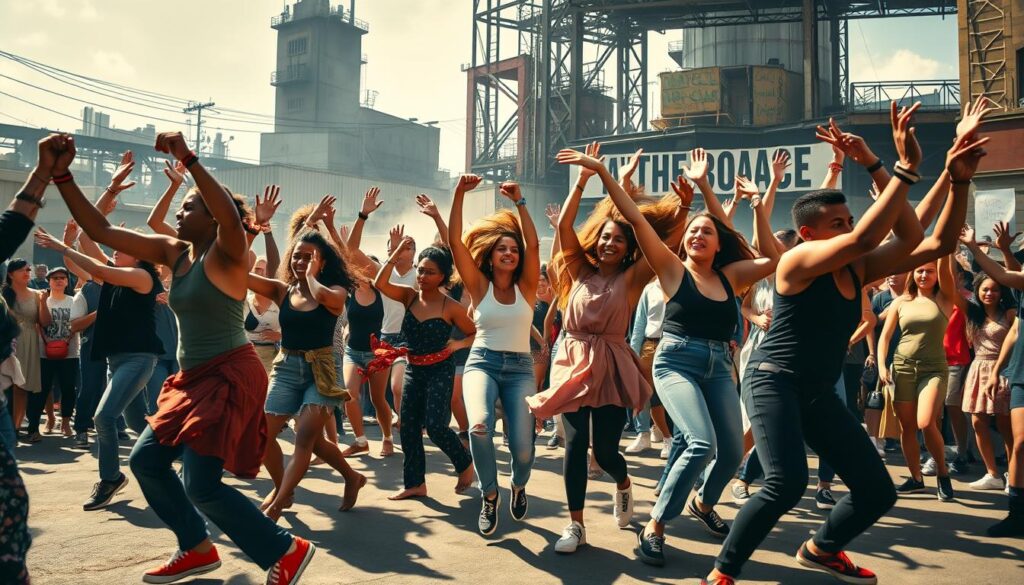
Choreography is key, needing both creativity and unity. Choreographers make a dance that looks good and is easy for everyone to do. They break down hard moves into simple steps, making sure the dance is fun from start to end.
Flashmobs also depend on getting people involved. Organizers invite local dance groups, schools, and centers to join. This makes the group diverse, adding to the event’s message and impact.
The place where the flashmob happens is also important. Organizers pick spots that are easy to get to and fit the event’s theme. Places like parks and malls are great because lots of people see them.
Rehearsals are also key, turning strangers into a team. Through practice, people learn the dance, get to know each other, and feel united. This is what makes the performance strong and meaningful.
In short, a revolutionary dance flashmob is complex, with planning, creative dance, and community involvement. Understanding these parts helps us see the power and beauty of flashmobs as a way to express and comment on society.
Audience Reactions: Shock, Awe, and Transformation
Seeing a flash mob can stir many feelings, from shock to inspiration. The sudden burst of dance in a busy area can stun people. It grabs their attention and leaves a lasting memory.
When the music starts, people’s confusion turns to wonder. The flash mob impact goes beyond the dance. It changes the place and makes everyone feel included, if only for a brief time.
The audience reactions to flash mobs vary greatly. Some are touched to tears by the beauty and unity. Others are inspired to join in, either right then or at future events. This shows dance’s power to unite people and build community.
Flash mobs can inspire people long after they’re over. They encourage individuals to be creative and see new possibilities. So, the effect of a flash mob can be felt for a long time, touching both those who perform and those who watch.
Going Viral: The Digital Explosion
The flash mob phenomenon exploded on social media, captivating a global audience. Its message, conveyed through an engaging and emotive performance, resonated with people from diverse backgrounds.
The role of social media in the success of the flash mob cannot be overstated. Platforms like YouTube, Facebook, and Instagram enabled the video to reach a massive audience. Millions of views and shares happened in a short time.
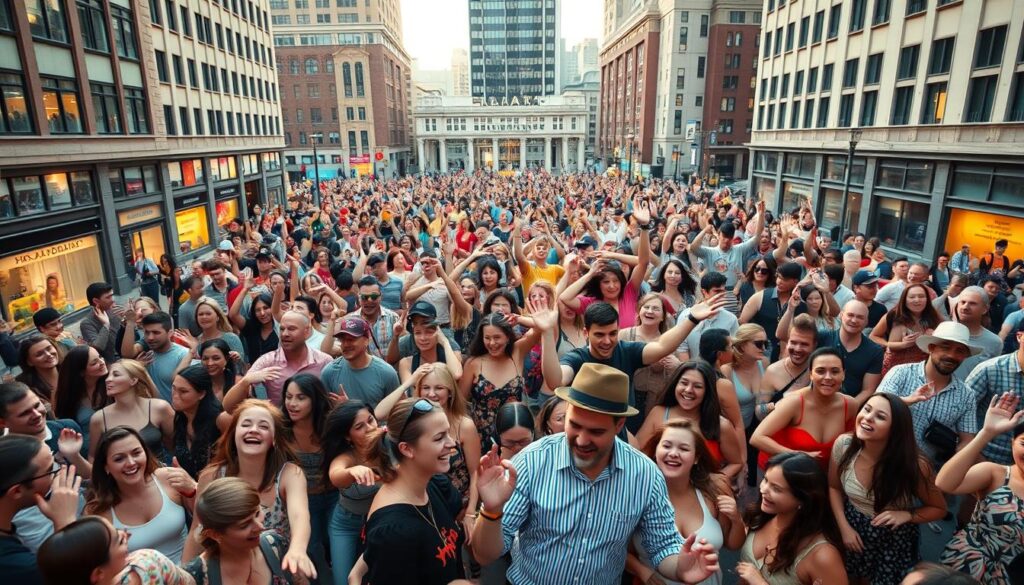
Viral flash mob videos have unique and captivating performances. These are amplified by the strategic use of social media. Hashtags, for instance, help increase the video’s visibility, making it more discoverable by a wider audience.
The digital explosion of the flash mob was fueled by emotional connections. As the video spread across social media, it sparked conversations, inspired empathy, and created a sense of community among viewers.
The success of the flash mob on social media shows the importance of social media in shaping narratives. By leveraging digital platforms, the creators of the flash mob could control the message, convey their vision, and connect with a global audience.
In conclusion, the flash mob’s flash mob viral success on social media was due to a unique performance, strategic promotion, and emotional resonance. As social media evolves, it will be interesting to see how future flash mob events use these platforms to make an impact.
Media Coverage: How Journalists Told the Story
Journalists were key in sharing the story of the flash mob. They showed how it affected the community. The media coverage was wide, with many outlets sharing their views.
The flash mob narrative was complex. Some journalists highlighted the creativity and surprise of the event. Others looked into the hard work behind organizing it.
The journalistic coverage did more than just report. It also offered analysis and insights into the event’s cultural value. This helped shape how people saw the flash mob.
Looking at the media, it’s clear the flash mob was more than a dance. It was a time of joy and a celebration of diversity. The way journalists told its story showed its impact and relevance.
The coverage also showed the power of media coverage in shaping our views of events. As journalists kept reporting, they helped start a bigger conversation. This conversation was about community, creativity, and expressing oneself.
The Ripple Effect: Inspired Events Across America
The ripple effect of flash mob culture is spreading across the country. It started with one event and now there are many more. This has created a lively dance scene that goes beyond just one place.
Dance has become a way to bring people together and make a difference. Now, inspired events are happening in cities all over America. Each event has its own special touch and goal.
These events are not just copies of the first one. They are new and show what their local communities are all about. They show how one event can start a chain of dance and community involvement.
Social media has helped spread flash mob culture even more. It lets organizers reach more people and get more people to join in. This makes the dance community more connected and exciting.
In the end, the ripple effect of the flash mob shows how dance can inspire and bring people together. As more inspired events happen across America, it’s clear the original flash mob’s impact will last a long time.
A Legacy of Barrier-Breaking Through Dance
The flash mob event has made a big impact on the dance world. It opened doors for future dancers. This event showed that dance can break barriers and inspire others.
This dance event set a new standard for dance events. It showed that dance can be innovative and include everyone. Now, similar events are happening all over America and beyond.
This event’s impact goes beyond the dance world. It changed how people see dance and brought people together. As dance evolves, this event’s legacy will keep inspiring others to be bold and break barriers.