
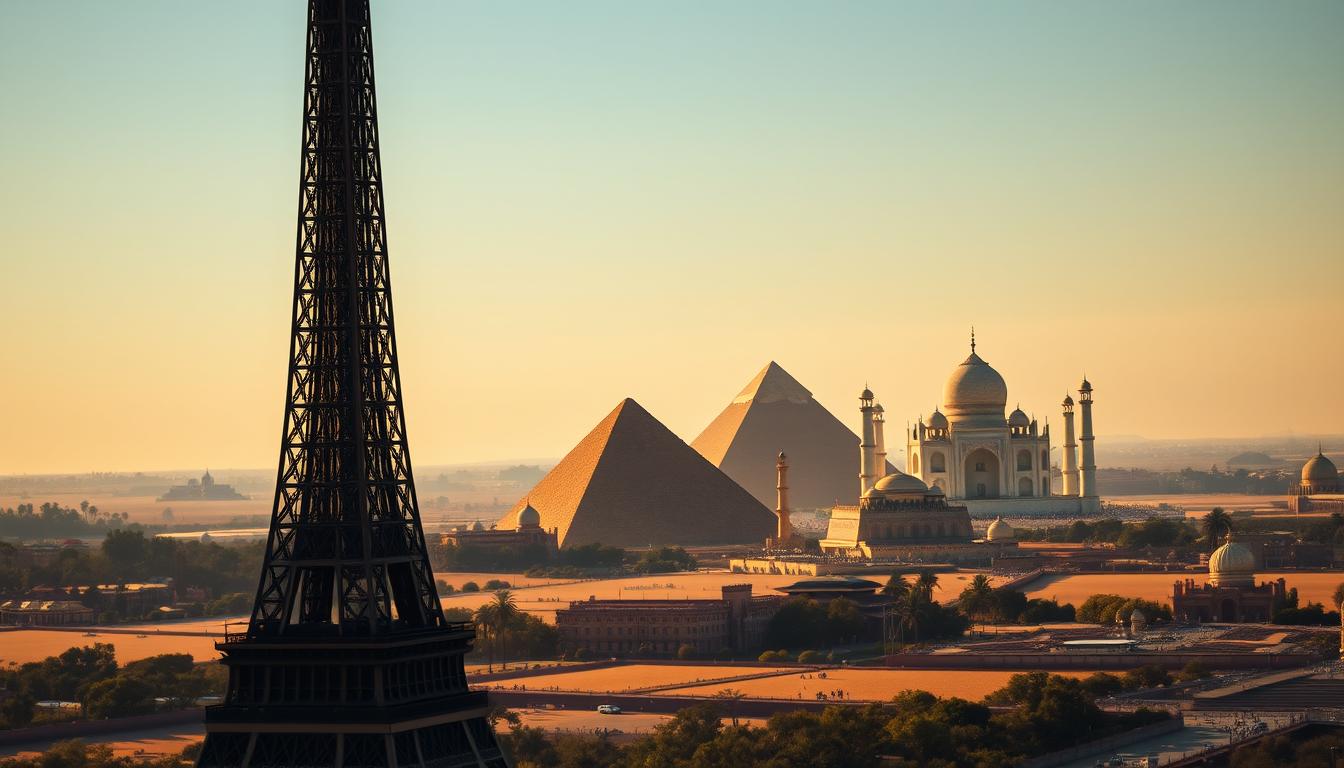
Traveling to famous historical landmarks is an exciting adventure. It lets people connect with the rich history and culture of various civilizations. Iconic spots like the Eiffel Tower in Paris and the Great Wall of China draw millions yearly.
These renowned landmarks are not just architectural wonders. They also share stories of the past. They are a must-see for anyone interested in history, culture, or exploring the world’s wonders. Let’s explore what makes these sites so significant and appealing to tourists worldwide.
The Significance of Monuments in History
National monuments and cultural heritage sites are more than just structures. They are gateways to understanding our rich and diverse history. These monuments connect us to historical events and figures, helping us understand our cultural identity.
Monuments like the Lincoln Memorial and the Vietnam Veterans Memorial in Washington, D.C., are significant. They attract millions of visitors. The Lincoln Memorial honors President Abraham Lincoln and the values he stood for. The Vietnam Veterans Memorial remembers the sacrifices of those who served in the Vietnam War.
These national monuments and cultural heritage sites are key to preserving our history and culture. They link us to the past, helping us reflect on historical events and their impact today and tomorrow.
By visiting and engaging with these monuments, we gain a deeper understanding and appreciation of our shared history. It’s vital to preserve these sites for future generations. This ensures their historical significance is not forgotten over time.
Must-See Monuments in the United States
America’s rich history shines through its most honored monuments. These draw visitors from all over. They symbolize the country’s past and its growth.
The Statue of Liberty stands as a symbol of freedom and democracy. France gave it to the U.S. in 1886. It has welcomed millions of immigrants coming to Ellis Island.
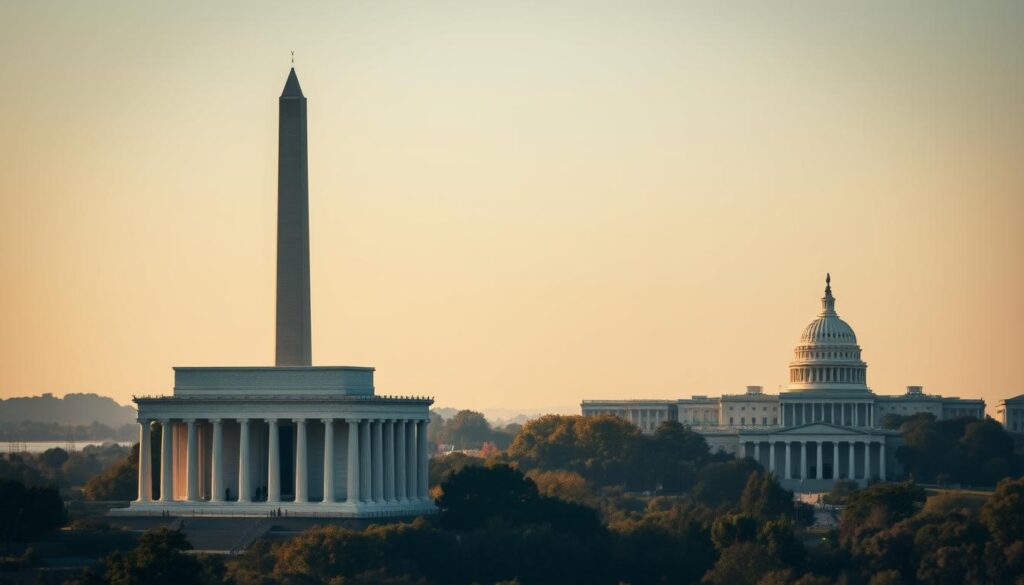
The Lincoln Memorial honors President Abraham Lincoln. It’s in Washington, D.C. and is known for its Greek design. It’s where Martin Luther King Jr. gave his famous “I Have a Dream” speech.
Mount Rushmore is in South Dakota’s Black Hills. It shows the faces of four U.S. presidents: George Washington, Thomas Jefferson, Theodore Roosevelt, and Abraham Lincoln. It tells the story of America’s growth and preservation.
These monuments are more than just sights to see. They are key pieces of history and culture. Visiting them lets you connect with America’s past and its values.
In summary, the U.S. boasts many monuments, each with its own tale. From the Statue of Liberty to Mount Rushmore, these landmarks are essential for anyone wanting to explore America’s heritage.
Exploring the National Mall in Washington, D.C.
The National Mall is at the heart of Washington, D.C. It’s a key spot for anyone wanting to learn about the U.S. history. This large public park is filled with monuments and memorials, each sharing a piece of the nation’s story.
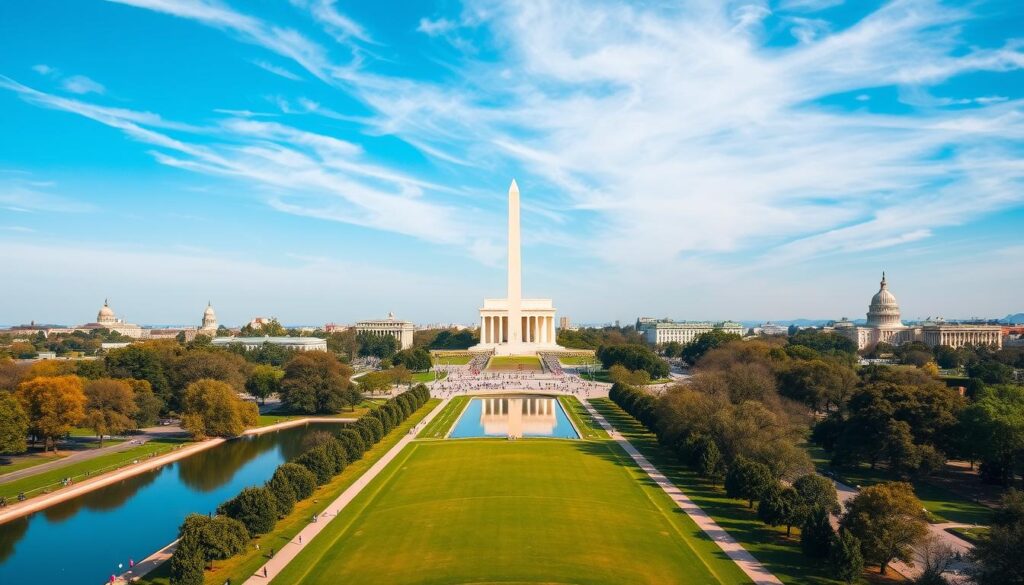
The National Mall is more than just historical sites. It’s a lively place for cultural events and ceremonies all year. You can see the beauty of each season, from the cherry blossoms in spring to the summer concerts and winter reflections.
Visiting the Lincoln Memorial
The Lincoln Memorial is a standout landmark on the National Mall. It honors President Abraham Lincoln. Designed by Henry Bacon, it features a large marble statue of Lincoln in deep thought.
At the Lincoln Memorial, you can feel the power of Martin Luther King Jr.’s “I Have a Dream” speech. It was given on the memorial’s steps in 1963. The memorial’s steps and grounds remind us of key moments in American history.
When you visit, notice the detailed work of the monument. It includes inscriptions of Lincoln’s speeches and symbols of his values. The Lincoln Memorial stands for unity and the fight for justice and equality.
In summary, the National Mall in Washington, D.C., including the Lincoln Memorial, is a journey through American history. It’s a place that will surely make a lasting impression, whether you love history, culture, or just exploring new places.
The Global Appeal of Monuments
Monuments have a unique power to draw people from all over the world. Famous monuments like the Eiffel Tower and the Taj Mahal are more than just buildings. They stand as symbols of culture and history.
The global appeal of monuments comes from the deep connections people feel with them. Visiting these sites is like a journey through time and culture. It’s a way to connect with the world on a deeper level.
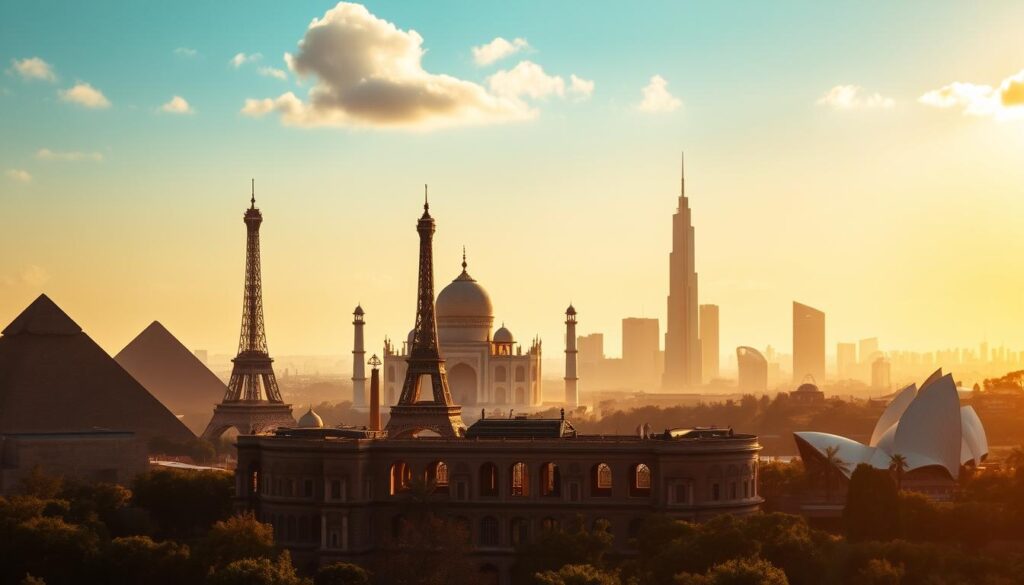
These global tourist attractions help local economies grow. They also help people understand and appreciate different cultures. The Eiffel Tower, for example, is not just a Parisian landmark. It’s a symbol of engineering and romance worldwide.
Monuments also have the power to move us and create lasting memories. The Great Wall of China, the Pyramids of Giza, and the Holocaust Memorial in Berlin are just a few examples. Each monument offers a unique experience that touches the heart.
In summary, monuments connect us across cultures, stir our emotions, and give us a glimpse into the past. As global tourist attractions, they continue to inspire, teach, and captivate people everywhere.
Unique Monuments to Discover in the U.S.
The U.S. has more than just famous landmarks. It’s full of hidden gems that are worth seeing. These spots add to the country’s culture and offer new places to explore.
The U.S. boasts a wide range of monuments, from the Statue of Liberty to lesser-known sites. For example, the Abraham Lincoln Birthplace National Historical Park in Kentucky marks the birthplace of the 16th U.S. President. It gives a peek into America’s rich history.
The Mount Rushmore National Memorial in South Dakota is another fascinating monument. It shows large sculptures of four key American presidents. Its grand size and historical importance make it a must-see.
The Bears Ears National Monument in Utah is perfect for those looking to avoid the usual tourist spots. It preserves a rich cultural landscape with ancient cliff dwellings and petroglyphs. It’s a mix of natural beauty and historical depth, making it a great place to visit.
These monuments, among others, make up the diverse history and culture of America. They let us connect with the past, understand today, and inspire tomorrow. Visiting them can deepen our appreciation for American heritage.
In summary, the U.S. is more than just famous landmarks. It’s also filled with lesser-known monuments waiting to be found. These unique spots are key to understanding America’s history, culture, and natural wonders.
Monuments and Their Impact on Local Communities
Monuments are key in defining local communities and boosting their economy. They draw tourists, create jobs, and help local economies grow.
The economic impact of monuments on local communities is huge. For example, the Statue of Liberty in New York City is a symbol of freedom and a big draw for tourists. It brings in a lot of money for the local economy. The National Park Service says over 4 million people visit the Statue of Liberty every year, making it a top monument in the U.S.
Monuments also have cultural significance. They connect us to the past, keeping history and culture alive for the future. Historian David McCullough said, “History is who we are and why we are the way we are.” This shows how important monuments are in understanding our culture.
“The preservation of monuments is not just about maintaining old structures; it’s about keeping the memory of our past alive for future generations.”
But monuments can also be a challenge for local communities. Handling tourism and keeping these sites intact is hard. Communities must find a balance between the economic benefits of tourism and protecting these historical sites.
In summary, monuments are essential to local communities, affecting both their economy and culture. By managing the impact of these monuments, communities can keep them for future generations.
Visiting Monuments: Practical Tips
To get the most out of visiting monuments, follow some key tips. Seeing famous spots like the Grand Canyon or the Statue of Liberty can be unforgettable if you’re ready.
First, plan your visit based on the monument’s hours and your schedule. Many places have rules you must follow. It’s smart to check the official website or call the monument’s office before you go.
Knowing and following these rules helps everyone. It makes your visit better and keeps the monument safe for others in the future. Some places have areas you can’t enter or rules about taking pictures.
Respecting the site is very important. Stay on paths, don’t touch the monument, and throw away trash correctly. This helps keep these places beautiful for years to come.
Also, think about others and the local community around the monument. These sites are not just old buildings but also important to the people living nearby.
By using these practical tips, you’ll have a great and respectful visit. Whether it’s a local landmark or a famous monument, being prepared and thoughtful is key.
The Role of Technology in Monument Preservation
Technology is changing how we save and protect historical monuments. New digital tools make keeping cultural sites safe and sound easier and better.
3D scanning is a big help in saving monuments. It makes detailed digital copies of monuments. These can help with fixing up sites, keeping records, and even for virtual tours. Experts say, “3D scanning has opened new ways to save cultural heritage by giving us accurate digital records of historical sites.”
“The use of digital technologies in monument preservation not only aids in conservation but also enhances the overall visitor experience by providing immersive and interactive experiences.”
digital archiving is also key in saving monuments. It means keeping digital records of monuments, like photos, videos, and old documents, in safe places. This way, even if a monument gets damaged or lost, its digital history stays safe for the future.
Technology plays many roles in saving monuments. It helps watch over monuments and makes fixing them easier. Tools like drones, GIS mapping, and digital twins are helping a lot in conservation work.
As technology keeps getting better, we’ll see even more new ways to save monuments. Using AI and machine learning could make saving historical sites even better.
How to Respectfully Engage with Monuments
When you visit famous monuments, it’s important to be aware of local customs and rules. This makes your visit better and helps keep these sites for others in the future.
Being culturally sensitive is key to making tourism good for the local community. Knowing and respecting local customs helps keep the monument and its area in good shape.
There are simple ways to make a difference. Stay on paths, don’t touch the monument, and be kind to others. These actions help protect these amazing historical places for a long time.