
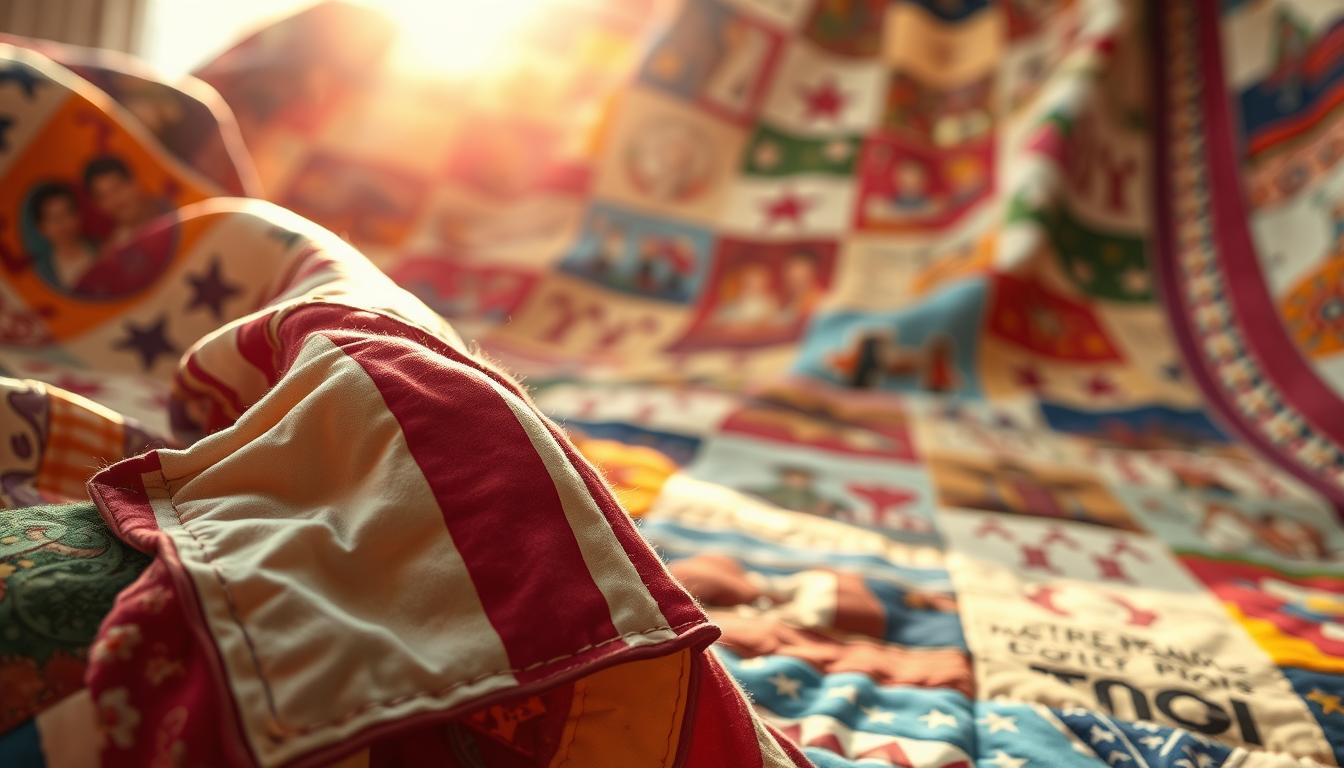
The AIDS Memorial Quilt is a powerful example of a narrative textile. It has nearly 50,000 panels dedicated to over 110,000 individuals. This iconic story quilt symbolizes the impact of the AIDS epidemic and honors those who have passed away.
Quilts have long been a way to preserve history and share personal stories. They offer a unique glimpse into the past. They reveal the lives and experiences of those who made them.
In this article, we will look at the importance of quilts in telling stories and honoring memories. We will dive into their role in quilt history. We will also see how they continue to shape our understanding of the world today.
The Ancient Art of Narrative Textiles
Textiles have long been a canvas for stories, keeping history and culture alive. The art of narrative textiles shows our ancestors’ creativity. They used fabric to share complex tales and feelings.
is a powerful way to tell stories across cultures. Native American quilts and African textiles are examples. They carry histories and myths through their designs.
The beauty of narrative textiles is how they speak to everyone, without words. They use sight and touch to tell stories. This ancient art inspires today’s artists and storytellers, keeping the tradition of storytelling through fabric alive.
What Defines a Story Quilt in American Culture
American story quilts are more than just decorations. They tell stories and carry deep meanings. For centuries, they’ve been a part of American culture. They record history, share personal tales, and pass down values.
The AIDS Memorial Quilt is a key example. It uses panels to remember those lost to AIDS. This quilt honors the dead and raises awareness, showing the impact of story quilts.
Symbolism and Meaning in Quilt Patterns
Quilt patterns often have special meanings. For example, some patterns might mean freedom, while others might symbolize love or loss. The choice of colors and fabrics adds to the story, making each quilt a rich tapestry of tales.
In American culture, quilts like the AIDS Memorial Quilt are vital. They help keep history and culture alive. By understanding their symbols, we appreciate these textiles more and their role in quilt history.
The Historical Significance of Quilted Narratives
Quilted narratives have long been a powerful way to keep history and personal stories alive. These textiles help remember big events, honor loved ones, and share community experiences.
The AIDS Memorial Quilt is a moving example of this. It’s a huge quilt that remembers the AIDS epidemic. It honors those lost and raises awareness about the disease’s impact.
Quilts like the AIDS Memorial Quilt are key in keeping history alive. They offer a personal look at the past. This helps future generations learn and connect with history.
Quilts also commemorate many other historical events. They cover wars, social movements, personal achievements, and family stories.
Looking at these quilts, we can understand history better. They connect us to the past. They let us reflect on others’ experiences and learn from their stories.
Underground Railroad Quilts: Secret Codes in Plain Sight
The Underground Railroad’s history is linked to quilting. Quilts were used to send secret messages to slaves trying to escape. This idea, though debated by historians, shows the cleverness and creativity of those helping slaves.
Quilts helped slaves in many ways. Some patterns were thought to mean different things. For example, the “Log Cabin” pattern might point to a safe place. The “Winding Road” pattern could warn of dangers or changes in the escape route.
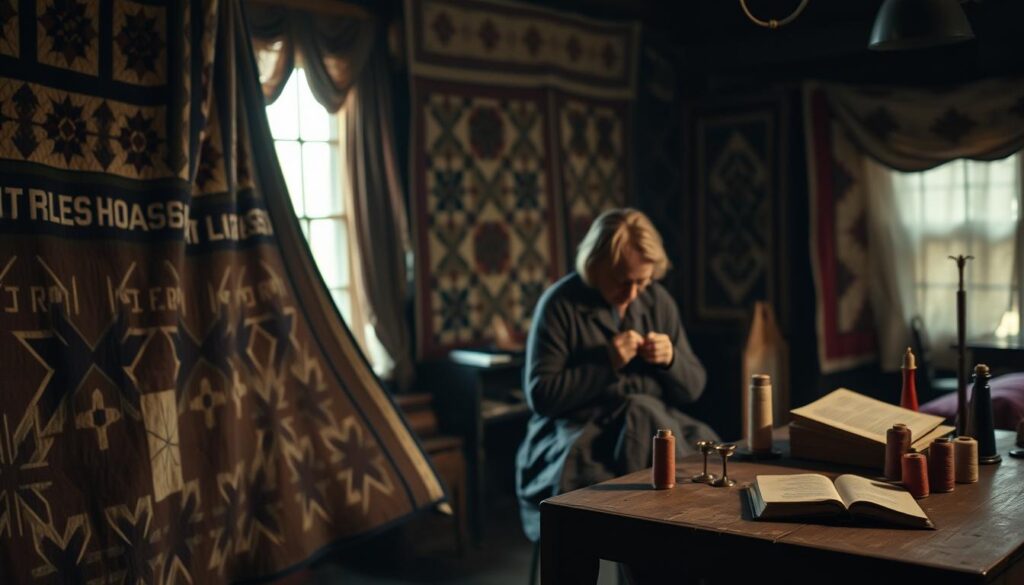
Quilts were a clever way to send messages. They were common in homes, so no one suspected them. This allowed the codes to be hidden in plain sight, within the quilt’s design.
As historian Jacqueline Tobin says, “Quilts helped tell slaves when it was safe to escape. They showed where to go and what dangers to avoid.” This shows quilts were more than just tools; they were symbols of hope and resistance.
“The quilt became a symbol of the freedom struggle, a tangible representation of the abstract concept of liberty.”
Underground Railroad quilts are important for more than their secret messages. They represent freedom, resistance, and community. They show the creativity and courage of those who made and used them.
African American Story Quilt Traditions
African American quilting traditions are a key part of their cultural heritage. They weave stories and histories across generations. Quilting has been important in African American culture, used for storytelling, building community, and keeping traditions alive.
Quilting holds deep meaning in African American communities. It’s a way to share messages, tell stories of overcoming challenges, and keep cultural heritage alive. Families and communities share patterns and techniques, keeping the tradition alive.
Story quilts are a powerful way for African Americans to share their experiences and values. These quilts often have symbols and motifs that reflect African American history and struggles.
The cultural significance of these quilts goes beyond their beauty. They connect us to the past and help preserve cultural identity. Through quilting, African American communities keep their heritage alive for future generations.
In summary, African American story quilt traditions showcase the rich heritage and resilience of African American communities. These quilts are vital in preserving history, telling stories, and building community.
Famous Story Quilts That Shaped American History
Many artists and activists have used quilts to change American history. Story quilts tell stories, make social comments, and keep cultures alive. The AIDS Memorial Quilt is a great example of quilting’s power to honor, educate, and unite people.
The AIDS Memorial Quilt started in the late 1980s. It has become a symbol of the AIDS fight and activism. Each panel remembers someone who died from AIDS, making the epidemic’s numbers real and personal. It has been shown all over, helping to advocate and remember.
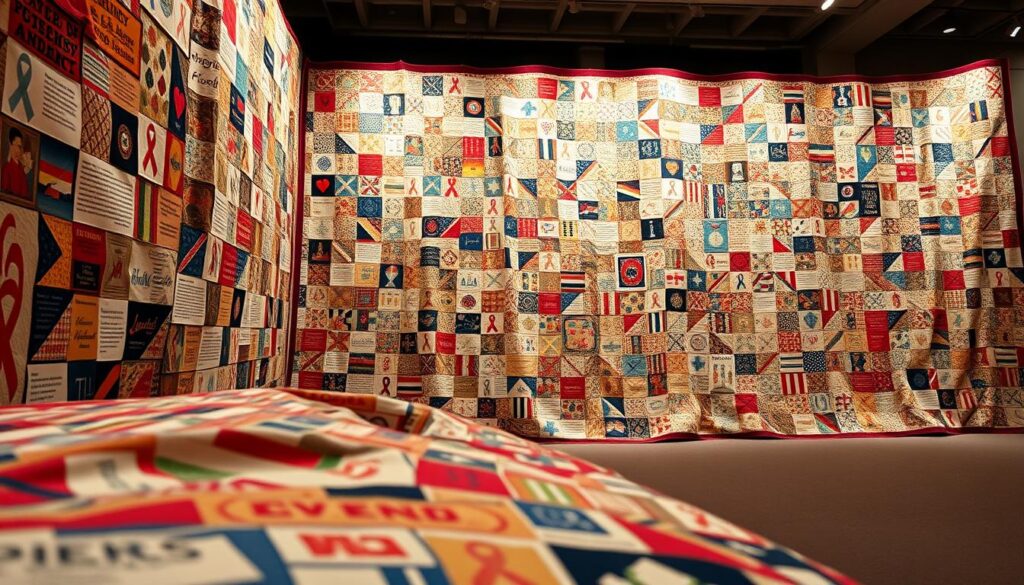
Other story quilts have also made big impacts. For example, quilts from the Civil Rights Movement showed resistance and unity. They showed African American culture and fought against racial unfairness.
These quilts are special because they tell complex stories and feelings through art and skill. Looking at these quilts helps us understand their historical context and how they helped change society.
In summary, quilts like the AIDS Memorial Quilt have deeply influenced American history. They show how textile art can inspire, teach, and bring people together. So, they are celebrated for their beauty and their role in shaping our culture and conversations.
The Communal Power of Quilting Circles
In American culture, quilting circles are key in building communities. They are places for social connection and sharing stories. These gatherings help people feel a sense of belonging and work together.
Quilting circles are more than making quilts. They are for sharing experiences, traditions, and stories. Patricia Crews, a textile history expert, says, “Quilting is a communal activity. It weaves together fabric and the lives of those who make it.”
“The quilt is a symbol of the community’s collective memory, a tangible representation of the stories, struggles, and triumphs of its members.”
Quilting circles unite people from all walks of life. Working on a quilt together builds understanding and empathy. Sharing stories and experiences creates strong bonds, making a community beyond the circle.
Quilting circles also preserve cultural heritage. Quilts carry patterns, designs, and stories, passing history and traditions to the next generation. This keeps cultural practices alive and connects us to the past.
In summary, quilting circles are about community building. They use quilting to create social connections and a sense of belonging. As we face modern life’s challenges, quilting circles remind us of the value of coming together, sharing stories, and making something meaningful.
Personal Narratives Stitched Into Family Heirlooms
Quilting is more than sewing fabric together. It’s about weaving family stories and memories into quilts. Quilts have long been treasured family heirlooms, passed down through generations. Each stitch and pattern tells a story of love, loss, and legacy.
These quilts are not just decorations. They are personal narratives and family histories in fabric. They often use fabrics and materials from important family events or ancestors. This makes each quilt a unique historical artifact.
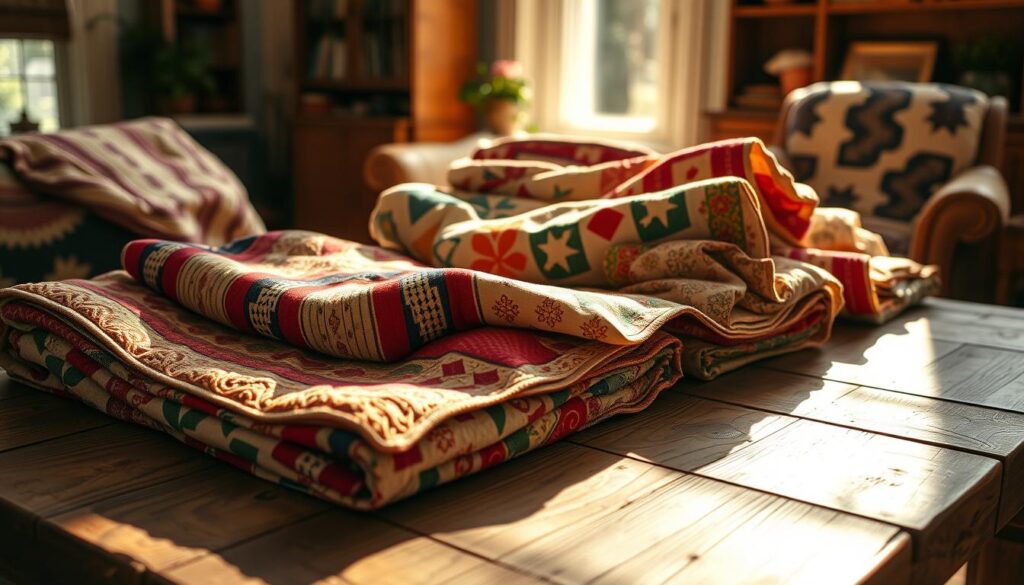
Making a quilt as a family heirloom involves the whole family. Stories are shared, memories recalled, and the quilt holds family history. This process strengthens family bonds and keeps personal narratives alive for future generations.
As family heirlooms, these quilts are loved and kept safe. They become key parts of family traditions and gatherings. They connect us to our past, showing the love and effort put into making them.
In short, quilts are quilts are vessels for personal narratives. They carry family stories and memories through time. They show the value of craftsmanship and keeping family histories alive.
The Art and Craft of Story Quilt Creation
Creating story quilts is a complex art form. It involves many techniques and traditions. Quilts are made through piecing, appliqué, quilting, and embroidery. This process is hard, requiring skill, patience, and creativity.
Piecing is key in quilt making. It’s about sewing fabric pieces together to form a design. This way, quilters can make detailed patterns and images that share a story.
Appliqué is another technique used in quilts. It adds decorative elements by attaching fabric shapes or designs to the quilt. This is done with needle and thread.
The quilting process layers the quilt top with batting and a backing fabric. Then, the layers are stitched together. This makes the quilt strong and cohesive, done by machine or hand.
Embroidery adds extra details and embellishments to story quilts. It includes detailed stitching, text, or other decorations. These enhance the quilt’s story and meaning.
The tradition of making story quilts is rich and ever-changing. Quilters use various techniques to create unique, meaningful quilts. These quilts tell stories and connect with people.
Story Quilts in the Digital Age
The mix of technology and textile art has changed story quilts in the digital age. The internet and social media help quilters share their work. They can connect with others and find patterns and tutorials online.
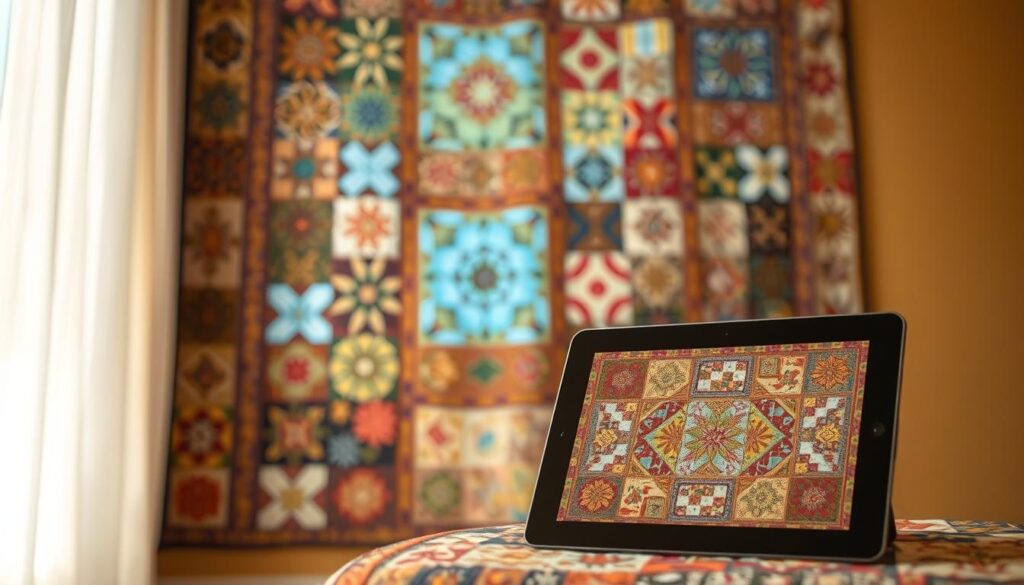
Online, quilters can show their story quilts to people all over the world. They get feedback and praise from everywhere. This has made quilting more popular and encouraged new designs.
The digital age also helps keep traditional quilting alive. It lets quilters mix old techniques with new ideas. So, story quilts keep growing, combining old traditions with modern styles.
Creating Your Own Story Quilt: A Beginner’s Guide
Making a story quilt is a great way to keep memories alive. This guide will help you from the start to the end of your project.
First, collect fabrics that mean something to you. This could be pieces from special clothes or textiles that tell part of your story. Think about the colors, textures, and patterns that fit your story best.
Designing Your Quilt means picking a pattern or layout that matches your story. You might go for a classic design with a personal touch or something entirely new. The most important thing is that the quilt’s look helps tell your story.
Tips for Incorporating Personal Narratives
To add depth to your quilt, use embroidery or appliqué to highlight important details. You can also include personal artifacts or memorabilia to make it even more special.
Remember, the journey of making your quilt is just as valuable as the finished piece. The love and effort you put into it will show in every stitch.
By following these steps and tips, you can make a story quilt that tells your story and becomes a family treasure.
The Timeless Voice of Fabric: Why Story Quilts Will Always Matter
Story quilts are loved today, showing the lasting power of fabric to share stories and keep history alive. They connect people across time, using the common language of storytelling.
The art of quilting has grown, but story quilts stay the same. They are a key way to express ourselves, showing the past and inspiring new artists. Fabric’s voice speaks to us all, sharing feelings, memories, and stories in a personal and shared way.
Looking ahead, story quilts will keep their place in our culture. They mean more than just looking good; they connect us to our shared past. By keeping these quilts alive, we celebrate the stories and makers, ensuring their voice keeps touching hearts for more years.