
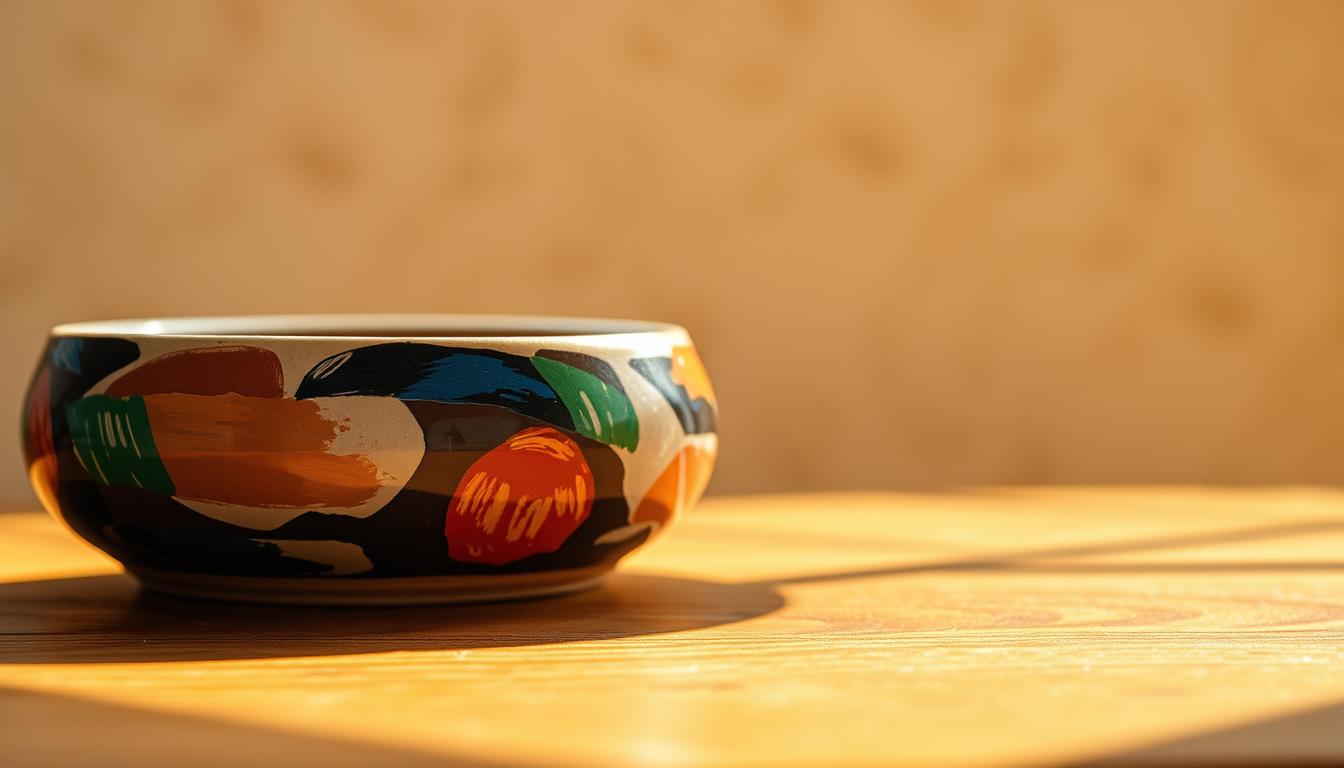
Adding a personal touch to ceramic art is super exciting. Artists often use pottery painting to make their ideas real.
Pottery decoration is different from regular painting. It uses special stuff like underglazes and oxide stains. This lets artists try new things and make unique pieces.
Whether you’re experienced or new, pottery painting is full of creative chances. We’ll look at how to paint a pottery piece. We’ll cover picking the right materials and adding the final touches.
Introduction to Pottery Painting
Pottery painting is a mix of art and skill. It lets you turn simple pottery into unique pieces. You add different materials to make it colorful and decorative.
The art of pottery painting and ceramic painting uses many techniques and materials. You can use underglazes, slips, oxide stains, glazes, and even acrylic paint or fingernail polish. Each material lets you try out different styles and designs.
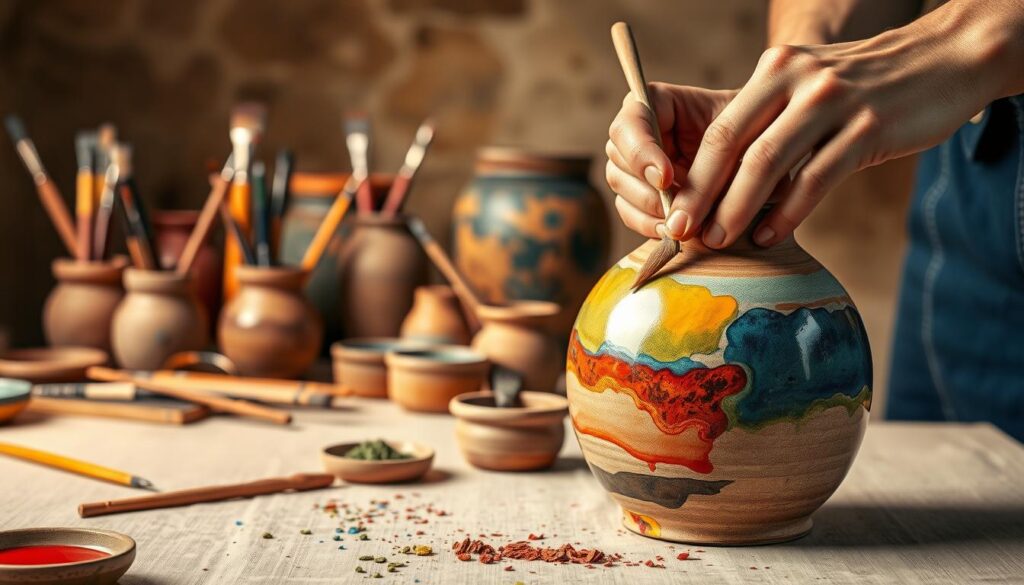
When you start pottery painting, knowing the basics is key. Underglazes are great for detailed designs, while glazes add a glossy finish. Trying out different materials and techniques helps you find your favorite style.
Choosing the right pottery piece is also important. The shape, size, and material affect the final look. As we explore pottery painting more, we’ll look at how to pick the perfect piece for your next project.
Selecting the Right Pottery Piece
Finding the right pottery is key for a great painting experience. You need a piece that’s ready for your creativity to shine.
“Bisque” is when the pottery is ready to paint. It’s been fired once and is now ready for underglaze or glaze. Choosing bisque-fired pottery ensures your artwork sticks well and lasts longer.
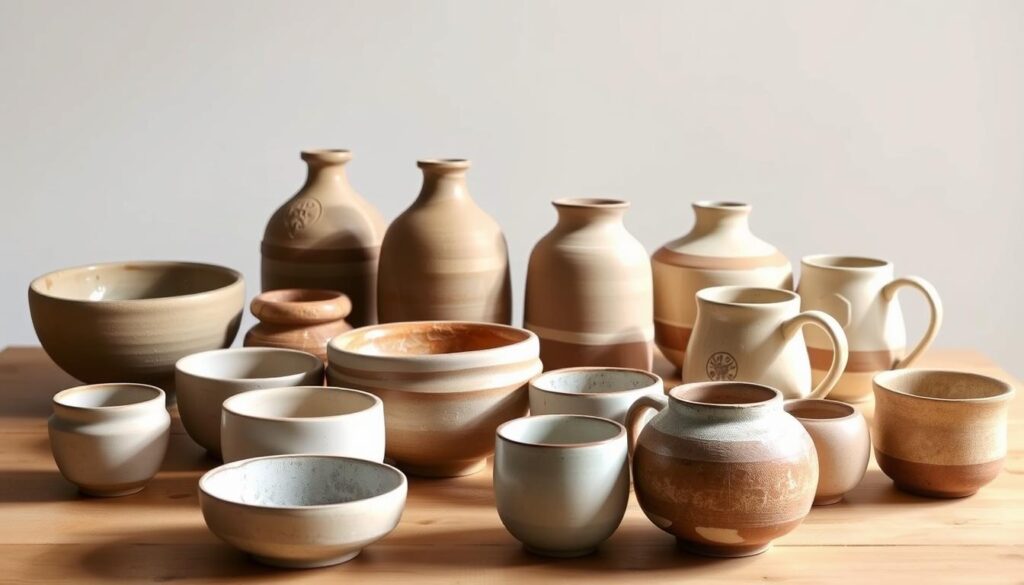
When picking ceramic pieces, think about the design, shape, and size. Some have cool designs or patterns to inspire you. Others are plain, letting you create freely. The most important thing is to choose a piece that fits your artistic vision.
“The art of pottery painting is not just about applying colors; it’s about bringing life to a piece of ceramic art.” – A pottery artist.
To get the most out of your pottery painting, consider these tips:
- Look for pieces with interesting shapes or textures.
- Consider the size of the piece and how it will fit in your workspace.
- Think about the theme or style you’re aiming for in your painting.
By choosing the right pottery, you’re setting up for a fun and creative painting session. Whether you’re new or experienced, the right piece can really enhance your artwork.
Essential Painting Supplies
Before you start painting your pottery, make sure you have the right stuff. The quality of your pottery painting supplies really matters. It can make a big difference in how your piece turns out.
Ceramic paints come in different types, each with its own special features. All our paints are water-based. This makes them easy to clean up and safe to use.
Paints and Brushes
The right painting brushes are just as key as the paint. Different brushes can help you achieve various effects. For pottery painting, you need brushes made for ceramics.
Our studio has a variety of painting brushes for different techniques. Whether you’re doing fine details or big strokes, we’ve got you covered.
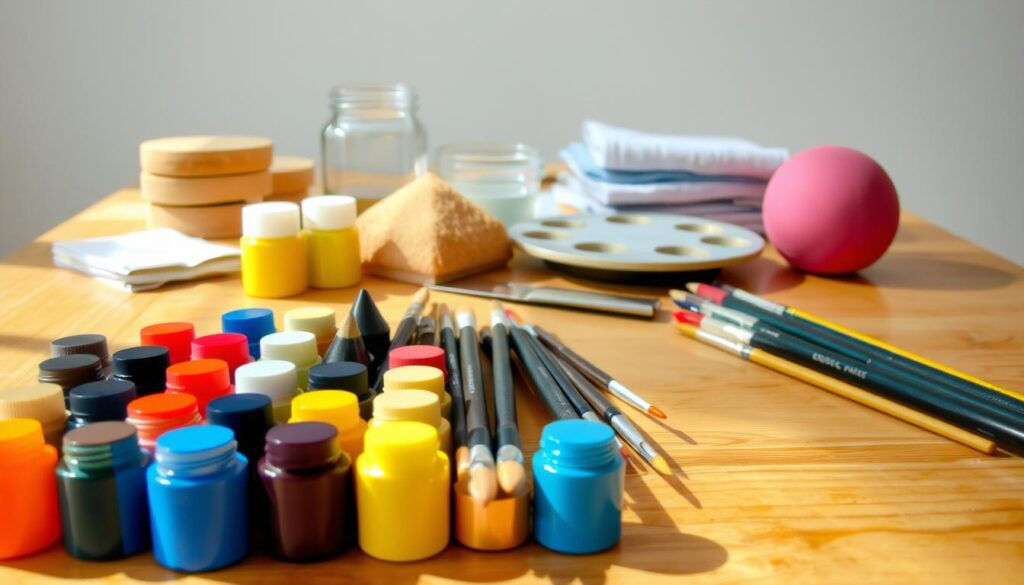
Think about the design you want when picking your pottery painting supplies. Our water-based paints are easy to work with. They also won’t stain your clothes, making them great for artists of all ages.
Choosing the right ceramic paints and painting brushes will help you create a stunning piece of pottery. It will show off your creativity beautifully.
Preparing Your Pottery for Painting
To get a professional look, start by preparing your pottery for painting. This step makes sure your pottery is ready for smooth paint.
Clean your pottery first. If it’s been fired once, it might have dust or debris. Use a soft brush or damp cloth to wipe it clean. This not only cleans the surface but also helps the paint stick better.
Inspecting the Pottery for any imperfections is key. If you find any, use fine-grit sandpaper to smooth them out. This ensures a uniform finish.
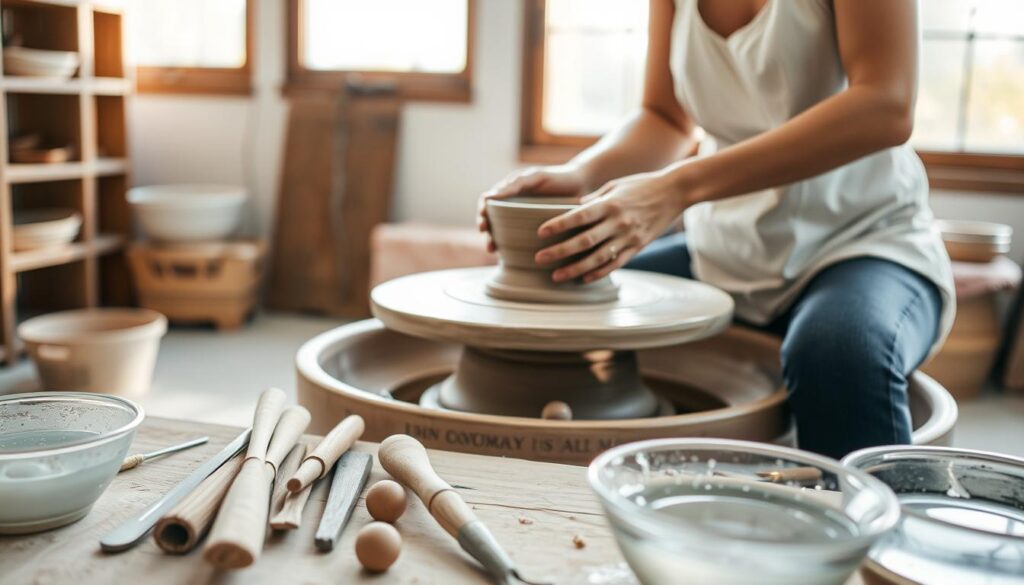
After cleaning and checking, your pottery is ready for paint. Proper preparation is vital for a lasting finish. By following these steps, your ceramic piece will look great and last long.
Tips for Effective Preparation: Always use clean hands or gloves to handle your pottery. This prevents oils from your skin from affecting the surface. Also, work in a well-ventilated area to avoid inhaling dust or fumes.
Techniques for Painting Pottery
To get unique designs on your pottery, you need to know and use different pottery painting techniques. Whether you’re new or skilled, learning various methods can make your work better.
Using brushstrokes is key in pottery painting. They can make your work smooth or detailed. Try different brushes to see what you can do.
Brushstrokes and Strokes
How you paint your pottery changes the look of your work. Brushstrokes can be big and bold or small and soft. Long strokes can make your work look like it’s moving. Short strokes add texture.
For most projects, we suggest using three coats of each color. But, the number of coats can change based on the paint and glaze you use.
You can also use special glazes and matte paints to add depth. These can make your designs pop and make your pieces unique.
By mixing ceramic painting methods and trying new things, you can find your own style. Don’t be scared to try new ideas and see what you can create.
Adding Color and Design
Adding color and design to your pottery can make it truly special. It lets you show off your creativity and make each piece unique.
Start by trying out different ways to make ceramic patterns. You can use stamps, stencils, and sponges for this. Stencils are perfect for detailed designs, while stamps can add cool, repeating patterns.
Color application is also key in pottery design. Try out different brushstrokes and layering to get the look you want. Our Idea Center has lots of materials to help spark your ideas.
Using various materials and tools can lead to amazing, unique pieces. Whether you’re new or experienced, the most important thing is to have fun and keep trying new things.
Finishing Touches
Once your pottery is painted, it’s time to think about the finishing touches. These touches will make it durable. Applying a protective coating is key to making your piece last long.
The most common method for pottery finishing is glazing. Glazing adds a decorative layer and protects against moisture and wear. Our studio offers many glazes to choose from after you’ve painted your pottery.
For ceramic sealing, we use a high-quality glaze. It’s then fired in a kiln for a durable finish. This makes your pottery beautiful, functional, and resistant to damage.
In some cases, we add extra protective coatings. This is for pieces used outdoors or subject to heavy use.
By leaving your finished pottery with us, you can trust it’s in good hands. We’ll glaze and fire it with care, ensuring a professional finish.
Common Mistakes to Avoid
To have a great time painting pottery, it’s key to know the common mistakes. Knowing these pottery painting mistakes can save you from frustration and help you get a beautiful result.
One big ceramic error is using the wrong paint. For example, acrylics are not meant for ceramics and shouldn’t be fired in a kiln. Using them can release harmful fumes, which is dangerous.
Another common pitfall is not getting the pottery ready before painting. This can cause the paint to not spread evenly, ruining the finish. Make sure the surface is clean and dry to avoid this.
Not following the glaze or underglaze instructions can also lead to unpredictable outcomes. Always read and follow the guidelines to get the right color and finish.
By knowing these common mistakes and how to avoid them, you can improve your pottery painting skills. Remember, the more you practice, the better you’ll get. Understanding these pitfalls is a big step towards becoming a pro.
Resources and Inspiration
Exploring pottery painting? The right resources and inspiration are essential to improve your skills. Our staff is always ready to help and share ideas to bring your vision to life.
Looking for painting tips? There are many online tutorials and videos with step-by-step guides and advice. Books and magazines on ceramics and pottery also offer valuable information.
Want to spark your creativity? Visit local art studios, attend ceramic workshops, or join online ceramic artist communities. These resources will help you create unique pieces that show off your style.