
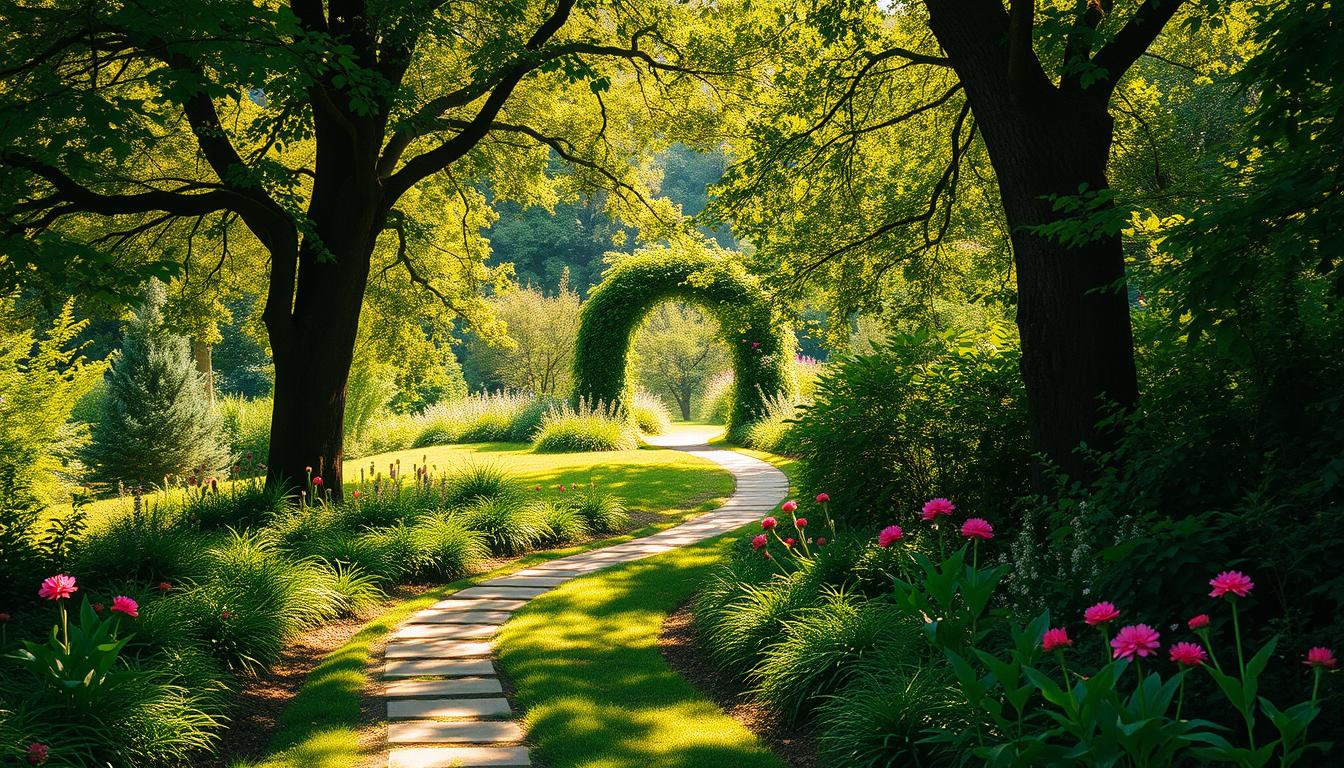
The journey is often more significant than the destination. This idea is shown in “The Lost Path,” an art piece. It teaches us about the value of pathways in our lives.
A well-designed garden path can turn an ordinary outdoor area into a peaceful and beautiful place. It’s not just about reaching the end; it’s about the journey, the experience, and the memories we make along the way.
By using garden design, a winding path can lead visitors through a carefully planned landscape. It invites us to explore and discover. As we follow these paths, we learn that sometimes, getting lost can help us find ourselves.
The Enchanting History of Pathways
The history of garden pathways is filled with cultural influences. For centuries, they’ve been key in garden design. They guide visitors through a world of beauty and peace.
Many garden designers have shaped the idea of pathways. Historic garden designs from Europe, Asia, and more have created today’s diverse styles.
Influential Garden Designers Through History
Designers like André Le Nôtre and Gertrude Jekyll have made a big impact. Le Nôtre worked on Versailles’ gardens, and Jekyll was part of the Arts and Crafts movement. Their work inspires garden designers today.
Garden pathways have changed over time. They reflect new values, technology, and tastes. Now, they’re not just for walking but also enhance a garden’s look and feel.
What Makes a Garden Path Special
A garden path is special because it changes how visitors feel, making them feel like they’re on an adventure. It’s not just a path; it’s an experience that can touch your heart and stay with you forever.
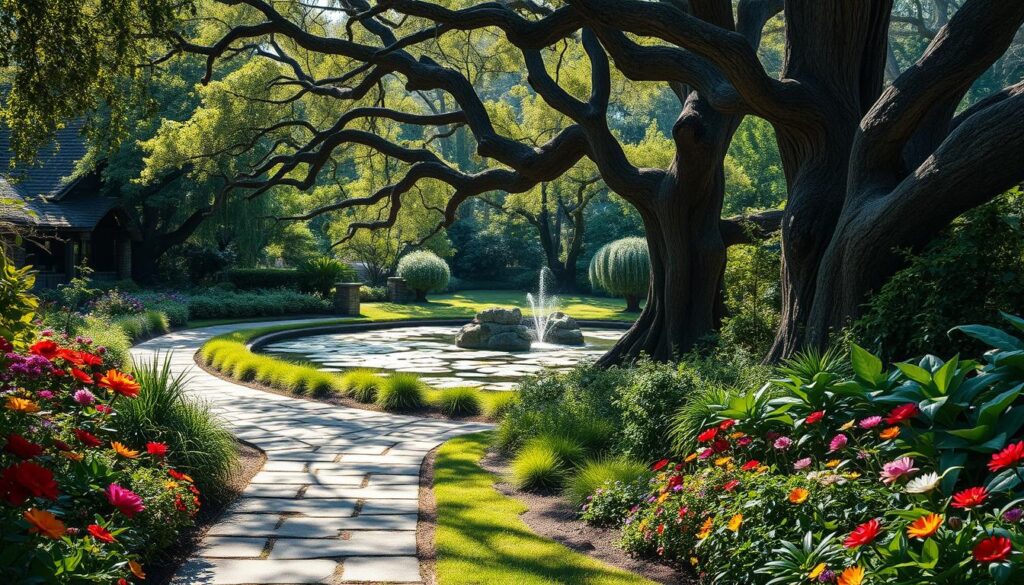
The design of a garden path is key to the visitor’s experience. It takes them through various parts of the garden, showing them new things to see, hear, and smell. A winding path builds excitement, while a straight one gives a clear direction.
The Psychology of Path Design
The psychology behind path design is about how it shapes our perception and actions. A well-made path can lead visitors to discover and marvel at the garden. Using different materials, colors, and textures makes the path more interesting.
Also, the psychology of path design is about how we interact with our surroundings. By designing the path carefully, gardeners can create a flow that makes the journey fun and memorable.
Adding curves, bends, and changes in elevation makes the path more exciting. It invites visitors to explore more. This makes the garden path a standout feature, adding to the garden’s charm.
Exploring Different Garden Path Styles
Homeowners have many garden path styles to pick from. They can find one that matches their outdoor decor and landscaping dreams.
Garden paths come in many styles, from modern to traditional. Modern garden paths have clean lines and simple designs. They use materials like concrete, steel, or glass.
Traditional garden paths use natural materials like stone, brick, or gravel. They also have decorative touches like statues or patterns.
Choosing a garden path style depends on your garden’s look and feel. For example, a formal garden might need a straight, brick path. A whimsical garden could look great with a winding, gravel path.
The perfect garden path style can make outdoor spaces more beautiful and useful. It makes them welcoming and fun to be in.
Materials That Tell a Story
Garden paths are more than just walkways. They tell stories through the materials used. The choice of material can bring a sense of history, culture, or whimsy. This turns a simple path into a journey of discovery.
There are many materials for garden paths, from traditional stone and brick to modern options like plastic pipes, as seen in “The Lost Path” installation. Each material has its own benefits, such as durability, beauty, or being eco-friendly.
Stone pathways can feel timeless, while gravel paths have a rustic, natural look. Reclaimed wood adds warmth and character to garden paths.
Using different materials in garden paths lets homeowners show their style and create a unique outdoor space. Whether it’s mosaic tiles or weathered stone, the right materials can make outdoor spaces more beautiful.
Creating Your Own Garden Path
Designing a garden path is a fun DIY project. You can make your garden a stunning oasis. A beautiful path guides visitors through your space.
First, think about what your path will do. Will it lead to a seating area or a water feature? Or is it just for looks? Knowing its purpose helps you design it.
For your garden path, you can pick from stone, brick, or gravel. Each has its own look. You can choose from formal to casual designs.
Budget-Friendly Path Solutions
On a tight budget? You can make a beautiful garden path without spending much. Using reclaimed materials like old brick or stone is a great idea. It’s eco-friendly and unique.
Another budget-friendly option is gravel or decomposed granite. They’re cheap and easy to lay. Stepping stones are also a good choice. They come in concrete, stone, and wood.
With the right materials and design, you can have a beautiful garden path. It will make your outdoor space better without costing a lot.
Plants That Transform a Simple Path into Magic
A garden path is more than a way to get around. It’s an experience made special by the right plants. The right garden plants can turn a simple path into a magical journey. This can make your garden’s style and feel even better.
When picking plants for your path, look for ones that are not just pretty. Choose plants that smell good and have interesting leaves. Lavender and rosemary smell great, while hostas and ferns look amazing. The goal is to find a balance that makes the path and the garden look good together.
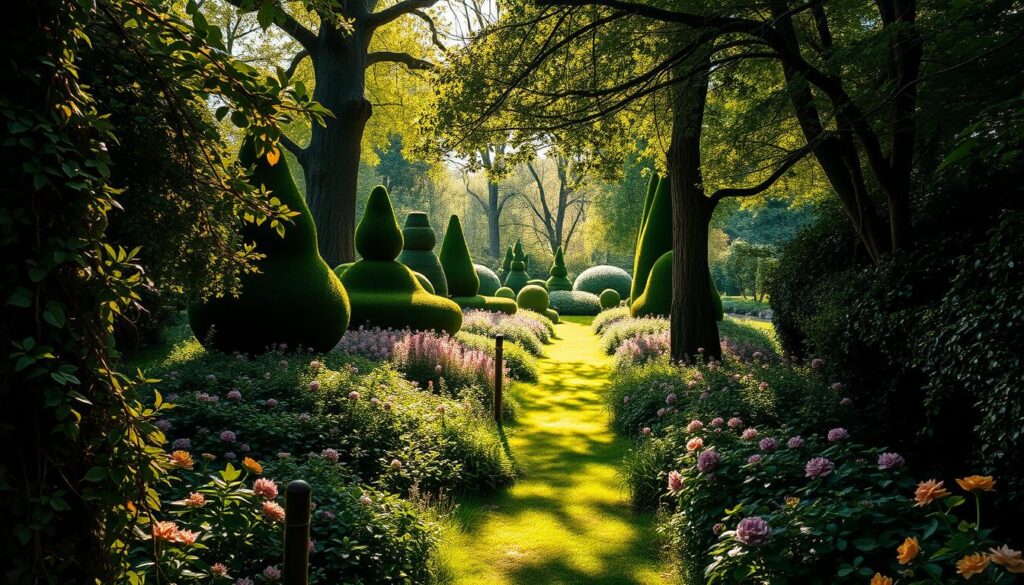
Using different plants along your path can guide visitors through your garden. Taller plants can frame the path, while shorter ones can spill over. This creates a sense of journey and discovery.
To get a look that works together, think about the colors and textures of your plants. Mix flowers and foliage for interest all year. Also, using native plants can make your garden look more natural and need less care.
The plants you pick for your path should match your style and what you want your garden to look like. By choosing garden plants that fit your garden’s design, you can make a path that’s more than just a way to get around. It’s a magical experience that will delight your senses.
Iconic Garden Paths Around the World
Iconic garden paths have amazed people for centuries. They are more than just paths; they make outdoor spaces beautiful and functional. Often, they are the main attraction in a garden.
The Gardens of Versailles in France is a famous example. Its well-kept paths and hedges create a grand feel. The Kensington Gardens in London also stand out. They have winding paths and beautiful views.
In the U.S., the New York Botanical Garden has many paths. These paths are perfect for walking and show off great garden design. They match the garden’s wide variety of plants.
These paths are loved for their history and beauty. They inspire garden lovers and designers everywhere. They show how important good outdoor spaces are.
The Garden Path as Metaphor
The idea of a garden path has grown into a strong metaphor for personal growth. It shows up in literature and media, symbolizing a journey of self-discovery. Here, the hero faces challenges and comes out changed.
Garden paths are seen as the winding path of life, full of twists and turns. This metaphor is key in coming-of-age stories. It shows the hero’s growth and maturity. Garden paths also appear in films and TV, symbolizing transformation and renewal.
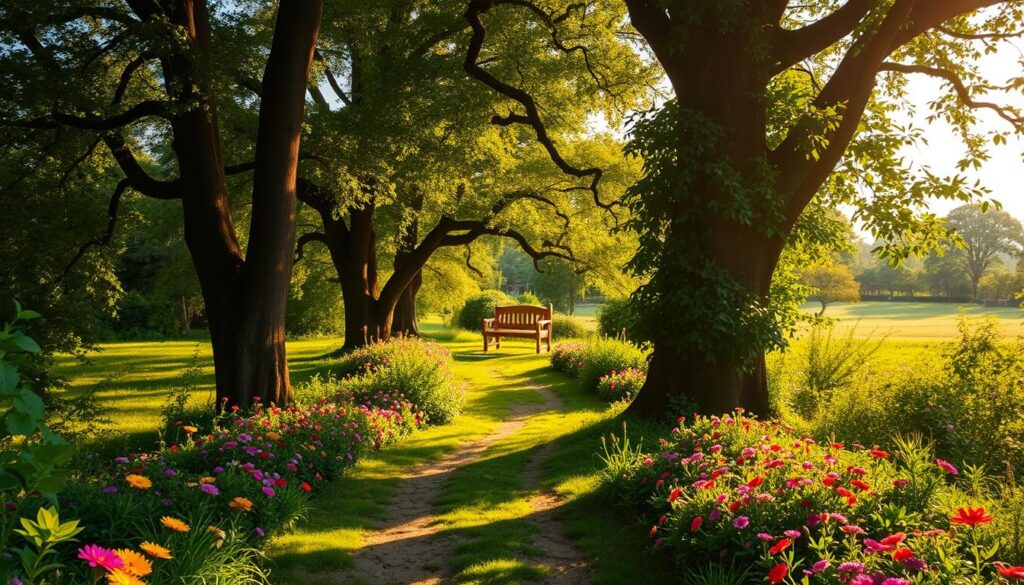
In today’s media, the garden path remains a powerful symbol. Authors use it in books to show a character’s path to self-discovery. The cultural value of garden paths comes from their ability to bring a sense of nostalgia and wonder.
Using garden paths in stories adds depth and complexity. It makes us think about our own life journeys. Exploring the garden path metaphor helps us understand the lasting appeal of gardens in media.
Finding Peace Along the Garden Path
A garden path is more than just a walkway; it’s a journey to inner peace. The serene environment of a garden, with its winding path, is perfect for mindfulness and relaxation.
Garden paths make us slow down and enjoy the beauty around us. We hear nature’s sounds, smell flowers, and see greenery. All these things bring us a sense of garden peace.
The idea of garden therapy shows that nature heals our minds and bodies. Garden paths help us relax and feel less stressed. They play a big part in this healing process.
Walking on a garden path is like meditation. It connects us with nature and brings calm inside. This simple act is why garden paths are so special.
Seasonal Care for Your Garden Path
To keep your garden path looking great, regular seasonal maintenance is key. As seasons change, new challenges come up. These can affect how your path looks and stays safe.
In spring, check your path for winter damage. Look for cracks, uneven spots, and debris. Summer needs regular cleaning to avoid dirt and slippery spots. “A well-maintained garden path is not just aesthetically pleasing but also safe for visitors,” says a renowned gardening expert.
Problems like weeds, erosion, and bad drainage can be fixed with simple steps. Regularly remove weeds and fix any damage to stop it from getting worse. Good drainage is key to avoid water damage and erosion.
By following these seasonal care tips and fixing common issues, your garden path will stay beautiful all year. Regular upkeep makes your garden more beautiful and keeps the path safe and welcoming.
The Healing Journey of Garden Paths
Walking through a serene garden path can be very therapeutic. It helps us feel mentally well and calm. The idea of a healing garden has been around for centuries. These spaces are designed to help us feel better and recover.
A well-designed garden path is key in garden therapy. It takes us on a journey of discovery and relaxation. As we walk, we leave our daily worries behind. Our minds start to heal.
Garden paths offer many benefits for wellness. They encourage us to move, connect with nature, and find peace. An expert says, “A garden path is more than a path. It’s a journey to inner peace.”
“The garden is a love song, a duet between a human being and Mother Nature.”
Adding a garden path to a healing garden makes it even more effective. It creates a space that cares for both our body and mind. By designing these paths carefully, we can make spaces that help us feel well and support our mental health.
Where the Path Leads You Next
Creating and enjoying a garden path opens up endless possibilities. Whether you’re looking for new garden ideas or want to improve your current one, the future is bright. The path ahead is full of promise.
Garden design is more than just looks; it’s about creating a changing experience. Think about how your path can grow and change with the seasons. It can show off your style and connect you closer to nature.
When planning your next garden project, every step is a chance to try new things. You can pick materials that tell a story or plants that make your path magical. The journey is as exciting as the end result.
With these tips, you’re ready to start your next garden adventure. You’ll create a space that inspires you and strengthens your bond with nature. The path you take will lead to new discoveries and a deeper love for garden design.