
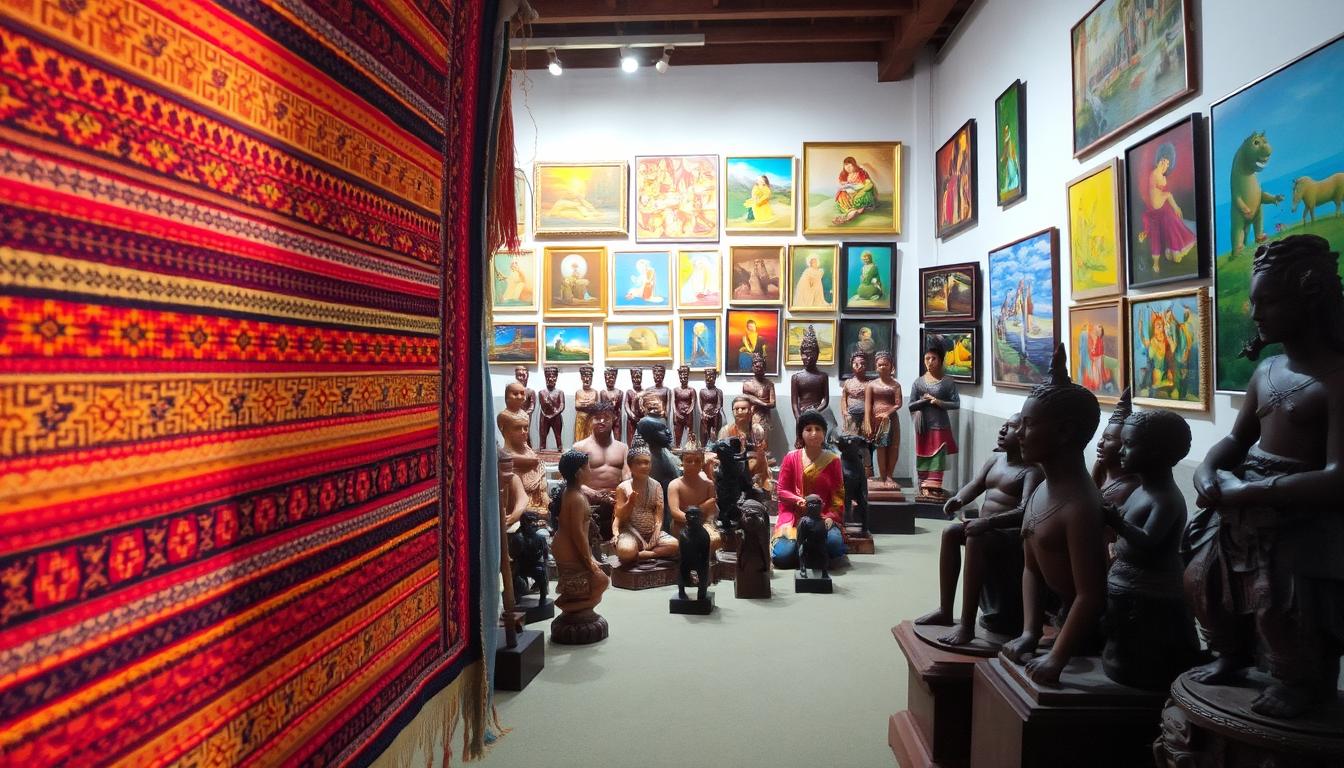
Showing off cultural art is a great way to share your heritage and identity. It lets people connect with their roots and feel a sense of belonging.
Studies show that displaying kids’ artwork boosts their self-esteem and creates lasting memories. An art exhibit is a powerful way to express oneself and bring the community together.
By embracing cultural display, people can share their unique views and experiences. This helps build a deeper understanding and appreciation of different cultures.
The Significance of Cultural Art in Modern Society
Cultural art is a key part of our cultural heritage. It deeply influences our modern society. It helps us understand and value the many cultures that make up our world.
In today’s global world, cultural art is vital. It helps us learn about and respect different cultures. By exploring cultural art, we gain insights into various traditions, values, and histories.
The importance of cultural art is huge. It brings people together, creating a sense of community. Cultural art shows help artists share their work. This leads to conversations and exchanges between artists, curators, and viewers.
By celebrating cultural art, we support understanding and appreciation across cultures. This enriches our lives and helps make our society more harmonious and inclusive.
Understanding Different Forms of Cultural Art
The variety of cultural art shows the creativity and richness of cultures worldwide. Different cultures have their own traditions, values, and histories. This makes cultural art very diverse.
Cultural art comes in many forms. You can see it in visual arts like painting and sculpture. You can also find it in performing arts, such as music and dance. Decorative arts, like textiles and pottery, are another example.
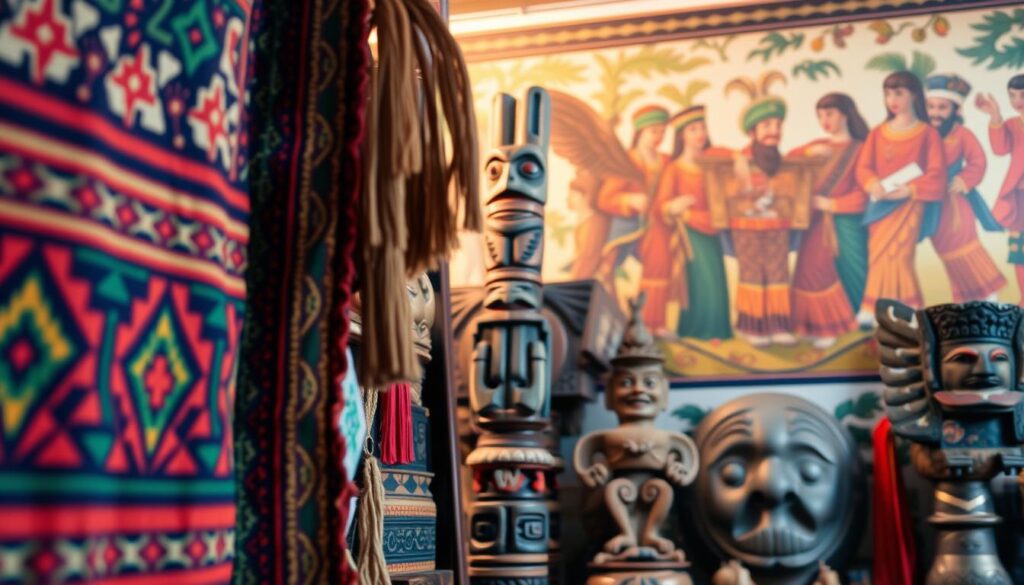
The “culture jars” art lesson is a great example. People make jars that show their cultural heritage. This shows how personal and intimate cultural expression can be. It helps keep traditions alive for future generations.
Cultural art also changes over time. It’s influenced by history, social changes, and new technology. This keeps cultural art fresh and interesting, teaching us about different cultures.
Learning about and enjoying different cultural art forms helps us understand and respect other cultures. By celebrating art diversity, we honor the unique cultural expression of communities everywhere. This enriches our lives and broadens our views.
Planning Your Cultural Art Exhibit: Essential Steps
Planning a cultural art exhibit needs careful attention and a deep understanding of the artwork’s cultural meaning. A great exhibit is more than just showing art. It’s about creating an experience that connects with the audience.
The first step is to decide on the exhibit’s theme and scope. This means researching the artwork’s cultural background and who it’s for.
Picking the right art is key to a successful exhibit. Look for art that fits the cultural theme, is in good condition, and looks great. Curators should also think about the art’s cultural sensitivity and how it might affect the audience.
Working with Artists and Collectors
Working with artists and collectors is vital for planning an exhibit. Curators need to talk clearly and make agreements that protect the artwork. Building good relationships with artists and collectors can also open up new opportunities.
By following these steps, curators can make an exhibit that people will remember. With careful planning, a cultural art exhibit can help people understand and appreciate different cultures.
Designing the Perfect Space for Cultural Art Display
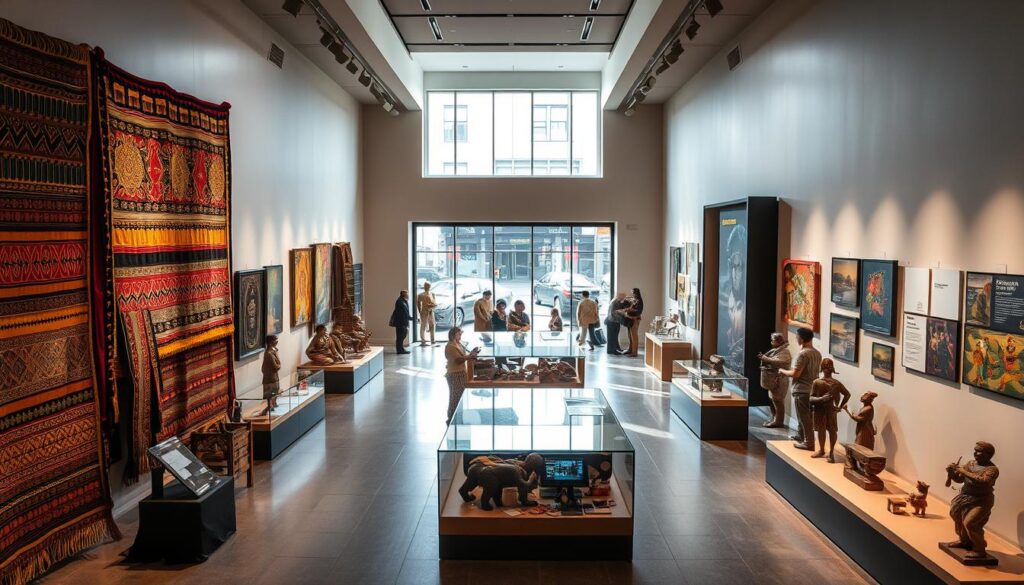
Displaying cultural art is more than just showing pieces. It’s about creating an immersive experience. Good exhibit design is key to showing the beauty and importance of cultural art. By planning the cultural art display well, you can make a space that connects art and viewer deeply.
Space planning is very important. It involves thinking about lighting, layout, and how things flow. This helps make an exhibit that is both harmonious and engaging. The right lighting can make colors and textures pop, and a smart layout ensures each piece gets its due.
The way the exhibit flows is also key. It should lead the viewer through in a way that’s both logical and interesting. This can be done by creating a story or theme that ties everything together, or by using design to guide the viewer’s eye.
The look of the exhibit space should also match the cultural art. Using materials and colors that fit the art and its culture can make the experience even more immersive.
By focusing on these details and using thoughtful exhibit design, cultural art display, and space planning, you can make a cultural art exhibit that truly impacts its audience.
Mastering the Cultural Art Exhibit: Presentation Techniques
Presentation techniques are key to a great visitor experience at cultural art exhibits. They greatly affect how people see and enjoy the artwork.
Engaging the Audience: Cultural art exhibits need to grab the audience’s attention. They do this with creative and respectful presentation methods. This includes smart lighting, space setup, and interactive parts for a full experience.
Multilingual Approaches: With a diverse crowd, language can be a big challenge.
Multilingual Approaches
Using translations and content that fits different cultures helps everyone enjoy the exhibit.
There are many ways to make exhibits multilingual. Digital screens, audio guides, and signs in many languages are all good options. They make the visit better and more welcoming for all.
Digital vs. Traditional Signage
Choosing between digital and traditional signs is important for looks and visitor feel. Digital signage is flexible and easy to change. Traditional signage is hands-on and can be more engaging in some cases.
Using both digital and traditional signs can make an exhibit lively and interesting. It’s about finding the right mix to share the art’s importance well.
By getting good at presentation, cultural art exhibits can draw more people. They also offer a richer and more fun experience for visitors.
Promoting Your Cultural Art Exhibit to the Public
Promoting a cultural art exhibit needs a careful mix of old and new marketing ways. It’s important to reach out to the community in a meaningful way. This helps draw in a wide range of people and grow their love for the art.
Using social media marketing is a big part of promoting an exhibit. Sites like Instagram, Facebook, and Twitter are great for sharing art photos, sneak peeks, and talks with artists. This helps build excitement and lets people join in with comments and shares.
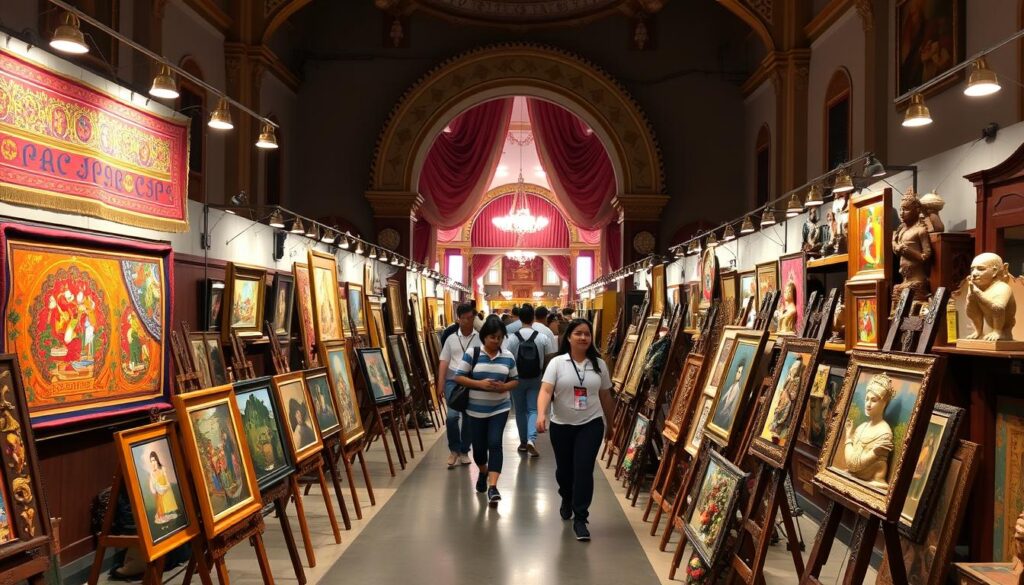
But it’s not just about digital marketing. Community outreach is also key. Working with schools, groups, and businesses helps spread the word. Getting press coverage is also important, with press releases sent to local media for articles and interviews.
A good marketing plan for an art exhibit makes it an experience, not just a show. This includes previews, talks, and hands-on workshops. It turns the exhibit into a gathering place for people.
The main aim of promoting an art exhibit is to leave a lasting mark on the community. By blending old and new marketing and focusing on public engagement, the exhibit can be a huge hit.
Cultural Sensitivity and Ethical Considerations
Cultural sensitivity is key when creating and promoting a cultural art exhibit. It’s important to respect the cultural context and significance of the artwork. This means understanding the art’s historical and cultural background and presenting it in a way that is both informative and respectful.
As Dr. Jane Smith, a cultural anthropologist, once said, “The display of cultural artifacts is not just about aesthetics; it’s about respecting and honoring the culture they represent.” This quote highlights the importance of ethical considerations in curation. Curators must think about how their exhibit might affect the communities from which the art comes.
“The way we display cultural art can either perpetuate stereotypes or promote understanding and respect. It’s a responsibility that should not be taken lightly.”
To show cultural sensitivity, exhibit curators should work with representatives from the culture being showcased. This collaboration offers valuable insights into how to handle and present cultural artifacts. It also builds a sense of community involvement and respect.
Also, ethical considerations apply to labeling and interpreting artworks. Labels should be accurate and informative, giving context without being too much. The interpretation of artworks should be respectful and considerate of cultural nuances.
In conclusion, cultural sensitivity and ethical considerations are vital for a successful cultural art exhibit. By keeping these aspects in mind, curators can make exhibits that are engaging, respectful, and informative.
Preservation and Conservation of Cultural Artwork
To keep cultural artifacts safe, managing their environment is key. Cultural artwork preservation uses many strategies to stop pieces from getting damaged.
Conserving cultural heritage is more than keeping artifacts intact. It’s also about keeping their cultural value for future generations. Environmental control is very important in this effort.
Temperature and Humidity Management
Keeping temperature and humidity steady is vital for preserving cultural artwork. Changes can cause materials to expand and contract, leading to damage. It’s best to keep the temperature between 68-72°F (20-22°C) and humidity between 40-60%.
Light Exposure Protection
Light can also harm cultural artifacts. UV light can make colors fade and materials break down. Using UV-filtering glazing and controlling light can help protect against this.
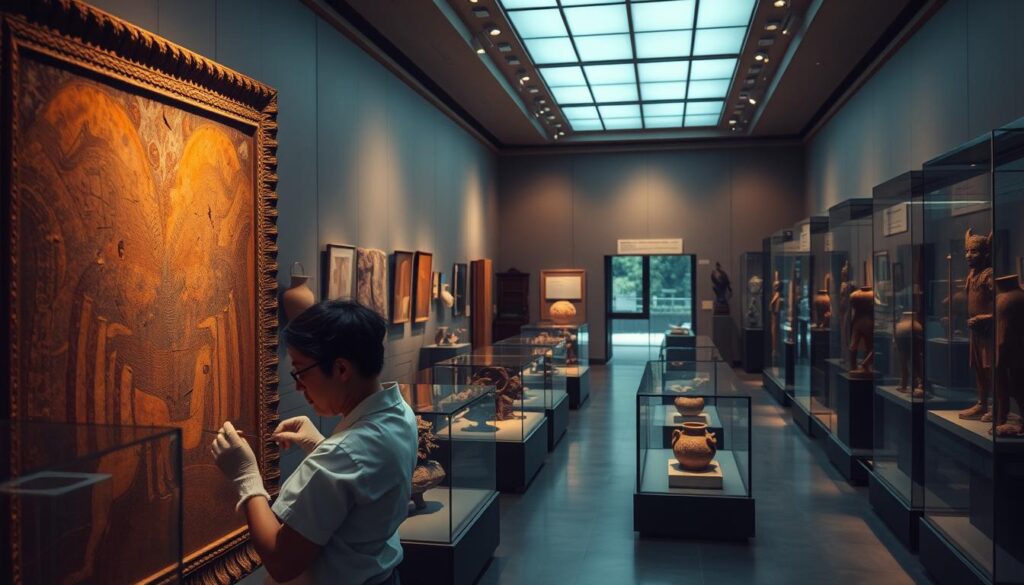
By taking these steps, we can all help in conserving cultural heritage. It’s a team effort that needs careful attention and a dedication to saving our cultural legacy.
Digital Innovations in Cultural Art Exhibits
The use of digital innovations is changing how we see cultural art exhibits. Museums and galleries now offer more interactive experiences. This is thanks to technology.
Digital innovations help museums reach more people. They can share their exhibits worldwide. This brings in new visitors and boosts visibility.
Technology makes exhibits more immersive. For instance, VR and AR let visitors dive deep into the artwork. They get a better feel for the art and its background.
Also, digital innovations help save cultural treasures. They create digital archives for everyone to see. This helps keep the art safe and gives a great resource for those who love art.
In short, digital innovations and technology are changing art exhibits. As technology grows, museums and galleries will keep finding new ways to engage us.
Case Studies: Successful Cultural Art Exhibits in America
America is known for its cultural art exhibits, showing off its rich cultural diversity. The “culture jars” art lesson is a great example. It gets people involved by filling jars with symbols and objects from different cultures.
In San Francisco’s Mission District, there are vibrant murals. These murals make the city look better and also share cultural stories and messages.
These case studies show the wide range of cultural art exhibits in America. They show how art can bring people together, keep cultural traditions alive, and help us understand each other better.
Looking at these successful cultural art exhibits, we can learn what makes them work. We can find ways to make future exhibits even better.
The Enduring Impact of Cultural Art Displays: Looking Forward
Cultural art displays deeply affect society, promoting understanding and creating lasting memories. Looking ahead, it’s key to keep celebrating and supporting cultural art. This ensures it remains important and relevant.
The legacy of cultural art is seen in its ability to inspire future generations. It offers a glimpse into the past and shapes tomorrow’s cultural identity. Supporting cultural art initiatives helps create a lasting impact across communities.
As we move forward, using digital innovations and trends is vital. It makes cultural art more accessible and engaging for everyone. This way, cultural art can continue to thrive, leaving a lasting legacy and having a significant impact.