
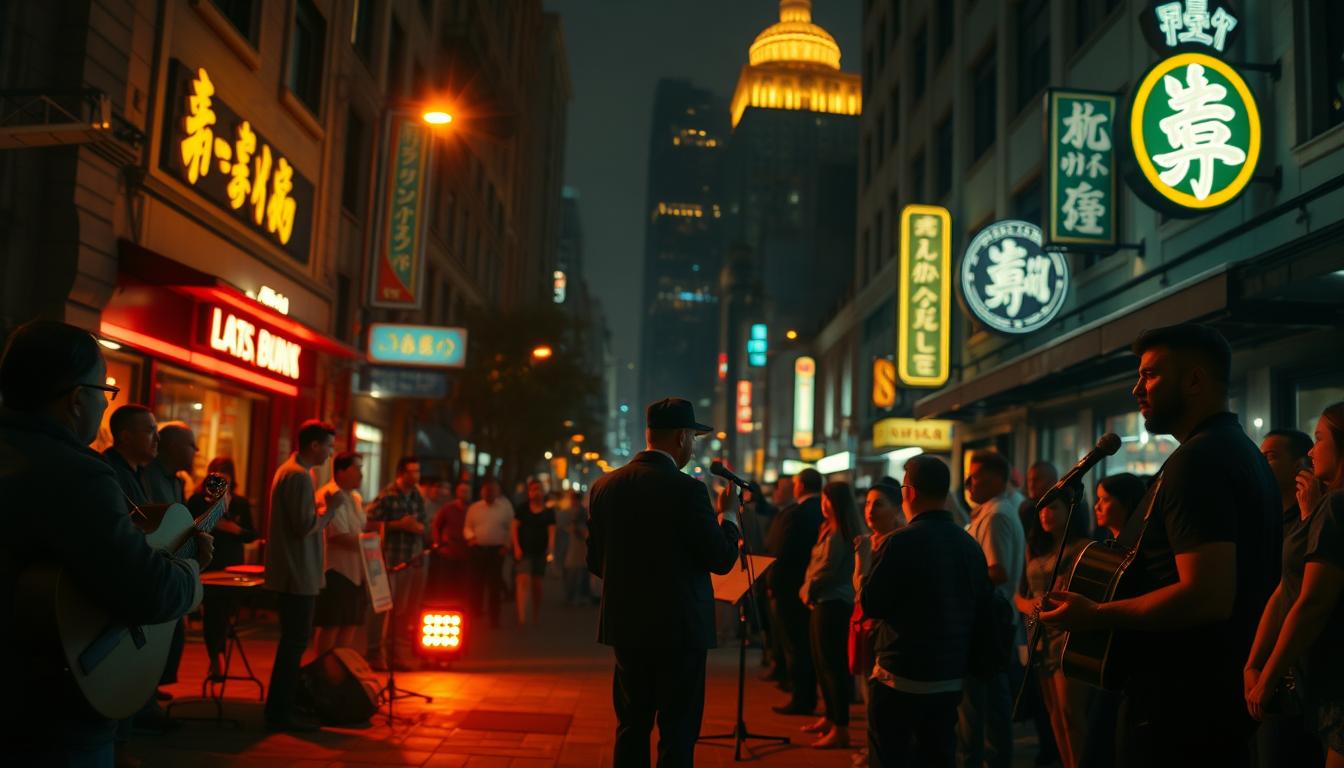
When the sun sets, the city transforms. Nighttime street performances add a special charm. They turn city spaces into vibrant stages.
Artists like Blume and Orca Life show the beauty of urban culture. Their music and performances are a big part of the city’s life.
The night air is filled with music that shows the city’s soul. These performances, whether planned or not, bring people together. They make everyone feel like they belong.
As the night goes on, the city’s rhythm grows stronger. It’s like the city’s heartbeat, echoing through the streets.
The Nocturnal Symphony of Urban Spaces
The urban landscape comes alive at night with a nocturnal symphony. It features a wide range of street music genres. As the sun sets, urban spaces turn into vibrant stages for musicians.
From ambient melodies to neo-psychedelic rock, the variety of street music genres is a key feature of urban spaces at night. These performances entertain and add to the area’s unique cultural identity.
Nighttime street performances are vital in shaping urban culture. They make cities more lively and appealing. They bring people together, creating a shared urban experience.
The diverse music in urban spaces at night shows the creativity and diversity of city life. It’s important to keep and support nighttime street performances. This helps keep urban areas vibrant.
The Rich History of Street Music Through the Ages
Street music’s history is a colorful mix of different cultures. For ages, streets have been lively stages for musicians. They’ve shown off many genres, each telling a story of its time.
Street music has greatly shaped city life. It’s a place for artists to share their talents and bond with people. From the start of American music to now, street shows have fueled new ideas and creativity.
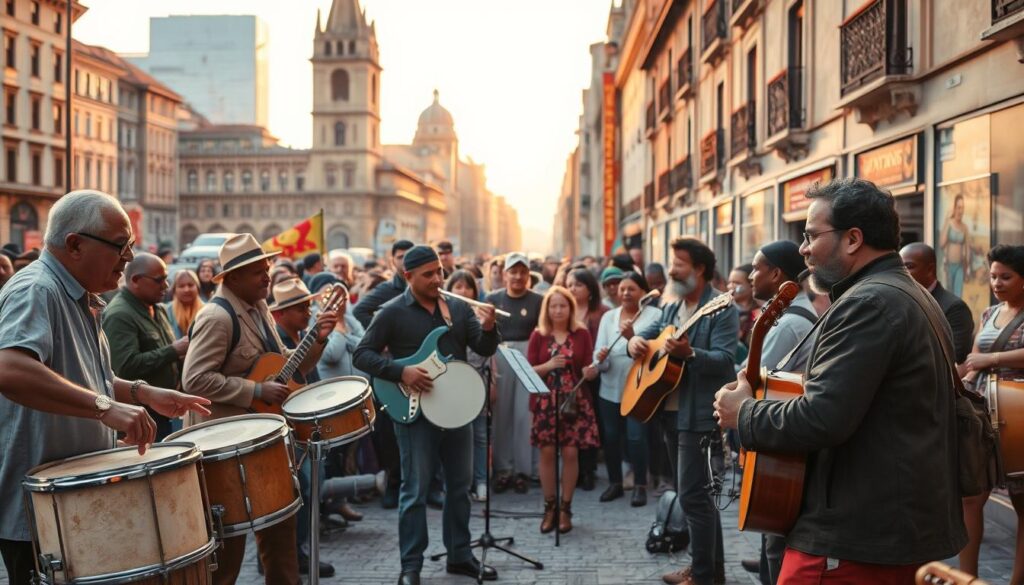
New Orleans is famous for starting jazz. At night, musicians mixed African beats with European sounds, making something new. Jazz became the city’s night life, with street acts key to its growth.
The Folk Revival on Urban Corners
The folk revival of the 1960s brought new street musicians to urban corners. Artists like Bob Dylan used the streets to spread their messages. This movement showed how street music can inspire and unite people.
Street music’s impact is seen in today’s artists and city scenes. Its history shows music’s lasting power to unite and shape culture.
Street Music: The Heartbeat of American Urban Culture
Street music is the pulse of urban America, from coast to coast. It’s a language that unites people, weaving a rich sound tapestry that’s uniquely American.
Street musicians are the heart of this cultural movement. They perform in places as varied as the music they play.
New York Subway Musicians
The New York Subway is a hub of musical talent. Commuters enjoy a wide range of music, from classical to modern.
New Orleans’ Bourbon Street After Dark
Bourbon Street in New Orleans buzzes with jazz and blues at night. Its historic streets beat with the city’s rhythm.
Venice Beach’s Eclectic Nightlife
Venice Beach is a haven of creative freedom. Street performers and musicians enhance its bohemian vibe.
These spots showcase the variety of American street music. They highlight its role in shaping urban culture. As cities grow, street music remains a constant, showing America’s dynamic and welcoming spirit.
By supporting its street musicians, American cities honor a rich cultural heritage. This heritage is both local and universal, making street music a key part of city life.
The Diverse Instruments That Define Nighttime Street Performances
Street performers at night use a wide range of instruments to make their own sound. The eclectic mix of these instruments adds to the lively atmosphere of nighttime street shows. Genres like ambient and neo-psychedelic music often include guitars, synthesizers, and percussion.
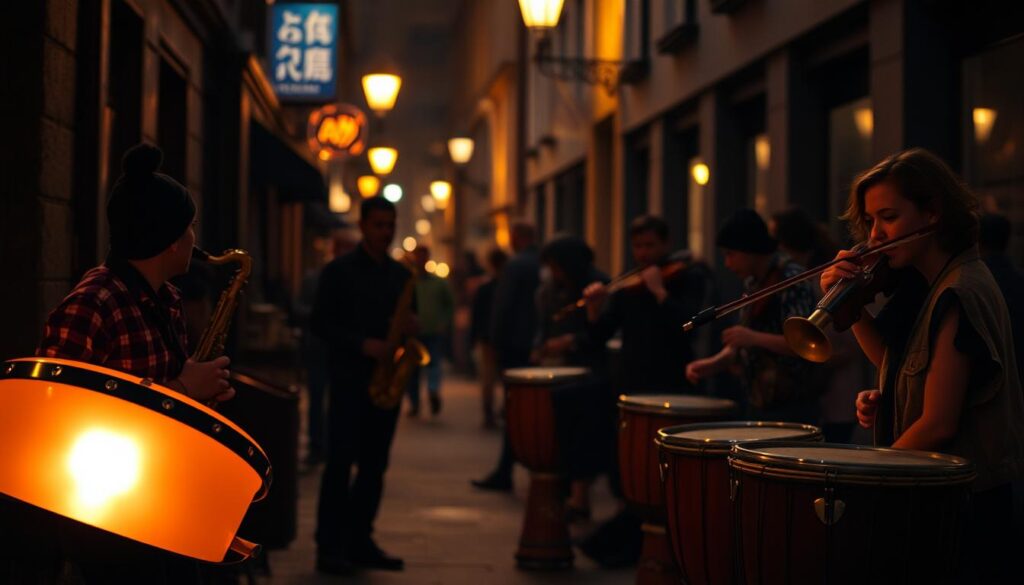
Performers also use unconventional instruments like hang drums and glass harmonicas. Even found objects are used as instruments. These unique sounds grab the audience’s attention. The mix of traditional and non-traditional instruments makes street music special.
Different street music genres are linked to specific instruments. Jazz might use saxophones and trumpets, while folk might feature acoustic guitars and violins. The variety of instruments in nighttime street performances shapes the urban soundscape.
Profiles of Legendary Night Performers
The night has been a canvas for legendary performers who started on the streets. Their stories show the lasting power of street music.
Many famous artists began their careers performing at night on city streets. These performances sharpened their skills and helped them connect with fans.
Tracy Chapman’s Journey from Harvard Square
Tracy Chapman is a great example of a legendary performer starting on the streets. She performed in Harvard Square, earning a dedicated fan base. She then signed with a major label. Her soulful voice and meaningful lyrics won many hearts.
Rod Stewart’s Early Days on European Streets
Rod Stewart started his music career on European streets. His unique voice and style quickly made him popular. This success led to a successful career as a rock star.
BB King’s Memphis Beginnings
BB King began his journey on Memphis streets, where he developed his guitar style. His night performances helped make him a blues legend.
These legendary performers prove that the streets can launch great careers. Their stories inspire new musicians and fans.
Their legacy reminds us of street music’s impact on artists and audiences. Celebrating night music honors the pioneers who paved the way.
The Economics of Nighttime Street Performance
Nighttime street performances have a big impact on local economies. They draw in tourists and locals, helping local businesses grow. Street artists add to the city’s nightlife.
Revenue Streams for Street Artists come from tips and online platforms. Streaming Revenue for Street Artists is a big deal, thanks to sites like SoundCloud. It lets artists share their work worldwide.
Streaming Revenue for Street Artists
Streaming sites help street artists make money. By posting their music on SoundCloud, they can earn from streams. This also helps them build fans globally.
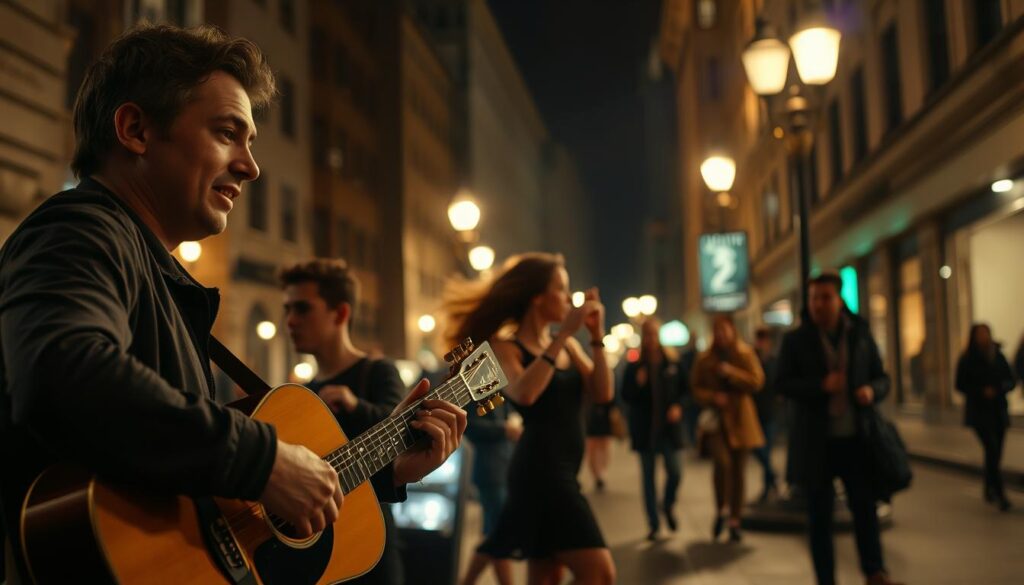
Crowdfunding is another way for street artists to get funding. Successful campaigns not only help financially but also market their work. This builds a loyal fanbase.
The mix of old-school street performance income and new digital platforms has made a strong economy for nighttime street artists. As cities change, the value of these performances will likely grow too.
The Psychology Behind Night Music’s Appeal
The appeal of night music is complex, involving emotions and social factors. Nighttime street performances captivate audiences, stirring feelings of nostalgia and wonder.
People connect deeply with the music played at night. Melodies under the night sky can stir strong emotions, creating a sense of closeness among listeners. This emotional bond is key to the lasting appeal of nighttime street music.
Also, nighttime street performances add to urban culture’s vibrancy. They make city life more lively and diverse. Listening to music at night brings people together, turning public areas into community spaces.
Emotional and social connections are why nighttime street music affects us so deeply. It’s not just the music, but the experience and memories it creates.
In summary, night music’s appeal lies in its emotional and social impact. As cities grow, the importance of nighttime street performances in urban culture remains. They offer a unique and enriching experience for everyone involved.
Legal Landscapes: Navigating Permits and Regulations
The rules for street music are complex, involving many permits and regulations. Cities in the United States have their own rules for street performances. This makes it hard for musicians to know what to do.
Street musicians often need permits to play in certain spots. These permits can change a lot from city to city. For example, big cities like New York and Los Angeles have special areas for street performers. But, you need the right permits to play there.
“The law is a mighty river, and those who navigate it successfully can find prosperity.”
This quote shows how important it is to follow the law for street musicians. Following the law lets musicians keep playing without trouble. It also helps them get along well with local authorities.
To play street music, you need to know the local laws well. Musicians must understand rules about noise, when to play, and what permits are needed. This helps avoid fines or other problems.
In short, the legal side of street music is tricky. But, knowing and following the permits and regulations is key for street musicians. This way, they can keep adding to the culture of cities with their music.
The Intersection of Street Music and Technology
Street music has moved from physical places to the digital world. Technology lets street musicians reach people all over the world. This change has opened up new chances for artists to show off their skills.
Technology has made viral performances possible. Now, videos of street musicians can spread fast on social media. This turns regular performers into stars overnight.
Viral Street Performances
Viral street performances help find new talent. Sites like YouTube and Facebook are key in promoting street musicians. Some videos get millions of views.
Building Community Through Online Platforms
Platforms like SoundCloud and Bandcamp help build a street music community. They let artists share their music, connect with fans, and get feedback. This builds a strong community feeling.
The mix of technology and street music has grown the audience and given artists new ways to make money. As tech keeps improving, the street music scene will likely get even more lively and varied.
Global Influences on American Street Music Scenes
Street music in the United States shows the power of global cultural exchange. The mix of sounds on American streets shows the country’s diverse culture.
International artists and genres have greatly influenced American street music. For example, Latin music like salsa and merengue is now common in cities. This is because of the growing Hispanic population.
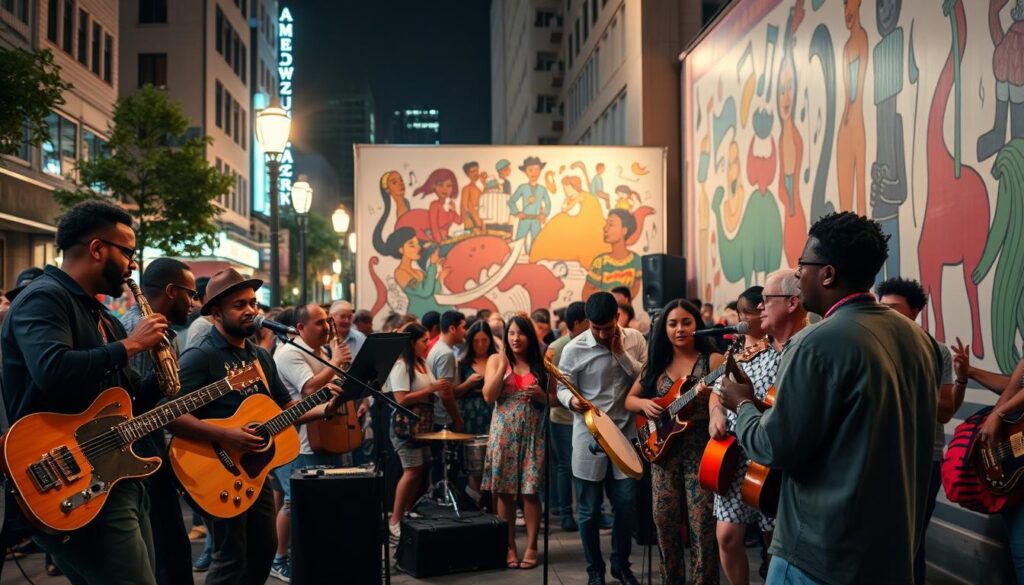
African rhythms and Asian instrumentation have also added to the music. This has created a sound that is uniquely American but also globally inspired.
American music like jazz and blues has also influenced music worldwide. This exchange has made the street music scene dynamic and always changing.
In cities across America, street performers’ music shows the global influences. This diversity makes American street music a fascinating part of the country’s culture.
Preserving the Magic of Midnight Melodies
The enchanting sounds of midnight melodies are a big part of urban culture. They bring people together and create a sense of community. It’s vital to keep street music alive to keep cities unique.
As cities change, it’s important to protect where street performers play. This way, the magic of midnight melodies can keep captivating people. It also inspires new musicians.
Keeping street music alive is more than just tradition. It makes cities vibrant and dynamic. By celebrating street music’s diversity, cities can boost tourism and support local artists. This makes cities more engaging for everyone.