
Donating blood is a selfless act that can save countless lives. Every day, patients of all ages rely on blood donations due to various medical conditions or accidents.
In the United States, someone needs blood every two seconds. Accident and burn victims, heart surgery and organ transplant patients, and those battling cancer all depend on the generosity of blood donors.
By participating in a blood drive, individuals can make a significant difference in their community. The benefits of donating blood extend beyond the recipients, as it also provides donors with an opportunity to contribute to a noble cause.
Understanding the importance of blood donation is key. It’s a simple yet impactful way to help those in need.
What is a Blood Drive?
Blood donation is key, and blood drives are vital for a steady blood supply. These events let people donate blood for medical needs. Blood can’t be made, so donations are essential.
The American Red Cross leads in managing blood drives in the U.S. They give out about 40% of the country’s blood. But, they face a blood shortage due to travel and disasters. “The need for blood donations is constant, and we rely on the generosity of donors to help patients in need,” they say.
Blood drives are more than just events; they’re lifelines. They connect donors with those needing blood for surgery, illness, or injury. By knowing what a blood drive is, people can see their impact. The blood donation process includes registration, a mini-physical, and the donation itself, lasting about an hour.
“Blood donation is a selfless act that can save lives. By donating blood, individuals can make a significant difference in their community.”
Blood donation faces challenges, like the current shortage. This shows the need for community support. The American Red Cross and others work hard to meet these needs, highlighting the importance of blood drives for public health.
How Blood Drives Work
Donating blood is easy and starts with some health checks. When you get to a place like the American Red Cross, you’ll go through tests. These tests make sure you’re safe and that the blood is good.
First, they check your blood pressure, pulse, temperature, and hemoglobin levels. These tests show how healthy you are at the moment. For example, they check your blood pressure to make sure it’s okay to donate. They also look at your hemoglobin to see if you have enough red blood cells.
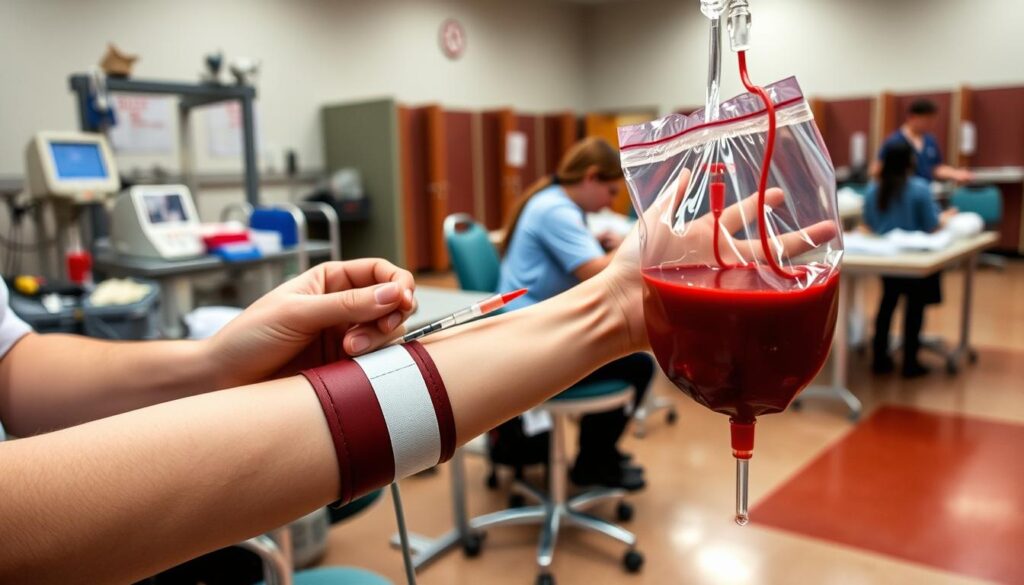
The blood donation process is safe and quick. After the first tests, you’ll fill out a health form. This form helps find any health risks. It helps decide if you can donate.
Then, you go to the donation area. A clean needle will take your blood. This part usually takes 10-15 minutes. You can relax and maybe listen to music or read.
After giving blood, you get something to drink and rest for a bit. The whole thing, from start to finish, is to keep you safe and the blood good.
Learning how to donate blood can make it less scary. Knowing what happens helps you feel more at ease. Giving blood helps others and is a great way to help your community.
Who Can Donate Blood?
To donate blood, you must meet certain criteria. This includes your health and lifestyle. It’s all about keeping both the donor and the recipient safe.
Medical Conditions and Blood Donation
Some medical conditions make you ineligible to donate blood. For instance, those with hepatitis or HIV can’t donate. Conditions like cancer, heart disease, and some neurological disorders also count.
These rules are in place to stop the spread of diseases. They ensure the blood is safe for everyone. Donating blood should not harm the donor or the blood supply.
Donors must also be healthy at the time of donation. This means no flu or cold, and no risky behaviors. It’s all about keeping the blood safe.
Always talk to healthcare professionals if you’re unsure about donating. They can give advice based on your health and other factors.
The Donation Process Explained
The blood donation process is simple, safe, and very rewarding. It has a few easy steps. These steps make sure the donor has a good experience and the blood is of high quality.
Before you donate, you need to fill out a health history form. You also get a mini-physical check. This includes checking your temperature, blood pressure, hemoglobin levels, and pulse. It’s important to make sure you’re healthy enough to donate.
Donation Process: After you’re cleared, you sit down and a sterile needle is put into your arm. The blood goes into a special bag with something to stop it from clotting. It takes about 10 minutes to collect one pint of blood.
After you donate, you get something to drink and are told to rest for a bit. The whole process, from start to finish, takes less than an hour. But the actual time you’re donating is much shorter.
It’s worth noting that donating blood is a safe process. The tools used are clean and only used once to avoid infection. You can go back to your usual activities right after, but avoid heavy lifting or hard exercise for the rest of the day.
Knowing what happens during the blood donation process can make you feel more ready. It makes the whole experience more rewarding.
Benefits of Donating Blood
Donating blood is more than just a good deed. It has surprising health perks for the giver. This simple act saves lives and boosts the donor’s health.
One key health benefit of blood donation is lowering heart attack risk. Studies show regular donations can cut down on heart disease. This is because it reduces iron levels, which can harm the heart if too high.
Donating blood also keeps iron levels in check. Too much iron can lead to oxidative stress and organ damage. By giving blood, people can balance their iron levels, improving their health.
The donation process includes a mini-physical check-up. Before donating, donors get a health screening. This checks hemoglobin, blood pressure, and pulse. It can reveal health issues donors might not know about, helping them get early treatment.
Some studies hint that donating blood might lower cancer risk. This could be because it reduces iron stores. While more research is needed, this finding is promising.
In summary, the benefits of donating blood are wide-ranging. They help not just the recipients but also the donors. By donating, people can help others and possibly improve their own health.
Common Myths About Blood Donation
Many people think donating blood is scary or complicated. But it’s actually safe and easy. Misconceptions can stop people from helping others by donating blood.
Some think donating blood hurts a lot. But it’s quick and doesn’t hurt much. Another myth is that it weakens your immune system. But, blood donation does not weaken the immune system; your body makes more blood fast.

Some believe they can’t donate because of health issues or lifestyle choices. While some conditions might stop you, many don’t. It’s key to consult with healthcare professionals to see if you can donate.
There’s also a myth that blood donation isn’t needed. But, blood donation is key for saving lives. It helps patients in surgery, those with blood diseases, and trauma victims. By donating, you can greatly help your community.
Knowing the truth can make more people want to donate blood. It’s a simple act that can change lives.
How Often Can You Donate Blood?
Knowing how often you can donate blood depends on the type of donation and your health.
For whole blood donation, you can donate every 56 days. This gives your body time to make more blood cells. It also keeps you safe.
Platelet donation lets you donate more often, every 7 to 14 days. But, you can only donate platelets up to 24 times in a year.
Plasma donation, like plasmapheresis, lets you donate every 28 days. Your body quickly makes more plasma, so you can donate more often.
Remember, these times are just guidelines. Your actual donation frequency might change based on your health. Before each donation, you must pass a mini-physical exam. This ensures your safety and the blood’s quality.
Donation centers check if you’re eligible to donate. They look at your hemoglobin, blood pressure, and overall health. This helps figure out how often you can donate safely.
In short, how often you can donate blood depends on the donation type and your health. Following these guidelines helps you donate safely and contribute to the blood supply.
Finding Local Blood Drives
Finding local blood drives is easy with a few simple steps. Thanks to digital technology and blood donation groups, it’s now simpler. You can find blood drives near you with just a few clicks.
Searching online is a great way to find blood drives. Type “blood drives near me” or “blood donation centers near my location” in a search engine. You’ll get a list of nearby options, including addresses, contact info, and hours.

Another good method is to reach out to local blood donation groups. The American Red Cross hosts blood drives all over the U.S. Visit their website or call their hotline to find local drives.
Many communities also have local blood banks or centers that host drives. These places often list their schedules on websites or social media. You can also ask local hospitals or healthcare providers for blood drive info.
By using these resources, you can find a blood drive near you. You’ll also learn about eligibility, the donation process, and what to expect. This helps more people donate, saving lives.
Corporate Blood Drives
Many companies are hosting blood drives at work. This shows their commitment to helping others. It also brings employees together, creating a sense of community.
To set up a blood drive, companies first need to contact a local blood center. They will arrange a date and time. The center will also bring the needed equipment and staff. Companies can then spread the word through internal messages, urging employees to donate.
Corporate blood drives bring many benefits. They improve a company’s image and boost employee happiness. They also help keep the blood supply steady for medical needs. As Steve Jobs once said, “Innovation distinguishes between a leader and a follower.” Hosting a blood drive is a creative way for companies to lead in giving back.
“Blood donations from corporate blood drives account for a significant portion of the nation’s blood supply.”
In summary, corporate blood drives are a great way for companies to help their communities. By hosting these events, businesses can greatly impact public health. They also help create a positive work environment.
Volunteering at Blood Drives
Volunteering at blood drives can greatly impact your community. Volunteers are key to the success of these events. They help with many tasks to make the donation process smooth.
Volunteers mainly assist with registration and donor screening. They help donors fill out paperwork and answer questions. They also make sure donors feel welcome and comfortable.

After donors give blood, volunteers help with post-donation care. They make sure donors are okay and offer them refreshments. This care is important for a good donation experience.
Supporting blood donation through volunteering is very rewarding. It helps meet the need for blood and builds community. It’s a chance to give back and promote kindness.
In summary, volunteering at blood drives is a fulfilling way to help. Volunteers play a big role in making sure blood drives are successful. They help patients who need blood transfusions.
The Future of Blood Donation
Medical technology is advancing, and donor demographics are changing. These shifts are reshaping blood donation. New trends are expected to guide this life-saving practice into the future.
New tech, like automated blood separation and digital donor registration, is making donations easier. These tools are not just faster. They also make the donation process better for everyone involved.
The donor pool is getting more diverse. Blood donation centers are adjusting to serve this new mix of donors. This change is helping meet the needs of a growing and varied population.
The outlook for blood donation is promising. Efforts to engage more donors and improve the process are ongoing. As new trends develop, blood donation will likely have a big impact on health.