
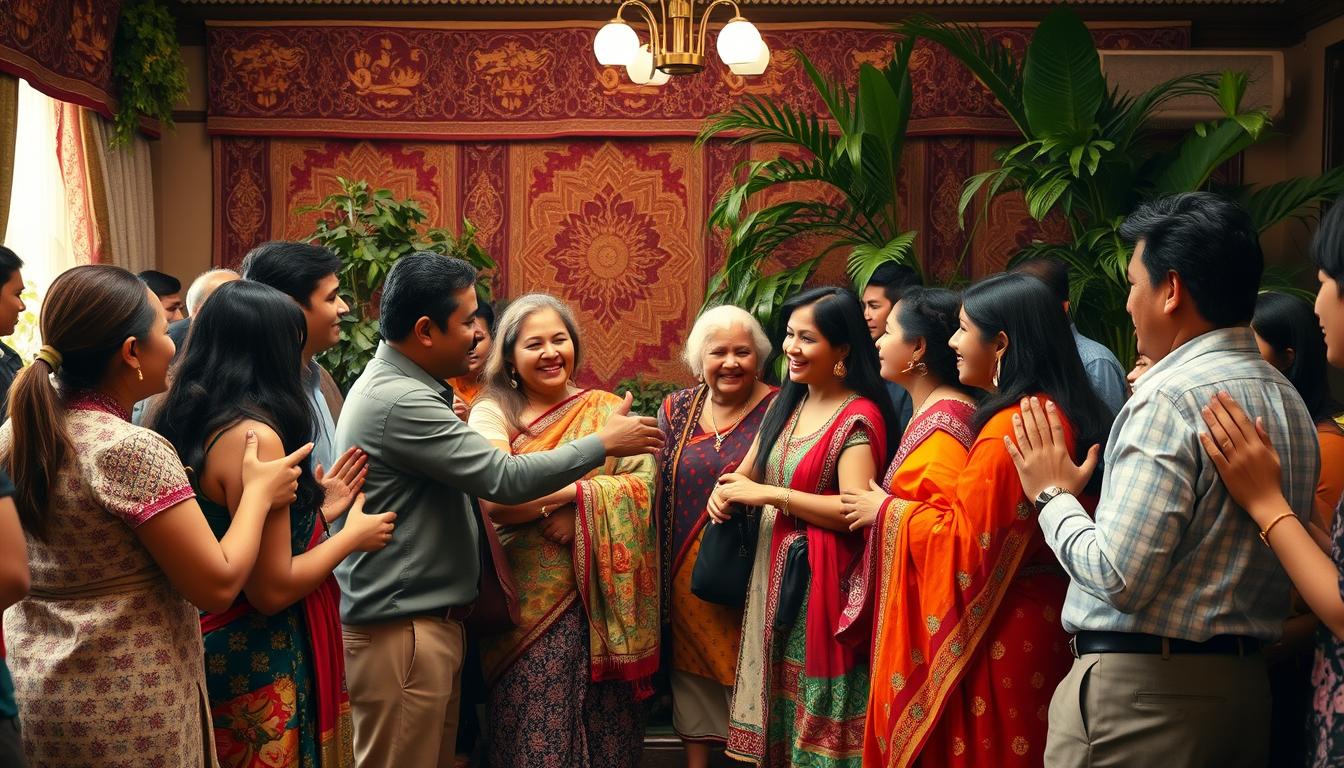
In today’s world, knowing cultural greetings is key. People from different places meet more often. A good greeting can make a big difference in how well you connect.
Learning global greetings helps you build better relationships. It also prevents mistakes. Knowing the cultural differences is important for clear communication.
Using warm and respectful cultural greetings makes everyone feel welcome. This is true in both personal and work settings.
The Importance of Greetings in Different Cultures
Learning about greetings in various cultures can really help with cross-cultural communication. Greetings show respect, build bonds, and set the mood for talks.
In some places, greetings are very formal and follow certain rituals. For example, in Japan, bowing is key, with the bow’s depth and length showing respect. In the U.S., a firm handshake is common, showing confidence and friendliness.
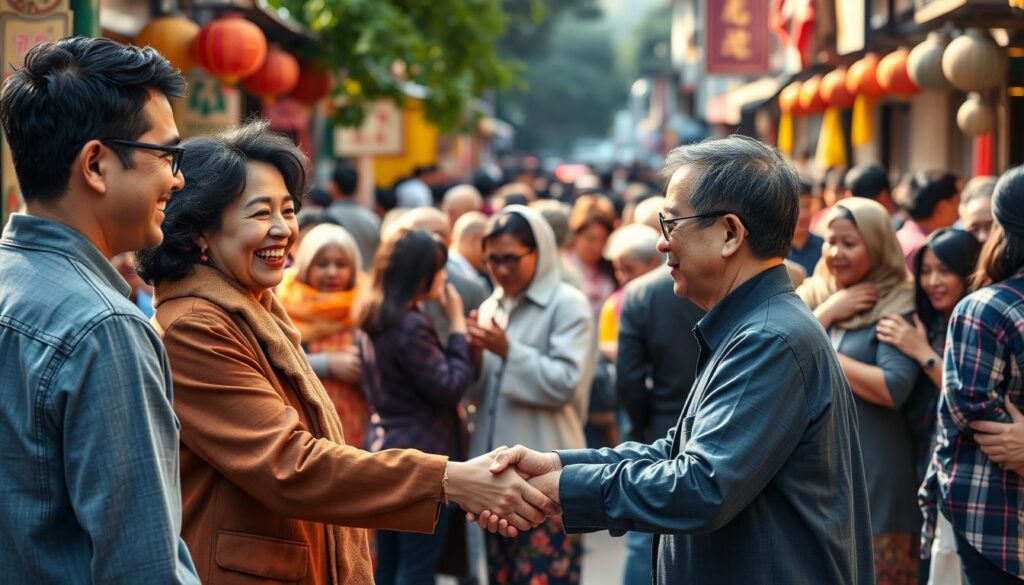
Cultural sensitivity is key when meeting people from different backgrounds. Knowing about different greeting customs helps avoid misunderstandings. For instance, direct eye contact can mean aggression in some cultures but respect in others.
Greeting customs vary a lot, showing each culture’s history, values, and norms. In many Asian cultures, people bow or say namaste. In Western cultures, a handshake or hug is more usual.
By understanding and respecting these differences, we can build stronger connections and talk better across cultures. This is very important in today’s world, where we meet people from all over more often.
Common Greetings in the United States
Learning common greetings in the U.S. can really help you get along in different social situations. In American culture, greetings mix words and body language. They play a big part in non-verbal communication and interpersonal skills.
A firm handshake is a key greeting in the United States. It usually comes with direct eye contact. This shows confidence and respect, which are important in American social etiquette. Adding a friendly smile makes the greeting even warmer and more sincere.

In work settings, these greetings can start a positive conversation. For example, a firm handshake and direct eye contact can impress during a job interview. They show your interpersonal skills. At social events, a warm greeting can help you make new friends.
It’s also important to remember that cultural differences can change how greetings are seen. While a firm handshake is usually okay, some cultures might see it differently. Knowing these differences can help you communicate better across cultures.
In summary, getting good at common greetings in the United States means understanding the mix of words and body language. This includes a firm handshake, direct eye contact, and a friendly smile. By mastering this, you can improve your social etiquette and make deeper connections in both personal and work life.
Greetings in the Workplace
Greetings in the workplace are more than just a formality. They are key to business etiquette. A warm and professional greeting can set a positive tone for work.
Knowing the norms of business etiquette and greeting customs is vital. It helps build strong relationships with colleagues and clients. A well-crafted greeting can make a big difference in professional relationships.
“The way you greet someone can significantly impact the outcome of your interactions.”
Business Etiquette and Greeting Customs
In the workplace, greeting customs can vary. They depend on the company culture and industry. Yet, some universal principles apply. For example, a firm handshake, a smile, and direct eye contact show respect and professionalism.
It’s also important to be aware of cultural differences and personal preferences. Being sensitive to these can help avoid unintended offense. It also fosters a more inclusive work environment.

By using these greeting customs in your daily interactions, you can improve your professional image. You also contribute to a more positive and respectful workplace culture.
Non-Verbal Greetings and Their Meanings
Understanding non-verbal cues is key for good communication in different cultures. Non-verbal greetings, like body language and facial expressions, tell us a lot. They can mean as much as what we say.
Body Language Across Cultures
Body language changes a lot from one culture to another. In some places, looking someone straight in the eye shows confidence and respect. But in others, it might seem too bold or aggressive.
How we greet each other physically also varies. In the West, a firm handshake is common. But in other cultures, a bow or a kiss on the cheek is more usual.

Facial expressions also have different meanings in different cultures. A smile is usually seen as friendly everywhere. But its meaning can change based on the situation.
Knowing these differences helps us communicate better and with more respect across cultures. By adjusting our non-verbal signals, we can build stronger connections with people from other backgrounds.
Greetings in Other Languages
Greetings change a lot from one culture to another. As the world gets closer, learning greetings in different languages helps us appreciate and share cultures more.
Words like “Bonjour” in French, “Hola” in Spanish, and “Konnichiwa” in Japanese are more than just phrases. They open doors to understanding the cultures they come from. For example, “Konnichiwa” is a formal greeting in Japan, used during the day. It shows the importance of being formal and aware of time in Japanese culture.
When we greet people in their own language, it makes a big difference. It shows we respect and want to connect with their culture. Whether it’s “Guten Tag” in German or “Ciao” in Italian, each greeting has its own special meaning.
Learning and using global greetings helps us connect with people worldwide. This simple action can greatly improve global understanding and respect.
Holidays and Special Occasions
The way we greet each other during holidays and special occasions shows our cultural roots. Cultural greetings during these times are more than just a formality. They show respect, kindness, and solidarity with others.
During holidays like Christmas or Eid al-Fitr, greetings take on a different tone and significance. Saying “Merry Christmas” or “Eid Mubarak” is not just a greeting. It’s a way to acknowledge the cultural and religious significance of the occasion.
“Greetings are the foundation of any culture, and during holidays, they become even more meaningful as they convey goodwill and friendship.”
Understanding cultural norms and customs around these events helps us show respect. It also helps us build stronger relationships with people from diverse backgrounds.
By being mindful of our holiday greetings and adapting them to the occasion, we can foster a more inclusive and respectful environment. Whether it’s a special occasion or a cultural holiday, our greetings can make a significant difference in how we connect with others.
The Evolution of Greetings in a Digital Age
Understanding the evolution of greetings is key in today’s digital communication. Technology has changed how we greet each other a lot.
Before, we only greeted face-to-face or through letters. But now, with digital platforms, we greet through emails, texts, and social media. This change makes it harder to show warmth and sincerity in our greetings.
Online etiquette is very important in digital communication. Knowing when to be formal, using emojis, and when to reply are all important. A simple “Hello” or “Hi, how are you?” can make a big difference in online interactions.
Adapting Greetings to Different Digital Platforms
Different digital places need different greetings. For example, LinkedIn calls for a more formal greeting than Facebook. Knowing these differences is essential for good greetings in technology.
Also, using emojis and GIFs can make digital greetings more personal. But, it’s important to use them wisely, thinking about the context and who you’re talking to.
The evolution of greetings in the digital age is about more than just technology. It’s also about keeping the human touch that makes greetings special. By being careful with online etiquette and adjusting our greetings for each platform, we can keep our online interactions warm and engaging.
In conclusion, the digital age has changed how we greet each other a lot. By understanding good digital communication and being flexible, we can handle the challenges of greetings in this new era.
Practicing Greetings: Tips and Tricks
Learning to greet others well can really boost your interpersonal skills. It’s all about being warm and respectful. You need to know about different cultures and pay attention to body language.
Knowing about cultural differences is key when saying hello to people from different places. For example, in some places, bowing is a sign of respect. In others, a firm handshake is better. Getting these greeting customs right can make you feel more confident in social situations.
Also, non-verbal signs like eye contact and open body language matter a lot. They can make your greetings more effective. Being mindful of these signs helps create a friendly atmosphere anywhere you go.
Here are some tips to improve your greetings: be aware of cultural differences, use body language well, and be true to yourself. Following these tips can help you make stronger connections and improve your interpersonal skills.
Using these tips in your everyday life can change how people see you. Showing respect and being sensitive to cultures can make your environment more positive and welcoming.
Building Your Own Greeting Style
Creating a personal greeting style is key to building strong relationships. It helps you navigate social situations with confidence. Knowing cultural norms and using body language well makes your greetings authentic and respectful.
Cultural awareness is vital in your greeting style. It helps you avoid misunderstandings and creates a positive vibe. Skills like listening and empathy make your greetings warm and inviting.
A greeting style that mixes cultural awareness with people skills is powerful. It helps in both personal and work settings. Being true and thoughtful in your greetings lays a solid base for deep connections. In today’s digital world, adapting your greetings to different situations strengthens relationships.