
Have you ever noticed how a simple ritual can make a meal feel more special? A new study in the journal Psychological Science found that simple rituals can make food or drink taste better.
Researchers say that these special rituals – like toasting or a unique serving method – make you more aware of what you’re eating. This awareness brings you into the moment.
This focus can make the taste of food more enjoyable. In this article, we’ll dive into the world of ritual food and its role in special rituals. We’ll also share ways to add these practices to your daily life.
Understanding Ritual Food and Its Significance
Rituals around food have been studied a lot to see how they affect our dining. Researchers from the Carlson School of Management at the University of Minnesota and Harvard Business School in Boston did four experiments. They looked into the importance of ritual food.
They found that rituals before meals make the food experience better. Rituals add meaning and excitement to eating, making it more fun and memorable. Ritual food turns a simple act into a special event, deepening our connection with food and others.
Ritual food is not just about food; it’s about the experience. It’s about how we prepare, who we’re with, and the culture we’re in. Understanding ritual food helps us value our cultural heritage and traditions in eating.
The emotional and psychological impact of ritual food is huge. Rituals bring up feelings of nostalgia, comfort, and belonging. They make our food experiences more fulfilling. Whether it’s a family recipe or a holiday dish, ritual food is key in our culinary lives.
In summary, ritual food’s importance is wide-ranging. It affects not just how we eat but also how we connect with others and our culture. By embracing these rituals, we can make our food experiences richer and create lasting memories.
The History of Ritual Food Across Cultures
Food has always been key in cultural and religious rituals worldwide. It shows the diversity and richness of human life. The story of ritual food is complex, with each culture having its own special ways of cooking and eating.
In many places, food is at the heart of religious and cultural rituals. For example, during Passover, Jewish families come together for a Seder meal. They eat foods like matzo and charoset, which hold special meaning. In many Asian cultures, rice is a key food in rituals, standing for wealth and luck.
Food rituals help communities come together. They create a feeling of belonging and connect us to our past. In Latin America, making and sharing traditional dishes is key to family and community bonding during holidays.
“Food is the most intimate and personal expression of culture, and when used in rituals, it becomes a powerful symbol of identity and community.”
The variety of cultural traditions around food is huge. Each culture has its own ingredients, cooking ways, and rituals. Learning about these differences can make our own cultural practices richer and help us understand the world better.
In summary, the history of ritual food across cultures is a rich mix of traditions, beliefs, and practices. By exploring and valuing these food rituals, we can connect more deeply with our heritage and the global community.
Common Ingredients Used in Ritual Food
Traditional ingredients are key in making ritual foods around the world. They are picked for their special meanings, which differ by culture.
In many places, grains like rice, wheat, and barley are vital. They stand for fertility, plenty, and life’s cycle. For example, rice is a big deal in Asian rituals, meaning wealth and luck.
Herbs and spices are also big in ritual foods. They’re thought to have spiritual powers, keeping bad spirits away or bringing luck. Sage, for instance, is used in some Native American rituals for its cleaning power.
Traditional Ingredients Across Cultures
Different cultures have their own special ingredients for ritual foods. In many African cultures, yams symbolize fertility and are used in harvest rituals.
In Western cultures, bread is often used in ritual foods. It stands for community and sharing. Sharing bread is a sign of peace and togetherness.
Fruits and vegetables are also common in ritual foods. They’re picked for their bright colors and meanings. For example, pomegranates in Mediterranean cultures mean plenty and fertility.
In summary, the ingredients in ritual foods are more than just food. They carry deep meanings that are key to the rituals. Knowing these ingredients helps us understand the cultural importance of ritual foods.
Preparing Ritual Food: Best Practices
Making ritual food is a special task that needs patience and a personal touch. It’s more than just cooking; it’s about adding meaning to the food.
Studies show that being part of a ritual is key. For example, watching someone make lemonade in a fancy way didn’t make the drink taste better. This shows how important it is to ritual food preparation yourself.
So, what’s the right way to make ritual food? First, understand the ritual’s meaning and the food’s role in it. This helps you choose the right ingredients and how to cook and present them.
Using special or meaningful ingredients is also important. These can carry symbolic or cultural values. Adding them to your preparing ritual food makes the ritual deeper.
Lastly, prepare with care and focus. Be fully there, from picking ingredients to serving the food. This turns cooking into a calming and meaningful act, following the best practices for ritual food preparation.
Ritual Food Around Major Holidays
Ritual foods are key in defining major holidays. They bring people together and keep traditions alive. These foods have deep roots in the holiday’s history and culture.
Syfo is a big part of holidays like Passover, Thanksgiving, Christmas, and Hanukkah. For example, Passover’s Seder feast includes matzo and charoset. These foods remind us of the Israelites’ journey from Egypt.
Thanksgiving is known for its big feast with turkey, stuffing, and pumpkin pie. These celebratory foods are more than just food. They symbolize family and friends coming together, just like the Pilgrims and Native Americans did.
Christmas and Hanukkah also have special foods. Christmas meals often have roasted meats. Hanukkah is all about fried foods like latkes and sufganiyot, celebrating the oil miracle.
The importance of ritual food holidays is huge. They connect us to our past and to each other. They carry stories and traditions from one generation to the next.
In short, ritual foods are essential for major holidays. They capture the holiday’s spirit and bring people together. By understanding these foods, we connect more deeply with the holidays we celebrate.
Vegan and Vegetarian Options for Rituals
Veganism and vegetarianism are becoming more popular. This means we need to find ways to include these diets in our rituals. Rituals help us connect, celebrate, and remember important events. Adding vegan and vegetarian choices to these rituals meets different dietary needs and brings new ideas to old traditions.
Plant-Based Ingredients for Ritual Food
Plant-based foods can be just as meaningful as traditional ones. For example, quinoa stands for abundance, and tofu shows versatility. Fruits and veggies add color, texture, and meaning, making rituals richer.
Vegan and vegetarian foods like mooncakes for the Mid-Autumn Festival and spring rolls for Lunar New Year are great. They honor the rituals and welcome everyone to join.
“The food we eat shows our values and connection to the world. Choosing plant-based for rituals shows our care for compassion and the planet.”
Tips for Creating Meaningful Vegan and Vegetarian Rituals
When making vegan and vegetarian rituals, pick foods that match the ritual’s meaning. Involve everyone in making the food to build community. This makes the ritual more personal and powerful.
In short, adding vegan and vegetarian choices to rituals makes them richer and more welcoming. As we change and grow, it’s wonderful to see our traditions adapt. This keeps rituals alive and meaningful for everyone.
Ritual Food and Community Bonding
Food has always been key in rituals, helping people connect and feel a sense of togetherness. Sharing meals during special times brings everyone closer, creating a feeling of unity and belonging.
Ritual food is important for building strong community bonds. When people work together to make ritual food, they share a special moment. This moment can bring up feelings and memories, making their bond stronger.
Preparing ritual food often means using old recipes and methods. This keeps cultural traditions alive and connects people to their heritage. By making and eating ritual food together, communities nourish their bodies and their bonds.
Food rituals are different in every culture and community. They range from big feasts to small meals shared with loved ones. Food plays a big role in bringing people together, creating special moments.
The power of ritual food community practices is clear. They help people from all walks of life and ages feel connected. This connection can make communities stronger and more united.
In short, the link between ritual food and community bonding is deep. Ritual food helps communities feel closer and more united. It strengthens their bonds and keeps their traditions alive.
Contemporary Trends in Ritual Food
Modern twists are changing how we view ritual food. These changes come from cultural exchange, innovation, and a desire for personal experiences. It’s a new way of looking at old customs.
Modern Trends in Ritual Food go beyond just changing recipes. They redefine the role of food in our rituals. Now, plant-based ingredients and vegan options are being added to traditional rituals, making them more welcoming.
“Food is everything we are. It’s an extension of nationalist feeling, ethnic feeling, your personal history, your province, your region, your tribe, your grandma. It’s inseparable from that.”
Online platforms have made it easier to learn about and join in cultural rituals. Online or in-person private classes offer customizable experiences. They meet individual tastes and dietary needs.
Fusing different culinary traditions is another trend. This innovation in ritual food shows the diversity of today’s society. It also makes rituals more interesting.
The future of ritual food is bright, with more innovation and appreciation for cultural heritage. People are now more interested in the stories behind the food. This makes rituals more personal and meaningful.
In conclusion, today’s ritual food trends are making old practices more relevant and engaging. Whether through new takes on classic dishes or the use of new ingredients, ritual food remains key in cultural and personal celebrations.
Food Rituals in Personal Milestones
Personal milestones are often marked with special food rituals. These bring families and friends together. The foods not only taste great but also create lasting memories.
Birthdays, for example, are celebrated with cakes and dishes that vary by culture. In many Western cultures, a birthday cake with candles is a must. It symbolizes the joy and light of the day.
Weddings are another big milestone where food plays a key role. The dishes chosen often show the couple’s heritage and taste. This makes the event even more special.
Other milestones, like graduations and anniversaries, also have special foods. These celebratory foods are more than meals. They honor the occasion and the people involved.
Adding food rituals to personal milestones makes them richer. It creates a sense of tradition and continuity. As we celebrate, the foods we share become a big part of our memories.
Global Ritual Foods to Explore
Exploring global ritual foods takes us on a journey through human history and tradition. These foods are key to understanding cultures around the world. They show us the values and customs of different communities.
Ritual foods connect us to our past and present. In Japan, mochi is eaten during New Year’s, bringing luck and long life. In India, ritual foods like prasad are given to gods, creating a bond among people.
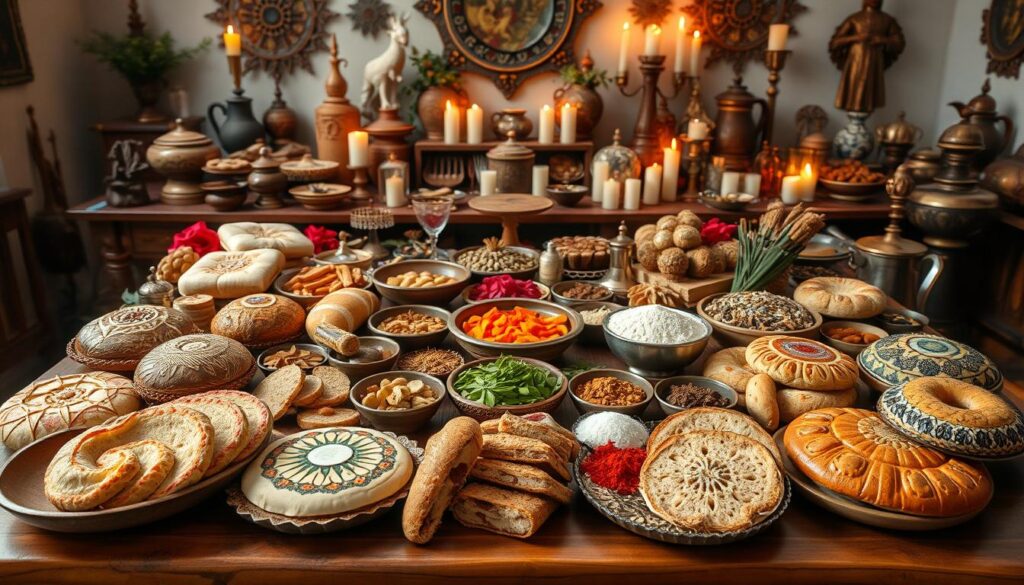
The variety of global ritual foods is vast. Each culture has its own special foods, ways of making them, and how to eat them. In Mexico, pan de muerto is eaten to honor the dead. In the West, turkey is a big part of holidays like Thanksgiving.
Learning about food rituals helps us see the world in a new light. It shows us the beauty of different cultures and what we share. By diving into these traditions, we gain a deeper understanding of human culture.
As we look into global ritual foods, we see they’re more than just traditions. They help us connect with our heritage and with others. Sharing these foods brings people together, creating a sense of community and belonging.
Crafting Your Own Rituals with Food
Making your own rituals with food lets you be creative and make lasting memories. Food can connect you deeply to your traditions and values. It’s a chance to explore your heritage and the emotions you want to share.
Think about the foods that mean a lot to you or your family. These could be family recipes or foods that remind you of special times. Using these, you can create personalized rituals that tell your unique story.
For example, cooking a certain dish on a special day can become a ritual. It honors the past and makes new memories. You can also use symbolic ingredients or traditional cooking methods to enrich your rituals.
Inviting your loved ones to help with cooking can also be a bonding experience. It creates a sense of community and shared tradition. Making meal prep a ritual can strengthen your relationships and create lasting memories.
We’d love to hear about your rituals! If you have a special food ritual, we want to know. Your stories and traditions make ritual food experiences rich and diverse.
Conclusion: The Lasting Impact of Ritual Food
Ritual food is more than just food; it brings people together and creates lasting memories. It goes beyond just eating, becoming a key part of our culture and personal traditions.
Food rituals have always been important for connecting with others. They help build community and make our meals more special. Whether it’s a holiday feast or a personal celebration, ritual food has a big impact on our lives.
It’s clear that ritual food touches our emotions and makes us feel connected. By making food rituals a part of our lives, we can deepen our relationships and keep our traditions alive for years to come.