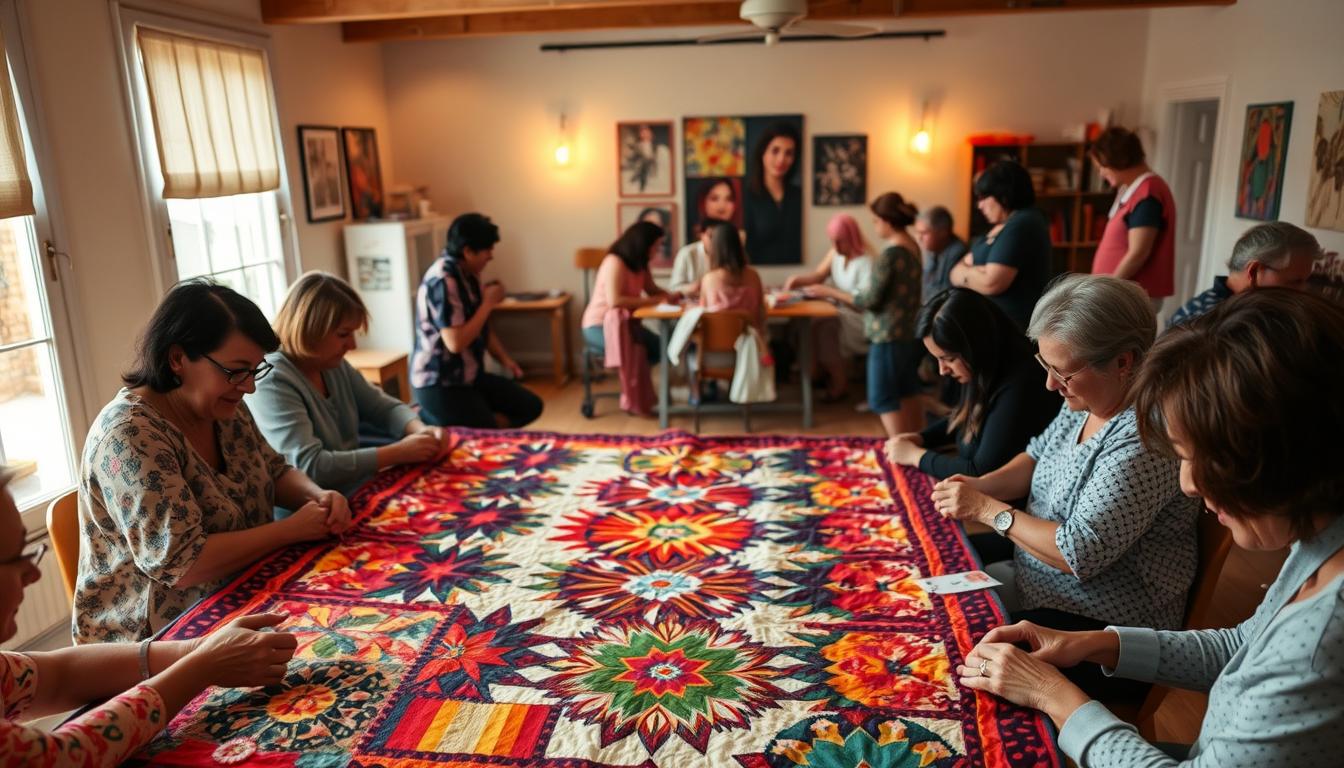
Collaborative quilting is a special way to bring people together. It’s a shared creative project that makes a beautiful community quilt. This quilt shows the group’s hard work and dedication.
Group quilting projects create a sense of friendship and connection. It’s fun for everyone, whether you’re experienced or new to quilting. Joining a collaborative quilting effort lets you learn, share ideas, and be part of something unique.
This article will help you plan, design, and finish a group quilting project. You’ll get useful tips and insights to make your project a success.
The Rich Tradition of Collaborative Quilting
Quilting has always been a group activity, building connections and community. It’s about making beautiful textiles together. This tradition shows that when we work together, we can create something truly special.
Jess Bai’s article on Tatter, “Many Hands Make a Quilt: Short Stories of Radical Quilting,” highlights this. It shows how quilting can tell human stories and help us understand each other better. It’s a way for communities to share their history and culture through quilts.
Community building is key in collaborative quilting. Working on a quilt together helps people feel a sense of belonging. It keeps the art of quilting alive and strengthens community ties.
The tradition of collaborative quilting inspires communities today. It offers a chance for people to come together and make something meaningful. Through this, we can gain a deeper understanding of each other and our community.
Why Start a Community Quilt Project
A community quilt project is more than sewing. It’s a chance to connect and make a difference. These projects bring people together, creating community engagement and social bonds. They let individuals share their skills and creativity, making a quilt that shows unity and teamwork.
These projects also help with charity work. Many quilts are given to those in need, bringing warmth and comfort. As quilter and community leader, Mary, once said, “A quilt is more than just fabric; it’s a symbol of love and care.”
“The quilt is a metaphor for the community that creates it – diverse, vibrant, and strong.”
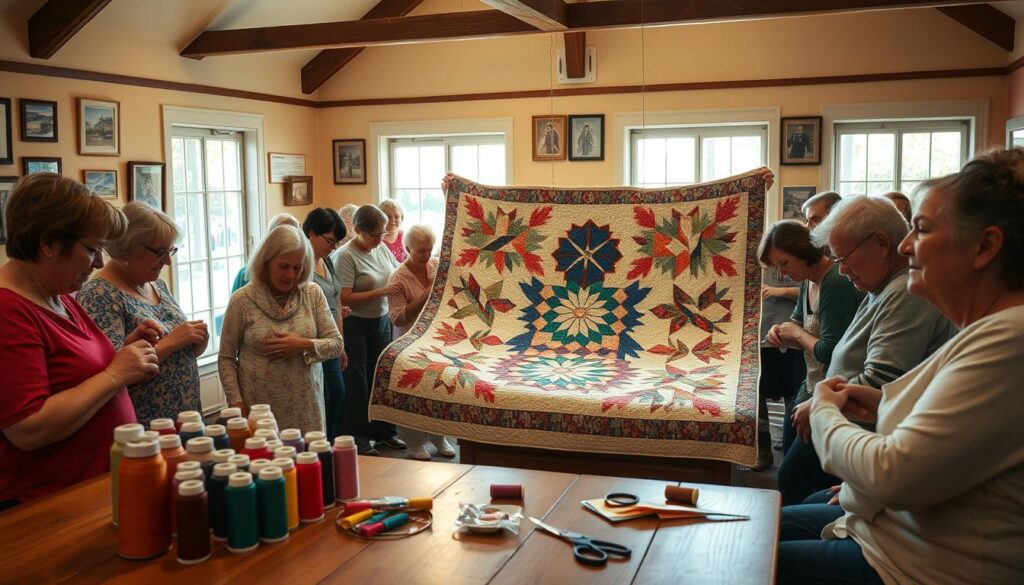
Community quilt projects also benefit the participants. They learn new skills, gain confidence, and make lasting friendships. So, these projects not only create beautiful quilts but also improve the community’s well-being.
Planning Your Community Quilt from Start to Finish
Effective planning is key to a successful community quilt project. It means setting clear goals, defining the project’s scope, and having a realistic timeline.
Digital Tools for Coordination
In today’s world, online tools make coordinating a community quilt easier. Platforms like Trello or Asana help assign tasks, track progress, and share updates. Digital communication tools like email or apps make talking to participants smooth.
“Digital tools have changed how we work on community projects,” says a quilting expert. “They help us stay organized and focused on our goal.”
But, in-person planning is also vital. It lets participants meet, share ideas, and feel part of a community. Face-to-face interaction boosts creativity and ensures everyone is in sync.
Using both digital tools and in-person planning creates a strong plan. This supports your community quilt project from start to finish.
Selecting a Theme and Design for Your Quilt
Choosing a theme and design for your community quilt is key. It sets the tone for the whole project. The quilt theme will help pick colors, patterns, and the overall look. This ensures the final product looks good together.
When picking a quilt design, you have many choices. Scrap quilts use different fabrics for a lively look. Checkerboard patterns give a clean, modern feel.
The community quilt pattern should match the quilt’s purpose or theme. For example, a quilt for kids might have bright colors and fun designs. A quilt for a historical society could have softer tones and classic patterns.
The best quilt design connects with those who made it and those who will get it. By picking a theme and design that means something, you make a quilt that’s not just pretty. It also tells a story.
Essential Materials and Tools for a Group Quilting Project
Starting a group quilting project means getting the right stuff. You need the right fabric, which comes in many types, colors, and patterns. Choosing a theme or color scheme helps pick fabrics.
Other key quilting materials are thread, needles, and batting. Good quality makes the quilt last longer and look better. You also need the right quilting tools, like scissors and rotary cutters, to make the project easier.
Setting Up a Community Supply Station
Having a community supply station is smart. It lets everyone share what they have. You can set up a place for everyone’s stuff or a shared box of quilting supplies.
“A shared supply station not only reduces costs but also fosters a sense of community among quilters.”
Sharing supplies means everyone gets to use more and better stuff. This makes the project better and more fun for everyone.
Types of Community Quilt Projects to Consider
The world of community quilting is full of variety. Projects range from charity quilts to memorial quilts. They serve many purposes, like raising funds or commemorating important events or people.
Charity Quilts are a favorite among community projects. They are made to help those in need or to raise money. For instance, quilts for cancer patients or for the homeless. These quilts offer both physical and emotional comfort.
Memorial Quilts are also significant. They honor and remember loved ones who have passed away. Made with fabric from the deceased’s clothes or personal items, they are a touching tribute.
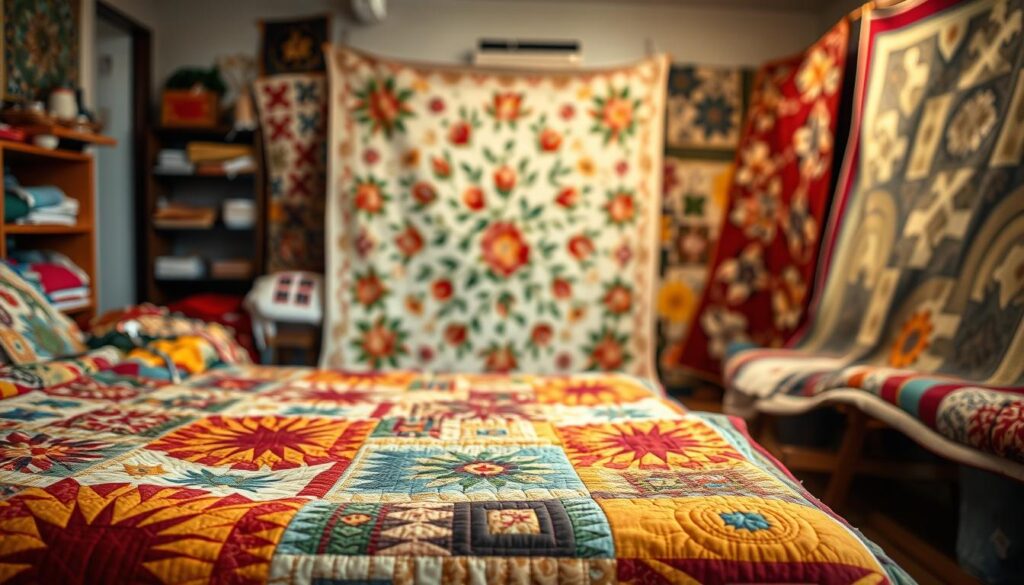
Community art quilts, by contrast, focus on the artistic side. They feature detailed designs and teamwork. These quilts are often shown in public, encouraging community involvement and appreciation for textile art.
Every community quilt project has its own benefits and challenges. Yet, they all aim to unite people and create something special. Whether it’s a charity quilt, a memorial quilt, or a community art quilt, quilting brings people together and builds connections.
Organizing Quilt Block Assignments and Contributions
Organizing quilt block assignments is key to a great community quilt. A clear plan helps everyone know their part. This leads to a quilt that looks good and feels cohesive.
Setting up clear guidelines and templates is vital. Templates give a common base for everyone to follow. This ensures blocks match in size, color, and pattern.
Templates and Guidelines for Consistency
Think about the quilt’s design and theme when making templates. Clear instructions on fabric, block size, and extras help keep the project on track. Share these through online documents, email, or at meetings.
Managing assignments and keeping in touch with participants is also important. Share updates through newsletters, social media, or meetings. This keeps everyone involved and excited.
With a well-organized plan, you can make a stunning community quilt. It will show the hard work and creativity of everyone involved.
Teaching Techniques for Varied Skill Levels
It’s important to teach quilting techniques for all skill levels in a community quilt project. This way, everyone can contribute effectively. The project brings together people with different quilting experiences, from beginners to experts.
One good strategy is to give step-by-step guides on basic quilting skills, like sewing and pressing. You can do this through workshops, online tutorials, or personal mentoring. Breaking down complex tasks helps participants feel more confident in their skills.
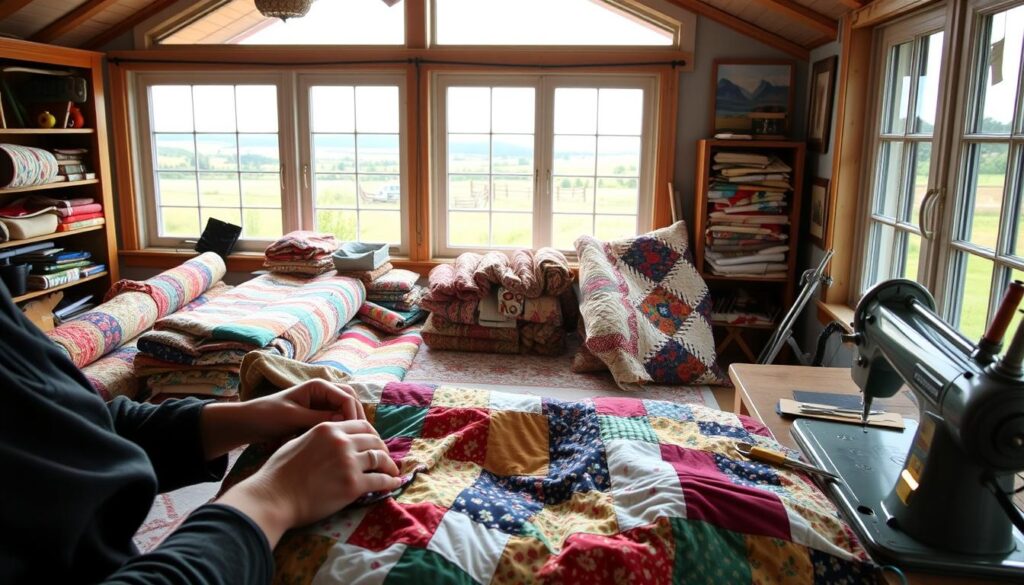
Even with clear instructions, beginners might face challenges. They might cut inaccurately, have uneven seams, or press wrong. It’s key to create a supportive space where they feel okay asking for help.
As quilting expert,
“The key to successful quilting is not just about the technical skills, but also about patience, persistence, and practice.”
Creating a culture of patience and support helps all quilters. It lets them overcome hurdles and make great quilt blocks.
For more skilled quilters, offer advanced techniques like complex piecing or creative binding. This keeps them interested and lets them share their knowledge with others.
By teaching for all skill levels and supporting beginners, your community quilt project will thrive. Participants will make a beautiful quilt, learn new skills, and make lasting friendships with other quilters.
Hosting Productive Community Quilt Gatherings
Hosting community quilt gatherings is all about creating a welcoming space. It’s where creativity, teamwork, and community spirit come alive. A well-organized event can make everyone feel included and inspired.
To make it work, you need to mix socializing with productivity. Start by setting clear goals for each meeting. Make sure everyone knows their role and what’s expected of them.
For productive meetings, having a plan is key. Create an agenda and share it with everyone before the meeting. This keeps the group on track and focused on the goals.
It’s also important to manage what people expect. Clearly share the project’s goals, timelines, and what’s needed from each person. Offer help and support when needed. This way, everyone in the quilting community will have a great time.
Assembling the Community Quilt as a Team
When the quilt blocks are done, putting the quilt together becomes a team effort. It needs coordination and precision. This stage is key as it combines individual parts into a unified and meaningful piece.
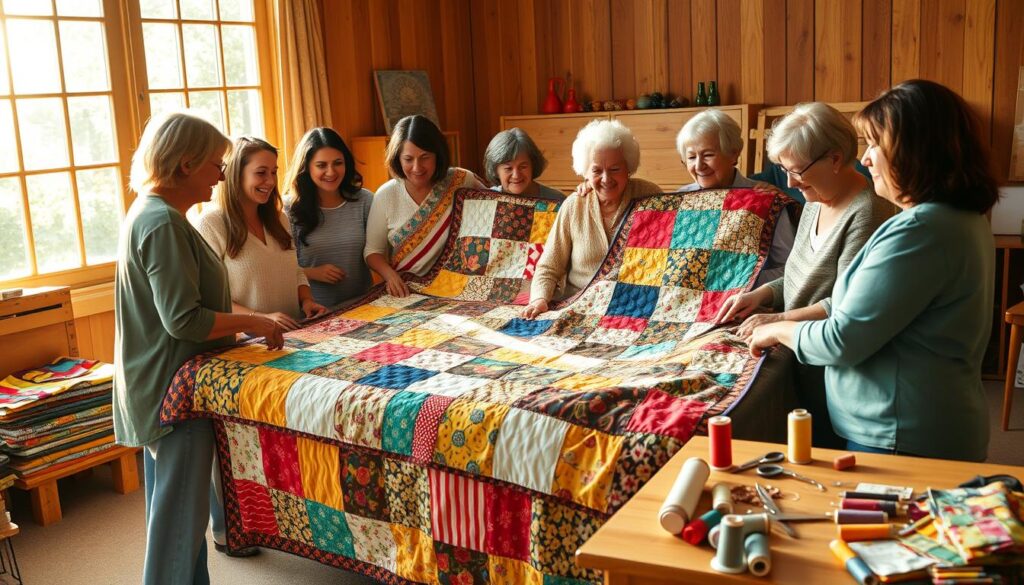
The process starts with laying out the quilt blocks on a big surface. It’s important to make sure the pattern and design are right. Having a clear plan and roles for each team member helps the assembly go smoothly.
Managing Quality Control Respectfully
Keeping an eye on quality control during assembly is key. It ensures the final product is up to standard. This means checking for mistakes in stitching, fabric alignment, and looks.
For respectful quality control, giving specific, clear, and helpful feedback is important. Team members should feel free to share their thoughts and ideas. This creates a space for open communication and teamwork.
By focusing on quality control together, the team can make a beautiful community quilt. It will show their hard work and dedication.
Quilting and Finishing Touches
The final stages of making a community quilt involve more than just quilting skills. They also include adding finishing touches that tell the quilt’s story and spirit.
When the group finishes their quilt, they must pick the right quilting techniques. They can choose hand-quilting, machine quilting, or a mix of both.
Adding finishing touches like binding and labels completes the quilt. It also lets them add a personal touch. A label or signature block can keep the quilt’s creators and its story alive.
Preserving the Stories Behind the Quilt
As the quilt gets close to being finished, it’s key to think about preserving the stories behind it. This can be done through writing, photos, or videos of its making.
By keeping these stories, the quilt becomes more than a piece of art. It becomes a link to the people and events it represents. This makes the quilt even more special and valuable for the future.
The Enduring Joy of Creating Together
Community quilting is more than a hobby. It’s a way to connect with others and share joy. It brings people together, creating a sense of belonging and friendship.
Working on a quilt teaches teamwork and encourages creativity. It’s a chance for quilters to share their skills and learn from each other. The finished quilt shows the community’s effort and creativity.
The joy of quilting goes beyond making something beautiful. It’s about the friendships and memories made along the way. Community quilting projects unite people, build community, and leave a lasting legacy.
Embracing community quilting and teamwork brings joy and makes a difference in the community.