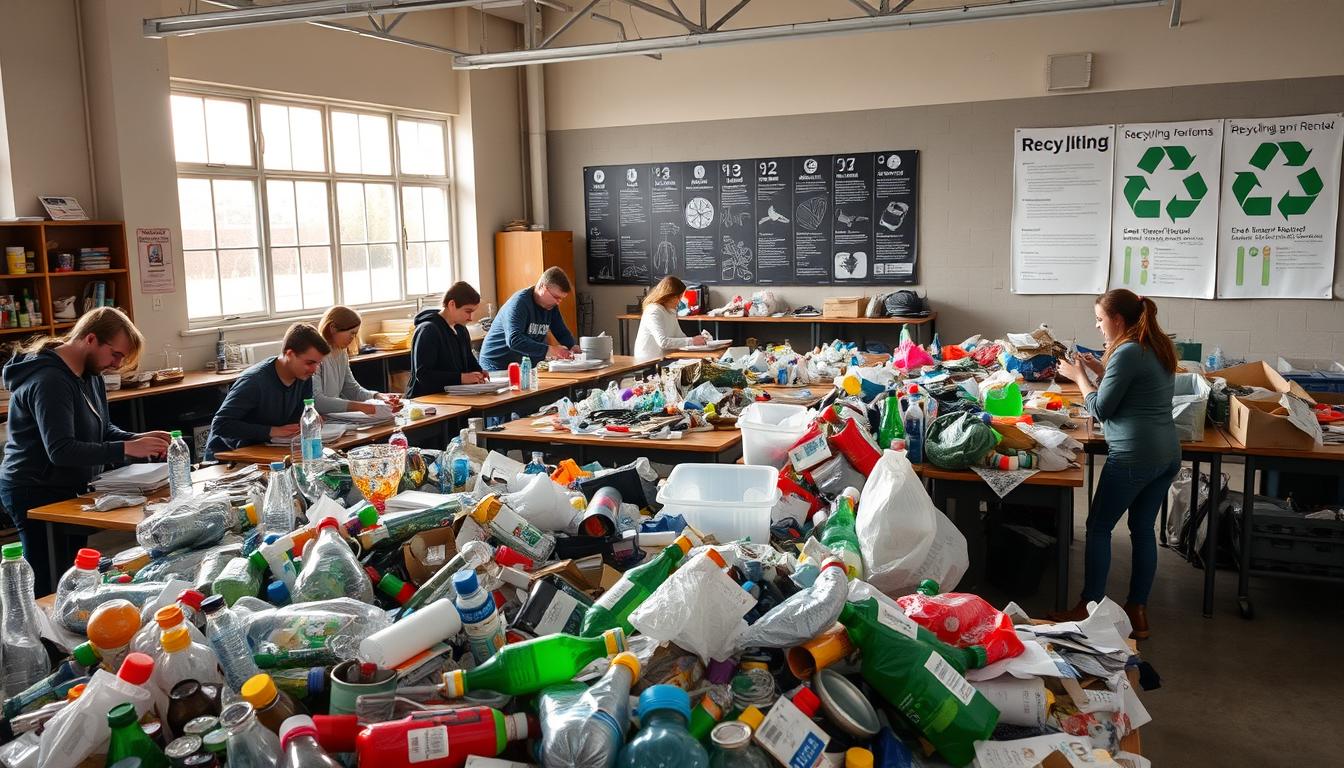
Learning to recycle right is key to living sustainably. A recycling workshop teaches you the basics and more. It’s a step towards a greener future.
At these workshops, you’ll learn the three basic rules of recycling. You’ll also get access to detailed guides and resources. This knowledge helps you make a real difference.
Joining a recycling workshop is a great way to live more eco-friendly. It’s a chance to learn, get involved, and make a positive change. Start your journey to a sustainable lifestyle today.
Understanding the Importance of Recycling
Recycling is more important than ever due to growing waste concerns. It’s not just about processing used materials. It deeply affects the economy, job market, and our environment.
Recycling has an estimated $13 billion annual economic impact. It creates jobs and boosts economic growth. The Environmental Protection Agency (EPA) says recycling and reuse are big parts of the U.S. economy. Investing in recycling helps communities grow economically and sustainably.
Recycling also has big environmental benefits. It cuts down on waste, saves natural resources, and lowers greenhouse gas emissions. An environmental advocate says, “Recycling is key to reducing our ecological footprint.”
“Recycling is a key component of sustainable waste management and is essential for reducing the environmental impacts of human activity.”
Recycling education is also vital. It teaches people about recycling’s importance and how to do it right. This boosts recycling rates and quality, leading to better environmental outcomes.
In summary, recycling is more than just processing materials. It brings economic, social, and environmental gains for a sustainable future. We must keep promoting recycling education and investing in recycling to achieve these benefits.
Common Recycling Myths Debunked
There’s a lot of confusion about recycling. It’s time to clear up the confusion. Many of us are unsure about what can and cannot be recycled. This leads to confusion and sometimes, contamination of recyclables.
One common recycling myth is that recycling is not effective. But recycling is key to saving natural resources, reducing landfill waste, and saving energy. For example, recycling aluminum cans uses 95% less energy than making new aluminum from raw materials.

Another myth is that some materials can’t be recycled. It’s true that not all materials are accepted by every recycling program. But, many communities have special facilities for unique items like electronics, batteries, and certain plastics. Knowing what your local recycling programs accept is important.
Recycling facts show that many everyday items can be recycled. These include paper, cardboard, glass, and certain plastics. But, contamination is a big problem. Putting non-recyclable materials in the recycling bin can ruin a whole batch of recyclables.
By debunking these recycling myths and understanding the recycling facts, we can improve our recycling. Community recycling initiatives are key. They educate the public and provide easy recycling options.
Let’s work together to make a difference. By being informed and active in community recycling efforts, we can help create a more sustainable future.
Types of Materials You Can Recycle
Knowing what can be recycled is important for good recycling habits. Different places have different recycling programs. It’s key to know what can be recycled where you live.
Common Recyclable Materials include paper, plastic, glass, and metal. Paper like newspapers, cardboard, and mixed paper is often accepted. Plastic bottles, jugs, and containers can also be recycled, but the types accepted vary.
Glass bottles and jars can be recycled too. Metal cans, like those made from aluminum and steel, are recyclable. Always check the local recycling guidelines to see what’s accepted.
Understanding What Can Be Recycled in Your Area
To recycle well, get to know your local recycling programs. This means knowing what can be recycled, how to prepare it, and any special rules.
Checking Local Recycling Guidelines can be done online or by calling your waste management. Some places offer workshops to help you understand recycling better.
By knowing what can be recycled in your area and following local rules, you help reduce waste. This promotes sustainability.
Setting Up Your Recycling Workshop
Creating a recycling workshop that teaches and engages is key. It helps people learn effective recycling practices.
For a successful workshop, start with the basics of recycling. Explain what materials can be recycled and how to prepare them.
Experts say community involvement is vital for recycling success. Use hands-on activities and simple steps to make recycling easy for all.
“The key to a successful recycling workshop is not just educating participants about what can be recycled, but also inspiring them to take action in their daily lives.”
To boost community engagement, include local recycling efforts in your workshop. Invite community members to share their recycling tips and stories.
By teaching effective recycling and promoting sustainability, your workshop can greatly help the environment. It can also lead to a greener future.
How to Educate Workshop Participants
A successful recycling workshop needs to teach participants about the importance and how to recycle. It’s important to keep them interested with interactive activities and clear instructions.
Teaching workshop participants through hands-on activities is a great way. For example, sorting exercises can show them how to recycle different materials. These activities not only teach but also make learning fun.
It’s also key to give clear guidelines on what can and can’t be recycled. Use posters, infographics, or simple handouts to make this information easy to understand. This way, participants can help the environment.
Using real-life examples and case studies in your workshop can also be powerful. It shows how recycling works and can motivate participants to recycle more. This makes the workshop’s impact last longer.
To really connect with your audience, tailor your content to their needs and interests. Start by understanding their current knowledge and concerns about recycling. This makes your workshop more engaging and relevant for your workshop participants.
Crafting a Recycling Curriculum
A successful recycling workshop starts with a well-planned curriculum. It’s key to teach participants about recycling’s importance and how to do it. A good curriculum helps everyone understand why recycling matters.
When making a recycling curriculum, focus on the basics. Talk about what can be recycled and how it helps the environment. Hands-on activities and real-life examples make learning fun and effective.
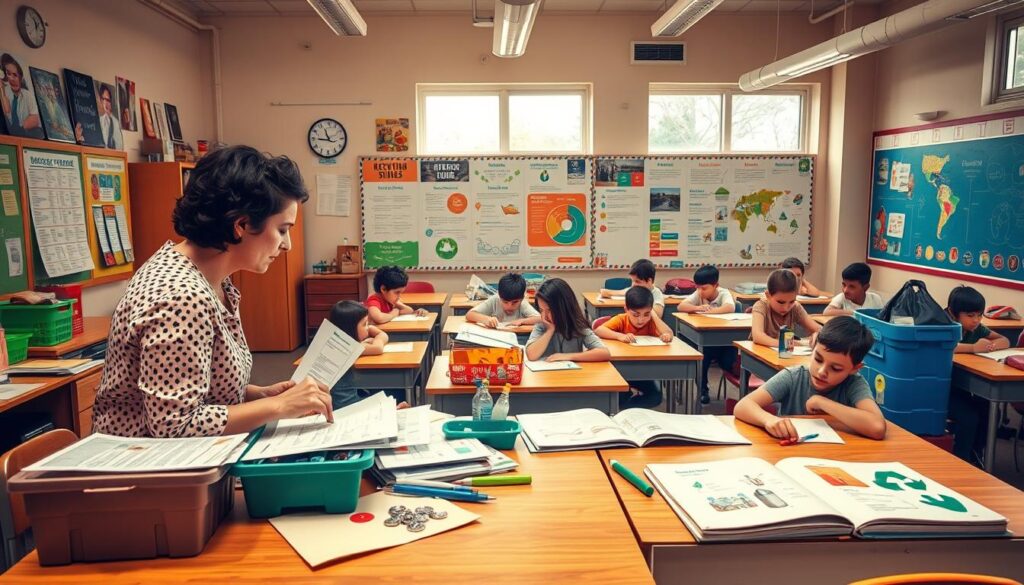
The curriculum should also debunk common recycling myths. It should show how to start recycling at home. Interactive elements and discussions help participants really get it.
It’s important to make the curriculum for everyone. This means using simple language and avoiding hard terms. This way, all participants can learn and enjoy the workshop.
With a solid recycling curriculum, workshops can teach people to help the planet. They give participants the tools to make a difference.
Promoting Your Recycling Workshop
To make your recycling workshop a success, you need to promote it well. Good promotion brings in participants and highlights recycling’s importance in your area.
Using social media is a smart move. Sites like Facebook, Twitter, and Instagram can reach lots of people. Make an event page for your workshop and ask your followers to join and share it. Use hashtags like #RecyclingMatters or #Sustainability to get more eyes on it.
Don’t forget about local newspapers and community newsletters. Many people look to these for local news. Write a press release that talks up your workshop and why recycling matters.
Community events are great for promoting your workshop too. Go to places like farmers’ markets or environmental fairs to hand out flyers. You can also team up with local businesses or groups to promote your event together.
Offering incentives can help too. Give discounts on recycling bins or free educational stuff. This might get more people to join your workshop and get involved in recycling.
By mixing these promotional ideas, you can reach lots of people. This helps make your community more sustainable.
Encouraging Community Involvement
Getting the community involved is key for recycling programs to succeed. When people join in, recycling efforts can make a bigger difference.
Partnering with local groups is a great way to get more people involved. Working with schools, businesses, and community groups helps recycling workshops reach more people. This way, more support is gained.
Benefits of Community Involvement
Being part of recycling efforts has many benefits. It boosts recycling rates, raises awareness, and strengthens community ties.
Local events like clean-up days and recycling fairs are also important. They offer chances for learning, fun, and getting involved. This makes recycling fun and easy for everyone.
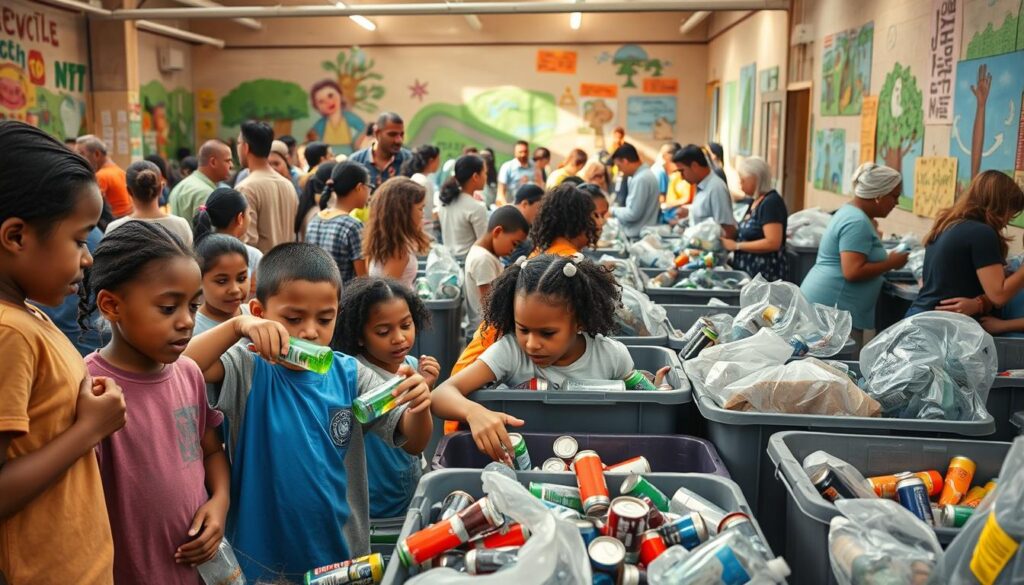
Also, community input can lead to new ideas and solutions. By listening to what people say, recycling programs can get better and meet community needs.
Empowering Community Members
Teaching people how to recycle is vital. Educational programs, workshops, and hands-on activities help show why and how to recycle.
Together, communities can greatly improve the environment. It’s not just about recycling more. It’s about creating a greener, more aware community.
Measuring the Impact of Your Workshop
Figuring out how well your recycling workshop works is key. It helps you spot areas for improvement and see if it’s a hit. To really measure its impact, you need to use both feedback and outcome checks.
Getting participant feedback is a big part of knowing if your workshop is a success. You can use surveys, questionnaires, or just chat with people at the end. Asking the right questions helps you understand what they liked and what could be better.
But, outcome measurements give you hard numbers on how your workshop is doing. You can track things like how many people showed up, how much recyclable stuff you collected, or if more people recycle after the workshop.
To make your workshop even better, you should analyze the data you collect. This might mean tweaking what you teach, boosting how you promote it, or making the experience better for everyone.
By really focusing on measuring impact and always looking to get better, your recycling workshop can keep being a big help to the community. It can keep pushing for good changes and helping people live more sustainably.
Continuing the Conversation on Recycling
It’s important to keep talking about recycling to make our communities more sustainable. Our recycling workshops show how education can really make a difference. It helps our community recycle and reuse better.
One great way to keep the conversation alive is through community events. Events like clean-ups or environmental fairs can draw more people in. They help us all learn about recycling and start using it more.
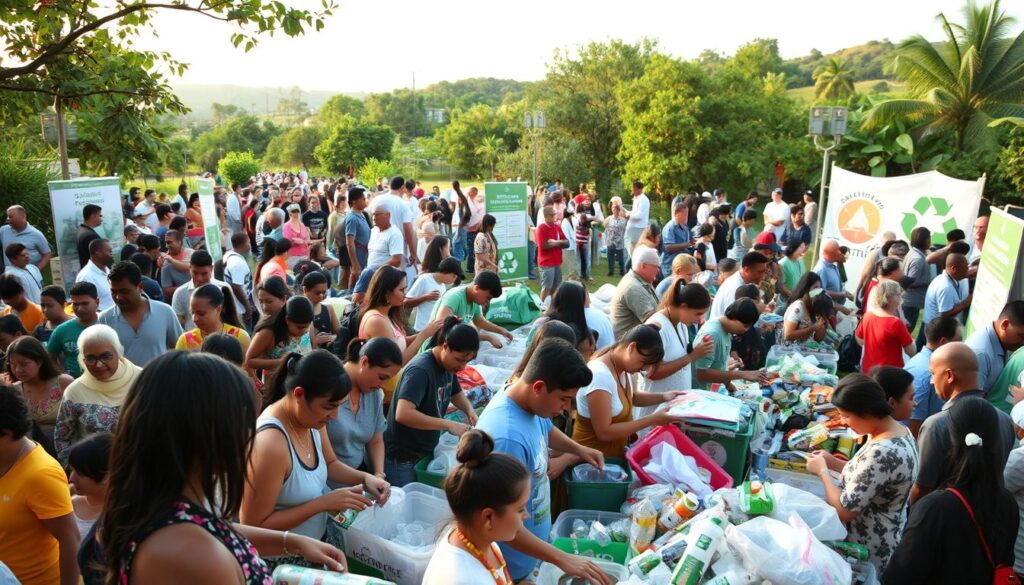
Using social media platforms is another smart move. We can share recycling tips, success stories, and updates. This way, we spread the word and build a community around recycling.
Also, working with local businesses and organizations is key. Together, we can make recycling programs better and get more people involved.
Remember, keeping the recycling conversation going is a long-term effort. It needs ongoing work, creativity, and a willingness to keep improving our methods.
Keeping the Momentum Going
Our recycling workshop has come to an end, but the journey is far from over. It’s key to keep talking about recycling to keep our community involved and sustainable.
To keep the recycling momentum alive, we need to keep learning and engaging with each other. We can do this by hosting more workshops, sharing useful information, and asking people to share their recycling tips.
This way, we can inspire others to join in and help protect our environment. Let’s keep the conversation alive and strive for a greener future together.