
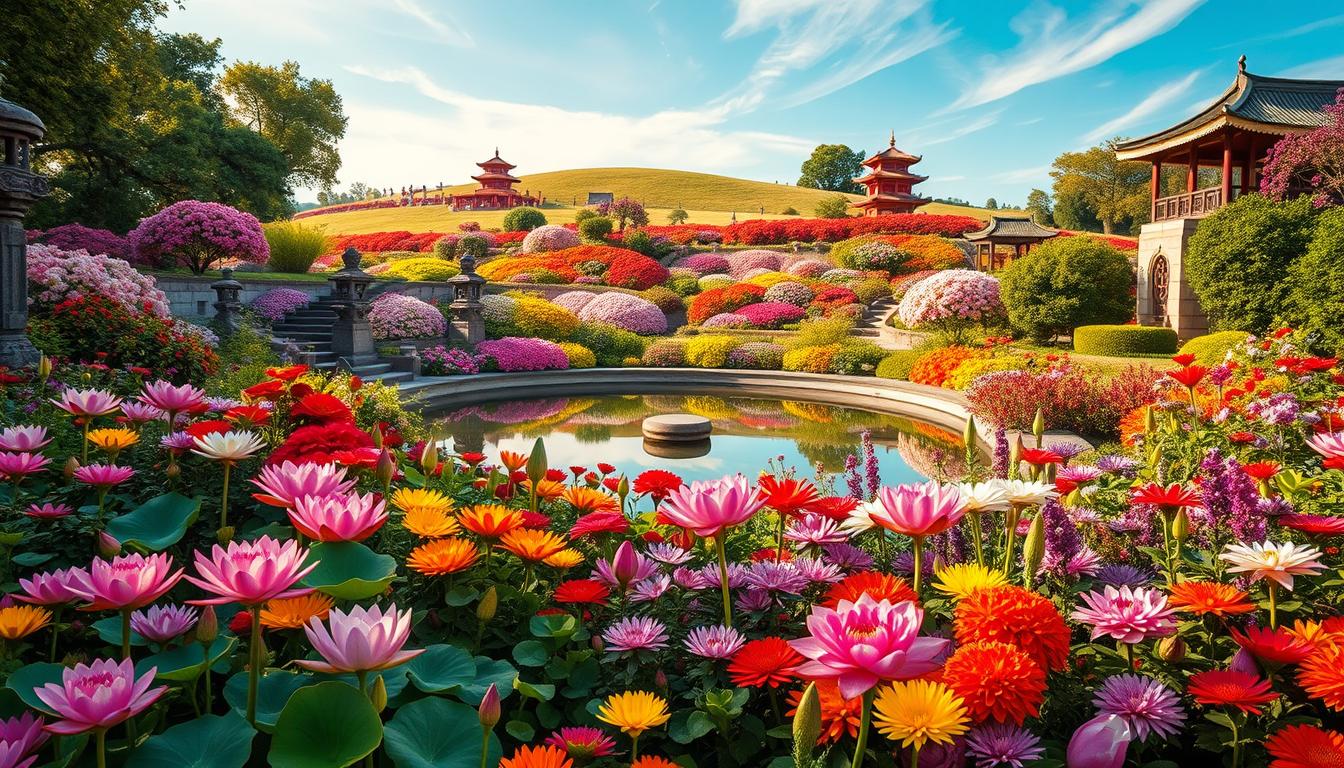
Creating a vibrant cultural garden is a great way to celebrate diversity and community heritage. By adding different flowers to your garden design, you make it more beautiful and diverse. This also helps in boosting biodiversity.
Recent studies show that adding flowers like cosmos, zinnias, and sunflowers can make your garden lively and diverse. This gardening style shows the cultural significance of flowers in various communities. It makes your garden a special place that reflects local heritage.
By designing your garden with cultural flowers, you create a beautiful outdoor space. It celebrates the diversity of your community.
Introduction to Cultural Gardens
A cultural garden is more than plants; it’s a blend of art, science, and community identity. As the second source notes, “Gardening is not just about flowers or veggies. It’s an art, science, and cultural expression shaped by centuries of tradition.”
Cultural gardens have a long history across many civilizations. Each adds its own views and practices. These gardens are not just pretty; they connect us to our heritage and traditions.
The cultural significance of these gardens shows the diversity and richness of cultures. They reflect the history, values, and traditions of their communities. This makes them key cultural landmarks.
“Gardens are a reflection of the human spirit, a blend of nature and culture that transcends geographical boundaries.”
Knowing the garden history helps us value today’s cultural gardens. By exploring how gardening has evolved, we see its importance in our world.
In short, cultural gardens celebrate diversity and foster understanding between cultures. They show how gardening can unite us, crossing cultural lines.
Choosing the Right Location for Your Cultural Garden
The success of your cultural garden depends a lot on where you place it. It’s important to think about a few key things.
First, consider how much sunlight your garden will get. Most cultural flowers need full sun to grow well. This means they need at least six hours of direct sunlight every day.
Sunlight and Soil Conditions
It’s key to check how much sunlight your garden gets. Watch the area during the day to see where the sun shines. Also, think about the soil, as it affects your flowers’ health and growth.
Adding organic matter like compost or manure can make the soil better. It helps the soil hold water and nutrients better.
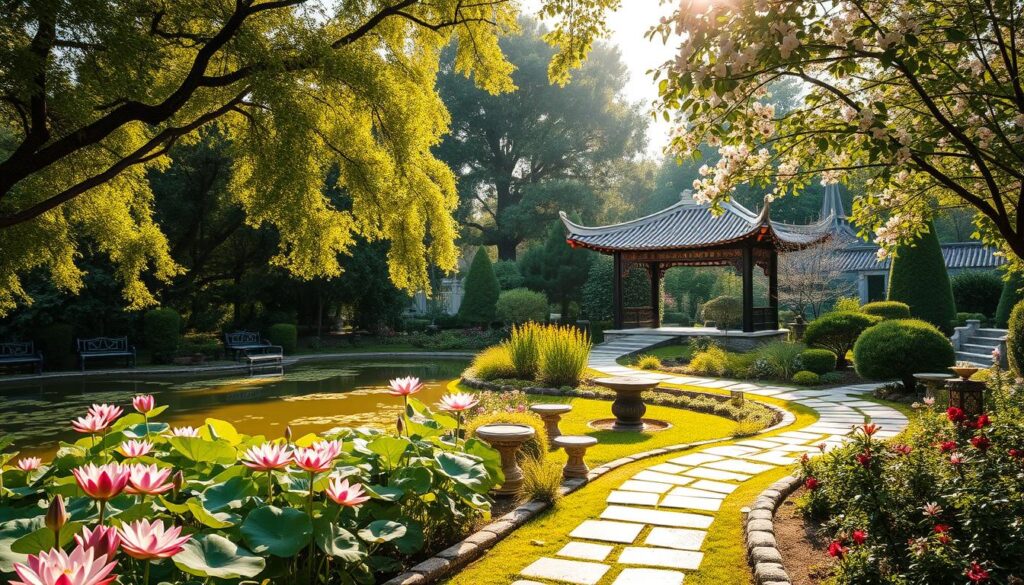
Don’t forget about drainage and how easy it is to get to your garden. A well-drained and easy-to-reach garden will do better.
By carefully picking and preparing your garden’s spot, you can make a great place for your flowers to grow.
Selecting Cultural Flowers to Represent Diversity
Diversity in a garden can be beautifully shown through the right choice of cultural flowers. It’s key to pick flowers that are not just pretty but also carry cultural importance. Cultural flowers add depth to your garden, showing off the diverse heritage it celebrates.
The third source says “Cosmos, zinnias, and sunflowers are great for adding color and diversity.” These flowers are not just pretty but also hold cultural value. For example, sunflowers symbolize loyalty in Chinese culture, and zinnias represent friendship in Mexican culture.
When picking cultural flowers, think about your garden’s climate, soil, and look. For dry climates, lavender or cacti are good choices because they need little water. In cooler zones, cherry blossoms or tulips are better, as they mean a lot in Japanese and Dutch cultures.
The act of flower selection is a chance to learn about and value different cultures. By choosing flowers that matter to many cultures, you make your garden more beautiful. You also celebrate cultural heritage and diversity.
In summary, picking the right cultural flowers is a thoughtful act. It involves knowing their cultural value, considering your garden’s needs, and valuing the diversity they bring. This way, you create a garden that’s not just lovely but also meaningful in showing cultural diversity.
Designing Your Cultural Garden Layout
Creating a cultural garden layout is all about mixing beauty with cultural importance. It’s a space that looks stunning and shares your heritage story.
Get inspiration from gardens worldwide. Japanese Zen gardens are calm and simple, with gravel and stones. English cottage gardens burst with color and a relaxed feel.
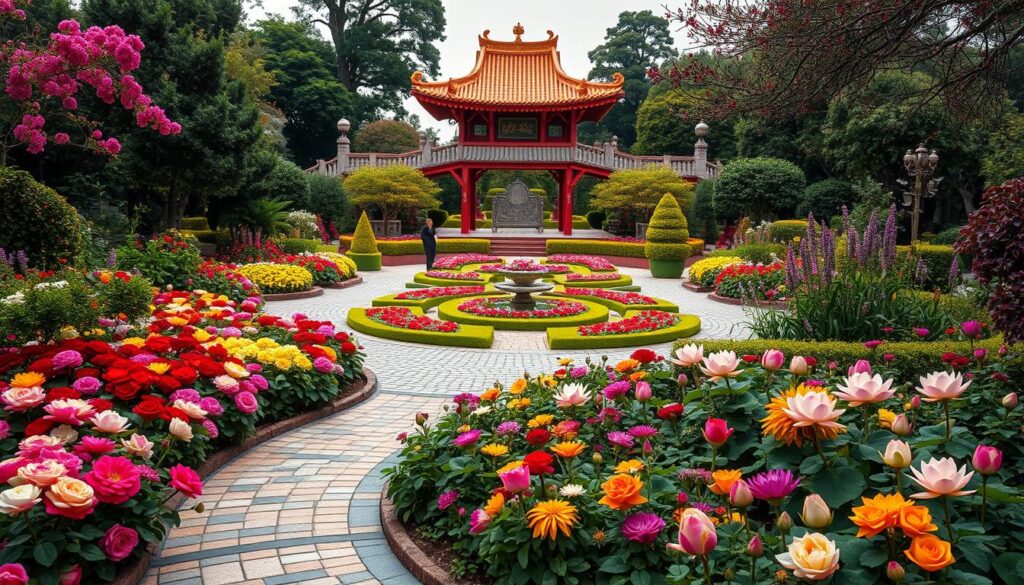
Think about the cultural significance of different plants in your garden. The lotus flower means spiritual growth in Asia, while roses symbolize love in the West.
The layout and design of your garden are key. Add water features, statues, or cultural artifacts to show your heritage.
“A garden is a love song, a duet between a human being and Mother Nature.” – Jeff Cox
This quote shows what a cultural garden is all about. It’s a mix of personal touch and natural beauty. Designing your garden thoughtfully makes it beautiful and culturally rich.
To make your garden more authentic, use traditional gardening ways. A Japanese-style tea garden might have a teahouse, stepping stones, and plants like bamboo.
The secret to a stunning cultural garden is balance. Balance elements, colors, and textures for a peaceful space. This way, your garden reflects your culture and welcomes visitors.
Incorporating Art and Cultural Elements
Art and cultural elements are key in making a garden beautiful and culturally significant. They turn a garden into a lively showcase of heritage and identity. This makes it a place where stories come alive for those who visit.
Chinese scholar gardens use symbols like water, rocks, plants, and buildings to show balance and harmony. These gardens are not just pretty; they carry deep cultural and philosophical meanings. They stand as important cultural symbols.
Using cultural elements in garden design can include sculptures, mosaics, or other art forms. These reflect the community’s cultural heritage. For example, a garden might have sculptures of mythological figures or historical events important to the local culture.
Adding cultural practices and traditions also makes a garden more meaningful. This can be done by choosing plants with cultural or symbolic value. Or by designing the garden to mirror cultural views on nature and the universe.
By carefully adding garden art and cultural elements, a garden becomes a vibrant space. It celebrates diversity and helps people understand different cultures. It’s a place where art, culture, and nature blend to offer a unique and meaningful experience.
Understanding Plant Care for Cultural Flowers
Proper plant care is key for the health and beauty of cultural flowers in your garden. It’s important to know what they need to thrive.
Cultural flowers need regular watering. Gardening experts say most flowers need water deeply at least once a week. This is more often in hot and dry weather. It helps build a strong root system, which is essential for their health.
Also, fertilizing is vital. The right fertilizer can boost growth and flowering. Regular pruning helps keep plants in shape and encourages new blooms.
By following these gardening tips, your cultural garden will be vibrant and diverse. Remember, a thriving garden needs consistent care and attention to your plants’ needs.
Community Engagement in Your Cultural Garden
Cultural gardens that involve the community are more vibrant and meaningful. Community engagement is key to creating a garden that shows the community’s diversity and richness.
When the community helps with garden activities and decisions, it builds a sense of belonging. For example, the Subak system in Bali shows how farmers work together. This teamwork not only keeps the garden thriving but also strengthens community ties.
Community-led garden projects also boost community involvement. These projects let community members design and care for the garden. This way, the garden truly reflects their cultural heritage.
To get more people involved, host cultural events and activities. You can have gardening workshops, cultural festivals, and educational programs. These events teach about cultural practices and traditions. They turn cultural gardens into lively community centers.
Being involved in cultural gardens also has many benefits. It helps build social bonds, keeps cultural heritage alive, and makes the garden look beautiful. Together, community members can create a space that shows their shared identity.
“Community gardens are not just about growing plants; they’re about growing communities.”
In summary, community involvement is essential for a thriving cultural garden. By getting the community involved, garden organizers can build a welcoming space that benefits everyone.
Sustainability Practices for Cultural Gardens
When we design cultural gardens, it’s key to use sustainable practices. These practices make the garden beautiful and help the environment.
Eco-friendly gardening is essential for a healthy garden. Techniques like terracing and agroforestry help prevent soil erosion and boost biodiversity.
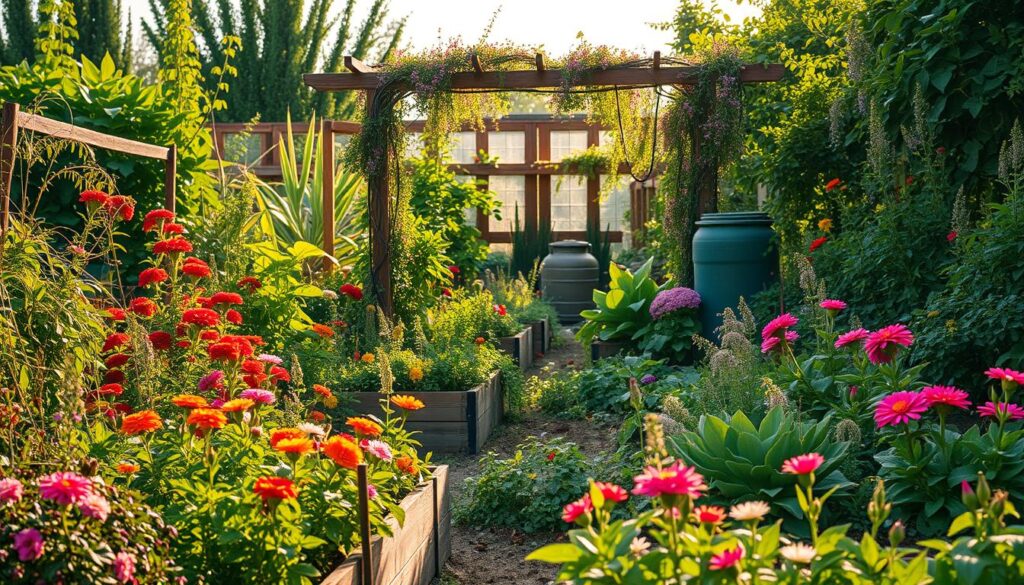
Terracing makes flat areas on slopes, stopping soil erosion. It lets us grow more plants. Agroforestry mixes trees with crops, adding to biodiversity and improving ecosystems.
Water saving is also vital in sustainable gardening. Using smart irrigation and drought-tolerant plants cuts down water use. This makes the garden strong against weather changes.
By using sustainable practices, we make gardens that are lovely and good for the planet. This way, the garden stays healthy and benefits the community for years.
Adding sustainability to garden design is smart. It helps the garden and the planet. It’s a way to make a garden more resilient and diverse.
The Role of Cultural Gardens in Urban Areas
Cultural gardens are more than just pretty spots in cities. They are key to making city life better. As cities get bigger, these gardens become even more important.
Having green spaces can really help our mental health. Studies show it can cut stress by half. This shows how important cultural gardens are in urban planning.
Creating cultural gardens in urban areas needs careful planning. They should be both beautiful and useful. These gardens can also be places where people come together, making everyone feel part of the community.
Good urban garden projects show how cultural gardens can change cities. They involve the community, making sure the gardens show off the area’s cultural variety.
In short, cultural gardens are vital in urban planning. They give us green spaces that are key for city folks’ well-being. As cities keep growing, so will the need for these gardens.
Events and Festivals in Cultural Gardens
Events and festivals in cultural gardens are a great way to share cultures. They make the gardens more beautiful and bring people together. This helps everyone understand and appreciate different cultures.
Cultural gardens are perfect for cultural events. They can host traditional music, dance, and art. These gardens become lively places that celebrate many cultures.
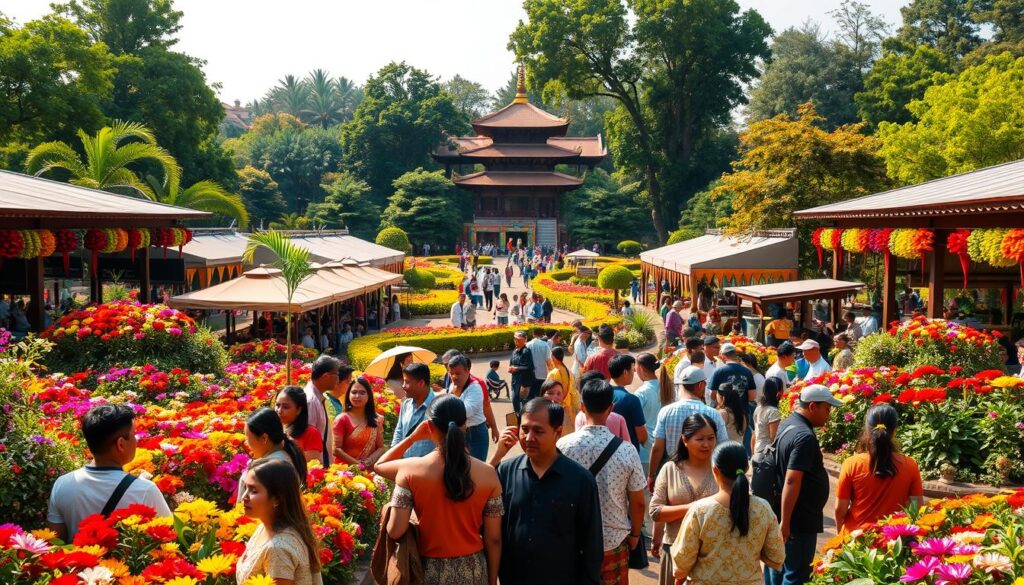
Garden festivals are a great way to show off cultural gardens. They bring people together to enjoy the gardens’ beauty and cultural value. This helps build unity and cooperation in the community.
Hosting cultural celebrations in gardens has many benefits. They encourage cultural sharing and help people talk and understand each other better. They also help keep cultural traditions alive by teaching them to younger people.
In short, cultural gardens are more than just pretty places. They are also important venues for cultural celebrations. By using these gardens for events, communities can grow closer and appreciate different cultures more.
Future Trends in Cultural Gardening
Cultural gardening is changing, mixing old ways with new ideas. The future will see gardens that are both beautiful and green. This is because of a mix of tradition and modern methods.
According to the second source,
“traditional gardening practices offer timeless wisdom for creating resilient, sustainable landscapes.”
This wisdom is being mixed with new ideas. This makes gardens that are not just pretty but also good for the planet.
One big trend is sustainable gardening practices. This means using rainwater, composting, and local materials. It helps gardens be kind to the earth while keeping their cultural value.
Another trend is innovative gardening techniques like vertical gardens and permaculture. These methods use space well and boost garden life. They also let gardeners show their culture through plant choices and design.
As cultural gardening grows, we’ll see more cultural gardening innovations. This might include smart gardening tech to help care for gardens better.
The future of cultural gardening is full of promise. Gardeners can make unique, green spaces that show off their culture. By following these trends, gardens will stay lively and meaningful for a long time.
Conclusion: The Lasting Impact of Cultural Gardens
Cultural gardens leave a lasting legacy. They promote cultural heritage and bring communities together. These gardens show the power of traditional gardening, which is about sustainability, community, and creativity.
The cultural garden legacy is more than just flowers and plants. It’s about the stories, traditions, and values they carry. By appreciating these gardens, we learn more about cultural diversity and support cross-cultural exchange.
Looking ahead, cultural gardens will keep shaping our communities and preserving our heritage. Their impact will last for many generations. They remind us of the value of sustainability, community, and creativity.