
It’s important to know how each member of a family helps it work. The way a family works together shapes how its members act and relate to each other.
Parenting and sibling relationships are key to a family’s dynamics. Looking at these areas helps us see how family roles are set and kept.
Understanding this can make a family’s home environment better. It’s a place where everyone feels important and understood.
Understanding Family Dynamics
Understanding family dynamics is key to strong family bonds. It involves how family members interact and relate to each other. This is shaped by parenting styles and sibling relationships.
Good families are warm, caring, and full of positive attention. They have great family communication. This makes sure everyone feels heard and understood. A stable environment also helps family members feel secure.
Effective family communication is vital for healthy family dynamics. It means listening well, sharing feelings, and solving problems together. This way, families become supportive places where everyone is valued and respected.
The roles family members play also matter a lot in family dynamics. For example, parenting styles can either help or hurt the family atmosphere. Also, sibling relationships shape individual personalities and behaviors in the family.
In summary, it’s important to understand and care for family dynamics for everyone’s well-being. By focusing on positive interactions, good communication, and a stable home, families can grow closer and handle challenges better.
Traditional Family Structures
The idea of traditional family structures has changed a lot over time. This change came from cultural and historical influences. In the past, everyone in the family worked together. They helped with the household and the family business.
This teamwork was key to the family’s survival. It also made the family feel united and cooperative.
In traditional societies, family roles were clearly defined. Parents were usually the main earners. Children helped with chores, and younger ones learned from the elderly. The elderly passed on cultural values and traditions.
Cultural influences have greatly shaped family structures. Each culture has its own way of organizing family roles. For example, some cultures live in extended families, sharing responsibilities.
Historical contexts have also played a big part in family roles. Things like economic conditions, social norms, and cultural practices have shaped these roles. Knowing this history helps us understand how family roles have changed.
Looking at traditional family structures, we see how they’ve shaped today’s families. Family roles are always evolving, influenced by culture, society, and economy.
The Role of Parents in Family Systems
Parents have a huge impact on family systems. Their parenting style greatly affects their children’s lives. They are not just in charge; they are also role models, guides, and nurturers. Their parenting styles are key to their children’s emotional and psychological health.
There are different parenting styles, like authoritarian, permissive, and authoritative. Authoritative parenting is seen as the most effective parenting style. It combines warmth with clear rules, helping create a positive parent-child relationship and open family communication.
Effective communication is vital for a strong parent-child relationship. It’s not just about talking but also listening to the child’s needs and worries. Parents who use effective parenting methods, like active listening and empathy, improve their bond with their kids.
“The way we talk to our children becomes the way they talk to themselves.” – Peggy O’Mara
This quote shows how important family communication is. It shapes a child’s self-image and communication skills. Positive communication helps in healthy growth and strengthens the parent-child bond.
In summary, parents are essential in family systems through their parenting styles and family communication strategies. By using effective parenting methods, parents can create a supportive environment for their children’s well-being and growth.
Sibling Relationships and Their Impact
Sibling relationships deeply affect how families work and how people grow. The way siblings interact can change how family members connect with each other.
The birth order of siblings, or sibling order, shapes their personalities and roles in the family. Firstborns often lead, while younger siblings might be more relaxed.
Sibling dynamics can range from very close to quite distant. These differences depend on age gap, personality, and how parents treat them. Studies show that siblings close in age have a bigger impact on each other’s growth.
The role of sibling relationships in personal development is huge. Siblings offer friendship, support, and a sense of belonging, which are key for growth. They also teach important skills like solving conflicts and showing empathy.
In summary, sibling relationships are key to family dynamics, affecting both family life and personal growth. Learning about these relationships helps us understand family complexities better.
The Influence of Extended Family
Extended families create a sense of belonging and support. Grandparents and other family members add richness to family life. They give children a deeper understanding of their family’s history and culture.
Grandparents are key in sharing family traditions, stories, and values. Their life experiences and wisdom guide children and parents through life’s ups and downs.
“The way we experience and understand family is deeply influenced by our interactions with extended family members.”
Extended family offers emotional and practical support. They help with childcare or financial needs during tough times. They also strengthen family ties by joining in family events, making memories that last.
The impact of extended family goes beyond immediate benefits. It shapes family dynamics and individual well-being over time. Children close to their grandparents often have better social skills and emotional health.
Building these relationships makes families stronger and more supportive. By valuing extended family, families can create lasting bonds that benefit everyone.
Family Roles Across Different Cultures
Families work in many ways, showing off the unique values and traditions of each society. Cultural and societal norms deeply influence family roles. They shape what family members are expected to do.
In some places, traditional family structures are common. Here, the father usually earns the money, and the mother takes care of the home. But, in other areas, diverse family structures are growing. Both parents work and share family duties.
Cultural family traditions also shape family roles. For instance, in some cultures, older family members are very respected and help make big decisions. In others, they might not have as much say.
How families raise their children also varies. In some cultures, kids are taught to be independent early on. In others, they learn to rely on their family more.
Cultural values also influence how families deal with problems. In some cultures, conflicts are solved through talking and finding a middle ground. In others, disagreements can be more direct and confrontational.
In summary, family roles differ greatly across cultures due to various values, traditions, and norms. Recognizing these differences helps us appreciate the wide range of family forms and functions worldwide.
Changes in Family Roles Over Time
Family roles have changed a lot over time. This is because of changes in society, culture, and the economy. Events, economic shifts, and social movements have all played a part in this.
The traditional nuclear family is no longer the only family type. Now, we see single-parent homes, blended families, and families with same-sex parents. These changes come from new views on family and laws that have broadened what we consider a family.
Economic changes have also shaped changing family roles. With more families having two incomes, parents share childcare and household duties. Also, economic needs have led to more families living together, with grandparents or other relatives helping with childcare.
Historical Context
Big events like wars and depressions have deeply affected family roles. For example, during World War II, many women started working outside the home. This change not only reshaped family life but also changed how society viewed women’s work.
After the war, families went back to traditional roles, but this didn’t last. The 1960s and 1970s saw big social changes, like the women’s liberation movement. These movements helped make family roles more equal, leading to the variety of family types we see today.
In summary, changes in family roles show how society has evolved. Understanding these changes helps us see the complexity of today’s family dynamics and what influences them.
Navigating Family Conflicts
Dealing with family conflicts needs empathy, understanding, and good ways to solve problems. Conflicts happen in many families. But how we handle them is key.
“The way we talk to our family can make things better or worse,” a family therapist notes. Effective communication means listening well and sharing feelings without blaming.
To tackle family conflicts well, we must use conflict resolution strategies. This means staying calm, finding the real cause, and looking for a solution that works for everyone.
“Conflict is an opportunity for growth, not just a problem to be solved.”
Good family communication is key to solving conflicts. By listening well and speaking clearly, we avoid mistakes and fix problems faster.
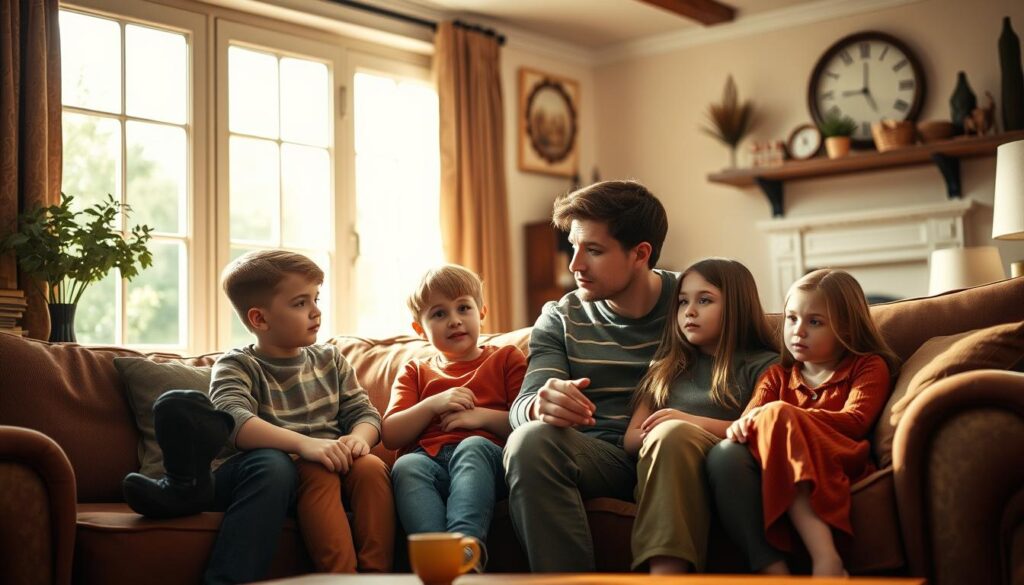
How parents handle conflicts affects their kids. Parents who show good ways to solve problems teach their children important skills.
Understanding family conflicts and using good strategies can make families stronger. This leads to a more peaceful home.
The Role of Family in Personal Development
Family has a huge impact on our growth, shaping our values and behaviors. It’s where we first learn about ourselves and the world. This foundation is key to our personal development.
Family support is vital for building self-confidence. When family backs us up, we grow stronger and more open to new experiences. This support helps us develop a positive outlook on life.
Family dynamics also shape us. The way we interact with family members affects our ability to form good relationships outside. Family life can also impact our stress levels and happiness.
Family values and beliefs guide our personal growth. For example, families that value education push us to succeed academically and professionally. These values motivate us to reach our goals.
Also, family influence lasts into adulthood. Family support and guidance continue to shape our choices and goals. This support is essential for our individual growth.
“The family is one of nature’s masterpieces.” – George Santayana
In summary, family’s role in personal development is deep and complex. They support us, shape our values, and influence our actions. By understanding and nurturing these influences, we can become healthier and more well-rounded individuals.
The Importance of Family Roles in Society
Family roles are key in society, shaping social responsibility and community engagement. They are the foundation of our social structures. They teach us values and norms that guide how we interact with others.
From a young age, families teach us to contribute to the greater good. They show us the value of social responsibility. This helps us understand how our actions affect others.
Family roles also play a big role in community engagement. Families that get involved in their communities inspire others. They encourage participation in local events and volunteer work.
Family Roles and Social Cohesion
Family roles help build unity and cooperation. This unity leads to a more harmonious community. When families support each other, they create a stable environment that benefits everyone.
The values families teach, like respect and empathy, are vital. They help keep society in order and foster community growth.
“The family is the test of freedom; because the family is the only thing that the free man makes for himself and by himself.” – Gilbert K. Chesterton
In summary, family roles are vital in society. They impact social responsibility and community engagement. By valuing these roles, we can build a more united and responsible society.
Celebrating Family Roles in Today’s World
Today, family roles are more varied than ever. This change reflects shifts in society, economy, and culture. Families now come in many forms, shaped by their culture, values, and financial status.
Families face common hurdles, like balancing work and family life. They also deal with financial stress and the impact of modern technology. These issues can put a strain on family ties and affect everyone’s happiness.
Yet, families have many chances to grow and strengthen their bonds. By embracing their unique roles, they can build resilience and a sense of belonging. They can create lasting memories by sharing activities, communicating well, and supporting each other through tough times.
By celebrating their diversity and supporting each other, families can flourish in today’s world. As they face modern life’s challenges, they can find strength in their relationships. Together, they can build a brighter future, making the most of opportunities for growth and overcoming obstacles.