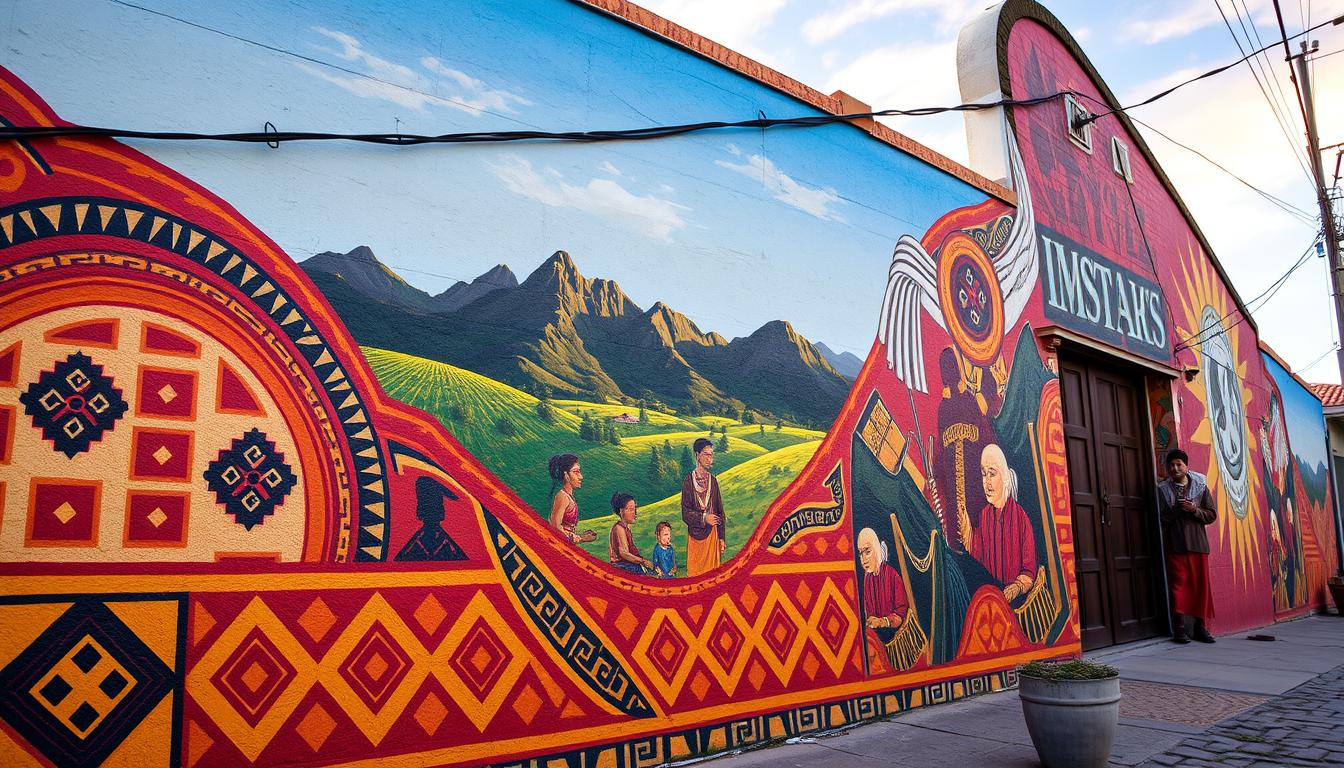
Public art can change places, share stories, and stir feelings. Adding a strong theme to a mural art piece can make it even more powerful. This theme should connect with the community.
Using cultural themes in a mural can make it more impactful. These themes can be about history, culture, abstract ideas, or messages about the environment.
Artists can pick a theme, plan well, and involve the community. This way, they can make murals that not only look good but also touch people’s hearts. It helps in building community engagement.
The Power of Cultural Expression Through Mural Art
Mural art is a big deal in cities today. Artists use it to show offcultural expression. They make murals that show what a community is all about.
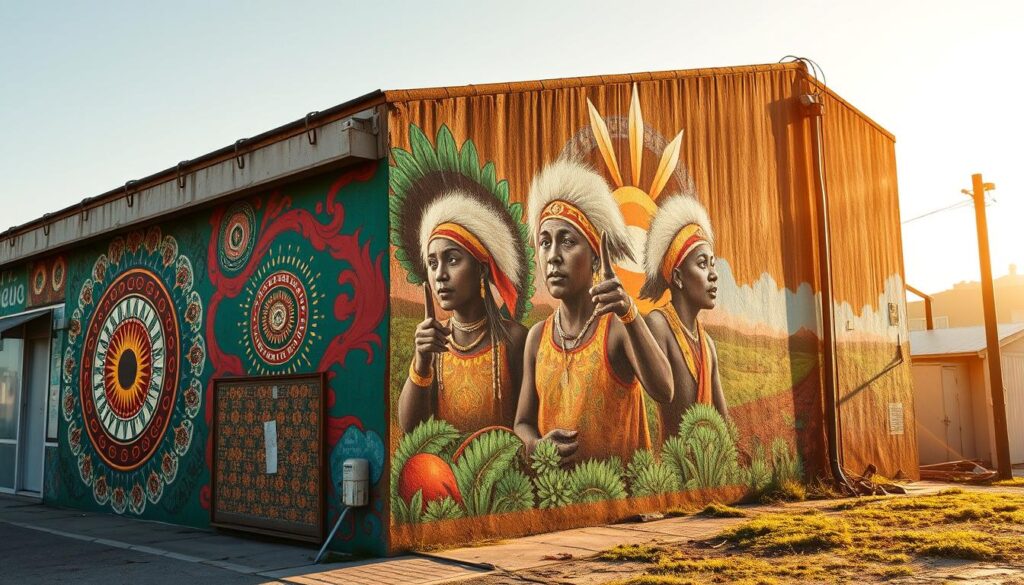
Mural art is more than just pretty pictures. It tells stories and sends messages to everyone. It goes back to ancient cave paintings, but now it’s a key part ofstreet art in cities.
Murals with cultural themes help people feel connected to their community. They make neighborhoods stronger and more united. These artworks make public spaces beautiful and tell the story of a place’s history and dreams.
So,mural art is key to a community’s identity. It helps people understand and value different cultures. It makes cities more interesting and meaningful, showing the power of art in our lives.
Researching Cultural Themes for Your Mural
Researching cultural themes is key to creating a mural that truly represents a community. It involves diving deep into the local culture and engaging with the community. This ensures your mural is meaningful and impactful.
To begin, immerse yourself in the community. Speak with locals, business owners, and leaders to grasp their views and the area’s cultural nuances. This not only gives you valuable insights but also builds community ownership in the mural.
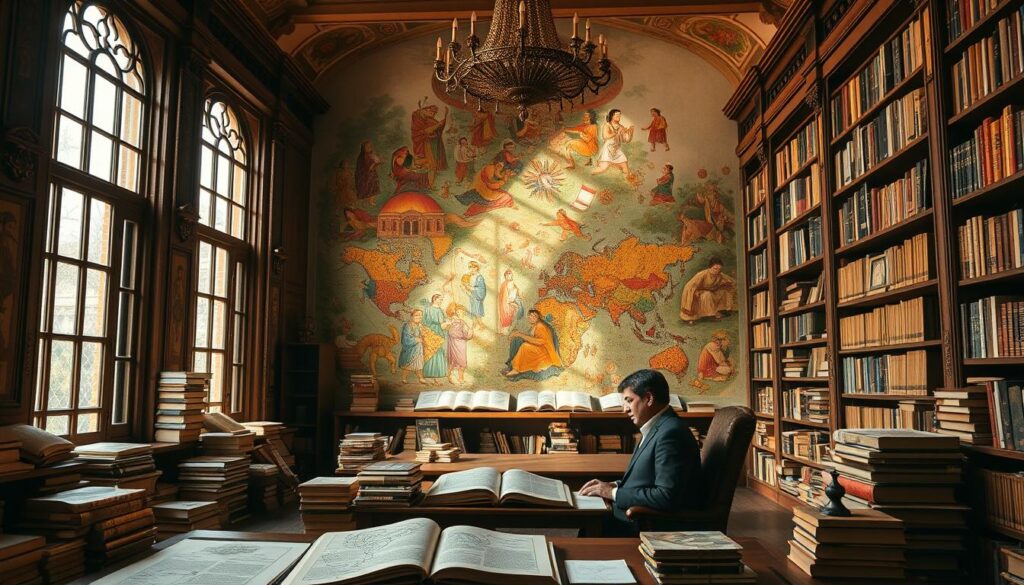
As community artists have noted, “A mural is not just a decoration; it’s a reflection of the community’s soul.” This highlights the need for thorough research. Reading about the area’s history, observing surroundings, and understanding local customs are all part of this.
This way, you can make a mural that looks great and connects with the community. Judy Baca, a famous muralist, once said,
“The power of a mural lies in its ability to tell a story that resonates with its audience.”
It’s essential to make sure your mural reflects the community’s cultural themes. This is what makes it successful and impactful.
The ultimate goal is to create a mural that becomes a cherished landmark and a symbol of community pride. With careful research and community engagement, you can achieve this. Your mural will then be a valuable part of the neighborhood.
Planning Your Cultural Mural Project
Planning is key to a successful cultural mural project. It involves several important steps to make your vision come to life. By planning well, you can finish your project on time and within budget.
One important part of planning is material cost estimation. To get costs right, think about your mural’s size, the materials you’ll use, and how many coats you’ll apply. For example, using top-quality paints might increase your material costs. Here’s a simple guide:
Material Cost Estimation
To figure out material costs, first measure your mural’s area. Then, look up the prices of paints, brushes, and other needed items. Keep in mind:
- Paint quality and brand
- Surface preparation needs
- Number of coats required
Time Management for Large-Scale Projects
Good time management is vital, more so for big mural projects. To manage your time well, break your project into smaller tasks like preparing the surface, sketching, and painting. Set realistic deadlines for each task. Also, think about the resources you have and any challenges you might face.
By making a detailed project schedule, you can make sure your mural is done on time. Check and adjust your schedule often to stay on track. This way, you can manage your time well and keep your project affordable.
With careful planning, including accurate cost estimation and good time management, you can make a beautiful cultural mural that touches your audience’s hearts.
Designing a Meaningful Cultural Mural
A meaningful cultural mural starts with knowing the cultural theme well. It’s key to research and understand the cultural nuances and history behind your theme.
When designing your mural, think about how it might affect the community. Avoiding cultural appropriation is key to making a respectful mural.
Avoiding Cultural Appropriation in Your Design
Cultural appropriation happens when cultural elements are used in a way that disrespects their original meaning. To avoid this, talk to the community and include cultural representatives in your design.
“The appropriation of cultural symbols and imagery can be a sensitive issue, requiring a thoughtful and informed approach to avoid misrepresentation.”
By being careful with cultural appropriation, you can make a mural that’s both stunning and culturally aware.
Respectful fusion art mixes different cultural elements in a way that’s both beautiful and meaningful. This can be done by blending traditional motifs with modern styles or by using diverse cultural symbols in a respectful way.
The secret to respectful fusion art is knowing the cultural importance of the elements you’re mixing. This way, you can create a mural that celebrates cultural understanding and unity.
A cultural art expert once said, “Fusion art can be a powerful tool for promoting cultural exchange and understanding, as long as it’s done with sensitivity and respect.”
By following these tips and being careful with cultural appropriation, you can make a cultural mural that’s both meaningful and beautiful.
Essential Materials and Tools for Cultural Mural Painting
Creating a cultural mural needs the right materials and tools. These choices affect the look, durability, and how green your mural is.
Acrylic vs. Spray Paint vs. Traditional Mediums
Acrylic paint is loved for its bright colors and quick dry time. Spray paint gives a cool texture. Traditional mediums like oil paint or fresco add a timeless feel.
“The medium is the message,” as Marshall McLuhan once said. The paint you pick can change your mural’s look a lot.
“Art is the only way to run away without leaving home.” – Twyla Tharp
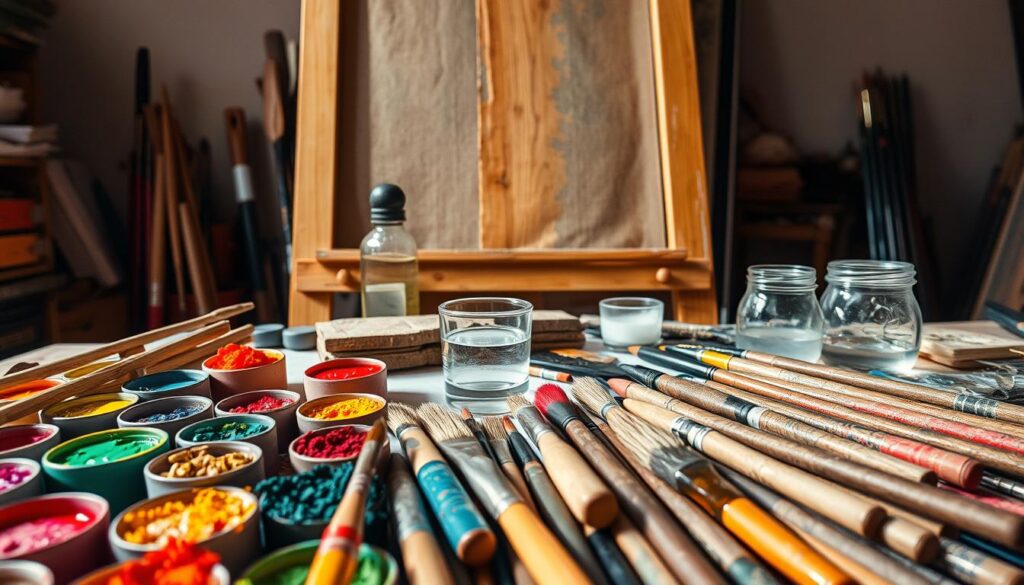
In recent years, eco-friendly paint options have become more popular. These paints use natural stuff and have fewer harmful chemicals. Brands like Benjamin Moore’s Natura or Lowes Eco-Koat are good choices.
Choosing eco-friendly paint makes your mural look great and helps the planet. As we care more about the environment, using green materials is a smart move.
Surface Preparation Techniques for Different Environments
Surface preparation is key for a successful mural, no matter where it’s placed. The right technique can make your artwork last longer and look better.
Different places have their own challenges. Outdoor murals face weather changes like temperature, humidity, and rain. Indoor murals might deal with wall types and air quality.
Climate-Specific Considerations
For outdoor murals, think about the local weather. In wet places, use a waterproof primer to avoid moisture damage. In very hot or cold areas, pick paints that won’t fade or crack.
Keeping your mural safe from the environment makes it last longer and stay bright. For example, in coastal areas, a special coating can protect against salt damage.
Using a protective coating or finish can really help your mural last. Varnishes and sealants are good choices because they block out the weather. Make sure the coating works with your mural paint.
By choosing the right surface prep for your environment, your mural will stay vibrant and a part of its space for many years.
Step-by-Step Painting Process for Cultural Murals
The step-by-step painting process is key to creating a vibrant cultural mural. It involves several important steps for a professional finish.
Sectioning Your Mural for Manageable Progress
Dividing your mural into sections makes painting easier. This way, you can focus on one area at a time. Start by drawing your design on the wall using a grid or stencils.
Then, paint one section at a time, from top to bottom. This helps avoid drips and smudges.
Sectioning your mural makes the task less overwhelming. It also helps keep the color and style consistent.
Even with careful planning, painting can have its challenges. You might face uneven surfaces, paint bleeding, and color issues. It’s important to have troubleshooting strategies ready.
For uneven surfaces, use a primer or textured paint. If paint bleeds, try a sealant or adjust your brushstrokes. Color issues can be fixed by reapplying paint or using shading.
Being ready to solve common painting problems ensures your mural looks as planned. This way, it will have a professional finish that makes a big impact.
Collaborative Approaches to Cultural Mural Creation
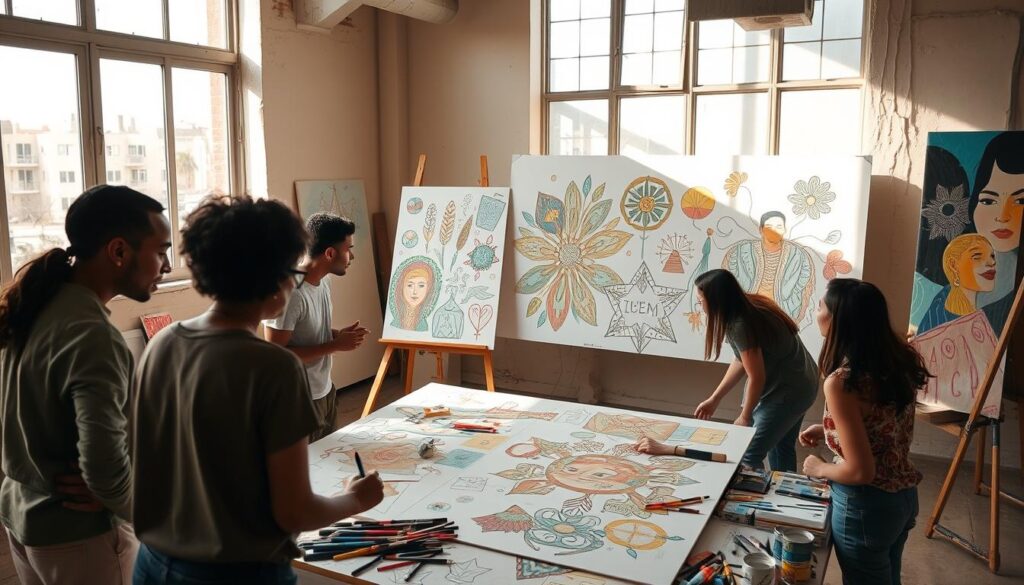
Collaboration is at the heart of cultural mural creation. It brings together different views and skills. Artists work with the local community to understand the cultural theme better.
Collaboration has many benefits. It combines resources, expertise, and ideas for a more lively mural. Community engagement is key. It makes sure the mural shows the community’s identity and values.
Artists can involve the community through workshops, meetings, and social media. This way, everyone can contribute to the mural’s design and painting.
Collaboration also helps solve challenges. Artists and community members work together on cultural sensitivity, historical accuracy, and beauty. This teamwork creates a mural that is both beautiful and meaningful to the community.
In summary, working together is vital for creating impactful cultural murals. By focusing on community engagement and teamwork, artists can make a mural that truly captures the area’s cultural heritage.
Sharing and Celebrating Your Completed Cultural Mural
When your mural is done, it’s important to share and celebrate it with the community. This step shows the hard work and creativity that went into it. By showing your mural at events, on social media, or in local news, you highlight its cultural value.
Celebrating your mural can be done in many ways. You could host a public unveiling or share it online. This not only brings people together but also makes the mural’s impact bigger. By sharing it widely, you help more people appreciate cultural art and community projects.
Getting the community involved is key to your mural’s success. Ask people to share their thoughts and feedback. This makes them feel proud and connected to the mural. It also helps keep the mural’s importance alive and relevant.