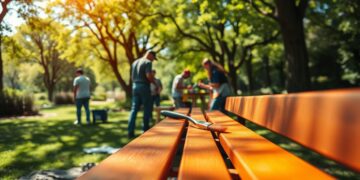
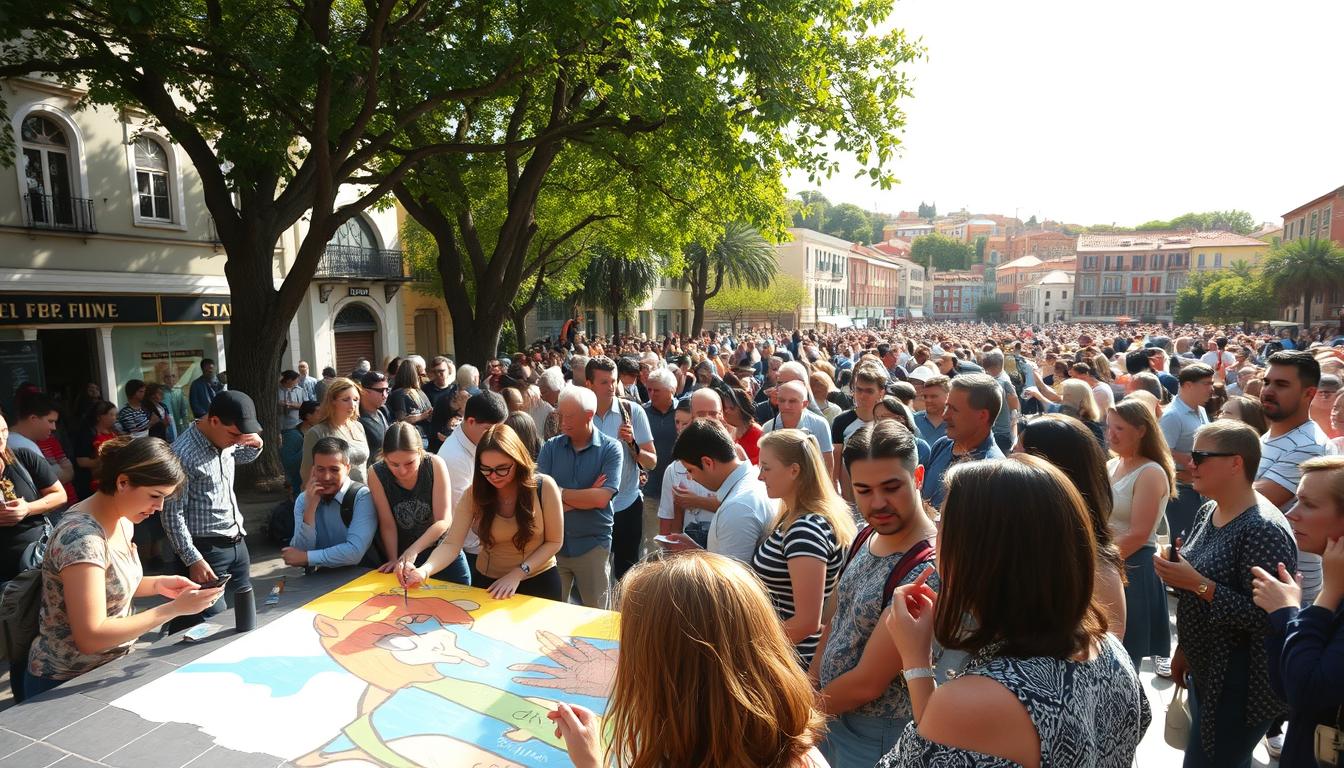
A vibrant community art project has brought people together. They created a beautiful public art piece that shows the community’s spirit.
This project is more than a pretty sight. It shows what can happen when people work together towards a goal. The result is a stunning mural that beautifies the city.
The Street Mural is not just beautiful. It tells a story of unity and creativity. It reminds us that art can bring people together and make us feel like we belong.
The Birth of a Community Vision
The mural’s idea came from a collaborative effort between locals and businesses. They worked together to make a public art piece that shows the community’s identity and spirit.
Many people helped shape the mural’s idea. Local businesses were key by giving money and resources. Their help was essential to make the project happen.
Local Business Involvement
Local businesses did more than just give money. They also helped decide what the mural would look like. Their input made sure the mural showed the community’s values and character. This made everyone feel like they had a say in it.
Resident Enthuasiasm
The people living there were really excited about the project. They showed their resident enthusiasm at many meetings and workshops. Their support was important to keep the project moving forward.
The University of Oregon mural project is a great example. Students and artist Sam Kirk worked together to make a colorful mural. It became a landmark in the community. This shows how community engagement can lead to amazing public art.
Together, local businesses and residents made the mural a true reflection of their community. It shows the power of working together and being creative.
Planning the Street Mural Project
The planning stage of the street mural project was key. It involved fundraising, material donations, and coordinating the project. Good planning made sure the project went smoothly, drawing in the community and making the area look better.
The first step was to get the money and materials needed. Fundraising efforts were essential. They helped buy paints, brushes, and other important tools.
Fundraising Efforts
Fundraising for the mural was a team effort. Local businesses, community groups, and people joined in. They organized charity runs, bake sales, and auctions to raise money. They also applied for grants from local government and arts groups.
These actions not only raised the funds needed. They also made people aware of the project and helped everyone feel part of it.
Material Donations
Donations of materials were also very important. Local businesses and suppliers gave paints, brushes, and more. These gifts were very helpful. They saved money and let the project focus on other things.
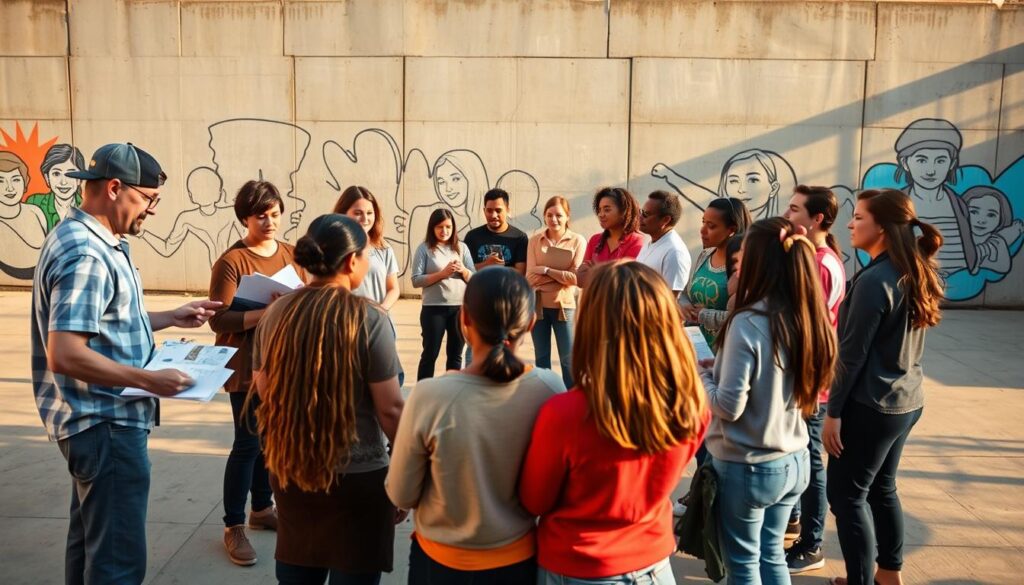
Thanks to good fundraising and material donations, the project could go ahead. It ended up with a colorful and meaningful mural that shows the community’s spirit.
Designing a Mural That Represents Everyone
The mural’s design was a team effort, aiming to show the community’s diverse voices. Sam Kirk, the designer, said, “The key to a successful mural is in the process, not just the final product.” This shows how important it is to include everyone in the design.
To make sure everyone was heard, the project used a few key strategies.
Digital Surveys
Digital surveys helped reach many people. They let community members share their ideas about the mural. This way, those who couldn’t attend events could also contribute.
In-Person Workshops
But digital surveys weren’t enough. In-person workshops were also held. These workshops let people talk directly with the designers. It made them feel more connected to the mural.
The design also included cultural elements to show the community’s rich heritage. Symbols and themes from different cultures made the mural a vibrant display of identity.
Generational Viewpoints
The project also aimed to include generational viewpoints. It recognized that different ages have unique ideas about the mural. By listening to people of all ages, the mural showed the community’s history and hopes for the future.
In the end, the mural is more than just art. It shows the community’s diversity and strength. The use of surveys, workshops, and cultural elements made it a true reflection of the community.
“The mural is a testament to what can be achieved when a community comes together to create something beautiful and meaningful,” said a community member.
The Artists Behind the Brushes
Behind the mural’s colors and designs are the skilled brushes of many artists. They brought their unique talents to the project.
The mural was a team effort. Artists from different backgrounds and skill levels worked together. University of Oregon students were part of it, learning and showing their creativity under Sam Kirk’s guidance.
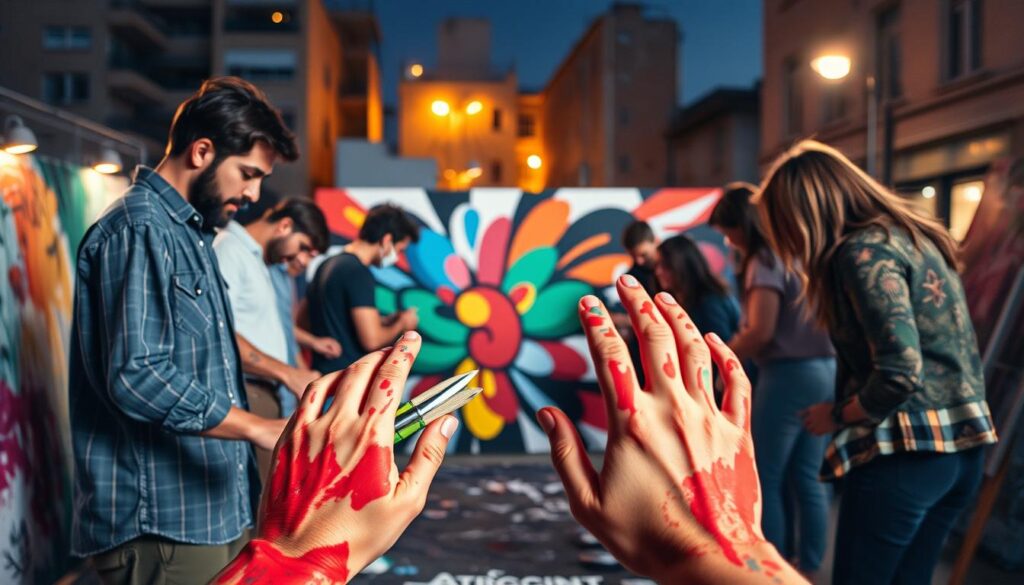
The project included school involvement programs. It engaged local students in the creative process. This helped build a sense of community and ownership.
Mentorship Opportunities
The project offered mentorship opportunities for new artists. They could learn from experienced professionals and improve their skills.
By involving local artists, students, and community members, the mural showed the community’s spirit and creativity.
Materials and Techniques of Street Mural Creation
Making a street mural last long needs the right mural materials and methods. The University of Oregon mural used particle board as its base. This made the artwork durable.
The paint choice is key. Acrylic paint was picked for its bright colors and quick dry time. But, it’s important to think about the paint’s effect on the environment and how long it lasts.
To keep the mural looking good, weather-resistant options were used. Protective coatings and sealants were applied to protect it from the weather. This helps prevent fading and damage from sunlight and rain.
Eco-Friendly Alternatives
Thinking about the environment was also important. Eco-friendly alternatives like recycled materials and paints with low VOC were considered. This helped reduce the mural’s impact on the planet.
By using strong mural materials and careful techniques, the artists made a mural that’s both beautiful and eco-friendly. It adds beauty to the community and shows a commitment to caring for the environment.
The Painting Weekend: How It All Came Together
The painting weekend was the result of weeks of hard work. It brought the University of Oregon mural project to life. The event was when the community’s vision, the artists’ creativity, and the planning all came together.
The day was filled with excitement and collaboration. Volunteers and artists worked together, sharing their skills and ideas. The atmosphere was lively, with music and people chatting as they painted the mural.
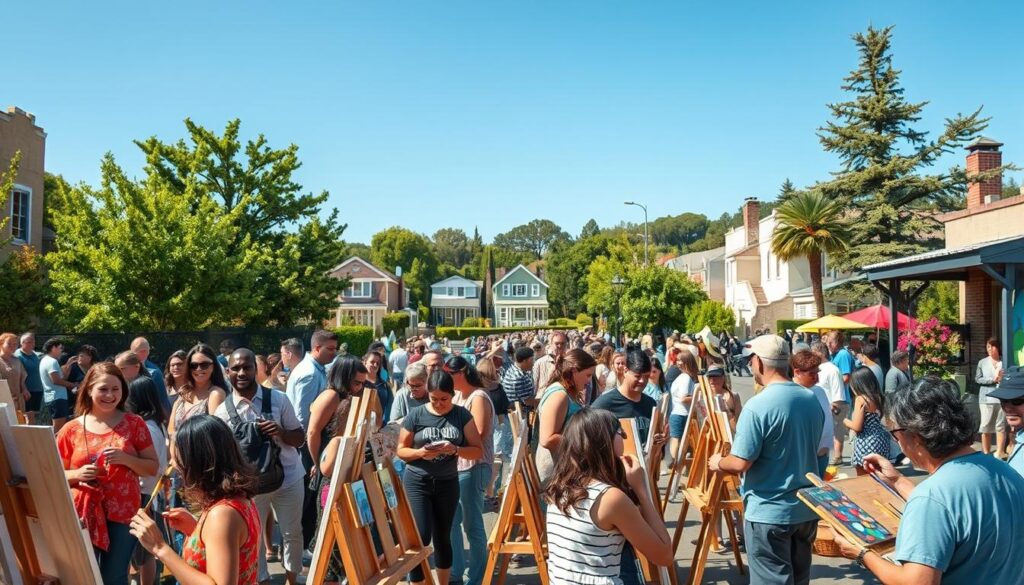
But, the weather can be unpredictable. To deal with this, the organizers had a contingency plan. They set up tents and had a flexible schedule to adjust to the weather.
Traffic Management
To avoid disrupting traffic, a detailed traffic management plan was put in place. This included barricades and clear signs. It also involved working with local authorities to keep things running smoothly.
The success of the painting weekend showed the power of working together. It brought the mural to life and strengthened the community’s bond.
As the mural neared completion, everyone felt a great sense of pride. The event was more than just creating art. It was about building connections and improving the community’s environment.
Symbolism and Storytelling Within the Street Mural
At first glance, the mural looks like a stunning piece of art. But, when you look closer, you find a deep story and symbols. The symbolism in the mural shows many sides of the community’s identity and values.
The mural shows environmental themes that connect the community with nature. It uses images of local plants and animals to stress the need to protect the environment. These elements make the space beautiful and remind everyone of their duty to nature.
Environmental Themes
The environmental themes in the mural include Oregon’s famous natural spots, like the coast and forests. These are not just pretty but also carry a deeper message. They show the community’s bond with its surroundings.
Unity Symbols
The mural also has unity symbols that show the community coming together. Symbols like interconnected patterns or figures holding hands show unity and solidarity. They highlight the power of diversity and the community’s support for each other.
The mural’s story shows the community’s creativity and vision. It combines environmental themes and unity symbols to tell a story. This story is about a community that values its natural world and the bonds between its members.
The mural is a vibrant example of how public art can share important messages and bring people together. Its symbolism and story inspire and unite the community. It is a lasting legacy of the effort that went into creating it.
Community Transformation Through Public Art
The University of Oregon mural shows how public art changes communities. It made the campus look better and brought people together.
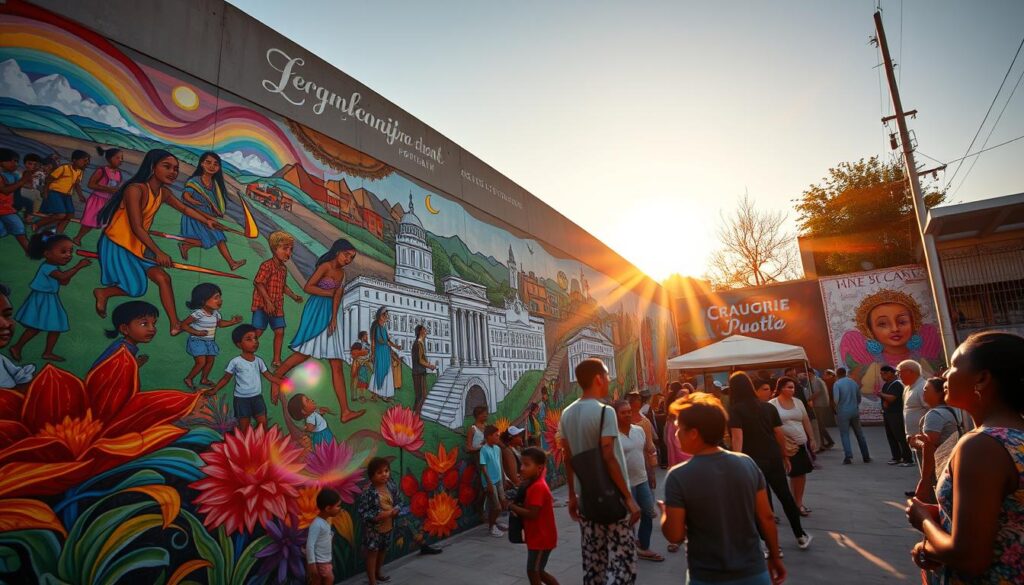
The mural project brought people from different backgrounds together. This helped create cross-cultural connections. Working together, they learned to appreciate each other’s cultures.
Cross-Cultural Connections
The mural project made people talk and share ideas. It helped break down cultural barriers. This made the community more welcoming to everyone.
Intergenerational Relationships
The project also helped people of all ages work together. They shared their stories and views. This made the mural rich and showed the community’s true identity.
The mural did more than just look good. It changed how people felt about each other. It brought empathy and a sense of belonging. This shows public art’s power to change communities for the better.
Public art can make communities stronger. The University of Oregon mural is a great example. It shows how art can bring people together and create positive change.
The Ripple Effect: Inspiring Other Neighborhoods
The mural project’s success has sparked a ripple effect. It has encouraged other neighborhoods to explore public art’s power. Now, many communities are diving into collaborative art projects.
This change goes beyond just new murals. It’s a cultural shift towards projects that bring people together and spark creativity. Neighborhoods are now aiming to follow the original mural’s lead.
Several online resources have been created to help. They offer guides on starting community art projects. There are also platforms for sharing tips and success stories.
Workshops and Conferences
Also, workshops and conferences have been set up. They bring artists, community leaders, and local officials together. These events are great for networking and learning from others’ experiences.
Preserving the Legacy of Our Collective Artwork
The street mural project is more than just a beautiful art piece. It shows the spirit of community and creativity. Keeping this artwork alive is key to keeping the neighborhood vibrant and true to itself.
Regular care and restoration are needed to keep the mural looking great. The University of Oregon mural is a good example. It was saved thanks to artists, community groups, and the university working together. This shows us how to keep other projects like it alive.
This project teaches us how important community involvement and public art are. By keeping our collective artwork alive, we inspire others and build community pride.