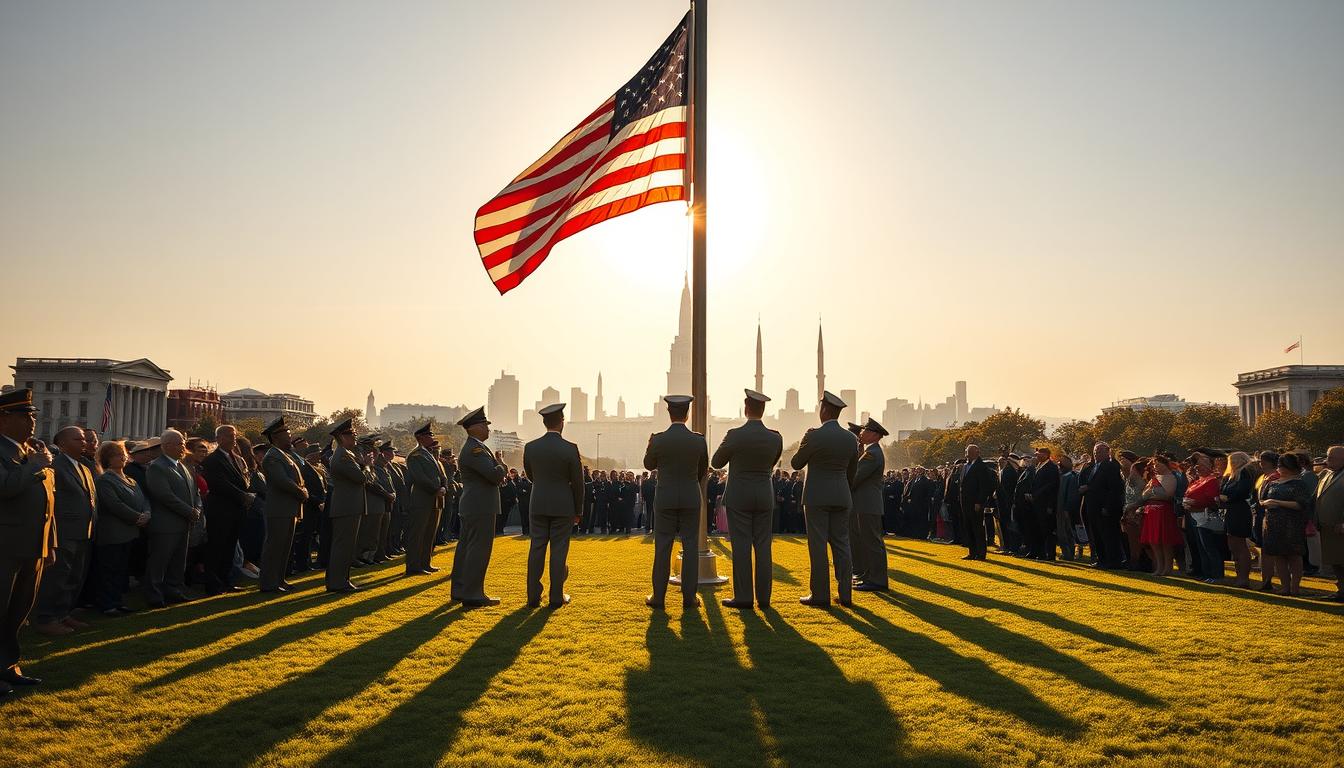
The flag-raising event on Iwo Jima during World War II is a powerful symbol. It shows American unity and patriotism. This moment is famous thanks to Joe Rosenthal’s Pulitzer Prize-winning photograph.
The patriotic event was a key moment in the Battle of Iwo Jima. It was a big step in the Allied campaign in the Pacific. It showed American courage and sacrifice, becoming a lasting image of the country’s history.
The importance of this American flag moment is clear. It represents the unity and resilience of the American people during hard times.
The Stars and Stripes: Symbol of American Unity
The Stars and Stripes is more than a flag; it’s a symbol of American unity and strength. It represents the country’s rich history and the unity of its people. The American flag stands tall as a national symbol. Its design, with thirteen stripes and fifty stars, shows the country’s founding and growth.
The flag is a powerful emblem that brings out patriotism and national pride. It stands for the values America holds dear, like freedom, justice, and equality. As a national symbol, it brings together the diverse people of the United States under one identity.
Throughout history, the American flag has been a constant presence. It represents the nation in times of peace and war. Its importance goes beyond being a national emblem. It reminds us of the country’s history, its people’s resilience, and the unity that holds them together.
In essence, the Stars and Stripes is a beacon of unity. It symbolizes the American spirit and the shared values of its people. It continues to be a powerful symbol of national identity and pride.
The American Flag Ceremony Tradition
The tradition of flag-raising ceremonies in the United States is as old as the nation itself. These ceremonies have become a big part of American tradition.
Flag-raising ceremonies happen on national holidays like Independence Day and Memorial Day. They also take place during patriotic events and at government buildings. These events include raising the American flag, playing the national anthem, and reciting the Pledge of Allegiance.
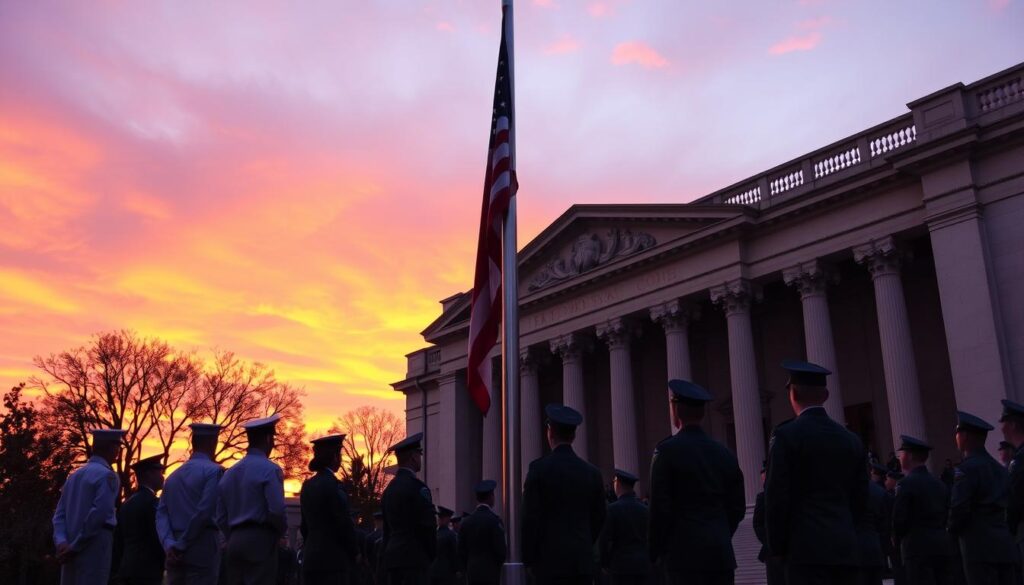
Historian John Smith said, “The flag-raising ceremony is a powerful symbol of national unity and pride.” These ceremonies remind us of the country’s values and history. They bring Americans together, creating a sense of community and shared identity.
“The flag, which we honor and under which we serve, symbolizes the unity and loyalty of the American people.”
In today’s world, the flag-raising ceremony is a key patriotic event. It brings out feelings of patriotism and national pride. It’s a cherished American tradition, linking the past to the present.
A Nation Gathers: The Historic Day
On February 23, 1945, a historic moment happened on Iwo Jima. The flag-raising ceremony was a key moment in World War II. It was a big step for the Allied forces in the Pacific.
Joe Rosenthal’s famous photo captured this moment. It shows American courage and sacrifice. The capture of the strategic island from Japanese forces was a major victory.
The flag-raising on Iwo Jima was more than a ceremony. It showed the bravery and strength of the soldiers. The image of the flag has become a symbol of American unity and strength.
When the news of the flag-raising spread, it stirred the soul of the nation. It was a time of pride and hope in the midst of turmoil. The day on Iwo Jima is remembered as a key moment in American history, a reminder of the sacrifices in World War II.
Heroes Who Carried Our Colors
Iwo Jima’s flag-raising ceremony showed American strength against tough times. Six Marines from the 5th Marine Division raised the flag. Their bravery during the Battle of Iwo Jima is a lasting symbol of American courage and sacrifice.
“The raising of the flag on Iwo Jima was a moment of great pride for the United States,” showing the nation’s unity and will during World War II. The flag-raising was more than a military action. It was a powerful symbol that touched the hearts of Americans everywhere.
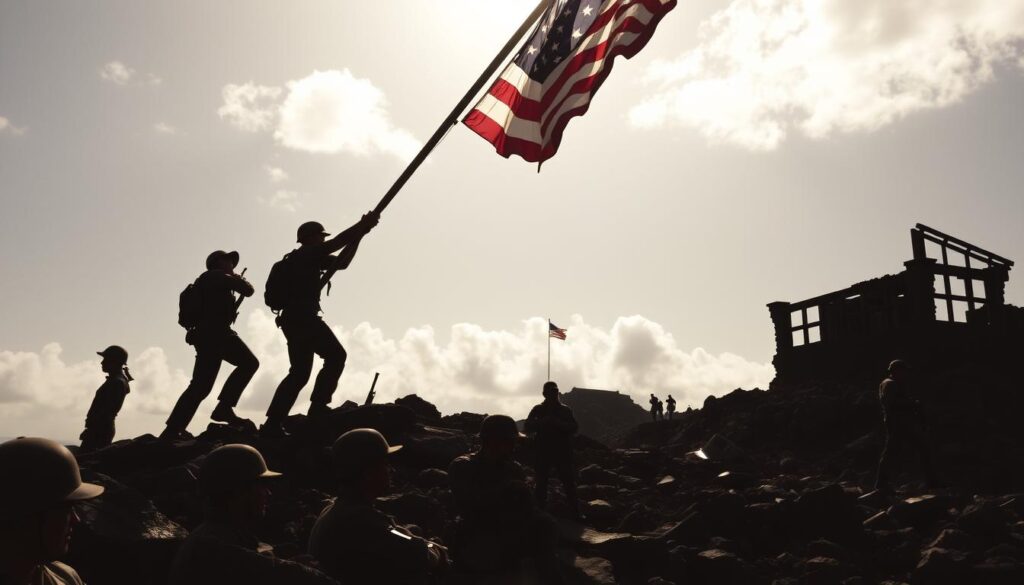
The famous image of the flag-raising is forever etched in history. It reminds us of the sacrifices made by the Marines and the American effort in the war. The event has been celebrated in many ways and remains a source of national pride.
“The flag-raising on Iwo Jima was a turning point in the war, marking a significant moment in the Allied campaign in the Pacific.”
The legacy of the Iwo Jima flag-raising continues to inspire Americans. It shows the courage and resilience that define our nation.
The Solemn Flag Ceremony Protocol
Respectful flag ceremonies follow certain rules to honor the national symbol. These rules help make the ceremony meaningful for everyone involved.
The protocol for flag ceremonies includes important steps. First, the flag must be treated with care and respect. This means folding and unfurling it correctly, not letting it touch the ground, and securing it properly. Proper flag handling is key to the ceremony’s dignity.
Playing the national anthem is another vital part. Everyone should stand, face the flag, and put their right hand over their heart. This is a solemn tribute to the nation and its symbols.
The Pledge of Allegiance is also a big part of flag ceremonies. Reciting the Pledge shows loyalty and commitment to the nation. It’s important to say it with sincerity and respect, understanding its deep meaning.
A respectful ceremony has a dignified and solemn feel. Everyone should act with respect, showing the ceremony’s importance. A well-conducted flag ceremony brings people together in patriotism.
In summary, the flag ceremony protocol ensures the national flag is treated with respect. By following these guidelines, we can create a meaningful and patriotic event that honors the nation and its symbols.
Patriotic Sounds That Stirred the Soul
The sound of patriotic music fills the air during a flag-raising ceremony. It stirs the soul. The national anthem, “The Star-Spangled Banner,” is key. It symbolizes national pride and unity.
When the flag is raised, the national anthem plays. The audience stands in respect. This moment is filled with emotional resonance. It evokes feelings of patriotism and pride.
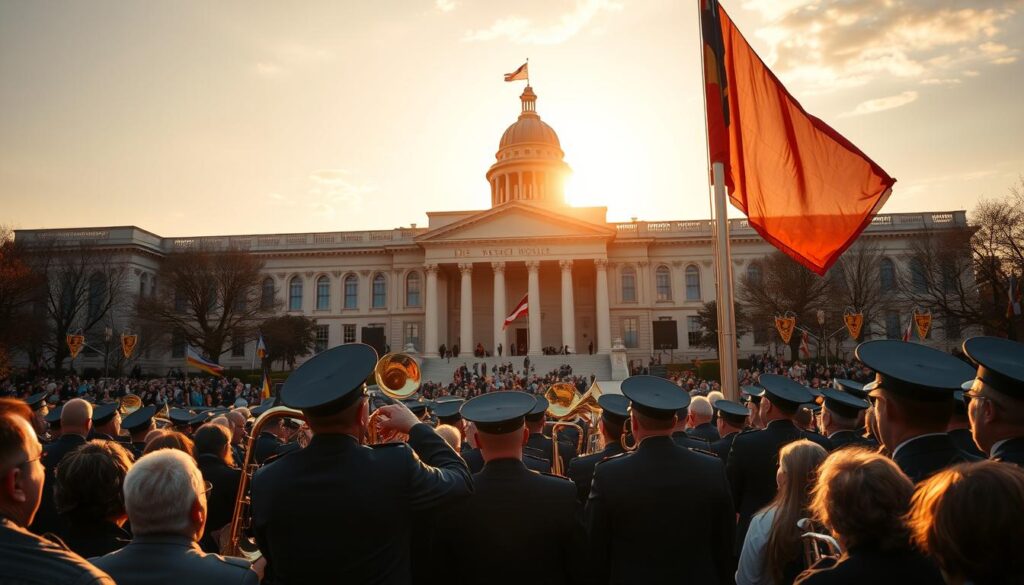
Other patriotic songs and marches may play too. They add to the national pride atmosphere. These musical elements create an emotional connection. They foster a sense of unity and shared values.
The mix of patriotic music and the flag-raising ceremony is powerful. It creates a stirring experience. It reaffirms national pride.
A Nation United: Emotional Responses
Flag-raising ceremonies have a big emotional impact, bringing Americans together. These patriotic events create a shared identity and purpose. They unite people from all walks of life.
When the country faces challenges or celebrates, these ceremonies remind us of our values and history. They spark a strong emotional response. This response unites citizens, no matter their background or beliefs.
These ceremonies show the power of national symbols. The American flag, in particular, evokes feelings of patriotism and loyalty. It stirs deep emotions in everyone.
When people come together to see the flag raised, they remember their shared heritage. This experience strengthens community bonds. It reinforces the sense of national unity.
In short, flag-raising ceremonies are more than just formal acts. They are patriotic events that touch the hearts of Americans. They elicit an emotional response that resonates deeply within the nation.
Iconic American Flag Raisings Through History
The United States has a rich history filled with iconic flag raisings. These moments have not only shown American patriotism but also helped shape the country’s identity.
One famous flag raising happened on Iwo Jima during World War II. The image of Marines raising the flag on Mount Suribachi is a symbol of American bravery. This photo, taken by Joe Rosenthal, is one of the most famous in American history.
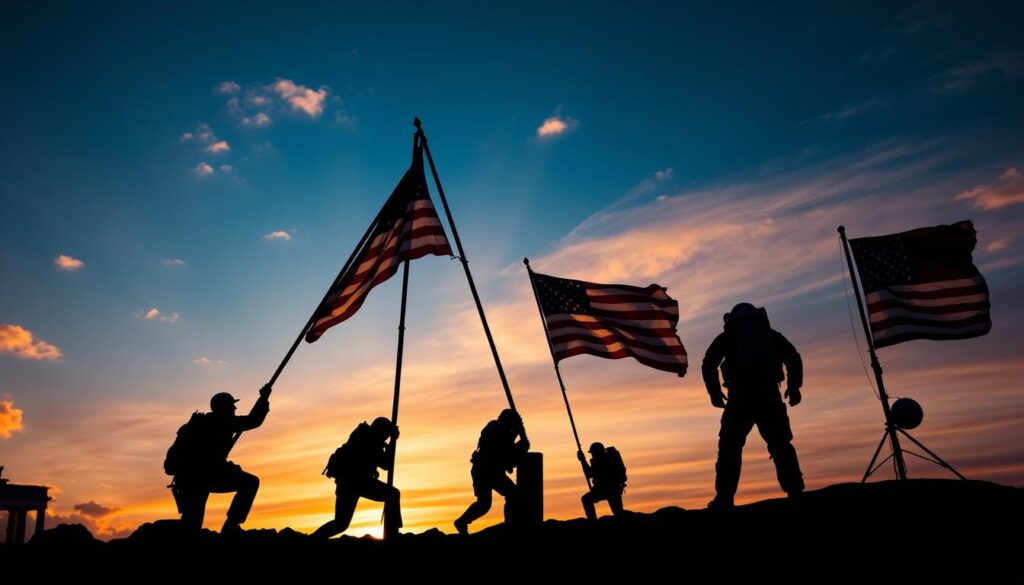
Another important flag-raising was at the Capitol Building in Washington, D.C. These events mark national occasions or honor American service members. They are held with great respect and follow strict rules to honor the moment.
Patriotic events like these flag raisings bring Americans together. They remind us of the values the flag stands for, like freedom and democracy. They also honor the sacrifices made to protect these values.
In summary, the iconic flag raisings in American history have been key in shaping the nation. From World War II to the nation’s capital, these moments inspire patriotism and national pride.
Preserving Respect: Modern Flag Ceremony Practices
Flag-raising ceremonies are a big part of American tradition. They show unity and patriotism. These events are very important in American culture, filled with respect and reverence.
Today, these ceremonies happen on national holidays and at government buildings. They also take place during patriotic events. They remind us of the country’s values and history. The respectful conduct of these events is kept by rules that show how to handle and display the flag right.
The national anthem and the Pledge of Allegiance are key parts of a modern flag ceremony. The national anthem moves people deeply. The Pledge of Allegiance shows our commitment to the nation.
To keep these ceremonies dignified, respectful practices are essential. This means folding and displaying the flag correctly. It also means taking a moment of silence or reflection.
In summary, modern flag-raising ceremonies are very important in American society. They bring people together and show patriotism. By following the rules and guidelines, these events honor the nation’s history and values.
Our Flag Stills Waves: The Continuing American Story
The American flag is a strong symbol of national identity and unity. It shows the country’s values and history. Its lasting impact is a sign of the nation’s founding and its growth.
In the United States, people celebrate the American flag in many ways. They hold patriotic events and raise the flag. These moments remind us of the country’s history and the sacrifices for freedom.
The flag means more than just a symbol. It stands for freedom, justice, and equality. As the nation changes, the flag stays a symbol of what we all share. It shows our common values and identity.