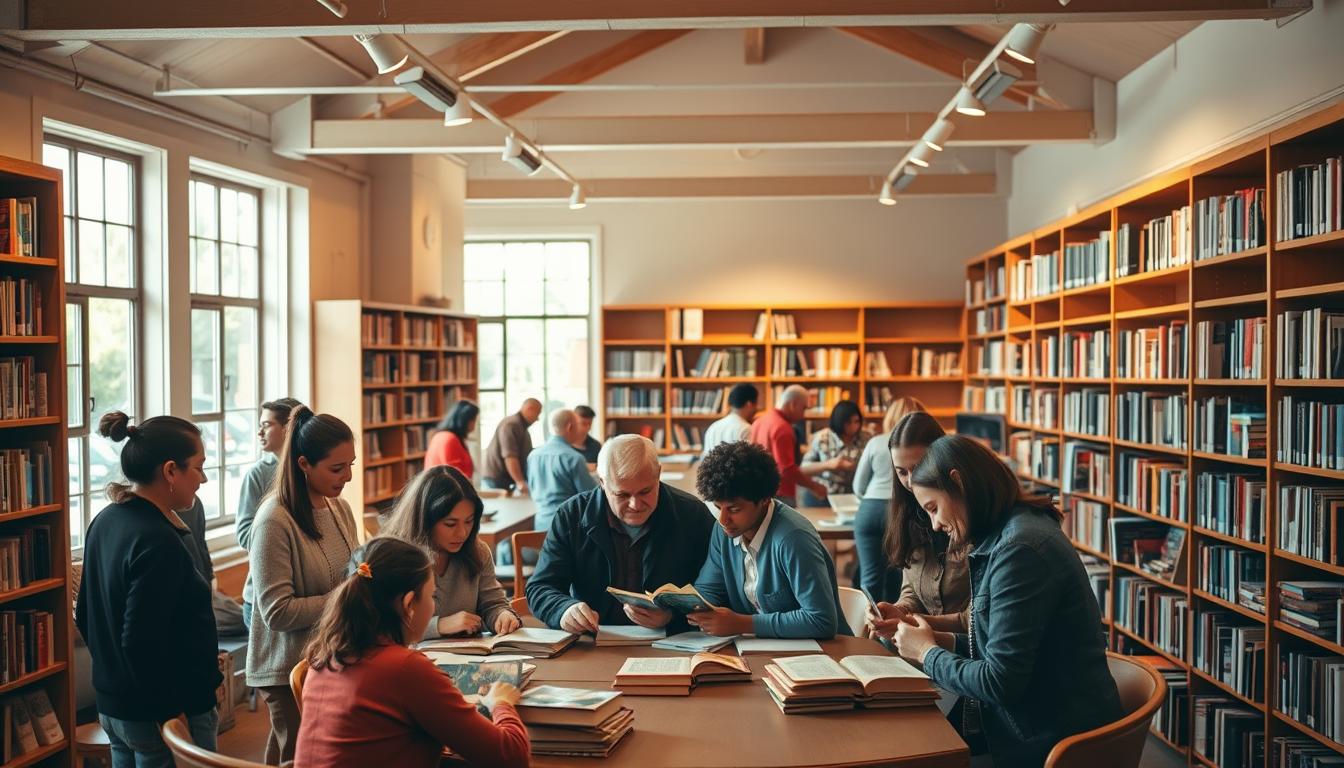
Sharing books is key to building a reading community. It’s not a new idea, but digital platforms make it easier. Now, we can share books physically or digitally, like through Amazon Household.
Libraries are essential in this effort. They offer a wide range of books and help readers connect. This way, we can all grow more literate and connected.
Book sharing brings people together, creating a shared experience. It helps us find new authors and genres. This way, we learn more about the world.
The Importance of Libraries in Our Communities
Libraries are more than just places to find books. They are key to community engagement and reading promotion. They offer a variety of library programs and services for everyone.
Libraries help promote reading through book clubs, author readings, and children’s storytime. These activities encourage reading and bring people together. For example, book clubs let readers share their favorite books and learn from others.
Author readings and literary events also boost reading love. They give aspiring writers a chance to meet published authors. These events include Q&A sessions and workshops to encourage writing.
Children’s storytime is a favorite in libraries. It helps young kids learn to read and love books. These sessions are fun, with puppet shows, singing, and stories.
Libraries also meet new community needs with services like digital literacy and career help. They offer more than just reading promotion. This makes them welcoming to everyone.
In short, libraries are essential for our communities. They support literacy and community engagement. Libraries are vital for our society’s social and educational growth.
Types of Libraries Available
Libraries come in many forms, each serving a unique purpose. The main types are public libraries, academic libraries, and special libraries. Each type meets different community needs.
Public libraries are open to everyone. They offer free access to books, media, and more for all ages. They also host programs and services that bring people together.

Academic libraries focus on students and teachers in colleges and universities. They have vast collections of academic materials. This includes journals, databases, and texts needed for research.
Serving Diverse Community Needs
Special libraries serve specific groups, like law or medical professionals. They offer unique information and services. This is tailored to the needs of their community or industry.
Libraries come in many types, showing the varied needs of communities. By understanding public, academic, and special libraries, we see how they support their communities.
How Libraries Promote Literacy
Literacy is key, and libraries work hard to promote it. They help with early childhood programs and adult education. Libraries are important for making reading fun and improving literacy for everyone.
Early Literacy Programs start teaching kids to love reading early. Libraries have storytime sessions and summer reading programs. These help kids keep their reading skills sharp and grow a love for books.
A literacy expert says, “Reading aloud to children is one of the most effective ways to instill a love for reading.” Libraries make reading fun with interactive sessions. This makes reading a joy for kids.
“The more you read, the more you know. The more you learn, the more you go.”
Libraries also help adults with Adult Literacy Initiatives. They offer literacy classes and tutoring. These programs help adults improve their reading and writing skills. This is important for those who want to do better in their careers.
Libraries aim to make literacy accessible to all. They provide many programs and resources. This helps everyone, from kids learning to read to adults improving their skills.
Accessing Library Resources
With a library card, you can open a world of resources at your local library. It’s easy and convenient to get to these resources.
Borrowing Books and Digital Content
You can borrow books, audiobooks, and e-books with your library card. Many libraries use digital platforms like OverDrive or Hoopla. These platforms offer a huge selection of digital media.

To get to digital resources, just go to the library’s website and log in with your library card. Then, you can browse and borrow e-books, audiobooks, and more.
Libraries always add new titles and resources. This means you can keep learning, enjoy new stories, and explore different interests.
Engaging Activities Offered by Libraries
Libraries are more than just bookstores. They are lively places with many activities for everyone. These activities meet different interests and ages, making libraries key spots for community fun.
Library Programs are a big part of what libraries offer. They include author readings, where you can meet authors and learn how they write. These events help people love reading more and understand books better.
Book clubs are also popular. They let readers talk about books, share thoughts, and meet others with similar interests. Book clubs make reading fun and help people have deep conversations.
Children’s programs are a big deal for libraries too. They have storytime for little kids and activities for older ones. These programs help kids love reading and learning. Libraries are key in helping kids grow.
Libraries also have workshops, exhibitions, and cultural events. These activities make libraries a community center. They bring people together and add to the area’s culture.
Libraries offer many activities, showing they care about the community and learning. Whether it’s author readings, book clubs, or children’s programs, libraries are essential in our communities.
The Role of Librarians
Librarians are more than just book keepers. They are skilled professionals who offer important research support and reader advisory services. They help people find their way through the vast resources in libraries.
Librarians help find the information people need. This could be for school or just for fun. They give personalized support to meet each person’s needs. They find the right materials, use databases, and even do research for others.

They also give reader advisory services. They suggest books based on what people like to read. This helps grow a love for reading in the community. It’s great for those who can’t find their next favorite book.
Librarians know a lot about books and authors. They keep up with new releases and genres. This means they can give the best advice to readers.
In short, librarians are key to libraries. They support research and reading in many ways. Their work has a big impact on the community.
Supporting Diverse Communities
Libraries offer special services and resources to diverse communities, including those often overlooked. This support is key to promoting fairness and inclusion in these groups.
Libraries are important places that meet the needs of different communities. They have services like assistive technology for people with disabilities and language learning tools for those learning English.
Libraries provide many services to meet community needs. For example, they offer assistive technology to help people with disabilities access information and join in community activities.
Language Support is also a big part of what libraries do. They have materials and programs to help English language learners fit into the community and get better at speaking.
Promoting Equity and Inclusion
Libraries play a big role in making society fairer and more inclusive. They help bring different community groups together, making sure everyone can get the information and resources they need.
In short, libraries are vital for supporting diverse communities. Their work in providing special services and resources shows their commitment to a fair and inclusive society.
Volunteering at Your Local Library
Volunteering at your local library helps support literacy and education in your area. Libraries have many ways for you to help, like shelving books or helping with events.
Helping out at a library can be very rewarding. It lets you connect with your community and support something you believe in. You can help with reading programs for kids or do administrative tasks. There’s a spot for everyone.
Library volunteers are key to the library’s daily work. They let librarians do more specialized tasks. Plus, volunteering is a great way to learn new skills, no matter your age.
To start, just reach out to your local library about volunteer spots. They often have orientation sessions to help you get ready. This makes sure you have a good time while helping out.
By volunteering at your library, you help your community and support literacy. This makes your community a better place for everyone.
Leveraging Technology in Libraries
Modern libraries are using digital tools to offer more services. They embrace library technology to provide digital resources for everyone.
Libraries now offer e-books and digital media. This lets people read from home. They also have online services like digital learning and tutoring for education and personal growth.
Technology helps libraries give access to online research databases. These are great for students, researchers, and professionals. They offer the latest information on many topics, helping with deep research.
Libraries also use tech to bring people together. They have digital programs like author talks, online book clubs, and classes on digital literacy. These activities boost literacy and build community among library users.
In summary, library technology is making libraries lively places for learning and community. By giving digital resources and online services, libraries meet community needs and stay important in today’s world.
The Challenges Facing Libraries Today
Libraries today face big challenges like funding, accessibility, and community engagement. They have always been key to communities, giving access to info, education, and culture. But, they struggle to keep serving their communities well.
Funding constraints are a big problem. Libraries get money from local, state, and federal funds, but this money can change a lot. Barbara Stripling, a famous librarian, once said, “Libraries are not just about books. They must stay vibrant and relevant as community hubs.” They need enough money for books, programs, tech, and buildings.
“The library is a place where you can lose yourself in the stacks, but it’s also a place where you can find yourself in the community.”
Another big challenge is accessibility. Libraries must make sure everyone can use their services and materials. This means accessible buildings, tech, and programs for all. It’s not just the law, but also a moral duty to include everyone.

Community engagement is key too. Libraries must connect with their communities to know what they need. By creating programs that matter to people, libraries stay important and relevant. They become more than just bookstores.
In short, libraries face big hurdles like funding, accessibility, and community ties. Overcoming these challenges is vital for libraries to keep thriving and serving their communities. As community centers, libraries are vital to society. Their role depends on their ability to change and grow.
How to Support Your Local Library
Supporting your local library is key for its success. You can donate books or funds to help them keep their collections fresh. This way, they can always offer new and exciting materials to the community.
Volunteering is another great way to help. By lending a hand with events or daily tasks, you make sure the library stays a lively place. It’s a chance to be part of something special in your community.
Don’t forget about advocating for libraries. By spreading the word about their value, you help get more support. This can lead to more funding and resources for your library.
Together, we can keep our libraries strong. By donating, volunteering, and speaking up, we ensure they continue to serve our community well.