

Cultural temples are sacred places that hold deep spiritual and cultural value. They are not just important for religious practices. They also attract tourists interested in religious tourism.
Entering a cultural temple is more than visiting a place of worship. It’s a journey into the rich history, art, and traditions of a community. Temple visits help us understand and respect different cultures. They promote peace and understanding.
By learning about these temples, we can truly appreciate the cultures they represent. This appreciation helps build a more harmonious and respectful world.
Introduction to Cultural Temples
Temples are more than just places of worship. They are cultural centers that show the diversity and richness of human life. These structures hold deep cultural significance, carrying the history, beliefs, and practices of their communities.
The temple architecture changes with each culture. You might see detailed carvings and statues in Hindu temples or simple designs in Buddhist ones. Each part of the temple has its own meaning, adding to its spiritual feel.
Religious practices in these temples are also varied. They include many rituals, ceremonies, and daily activities that are key to the spiritual lives of those who attend. For example, Buddhist temples have daily chanting, while Hindu temples host big festivals. These practices bring people together, creating a sense of community and spiritual bond.
These temples are also places for learning and preserving culture. They host events and activities that help people understand and value their cultural heritage. Through their cultural significance, temple architecture, and religious practices, temples are essential to individuals and communities. They connect us to our past and help us find our place in the world.
History of Temple Architecture
The history of temple architecture is a rich tapestry. It’s woven from the threads of various cultural influences. Throughout the centuries, temples have been more than just places of worship. They have also symbolized cultural identity and architectural innovation.
Temple architecture has changed a lot over time. It reflects the history and culture of different civilizations. From ancient Greece to modern-day America, temples have been shaped by many factors. These include geographical location, religious beliefs, and cultural exchange.
The design of temples has been influenced by cultural influences. For example, ancient Greek temples used columns and pediments. This reflected the architectural styles of the Mediterranean region. On the other hand, temples in Asia, like those in China and Japan, have features like pagodas and detailed carvings. These show the rich cultural heritage of these countries.
Religious beliefs have also shaped temple architecture. The layout and design of temples often mirror the spiritual practices of the communities they serve. For instance, the orientation of temples and the use of sacred symbols contribute to their unique character.
Also, historical events and cultural exchange have greatly influenced temple architecture. The spread of religious beliefs through trade and conquests has led to the exchange of architectural ideas. This has resulted in the diverse range of temple styles we see today.
In conclusion, the history of temple architecture is complex and fascinating. It reflects the interplay of cultural, religious, and historical influences. Understanding these influences gives us valuable insights into the significance and beauty of temple architecture.
Famous Temples to Visit in the U.S.
Exploring the U.S., you’ll find many iconic temples filled with history and spirituality. These temples are not just places of worship. They are also big tourist attractions, attracting visitors from all over.
The Mormon Temple in Salt Lake City, Utah, is a standout. It’s famous for its beautiful architecture and gardens. You can take a guided tour to learn about its history and importance.
The Washington D.C. Temple of The Church of Jesus Christ of Latter-day Saints is another must-see. It’s one of the largest temples globally. Its design and peaceful setting make it unforgettable.
The ISKCON Temple in New Vrindaban, West Virginia, is a key Hare Krishna temple in the U.S. It’s known for its giant Krishna statue and architecture inspired by ancient India.
These famous temples in the U.S. show the country’s rich cultural and religious diversity. They are more than places of worship. They are also hubs of community and cultural exchange.
Visiting these temples is a rewarding experience. It offers a deep dive into various cultures and spiritual practices. Whether you’re into history, architecture, or spirituality, the U.S. temples have something for everyone.
Spiritual Significance of Temple Visits
Temple visits are important for personal growth and thinking deeply about oneself. They are places where people can find their spirituality and have meaningful religious experiences.
Visiting temples means taking part in special religious activities. In many Eastern traditions, temples are sacred. Here, people pray, make offerings, and meditate. One visitor said, “
Visiting the temple allows me to quiet my mind and focus on my spiritual journey.
” Such moments can deeply change one’s understanding of themselves and their faith.

Going to a temple shows a person’s commitment to their spiritual journey. It shows they are ready to reflect on themselves and seek a higher connection. As Ramakrishna said, “
The temple is a place where the finite meets the infinite.
” This shows temples connect us to the divine.
Also, temple visits are about community. Many temples have services and events that bring people together. These experiences make temple visits even more special, creating a sense of belonging and shared faith.
In summary, temple visits are rich in meaning. They offer personal growth, religious experiences, and community bonding. Whether for prayer, reflection, or community, visiting a temple can be very rewarding.
Planning Your Temple Visit
When you plan a visit to a cultural temple, knowing the etiquette is key. It ensures a respectful and enriching visit. Temples are not just beautiful buildings but also places of deep spiritual meaning.
Understanding Temple Etiquette
Temple etiquette varies by culture, but some practices are universal. For example, bowing upon entering or leaving is often seen as polite. The specifics can vary based on the temple’s traditions.
Dress Code and Behavior
Dressing modestly shows respect when visiting a temple. This means covering your shoulders and knees. In some places, you might need to remove your shoes before entering certain areas. So, it’s wise to wear socks or be ready to remove your footwear.
Behavioral norms inside the temple include being quiet and not taking pictures in sensitive areas. Always follow any rules provided by the temple staff or signs. Knowing these guidelines ensures your visit is both enjoyable and respectful.
Before your visit, check the temple’s website or contact them directly. They might have specific visitor guidelines, like guided tours or meditation sessions.
Being informed and respectful makes your temple visit meaningful. Whether you’re admiring the architecture, joining a ceremony, or seeking peace, following the temple’s etiquette is essential.
Cultural Events at Temples
Temples are more than places of worship. They are also venues for cultural events that unite communities. Throughout the year, temples host many festivals and celebrations. These events are deeply rooted in tradition and spirituality.
Temples play a key role in preserving cultural heritage through cultural events. These events include traditional dance performances, music concerts, and religious ceremonies. For example, many temples celebrate Diwali, the Hindu festival of lights, or the Buddha’s birthday with great enthusiasm.

“Temples are vibrant centers of community life, hosting events that foster a sense of belonging and connection among their members.”
These events are not just for cultural expression. They also connect different generations and communities.
The temple festivals are known for their colorful decorations and traditional attire. They create a joyful atmosphere. Visitors can experience the rich cultural tapestry of the community.
In conclusion, the cultural events at temples show their importance as cultural and spiritual hubs. By joining in these celebrations, people can learn more about the cultural heritage and traditions of these sacred spaces.
Understanding Temple Symbols and Art
Temple symbols and art are more than just pretty pictures. They tell deep stories of spirituality and culture. The detailed designs and symbols in temples show the community’s beliefs and values.
The religious art in temples is not just for looks. It helps share spiritual ideas and tales. For example, pictures of gods or mythical beings often stand for important virtues or divine qualities. Knowing these symbols can make your temple visit more meaningful, connecting you to the culture and spirituality.
Cultural symbolism is key in temple art and design. Each culture has its own symbols and patterns that show their history, beliefs, and values. Like the lotus flower in many Eastern cultures, which means spiritual growth and enlightenment.
Exploring the symbols and art in temples helps visitors understand the culture and religion of these places. It makes the visit more enriching and shows respect for the diversity of cultures.
Engaging with Temple Communities
Visiting temple communities can be very enriching. It helps us understand different cultures better. When we join in temple activities, we learn more about their traditions and values.
Temple communities often invite visitors to their festivals and ceremonies. This local engagement makes our visit more meaningful. It also helps in cultural exchange, bringing people from different backgrounds closer.
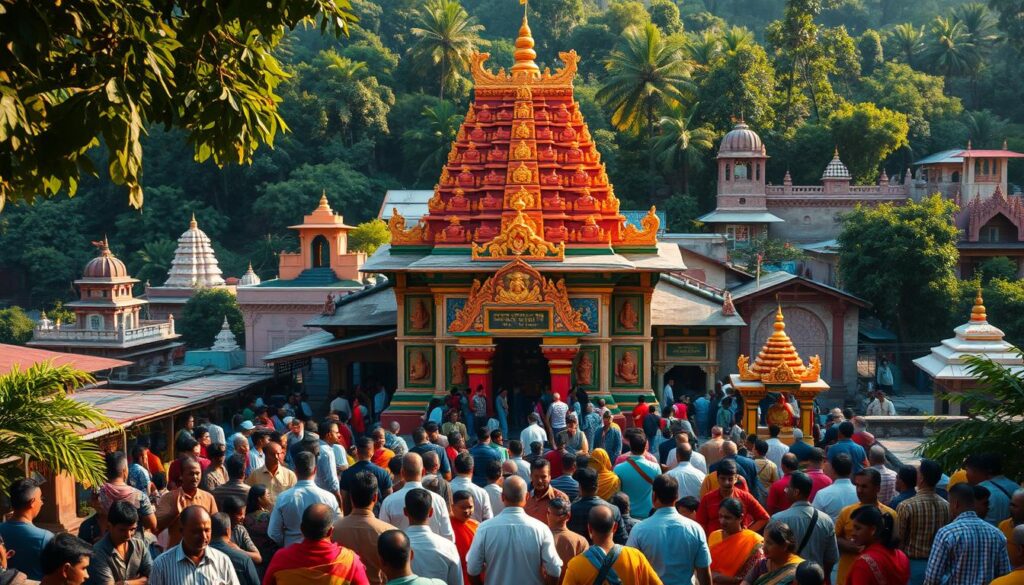
By connecting with temple communities, we get a deeper look at their culture. We learn about their history, art, and architecture. We also get to see their social and religious practices.
Many temples have classes, workshops, or volunteer programs. These let visitors dive deeper into the community. Activities can include learning a new language, cooking traditional meals, or helping with conservation.
These interactions help us make real connections with community members. They show us the importance of global unity and understanding. Visiting temples is a special chance for cultural exchange and growth.
Family-Friendly Activities at Temples
Temples across the United States offer many family-friendly activities for all ages. These activities help families learn together and build a sense of community.
Many temples have children’s programs with educational workshops and cultural events. These programs help kids understand the temple’s cultural and spiritual importance.
Educational initiatives are a big part of temple activities. Temples host lectures and workshops on various topics, from religion to cultural heritage. These efforts help families deepen their cultural knowledge.
Temples also organize community events for everyone. These events include festivals, concerts, and cultural celebrations. They bring people together and promote unity.
Temples are key in helping families bond. They offer a place where families can learn and enjoy activities together. This strengthens family ties and creates a sense of belonging.
In summary, temples provide family-friendly activities that are inclusive and educational. Through programs for kids, educational initiatives, and community events, temples aim to foster learning and community engagement across generations.
The Role of Technology in Modern Temples
Modern temples are using technology to improve worship and community ties. This move is making old traditions more modern and accessible to more people.
One big modern innovation is digital worship services. Now, temples can stream services online. This helps those who can’t attend in person, thanks to distance or mobility issues. It’s opened up new ways for people to connect and grow spiritually.

Digital practices are also making worship better. Temples are creating digital content like podcasts, videos, and online courses. These help teach followers about their culture and faith.
Technology is also improving communication in temple communities. Social media and temple apps are used to share news, plan events, and start discussions. This digital engagement is making communities stronger and more united.
In summary, technology in temples is changing how these places work. By using modern innovations and digital practices, temples keep their traditions alive while staying relevant today.
Contributing to Temple Sustainability
Many temples are now focusing on sustainable practices to help our planet. This change is good for the Earth and makes temple visits more meaningful.
Temples are starting to use eco-friendly initiatives like renewable energy and less water. They also use sustainable materials in their buildings. This shows their commitment to temple sustainability.
Visitors can help by being careful with their own impact. Small actions, like using less energy and taking care of the temple grounds, can help a lot.
By adopting eco-friendly practices, temples protect their culture and help the future. This connection with nature makes temple visits even more special.
It’s important to see how environmental initiatives are changing temple visits. They help create a community that values both spiritual growth and caring for the Earth.
Conclusion: Embracing Cultural Diversity Through Temple Visits
Visiting cultural temples is a special way to see the rich diversity of cultures. These visits help us understand different cultures better. They also help us grow personally.
Temples are more than places of worship. They are cultural centers that host events and exhibitions. These experiences allow us to appreciate the traditions and practices of these sacred sites.
By going to temples, we can learn to be more open-minded. We can develop tolerance and understanding. Reflecting on our experiences helps us build a more inclusive community.