
Proper waste management is key for a sustainable world. It starts with using a recycling bin. By sorting recyclables from trash, we can lessen our environmental impact.
The role of waste management is huge. As we aim for sustainability, recycling bins play a big part. They make sorting garbage easier and ensure materials like paper and plastic are handled right.
By recycling, we can greatly help the environment. It’s a simple yet effective way to move towards a greener future.
Understanding the Importance of Recycling Bins
Recycling bins are key to living sustainably. They are not just containers; they help us cut down on waste and protect the environment. By sorting waste, recycling bins encourage us to live more sustainably.
Reducing Waste is a big plus of recycling bins. They help sort materials like paper, plastic, glass, and metal for recycling. This saves natural resources and cuts down on pollution from making new products.
Environmental Impact drops when we use recycling bins. Recycling cuts down on greenhouse gases by using less energy. For example, recycling aluminum cans saves 95% of the energy needed to make new aluminum. Recycling also keeps waste out of landfills, saving space and reducing pollution.
Recycling bins play a huge role in promoting sustainable practices. They make recycling easy and accessible. Education and awareness help people know what can be recycled and how to prepare it.
In short, recycling bins are a simple but powerful tool for sustainability. By using them right, we can make a big difference for the planet.
Types of Recycling Bins Available
Recycling bins come in many types, each for a specific purpose. They meet different recycling needs, from home to industrial waste.
The materials for recycling bins include plastic, metal, and wood. Plastic bins are light and easy to clean, great for homes. Metal bins are sturdy and often seen in public or industrial areas.
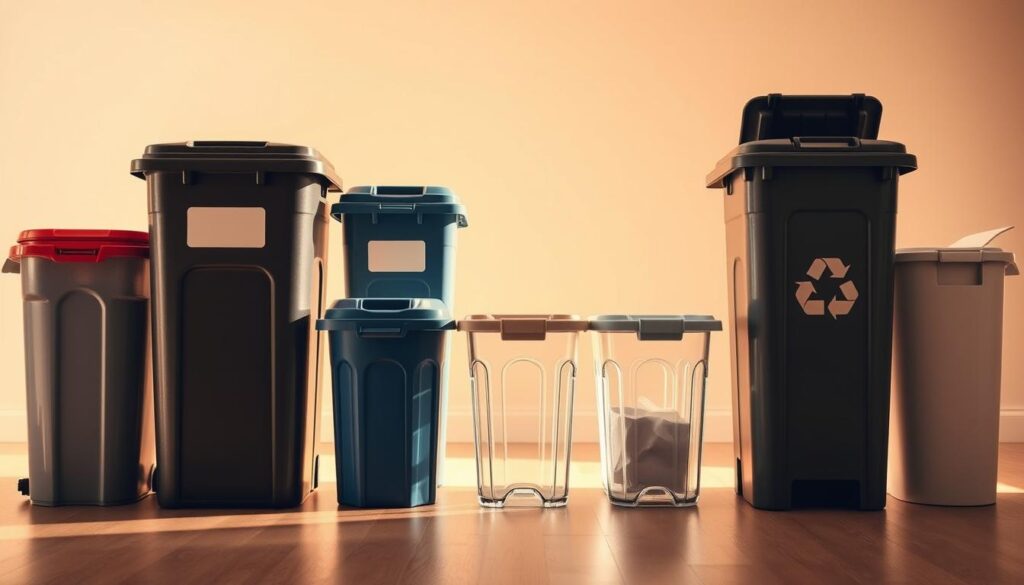
When picking a recycling bin, think about a few key features. Size matters; it should hold enough recyclables but not be too big.
Durability is also important. A tough bin can handle weather and last longer, saving you from often buying new ones. Also, think about how easy it is to use and empty.
The lid or opening mechanism is another thing to consider. Some bins have pedal lids, while others have simple swing lids. Your choice depends on what you like and how you’ll use it.
Lastly, think about the aesthetic appeal of the bin. If it’s going to be seen, choose one that looks good. Modern recycling bins come in many designs and colors, fitting any decor.
Choosing the Right Recycling Bin for Your Area
Choosing the right recycling bin is key to a greener future. You need to think about a few key factors to make your recycling efforts work well.
The size of your household is a big factor. Big families make more trash, so they need bigger bins. Small families can save money with smaller bins.
What kind of trash you make matters too. Places recycle different things like paper, plastic, glass, or metal. Knowing what your area recycles helps pick the right bin.
Local recycling rules are also important. Cities have rules on what can be recycled and how to sort it. Following these rules is key to good recycling.
The bin’s durability and design are also key. A good bin is easy to use and clean. It should last long, even in bad weather.
Thinking about these points helps you pick a recycling bin that fits your area’s needs. This choice helps make our planet greener.
Where to Place Recycling Bins
To boost recycling, it’s key to put recycling bins in the best spots. The right spot makes collecting waste better and gets more people involved in recycling.
When picking a spot for recycling bin placement, make sure they’re easy for everyone to reach. Place them near where trash is thrown away or in recycling areas.
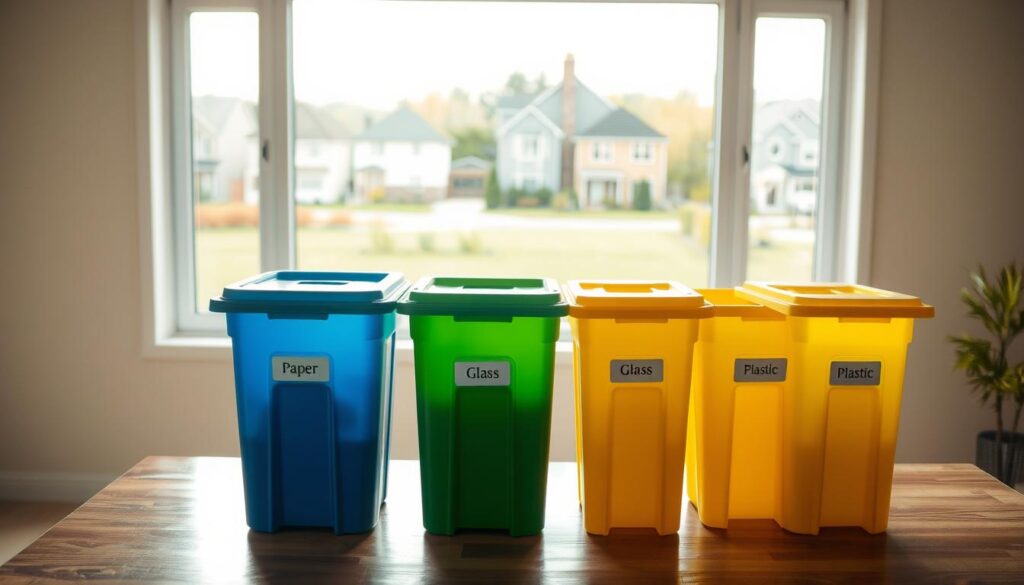
For curb placement, bins should be seen and reached by waste pickup teams. Also, follow local rules about how far from the curb and when to put them out.
Accessibility matters a lot. Recycling bins should not block the way or hinder access, which is important for everyone, including those with disabilities.
By carefully placing recycling bins and following the best spots, communities can greatly increase recycling. This helps make our environment more sustainable.
Educating the Community About Recycling
To foster a culture of recycling, it’s essential to educate the community on its benefits and practices. Effective recycling education can lead to significant environmental benefits. These include conservation of natural resources and reduction of landfill waste.
Promoting Community Awareness
Community awareness is a critical component of successful recycling programs. By organizing workshops, seminars, and awareness campaigns, communities can be educated. They learn about the importance of recycling and how to do it correctly.
“Education is the most powerful tool which you can use to change the world.” – Nelson Mandela. This quote emphasizes the role of education in promoting positive change, such as adopting sustainable recycling practices.
Strategies for Effective Recycling Education
Several strategies can be employed to educate the community about recycling. These include:
1. Collaborating with local schools to integrate recycling education into the curriculum.
2. Organizing community events, such as clean-up initiatives and recycling drives.
3. Utilizing social media platforms to disseminate information and promote recycling practices.
Encouraging community participation in recycling programs is vital for their success. This can be achieved by making recycling convenient, providing clear guidelines, and recognizing community efforts.
By implementing these strategies and promoting recycling education, communities can work together towards a more sustainable future.
Maintenance and Management of Recycling Bins
Keeping recycling bins clean is key for good waste management. Clean bins mean better recycling quality and more people join in. This helps our environment.
Regular Cleaning stops bad smells and messes. A quick rinse and mild soap can keep them spotless.
Inspection and Repair are also important. Checking bins often helps find and fix problems fast.
“A well-maintained recycling bin is not just a container; it’s a symbol of our commitment to sustainability and environmental stewardship.”
Communities can also use clear labeling and rules on what’s recyclable. This makes recycling easier for everyone.
By following these steps, we can keep recycling bins clean and useful. This helps our recycling efforts a lot.
Collaborating with Local Businesses
Working together with local businesses can boost recycling efforts in communities. Business collaboration is essential for effective recycling initiatives. Local businesses can help by starting recycling programs and encouraging customers to join in.
Businesses can also cut down their own waste. They can use less packaging, choose recyclable materials, and compost food waste. For example, a local restaurant can compost food and use compostable containers.
Businesses can also team up with recycling groups to promote recycling. They can put up posters, share educational materials, or host recycling events. This not only helps recycling rates but also builds community spirit.
When businesses and communities work together, they set a good example for others. A local store might start a campaign to get customers to use reusable bags. This helps cut down on plastic waste.
In summary, teamwork between local businesses and communities is critical for recycling initiatives to succeed. Together, they can make the environment more sustainable and encourage recycling.
Promoting Reusable Items Instead of Single-Use
Reducing waste is key to a sustainable future. Promoting reusable items is a big step in this direction.
Using reusable bags, containers, and water bottles cuts down on waste. Environmental groups say, “Switching to reusable products is one of the simplest ways to reduce waste and help the environment.”
“The biggest threat to our planet is the belief that someone else will save it.” This quote points out the need for personal actions, like choosing reusable over single-use items.
Making single-use reduction a part of daily life is easy. For example, carrying a reusable coffee cup, saying no to plastic straws, and choosing products with less packaging are simple steps.

Supporting businesses that use reusable products is also important. By shopping at stores that offer reusable bags or containers, we encourage more businesses to go green.
Using reusable items in our daily lives helps the environment and promotes sustainability. As more people make this change, we can see big positive effects.
Addressing Contamination Issues
Reducing contamination is key in recycling bin management. Good recycling programs need clean materials. Contamination can hurt these efforts a lot.
Teaching people what can and can’t be recycled is a big help. It’s about knowing what materials are accepted and what aren’t. For example, many places teach people to remove lids and labels and keep things clean.
Reducing contamination makes recycling better and more efficient. When materials are dirty, they often go to landfills instead of being recycled. Less contamination means more materials get recycled.
Best Practices for Minimizing Contamination
Here are some ways to cut down on contamination:
- Label recycling bins clearly to show what’s accepted.
- Keep the community updated on recycling rules.
- Watch for and fix contamination problems fast.
By following these steps, we can make recycling work better. It’s a team effort between the community and local officials.
Keeping up the fight against contamination is vital. Together, we can make recycling more effective and sustainable.
Tracking Recycling Progress
It’s key to track recycling progress to find ways to improve recycling programs. By watching how recycling efforts do, communities can make better choices for recycling.
One main way to track recycling progress is by looking at recycling rates. This means checking how much material is recycled over time. If recycling rates go down, it might mean more education or better recycling spots are needed.
Also, it’s important to see how recycling initiatives affect the environment, economy, and society. For example, studies can show how recycling cuts down on pollution or saves money by reducing waste.
To really track recycling progress, communities can use different tools and plans. These might include:
- Setting up systems to keep track of recycling rates and how clean the recycling is.
- Doing regular checks to see if recycling programs are working well.
- Talking to the community through surveys and feedback to learn about their recycling habits and problems.
By taking a detailed approach to tracking recycling progress, communities can make their recycling programs better. They can tackle problems and work towards being more environmentally friendly.
The Future of Recycling Initiatives
The recycling world is changing fast, thanks to new trends and tech. These changes are making waste management better. Communities are getting more creative with recycling, making the future look good.
Advanced tech like AI and robots is now part of recycling. They make recycling faster and more accurate. This means more materials get recycled and less waste is thrown away.
There’s also a big push for the circular economy. This idea aims to cut down on waste by making products and systems that can be reused. It helps reduce the harm caused by getting raw materials.
It’s important to keep up with recycling’s progress. By using new trends and tech, we can make recycling better. This way, we can all help create a greener future.