Documenting cultural heritage is very important. It needs careful planning and execution. One good way to keep cultural heritage alive is through video recordings.
Recording a cultural activity on video helps preserve it. It also makes it easier for more people to see. This guide will show you how to make a cultural video that truly captures the essence of the heritage.
By following the best practices for video recording, your work will be of high quality. It will be a valuable resource for generations to come.
The Value of Documenting Cultural Heritage
Cultural heritage documentation connects the past to the present. It lets future generations learn from and appreciate their roots. By keeping cultural practices and traditions alive, we promote cultural preservation. This helps diverse communities understand each other better.
It’s key to document cultural heritage to protect human culture’s intangible parts. This includes language, music, and art. This way, we preserve heritage and make it available for study and appreciation.
The aim of cultural documentation is to keep practices alive. It makes them a focus of study, valuing the unique expressions and identities of people worldwide. Good heritage preservation efforts protect these treasures for the future.
Understanding Your Cultural Subject
Before you start documenting culture, it’s key to understand the cultural subject. You need to explore the cultural context and spot cultural practices and traditions. It’s also important to be aware of the community’s needs and concerns.
Researching Cultural Context
UNESCO has pointed out several key areas for preserving culture. These include oral traditions, performing arts, social practices, rituals, and festive events. By researching these, you can get a better grasp of the cultural scene. It’s vital to do this research with respect and care for the community.
“Cultural heritage is not just about monuments or artifacts; it’s about the living practices and traditions that define a community.” This understanding helps in making your cultural documentation more detailed and accurate.
To document culture well, you must dive deep into the subject. This includes its history, importance, and role in the community. This way, your documentation will be informative, respectful, and sensitive to cultural nuances.
Pre-Production Planning for Cultural Videos
Good pre-production planning is key for a great cultural video. It covers important steps to make your video recording a success and of high quality.
Finding the right location is the first step. NYU Media Production suggests looking for a spot with plenty of natural light or indoor lighting. This improves your video recording quality and makes your subjects feel welcome.
It’s also important to pick a quiet spot with little background noise. Avoid places with lots of echo to keep your audio clear. A quiet setting helps your subjects’ voices come through, making the video more engaging.
Planning the shoot and getting your equipment ready are also part of pre-production. You need to plan your shots, schedule interviews or performances, and check that all equipment works well. This helps avoid delays and makes the video recording process smoother.
In summary, detailed pre-production planning is essential for a compelling cultural video. By choosing the right location, managing the environment, and preparing your equipment, you can make a high-quality video that showcases your cultural subject well.
Essential Equipment for Recording Cultural Activities
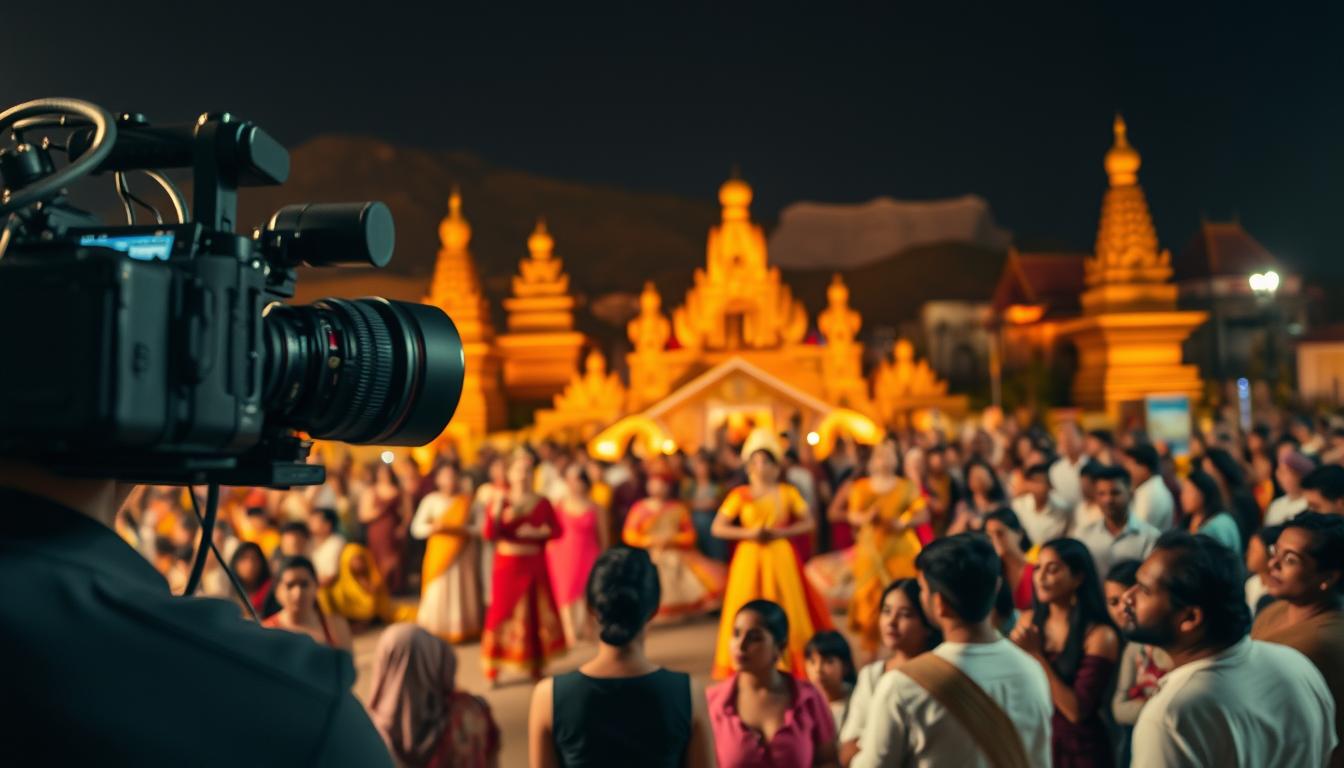
Getting the right gear is key for clear and precise recordings of cultural activities. The NYU Media Production team suggests using a tripod or steady surface to prevent shaky footage. Also, shoot horizontally in landscape mode.
Camera Selection: Picking the right camera is vital for top-notch video. Professional cameras are great, but smartphones can work well too, thanks to recent tech advances. Look for a camera that does well in low light, as many events happen indoors or at night.

Stabilization is Key: A tripod is a must for keeping your shot steady. It makes panning and tilting smoother, improving the viewer’s experience. For more movement, a gimbal can stabilize the camera while you move it.
Audio Recording: Audio quality is just as important as video. An external microphone can greatly improve audio at cultural events. Use lavalier microphones for interviews or handheld microphones for narrations.
“The quality of your cultural video documentation depends significantly on the equipment you use.”
Other gear like lighting kits might be needed for poorly lit events. Knowing your equipment and how to use it is essential for great cultural documentation.
Investing in the right equipment and learning how to use it can greatly improve your cultural video recordings. This ensures they remain valuable for years.
Setting Up Your Recording Environment
The recording environment is key to your cultural video‘s quality. To get top-notch footage, you need a space that’s free from distractions. It should also be great for both video and audio.
For the best recording environment, pick a quiet spot with minimal background noise. Stay away from places with lots of echo, as it can mess up your video recording‘s sound. If you can, use rooms with sound-absorbing materials or acoustic panels to cut down on echoes.
Don’t forget about the lighting in your recording area. Make sure it’s well-lit but avoid harsh direct light that can make shadows. Natural light is best, but if indoors, softbox lights or diffused lighting can help get a good balance.
With a well-thought-out recording environment, your cultural video will be much better. It will be more engaging and fun for your viewers.
Storytelling Through Cultural Video
The art of storytelling is key in cultural video. It brings to life the intangible parts of cultural heritage. By telling a compelling story, cultural videos can grab audiences’ attention and help them understand different cultural practices better.
Good storytelling in cultural videos does more than just show events. It shares the emotions, traditions, and values of a community. A well-crafted story can take viewers right into the heart of the cultural experience. This makes cultural heritage more relatable and interesting.

To make this happen, filmmakers use many storytelling methods. They might do interviews with community members, show traditional practices, or use beautiful images. The goal is to create an experience that feels real and connects with the audience.
Also, storytelling through cultural video helps keep cultural heritage alive for the next generations. These videos capture the essence of cultural traditions and practices. They are a valuable resource for learning about and appreciating culture.
Crafting a Compelling Narrative
A good story is the heart of cultural video storytelling. It’s about knowing the cultural context, finding important themes, and sharing them in a way that grabs attention. The story should be true, respectful, and full of information. It should give viewers a real look into the cultural heritage being shown.
Mastering Composition Techniques for Cultural Events
When recording cultural events, using the right composition techniques is key. This can greatly improve your video’s quality. It’s best to place the camera at eye level. This way, you avoid looking up or down on your subject.
Good composition makes your subject look great. Try the rule of thirds. This means dividing the frame into thirds both ways and placing your subject on those lines or where they meet.
Also, think about the background. A busy background can pull your subject’s focus. Use a shallow depth of field to blur the background. This makes your subject stand out more.
Learning these composition techniques helps you make engaging videos. Your cultural event footage will capture its essence beautifully.
Lighting Techniques for Cultural Activities
Lighting is key in making your cultural activity videos look great. Good lighting makes your footage more appealing and real. It’s important to know the basics of lighting to capture the true essence of the event.
Daylight is the best choice as it brings a natural and lively feel to your recordings. “Natural light is always the best option when available,” it adds warmth and depth. But, if you’re indoors, a ring light can help light up your subject.

Using the right lighting techniques can greatly improve your video quality. It’s not just about lighting up the scene. It’s about creating an atmosphere that fits the cultural activity. By mastering lighting, you can make videos that are not only informative but also engaging and visually appealing.
Audio Recording Strategies for Cultural Events
Good audio is key when recording cultural events. It brings out the details and makes the experience better. High-quality audio makes everything more immersive and fun to watch.
Choosing the Right Location is very important. Pick a quiet spot with little background noise. Avoid places with lots of echo, as it can ruin the sound.
For the best sound, use external microphones or lavalier microphones in loud places. They help focus on the sound you want and cut down on background noise.
Monitoring Your Audio is also key. Listen with headphones to catch any problems right away. This way, your recording will be top-notch.
Using these strategies can really improve your cultural event recordings. Your audience will enjoy them more because of the better sound.
Directing and Interviewing Cultural Participants
Directing and interviewing cultural participants needs a deep understanding of their culture. It’s key to be respectful and sensitive to their needs and concerns.
To do good interviews, start by building a rapport with the participants. Know the cultural nuances and be empathetic towards their experiences. This way, you create a space where they feel comfortable sharing their stories.

When directing, give clear guidance but keep their comfort in mind. Explain the video’s purpose, show them what to do, and make sure they know what’s expected.
With a thoughtful and considerate approach, you can get real and meaningful footage. This footage will show the beauty of cultural heritage.
Post-Production Workflow for Cultural Video
After capturing a cultural activity, the next step is post-production. This phase turns raw footage into a cultural video through editing, sound design, and visual effects.
In post-production, video editing is key to telling the cultural event’s story. Editors pick and arrange footage to share the message. They make sure the story flows well and stays true to the culture.
It’s important to follow copyright laws when using cultural content. This means getting the right permissions for music, archival footage, or other copyrighted materials in the cultural video.
A good post-production workflow includes several steps. First, import and organize the footage. Then, make a rough cut, refine the edit, add sound design, and use visual effects. Each step needs careful attention for a top-notch final product.
Good video editing in cultural videos makes them look great and teaches about culture. By paying close attention to post-production, creators make videos that connect with viewers and honor the culture they show.
Preserving and Sharing Your Cultural Heritage Documentation
Cultural heritage documentation aims to save the intangible cultural heritage of people groups. It uses audio and video recordings to promote understanding and appreciation across cultures. Keeping these recordings safe is key to maintaining cultural identity and teaching future generations about the past.
It’s important to store these recordings in a safe, climate-controlled place. Using formats that don’t easily wear out is also vital. Sharing them online, in museums, and cultural institutions helps make them accessible to everyone.
Preserving and sharing cultural heritage helps us understand and appreciate different cultures. It makes our lives richer and helps build a more inclusive society. This way, we can all learn from and celebrate each other’s traditions.