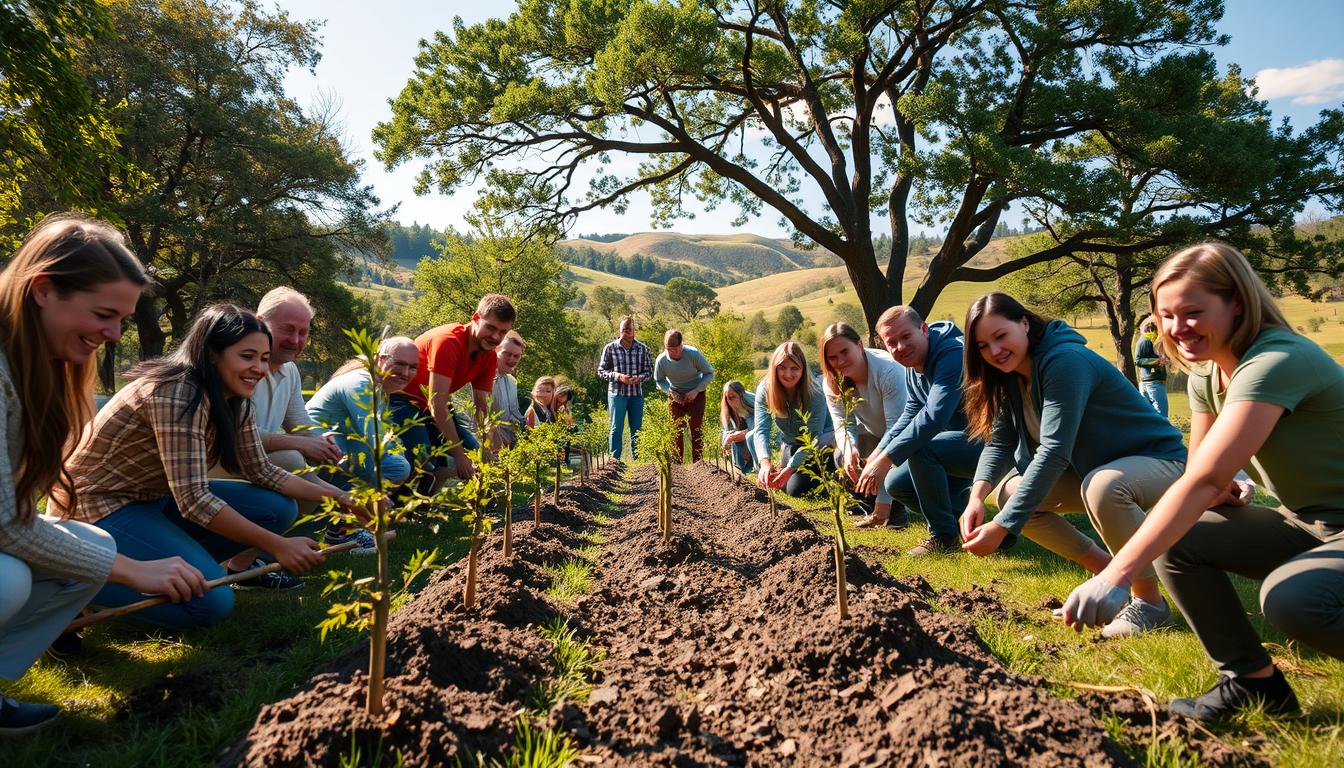
Gathering with friends to help the environment is rewarding. Community Engagement through Eco-Friendly Activities like tree planting brings people together. It also makes local ecosystems better.
Groups like The Nature Conservancy’s “Plant a Billion Trees” and “Friends of Trees” show the power of working together. They make neighborhoods look better and help the planet stay healthy.
Joining local tree planting events helps build community. It also supports Eco-Friendly Activities. It’s a simple way to make a big difference.
The Environmental and Social Benefits of Group Planting
Planting trees in groups boosts the environmental benefits and strengthens community bonding. When people plant trees together, they help a lot with reforestation. This has a big effect on our planet.
Trees are key in cleaning our air, giving us clean water, fighting climate change, and providing homes for animals. By planting trees together, we can cut down pollution, make our air and water cleaner, and increase the variety of life around us.
Also, planting trees in groups has many social benefits. It lets people meet, make friends, and feel like they’re working together for their community. These efforts can really make a difference for our planet and for each other.
Why Tree Planting Matters Now More Than Ever
The world needs urgent action, and tree planting is key. Organizations like The Nature Conservancy show how vital it is. They say restoring forests is essential to fight climate change and save biodiversity.
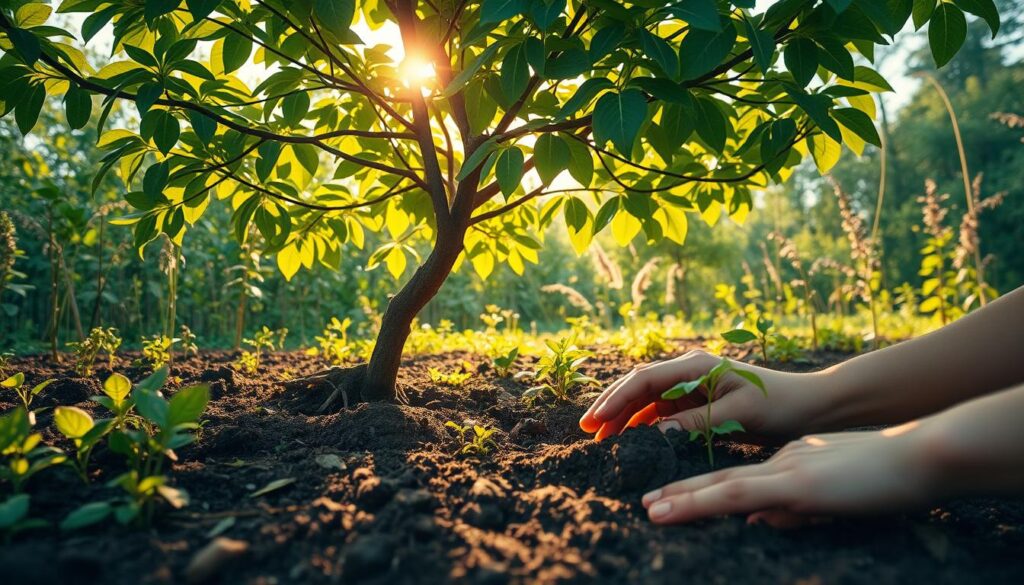
Tree planting brings many Environmental Benefits. Trees help clean the air by taking in carbon dioxide and making oxygen. This makes the air we breathe cleaner.
Pollution Reduction Benefits
Trees are great at cutting down pollution. They soak up bad gases and particles. This makes the air better and helps us stay healthy. Using Sustainable Practices like planting trees can really help reduce pollution.
Health Advantages for Community Members
Tree planting also boosts Health Advantages for Community Members. Trees give us shade, lower the heat in cities, and help animals. They make our lives better. Taking care of trees ensures these benefits last.
When we plant trees, we work together to make our world better. This teamwork not only strengthens our community but also helps our planet for the future.
Planning Your First Tree Planting Event
Organizing a tree planting event is rewarding. It boosts community engagement and helps the environment. With help from groups like “Friends of Trees,” you can make a big difference.
Pre-Planting Preparation Tasks
Before the event, several tasks are key. Pick the right spot, choose the best trees, and get permissions. Effective planning makes the event a success.
Also, promote the event in the community. Use social media, newspapers, and community boards. Ask people to bring their friends and family to boost community engagement.
On the event day, have a clear plan. Tell everyone what to expect and when. Start with a brief intro and then plant the trees.
Have all the necessary supplies ready. This includes shovels, gloves, and trees. Assign volunteers to help and teach tree planting skills. This makes the event fun and successful for everyone.
By following these steps, you can host a great tree planting event. It helps the environment and brings people together.
Gathering Your Tree Planting Team
Getting a diverse group of volunteers is essential for a successful tree planting event. Community tree planting works best when people from all backgrounds join together. This way, everyone can make a real difference.
To build a strong team, start by contacting local groups, schools, and environmental organizations. Use social media to share the event and invite people to participate. Adding team building activities to the planning can help everyone feel connected.
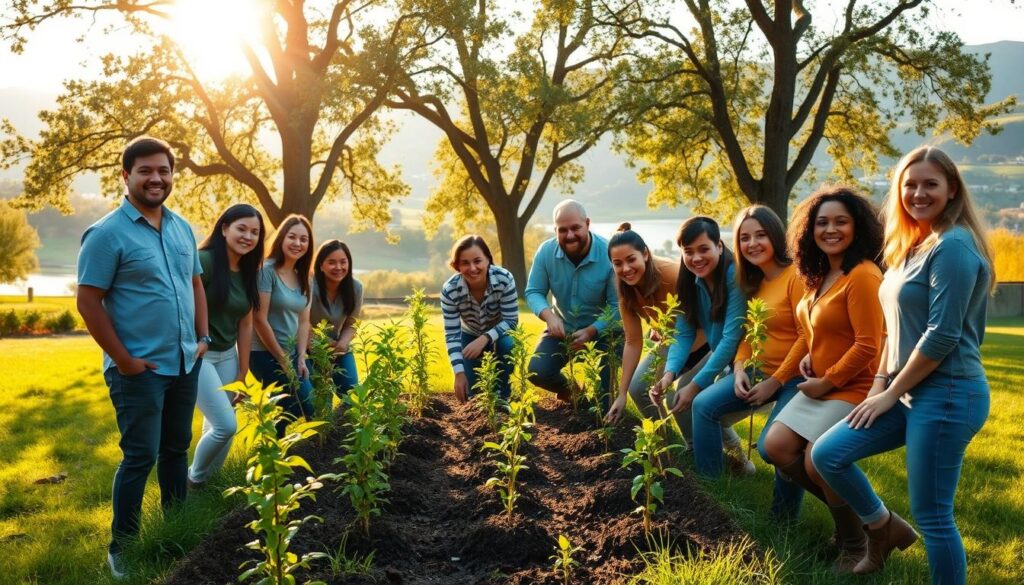
Volunteer engagement is key to a successful event. Make sure everyone feels important by giving them tasks that match their skills. This way, everyone can contribute and feel valued.
Selecting the Perfect Location for Your Trees
Choosing the right spot for your trees is as key as picking the trees themselves. The Nature Conservancy stresses the need to plant trees in the best places for them to thrive. This approach helps us pick the ideal spot for your trees, using sustainable practices that help the environment and the community.
Soil testing is a key part of picking the right spot. You can check the soil’s color and texture, do a jar test, or use pH test kits. These steps help find soil that’s good for tree growth.
Identifying Optimal Planting Spots
After testing the soil, find the best places to plant. Think about sunlight, drainage, and how close to buildings or roads they are. By looking at these factors, you can pick spots that help your trees grow well, following Tree Care best practices.
By using simple soil tests and checking planting sites carefully, your tree planting will be a success and good for the planet.
The Best Tree Species for Community Tree Planting
For community tree planting to have a lasting impact, picking the right tree species is key. The choice of trees greatly affects the success of reforestation efforts. It impacts the environment and community engagement.
When choosing tree species, consider the local climate and soil type. Native trees are often the best choice. They are well-suited to local conditions, need less care, and support local wildlife.
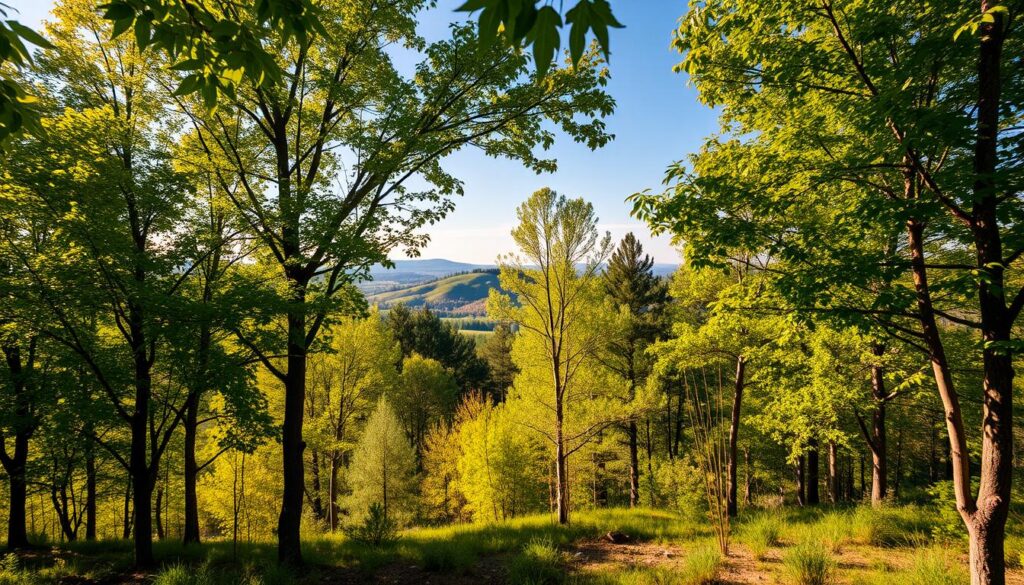
Trees like oak, maple, and pine are great for community planting. They are hardy and offer many ecosystem services. Oak trees, for example, support a wide range of wildlife and can live for centuries.
Planting the right tree species brings more than environmental benefits. It builds community, offers educational chances, and beautifies neighborhoods.
In conclusion, picking the right tree species is vital for community tree planting. By choosing native trees and considering local conditions, communities can ensure their reforestation efforts succeed in the long term.
Essential Supplies and Tools for Successful Tree Planting
The success of a tree planting event depends on the right essential supplies and tools. The right equipment makes sure trees are planted right. It also makes the event fun for everyone.
When kids help with tree planting, they need child-friendly tools. These tools should be safe and easy to use. Kids need smaller shovels and gloves that fit them well. Keeping them safe is the top priority.
Accessibility Considerations
It’s important to make tree planting events accessible to all participants. This means using tools that everyone can use. The planting site should also be easy to get to. Making events accessible makes them more fun for everyone.
By choosing the right Tree Planting Tools and Safety Equipment, and thinking about Accessibility, organizers can make the event great for everyone.
Tree Planting Techniques for Maximum Survival Rates
For trees to survive, we must use the right tree planting techniques. The Nature Conservancy shows us how to plant trees for their long-term health. Planting a tree is more than just digging a hole and putting it in. It’s a series of steps that help trees grow strong.
Common Planting Mistakes to Avoid
One big mistake is planting the tree too deep. This can hurt the roots. Another error is not preparing the soil well, which harms root growth. Experts say, “Good soil is essential for healthy roots” (
The Arbor Day Foundation
). To avoid these errors, dig a hole that fits the tree’s roots. Also, loosen the soil at the bottom to help roots grow.
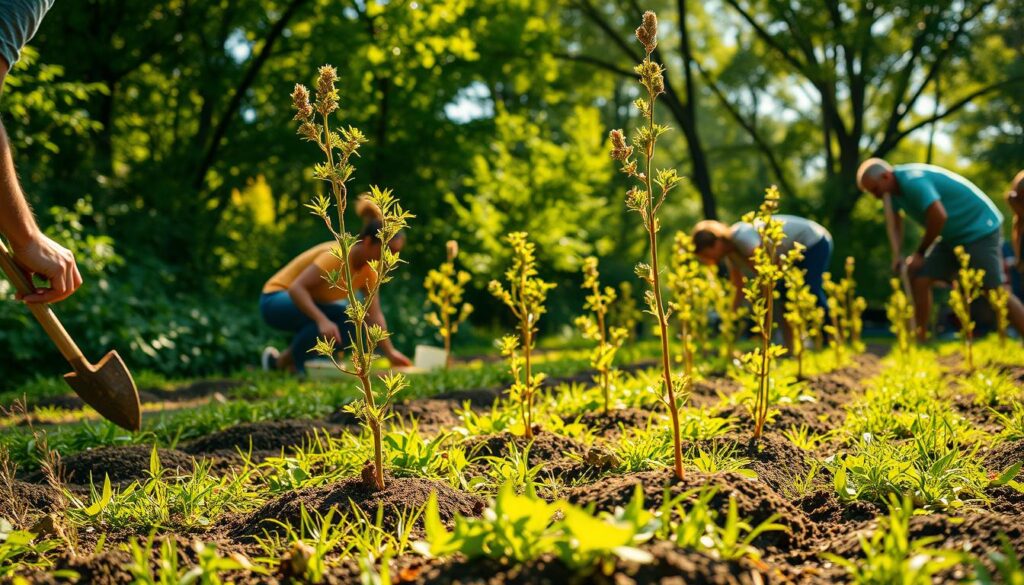
It’s also key to adjust tree planting techniques for soil types. For clay soils, plant trees on a mound to avoid waterlogging. In sandy soils, trees need more water because the soil holds it poorly. Knowing the soil type and adjusting planting methods can greatly improve tree survival.
Adjustments for Different Soil Types
Different soil types need different tree care approaches. Trees in poorly draining soils might need raised beds. Those in dry soils might benefit from mulch to keep moisture in. By understanding soil needs, we can make our planting techniques more effective.
In summary, using the correct tree planting techniques and adjusting for soil types are key to tree survival. By avoiding common mistakes and tailoring our methods to the soil, we can help tree planting succeed.
Making Your Tree Planting Day Memorable and Fun
To make your tree planting day unforgettable, add fun activities that bring people together. Programs like “Friends of Trees” and “Plant a Billion Trees” show that tree planting can be enjoyable. This makes the event more successful.
Make tree planting fun for everyone by adding enjoyable activities. You could have a competition to see who plants the most trees. Or, create a scavenger hunt to explore the planting site.
Make the day even better by adding extras. Offer refreshments, have a picnic, or celebrate after planting. These activities help everyone feel connected and make the event memorable.
Good event planning is key to a successful tree planting day. Plan well, work with participants, and have a clear plan for the event. With careful planning, you’ll create a fun and lasting experience for everyone.
Post-Planting Care: Ensuring Your Trees Thrive
After planting trees, it’s important to give them the care they need to grow. Post-Planting Care is key for their survival and growth. It involves sustainable practices to help them adjust to their new home.
Watering is a critical part of post-planting care. Trees need enough water, mainly in their first year. Water them deeply once or twice a week, based on the weather. Deep watering helps roots grow strong, making trees more drought-resistant.
Pruning is also essential. It keeps the tree’s shape, promotes growth, and removes dead or sick branches. Prune during the tree’s dormant season to avoid stressing it.
Regularly check for health issues. Watch for signs of disease or pests and act fast if you see any. This is part of sustainable practices for your trees’ long-term health.
By following these tips and practicing Tree Care, your planted trees will thrive. This benefits the environment and makes your community more beautiful.
Building Lasting Community Through Regular Tree Planting
Neighborhoods come together through community tree planting. This effort builds unity and care for the environment. Tree planting makes areas look better and helps people meet and form lasting bonds.
Digital mapping tools for tree tracking play a big role. Groups like The Nature Conservancy use them to watch over trees. This helps keep trees healthy and plans for more community engagement.
Digital Mapping Tools for Tree Tracking
Digital tools help communities track their trees. They note where, what kind, and how they’re doing. This info is key for tree care and teaching the community about trees.
Environmentalists say,
“Trees are the lungs of the earth, and by tracking and caring for them, we are ensuring a healthier planet for future generations.”
Anniversary Celebrations for Past Plantings
Celebrating tree planting anniversaries boosts community engagement. It’s a chance to look back, share stories, and strengthen community ties. Celebrations can be simple picnics or bigger events with tree care workshops.
Regular tree planting makes neighborhoods better and brings people closer together.
The Growing Legacy: How Friends Who Plant Together Change the World
When communities plant trees together, they leave a lasting mark. This effort helps the environment and strengthens the community. Planting trees reduces carbon emissions and boosts biodiversity.
This Environmental Impact also brings people together. It shows how different backgrounds can unite for a goal. These events build strong bonds and a united community.
The Tree Planting Legacy grows with each event. It shows what’s possible when people work together. This legacy inspires others to act, creating a wave of positive change.