
Stories from mythology and legends are full of animal characters. They symbolize the knowledge, strength, and magic of nature.
These creatures are important in many cultures. They represent different parts of human life and the environment. By looking into the role of folklore animals, we learn more about their value and what they stand for.
In many cultures, legendary creatures are seen as powerful and wise. They connect us to nature and our role in it.
Introduction to Folklore Animals
Across cultures, animals carry deep symbolic meanings in mythologies and folklore. Many see them as guides and messengers. They bring important information from the spirit realm.
The importance of animals in folklore comes from their ability to share complex messages. They symbolize different parts of human life. For example, some animals are seen as sacred or mystical, showing qualities we admire or fear.
The cultural significance of these animals is wide-ranging. It shows how humans see and understand the natural world. In myths, animals often have special powers or act as messengers between the living and the spiritual.
The symbolism of folklore animals is rich and varied. It reflects the values, fears, and hopes of the cultures that tell these stories. By looking at the role of animals in folklore, we learn about their cultural and symbolic importance.
History of Folklore Animals
Exploring the history of folklore animals opens a world of mythology and symbolism. These creatures have been key in human culture. They appear in stories, legends, and myths passed down through generations.
The origins of these animals go back to ancient cultures and mythologies. They often symbolized natural phenomena, human traits, or supernatural forces. For example, the fox is seen as a cunning trickster in many cultures. This shows a shared human experience or understanding across different cultures.
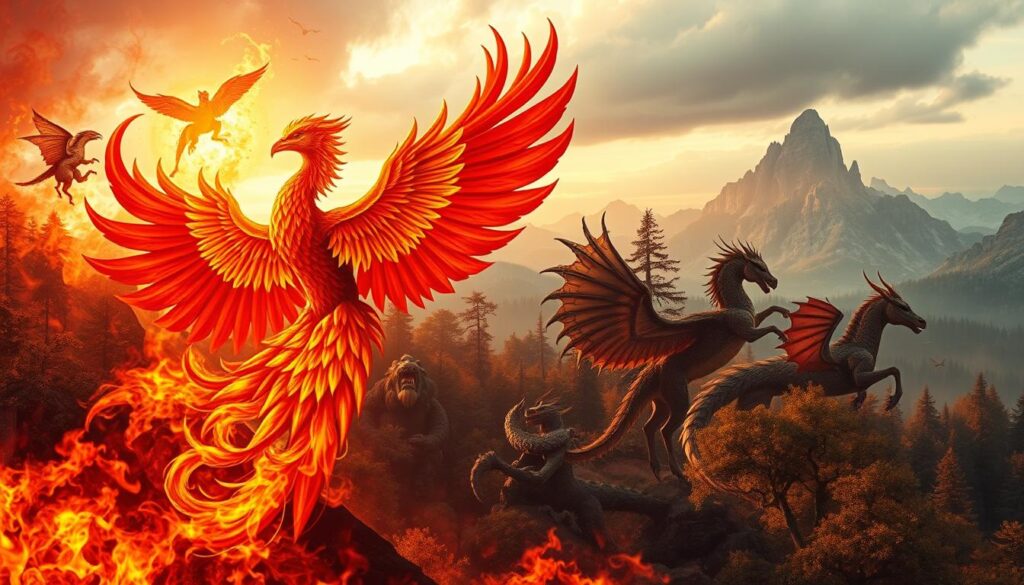
Over time, the stories of folklore animals have changed. This is due to cultural exchange, migration, and adapting myths to fit new values. Yet, the core themes and symbolism of these creatures have stayed the same. For instance, the serpent symbolizes renewal and transformation, showing its ability to shed its skin and be reborn.
Folklore animals are important because they teach moral lessons, explain nature, and entertain. They represent our collective unconscious, showing our fears, desires, and the human condition. Their stories continue to captivate us today, showing their lasting appeal and the need to understand their history.
“The stories will carry common themes around the world– foxes are frequently cast as cunning tricksters– which makes me wonder if there might not be some truth to the tales.”
This thought shows the universal nature of folklore animals. It encourages us to look into the possible truths behind these tales. By studying the history and evolution of folklore animals, we learn about our cultural, social, and psychological views of the world.
Popular Folklore Animals in America
Native American mythology is filled with folklore animals that symbolize virtues and vices. They show the spiritual bond between humans and nature. These animals are a big part of our cultural heritage, shared through stories and legends.
The fox is a trickster figure in Native American folklore, known for its cleverness. A famous story tells of Fox tricking Bear into ice fishing with its tail, which snapped off when the lake froze. This tale highlights the fox’s cleverness and why bears have short tails.
These folklore animals mean more than just fun stories. They teach important lessons that are true today. For example, the coyote teaches about the dangers of greed and foolishness. These tales help pass down cultural values and history.
The range of folklore animals in Native American mythology is huge. There’s the thunderbird, a bird that makes thunder and lightning, and the skinwalker, a shapeshifter. Each animal has its own stories and meanings, showing the variety of Native American cultures.
Learning about these folklore animals helps us understand America’s rich culture. By diving into their stories, we appreciate our cultural heritage and the values they stand for.
Regional Variations of Folklore Animals
Regional folklore animals show the wide range of human creativity and cultural differences. These creatures are deeply connected to the myths of their areas. They often mirror the unique histories, environments, and social settings of their cultures.
The Kitsune, a shape-shifting fox spirit from Eastern myths, is a great example. In Japanese tales, the Kitsune is a trickster with magical abilities that grow with age and wisdom. But, fox spirits are seen differently in East Asia. In Chinese myths, the Huli Jing has up to nine tails and can be kind or cruel.
“The same animal can symbolize different virtues or vices in different cultures, reflecting the complex and multifaceted nature of human belief systems.” For example, the fox is sly in Western stories. But in some Native American tales, it’s wise and clever.
Looking into these regional variations helps us understand folklore better. It shows how cultures see and tell stories about animals. This gives us a peek into their values and fears.
In summary, the different views of animals like the Kitsune show the rich diversity of global myths. They encourage us to dive into and value the many ways humans share their stories and beliefs.
The Symbolism Behind Folklore Animals
Folklore animals carry deep symbolic meanings. These meanings reflect the values and traditions of the cultures they come from. For centuries, these creatures have been part of our stories, acting as messengers and guides.
Birds are often seen as messengers from the spirit world. Their ability to fly high symbolizes freedom and insight. In many cultures, birds are believed to hold great knowledge, helping humans through life’s ups and downs.
The cultural significance of folklore animals is clear in art, literature, and rituals. For example, the eagle is highly respected in many Native American cultures. It stands for strength, courage, and protection. In Chinese culture, the dragon is a symbol of power, good fortune, and prosperity.
“Animals in folklore are not just mythical creatures; they carry significant symbolic meanings that vary across cultures, reflecting the diversity and richness of human experience.”
Learning about the symbolism of folklore animals offers insights into different cultures and environments. By exploring these meanings, we can appreciate the role these creatures play in our worldviews.
Symbolic Meanings Across Cultures
The meanings of folklore animals change and vary across cultures. For example, the snake can mean danger and evil in some places, but renewal and healing in others.
By looking at the different meanings of folklore animals, we can understand the complex ties between humans, nature, and our cultural stories.
Folklore Animals in Literature
Folklore animals in literature have captivated readers for ages. These creatures come from mythology and legends. They play big roles in stories, teaching us moral lessons and sharing cultural values.
Take Roald Dahl’s “Fantastic Mr. Fox” for example. It tells the story of a clever fox who tricks farmers to feed his family. This tale shows the cleverness and resourcefulness of folklore animals. It makes them relatable and loved by readers.
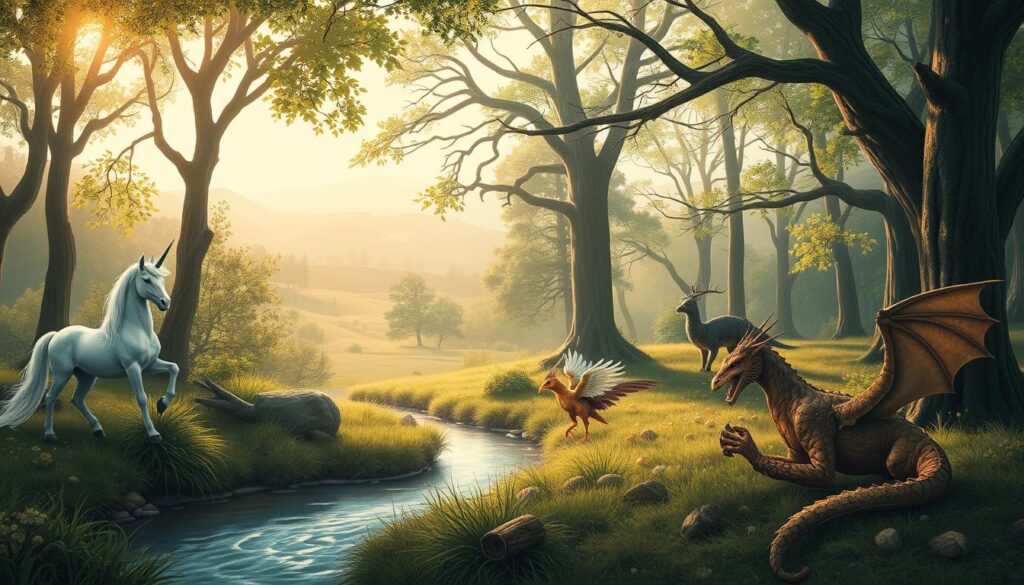
Folklore animals aren’t just for kids’ stories. They show up in all kinds of literature, like epic poems and modern novels. They can be symbols, metaphors, or even the main characters. For example, the Minotaur in Greek myths shows the battle between human and beast. The Phoenix stands for rebirth and new beginnings.
These animals also connect different cultures. They show us common human experiences and the love for certain creatures. The dragon, for instance, is found in many mythologies. It often means power, strength, or good luck.
In summary, folklore animals in literature help us understand our cultural heritage and human nature. Through their stories, we learn about the values, beliefs, and traditions of various societies. These creatures are a key part of our literary and cultural world.
The Role of Folklore Animals in Art
In the world of art, folklore animals hold a special place. They carry the spiritual, cultural, and symbolic values of various societies. These creatures have been shown in many art forms, like paintings, sculptures, textiles, and pottery.
The art of folklore animals is more than just pretty pictures. It often holds deep meanings. For example, in Chinese culture, tortoises are linked to the universe and stars. This shows how closely natural things and human beliefs are connected.
Timothy Taylor, an art historian, said, “Animal images in art help cultures share complex ideas and feelings in a way everyone can understand.” This is clear in how folklore animals are shown in different cultures. Each one reflects the unique beliefs, spirits, and environments of their societies.
“Art is the only way to run away without leaving home.” – Twyla Tharp
In many indigenous cultures, folklore animals are seen as spiritual beings. They have qualities and powers. Art that shows these animals is a way to honor and connect with these spirits.
The importance of folklore animals in art is vast. It shows the creativity and skill of the cultures that create them. It also helps keep cultural heritage and stories alive. Through art, folklore animals inspire, teach, and fascinate people all over the world.
Folklore Animals and Local Legends
The bond between folklore animals and local legends is intriguing. It shows how these creatures hold deep cultural value. These stories, filled with folklore animals, entertain and teach us about community values and beliefs.
The Kermode Spirit Bear is said to connect with the earth and stars. This shows how folklore animals are part of local legends. These tales not only thrill us but also help pass down cultural stories and myths.
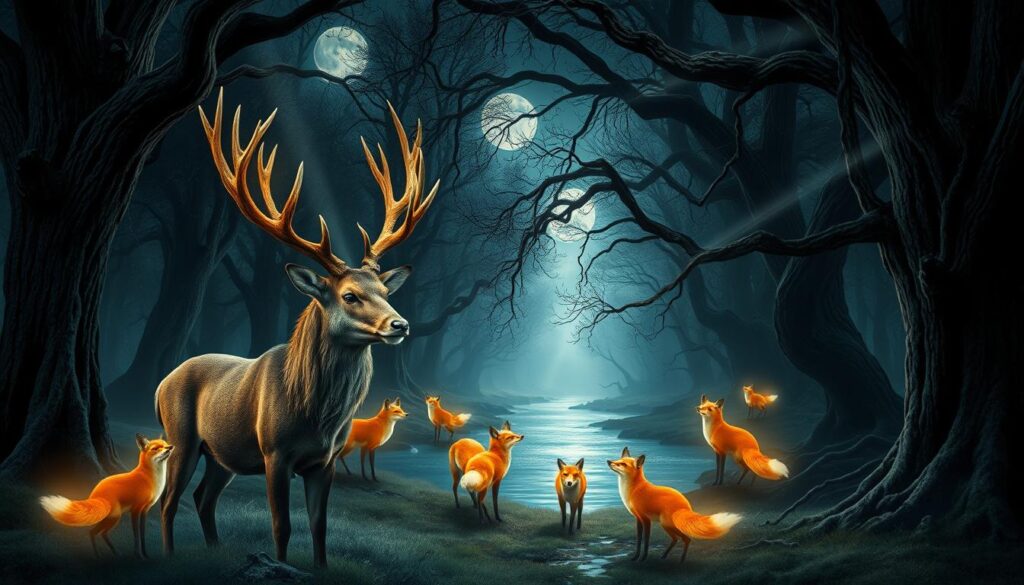
In many cultures, folklore animals are seen as sacred or carry deep meaning. For example, the Thunderbird in Native American tales stands for power and safety. The Jackalope in American folklore represents the mysterious and unknown. These animals are key to local legends and mythology, adding depth to our cultural world.
The importance of folklore animals in local legends goes beyond fun. They often teach us lessons or explain natural wonders. By looking into these stories, we learn more about the culture they come from and how mythology shapes our identity.
In summary, the relationship between folklore animals and local legends is rich and complex. It shows how different societies have tried to understand their world. Through mythology, we can see the symbolic meanings and cultural importance of these creatures. We can also appreciate their lasting impact on our shared imagination.
Modern Interpretations of Folklore Animals
In today’s world, folklore animals are seen in new ways, showing their lasting cultural significance. These creatures, once key in old stories and legends, now shine in modern media and culture.
Modern media, like films, TV shows, and books, has made folklore animals relevant again. For example, the Chupacabra and the Mothman appear in movies and TV, drawing in new fans with their enigmatic and sometimes magical traits.
These creatures symbolize human fears, dreams, and values. By updating folklore animals for today, creators tackle current issues in a way that feels familiar and interesting to today’s viewers.
The growth of digital media has also given folklore animals new stages. Online spaces and social media are full of tales, art, and talks about these beings. This shows their ongoing charm and the many ways they can be seen anew.
In summary, the fresh views on folklore animals show their deep influence on culture and society. By welcoming these beings in fresh and creative ways, we keep valuing their importance and the part they play in our shared dreams.
The Science Behind Folklore Animals
Looking into the animals that folklore creatures are based on helps us understand their science and mythology. Creatures like dragons and the Loch Ness Monster have fascinated people for ages. They often take inspiration from real-life animals’ traits and behaviors.
Real-Life Inspirations: Many folklore creatures come from the natural world. For example, the Thunderbird in Native American stories might have come from fossils of big birds or seeing eagles and condors. Sea serpents could be based on giant squids or oarfish, known for their huge size and rare sightings.

Studying these animals gives us clues about folklore’s origins and our connection to nature. Wolves, key in many legends, are top predators with complex social lives. Science has shown this through wolf pack studies.
Learning about the science behind folklore animals also deepens our respect for these creatures’ cultural and symbolic value. By looking into the biology and behavior of these animals, we find the reasons behind myths and legends passed down through generations.
In summary, the science behind folklore animals offers a captivating way to see how mythology, legends, and nature meet. It shows the value of understanding and protecting the biodiversity that shapes our cultural heritage.
Folklore Animal Conservation Efforts
It’s important to protect animals tied to folklore to keep both species and stories alive. Many animals, like those in folklore, face dangers like habitat loss, poaching, and climate change.
Protecting these animals helps save biodiversity and keeps cultural stories alive. For example, wolves, often found in folklore, are endangered in many places.
Efforts to save these animals include fixing habitats, making laws, and working with communities. Teaching local people about these animals’ role in folklore can make them care more about saving them.
Cultural significance helps get people to support saving these animals. When folks see how important these animals are culturally, they’re more likely to help protect them.
Also, working together is key. Conservationists, local communities, and cultural groups need to team up. This way, we can protect these animals and keep their folklore alive for the next generations.
Conclusion: The Enduring Appeal of Folklore Animals
Folklore animals have always been a big part of our culture. They capture our imagination with their mystery and meaning. These creatures have been fascinating people for ages, from ancient myths to today’s stories and art.
These animals symbolize deep human feelings and experiences. Stories about them have been shared for generations. They show the values and traditions of different cultures.
Today, folklore animals are a key part of our shared cultural history. We see their lasting appeal in many forms, like movies and books.
Learning about folklore animals helps us understand their importance in myths and legends. It shows us how these creatures are relevant today, too.