
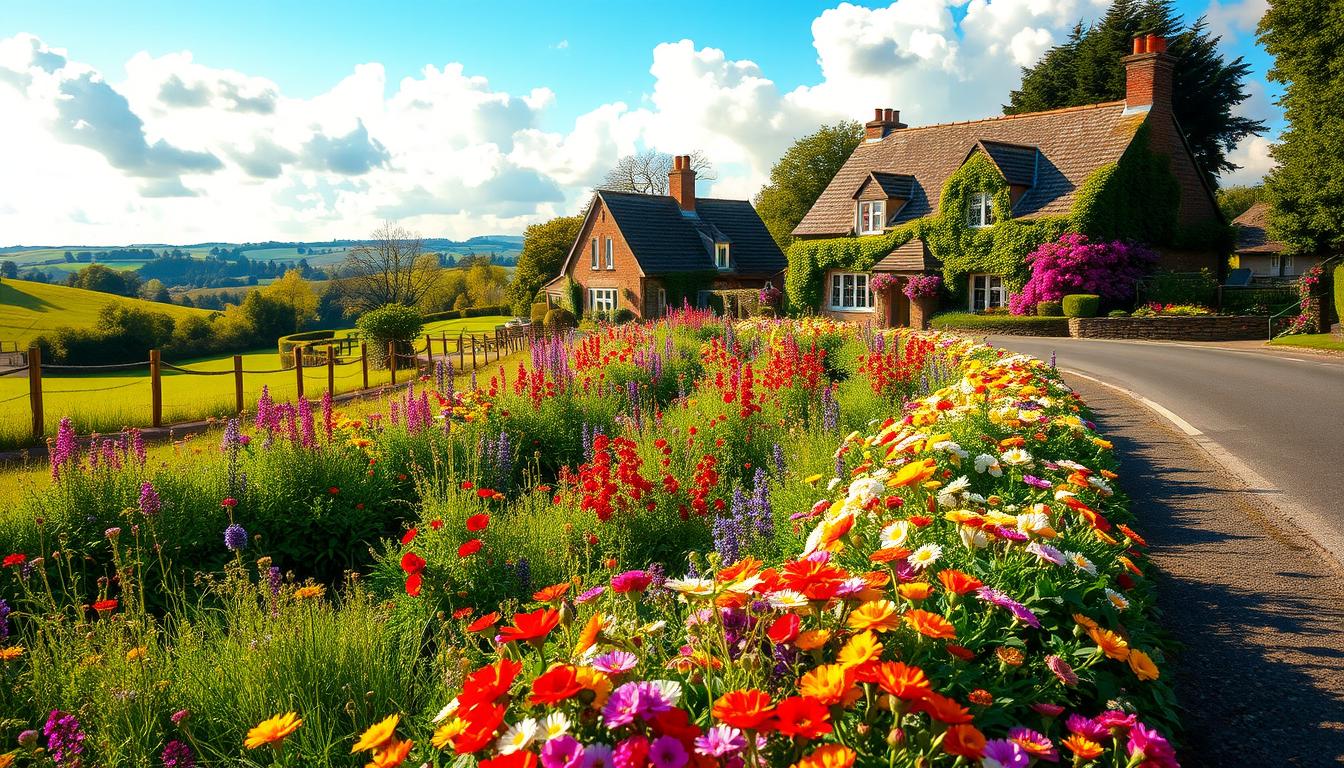
Roads are vital to our world, connecting us and meeting our needs. But, building them often harms the landscape. Wendell Berry notes that even simple roads disrupt nature.
Yet, from destruction comes new life. Nature heals by covering the scars with roadside wildflowers. Planting flowers along roads does more than make them pretty. It also helps wildlife and beautifies our surroundings.
Street gardens are key to a better environment and community spirit. They show us the value of roadside gardens in our lives.
The Importance of Street Gardens
Street gardens are more than just a pretty view; they play a key role in supporting local ecosystems. By using native plants and wildflowers, we can create vibrant habitats. These habitats support a wide range of wildlife.
“Roadside gardens can be a haven for native plants and wildflowers, providing a splash of color and a haven for wildlife,” as noted by a recent study. These areas are not just aesthetically pleasing; they are vital for the survival of certain species. These species rely on these gardens for food and shelter.
Native plants are well-suited for street gardens because they are adapted to the local climate and soil. They require less maintenance. They also provide a source of food and shelter for native animals, such as birds, bees, and butterflies.
The importance of street gardens extends beyond their ecological benefits. They also play a significant role in making our urban landscapes more beautiful. As one expert puts it, “These areas can be critical for the survival of certain species.”
Street gardens can serve as corridors for wildlife, connecting isolated habitats. This allows species to migrate and interact. This is important in urban areas where natural habitats are often fragmented.
By investing in street gardens, we are not only beautifying our roadsides. We are also contributing to the health of our local ecosystems. As we move forward, it’s essential to continue promoting the use of native plants and wildflowers in these gardens. This will maximize their ecological benefits.
Choosing the Right Flowers
Choosing the perfect flowers for your street garden can be tough. But, knowing the benefits of native plants helps a lot. Native plants grow well in local conditions, needing less care and upkeep.
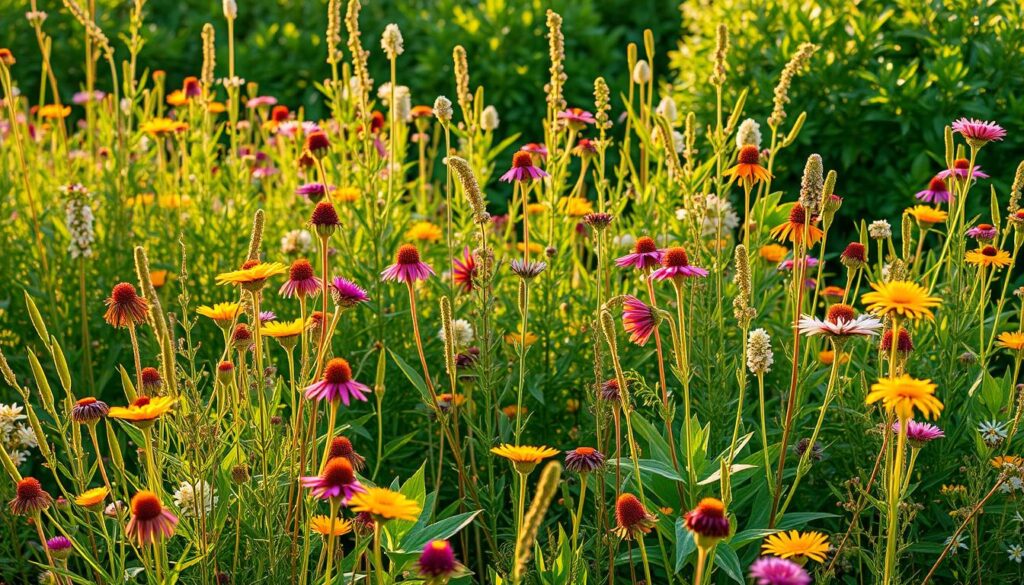
Native plants adapt easily to local weather and soil. They need less water, pruning, and fertilizer. This makes them perfect for those who are busy or new to gardening.
Benefits of Native Plants
Native plants fight off local pests and diseases well, cutting down on pesticide use. As John Smith, a renowned horticulturist, says, “Native plants are the heart of a healthy garden.”
“Using native species in gardening projects not only enhances biodiversity but also supports local ecosystems.”
Native plants in street gardens help the environment. They create a home for bees, butterflies, and birds. This makes your garden a haven for wildlife.
Adding native plants to your garden is good for the planet and makes your space beautiful. As gardening expert Jane Doe points out, “Native plants add a special charm to any garden.”
Planning Your Street Garden
Creating a stunning street garden needs careful planning. It’s more than just planting flowers by the road. It’s about designing a beautiful landscape design that makes the area look better.
Before planting, you must assess the site. Look at the soil type, sunlight, and what plants are already there. Experts say, “Knowing the soil and sunlight is key to picking the right plants.”
“The right plant in the right place can make all the difference in the success of your roadside gardens.”
Good planning makes your garden beautiful and sustainable. Think about how much care it will need and choose plants that fit the local weather. This way, you can make a roadside garden that makes everyone happy.
Planning also means looking at the site’s current state. Check if there are wildflowers that show the area’s natural beauty. This helps you create a garden that fits well with nature.
By following these steps, you can make a street garden that looks great and is good for the environment. With the right planning, your roadside gardens will become a beloved part of the community.
Planting Techniques for Success
Starting a street garden right is key. It’s all about the planting techniques. You need to prepare the soil, pick the right method, and take care of it after.
Soil Preparation is a must. Test the soil type and pH level. If it’s too alkaline, add compost to balance it. Good soil means better drainage, aeration, and nutrients for plants.
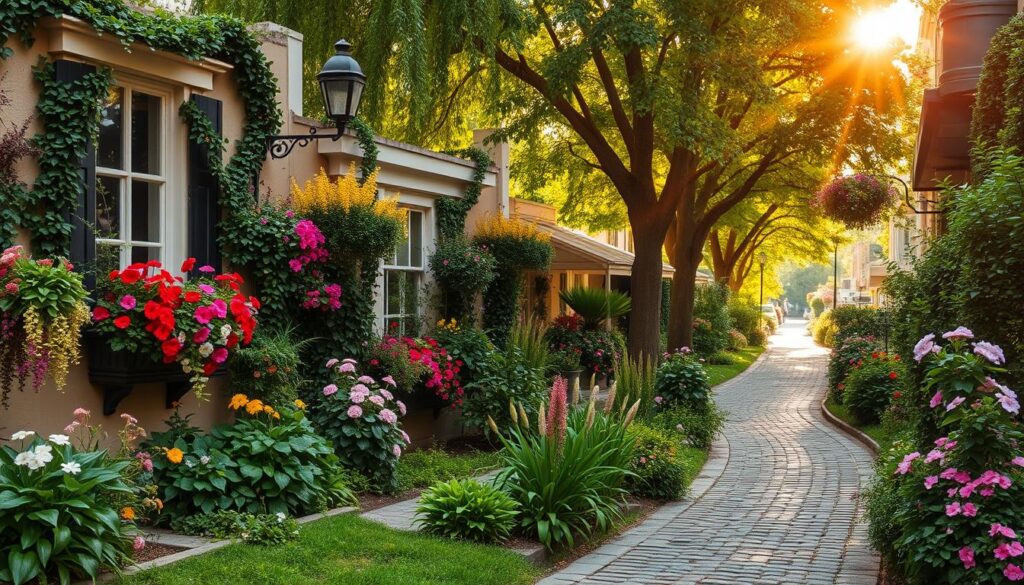
Choosing the right plants is important. Native species are best for street gardens. They need less care and help local wildlife.
The planting method matters too. Mix plants with different growth habits for a beautiful garden. Make sure to space them right for air to flow.
“The garden is a love song, a duet between a human being and Mother Nature.” – Jeff Cox
Aftercare is key to a healthy garden. Water, mulch, and prune regularly. Watch for pests and diseases to keep your garden healthy.
With the right techniques and care, your street garden will flourish. It will make your community more beautiful and bring pride to everyone.
Maintenance Practices for Street Gardens
To keep your roadside gardens looking great, regular care is key. It’s not just about looks; it’s also vital for the garden’s health and life span.
Regular Mowing: For gardens with grassland wild flowers, mowing twice a year is best. This keeps the variety of plants balanced and stops one type from taking over.
Watering Wisely: Wild flower plug plants need enough water, but too much can harm them. So, it’s important to water them right.
Controlling Weeds: Weeds can crowd out the plants you want in your gardening project. Pulling weeds by hand or using the right herbicides helps keep things balanced.
By sticking to these care tips, your roadside gardens will stay lively. They’ll also keep on giving back to the community and nature.
Engaging the Community in Gardening
Turning a street garden into a lively public space is possible with community involvement. When people help plan and care for the garden, they feel a sense of belonging. This leads to community pride.
One great way to get people involved is through community gardening workshops. These workshops teach about green gardening, plant care, and the value of urban green spaces. Participants learn by doing, gaining skills to help with the garden.
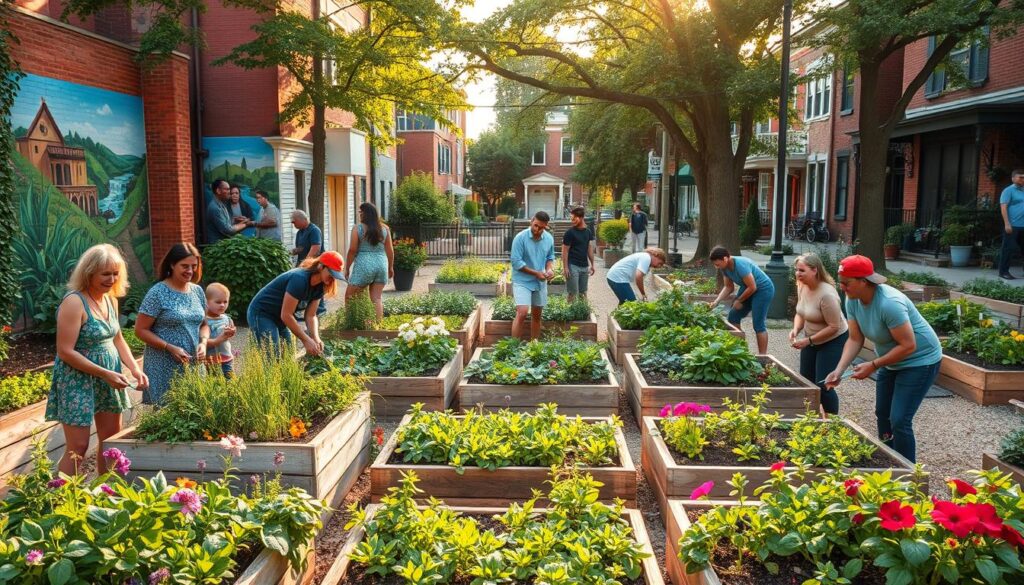
Hosting community events in the garden is another good idea. Events like garden tours, plant sales, and environmental workshops draw in many people. They help spread the word about the garden and encourage more to join in. It’s also a chance to team up with local businesses, schools, and groups, making the garden’s impact even bigger.
Getting local schools involved is very beneficial. Schools can use the garden in their lessons, teaching kids about plants, nature, and helping others. This makes learning fun and teaches kids to care for the environment early on.
To keep the garden thriving, setting up a community-led garden committee is key. This group handles upkeep, plans events, and decides on the garden’s future. By letting the community lead, the garden truly becomes a place that reflects local values and needs.
Getting the community involved in gardening does more than just make the area look nice. It strengthens bonds within the community. Working together on a garden project fosters a shared sense of purpose and pride in the neighborhood.
Funding Your Street Garden Project
Finding money for your street garden is key. There are many ways to get funds. Getting enough money is vital for your garden’s success.
Looking into local grants is a good start. Many places give out grants for community gardens. These grants help make public spaces better and support the environment.
Community fundraising events are also great. Events like runs, bake sales, or auctions can bring in money. They also help get people talking about your garden.
Partnering with local businesses is another smart move. These partnerships can help with money and resources. They also give businesses good PR while helping your community.
Using different ways to get money helps your garden last long. Being creative and proactive in finding funds is important.
Utilizing Technology in Gardening
Technology has changed how we garden, making it easier to plant, care for, and enjoy our gardens. Gardening apps help us identify plants, check the weather, and get gardening tips. This makes gardening more effective than ever.
Smart gardening tools are a big step forward in gardening technology. They automate tasks like watering, pruning, and fertilizing. For example, smart irrigation systems adjust watering based on the weather. This ensures plants get the right amount of water.
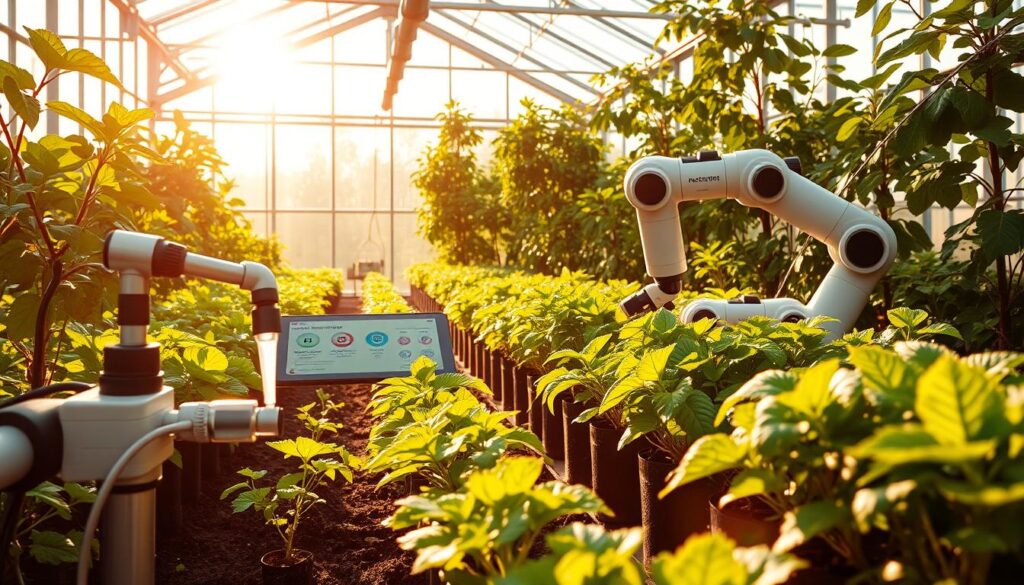
Online forums and social media groups are great for gardeners. They let us share knowledge, tips, and show off our gardens. This builds a community and encourages more people to garden.
Technology also helps us learn about gardening online. We can find tutorials, webinars, and e-books. This information helps gardeners of all levels improve and solve problems.
In summary, technology has made gardening easier and more enjoyable. By using these tools, we can create beautiful, sustainable gardens.
Environmental Impact of Street Gardens
Street gardens have many benefits for the environment. They help local wildlife by providing homes. This makes the ecosystem healthier.
These gardens also cut down on pollution in cities. Plants take in carbon dioxide and make oxygen, making the air cleaner. They also cool the air by providing shade and through evapotranspiration.
Experts say urban green spaces, like street gardens, are key for urban balance. They choose plants that look good and help local animals.
Street gardens also reduce noise pollution, making cities quieter. They help keep the soil in place, preventing erosion and keeping it healthy.
“Green infrastructure, such as street gardens, is essential for creating sustainable and livable cities.”
In summary, street gardens have a big impact on the environment. By adding them to cities, we can improve biodiversity, lower pollution, and make cities better places to live.
Inspiring Success Stories
Street gardens have changed urban areas in the United States. They turn old roads into lively spots that help communities and protect the environment. The third source shares amazing examples of roadside gardens and wildflowers, showing their beauty and what they can do.
The High Line in New York City is a great example. It’s a park built on an old rail line. This project has made the area better and inspired others to do the same across the country.
These stories show how street gardens can unite people and make the environment better. We hope to inspire readers to start their own street gardens. This way, they can help improve their communities through Street Garden initiatives.