
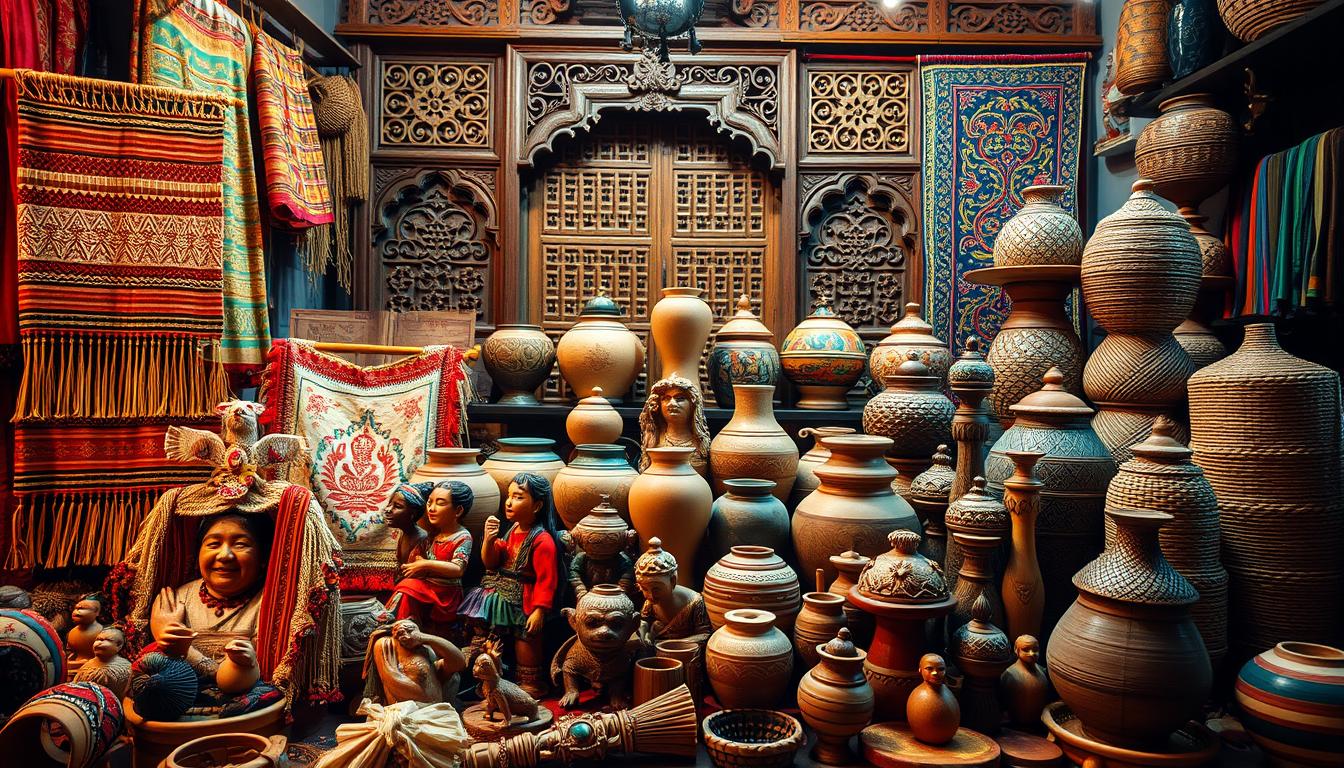
As the end-of-year holidays approach, the importance of handmade cultural crafts grows. These unique pieces hold deep cultural meaning. They showcase the rich cultural heritage of many communities.
The idea of traditional crafts has changed over time. It has adapted to new needs and values while keeping its cultural heart. These crafts are more than objects. They carry the history, traditions, and values of their makers.
In this section, we’ll look at the role of handmade cultural crafts today. We’ll see their importance across cultures. And we’ll explore the different types of crafts that fit into this category.
Understanding the Importance of Cultural Crafts
Handmade cultural crafts are more than just objects. They show a culture’s values and traditions. These crafts tell a community’s story, passed down through generations.
The cultural significance of these crafts is huge. They represent a community’s cultural identity. They carry symbolic meanings, showing the community’s beliefs and traditions. For example, pottery, weaving, and woodcarving are not just crafts. They carry cultural stories and histories.
Traditional art forms are key in keeping cultural heritage alive. They help pass down cultural knowledge and skills. These crafts also use traditional symbols, patterns, and motifs with deep meanings, adding to the cultural story.
Cultural crafts play a big role in promoting cultural understanding. By keeping and sharing these traditional art forms, communities can show their cultural identity to the world. This helps build understanding and appreciation among different cultures.
In conclusion, cultural crafts are not just old relics. They are living parts of a community’s cultural identity and heritage. By understanding and valuing these crafts, we can learn more about the cultural significance and traditional art that shape our world.
Materials Commonly Used in Cultural Crafts
Cultural crafts use a variety of materials, each with its own special qualities. Artisans pick materials based on tradition, what’s available, and what they want to create.
Traditional materials are key in cultural crafts. Fiber, fabric, wood, clay, metal, glass, paper, and animal hides are often used. For example, weaving uses fiber and fabric, while woodworking and pottery use wood and clay.
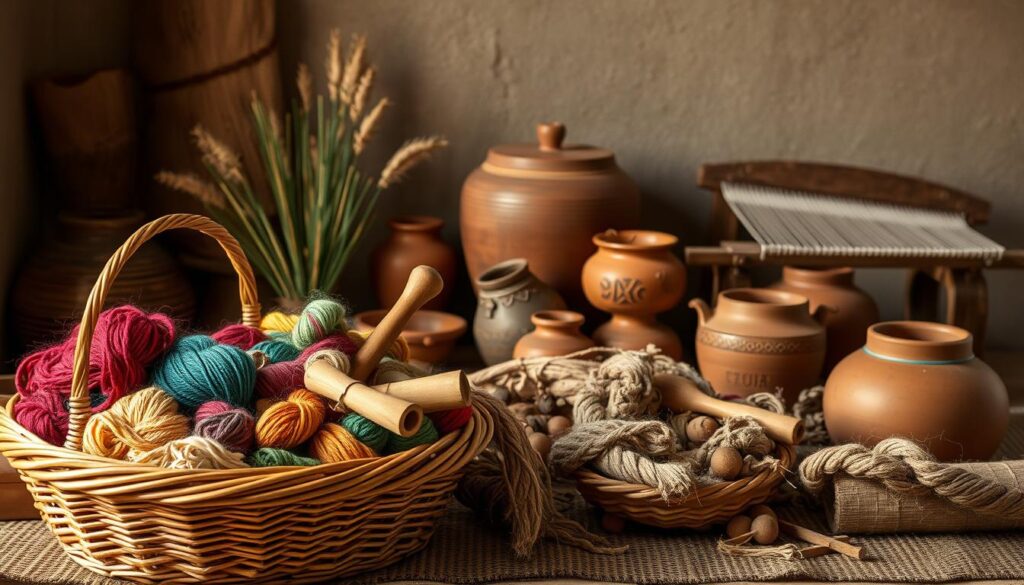
The material choice depends on the craft techniques used. Metalworking needs special tools and skills, while paper crafting is more flexible. Artisans must know the properties and limits of their materials.
Examples of Crafts and Their Materials
Crafts made from these materials are both useful and carry deep cultural meaning. Native American cultures are famous for working with animal hides, making leather clothes and accessories. Many Asian cultures have a long history of making beautiful textiles from silk and other fabrics.
The use of these materials and craft techniques has been passed down through generations. It shows the artisanal skills that are highly valued in many cultures. By understanding and appreciating these materials and techniques, we can see the cultural importance of handmade crafts.
Popular Types of Cultural Crafts in the U.S.
The U.S. is filled with cultural crafts, from Native American beadwork to Southern quilts. These crafts are beautiful and show the country’s rich cultural heritage.
Different parts of the U.S. have their own craft traditions. The South is known for its quilts, which tell family stories. Native American communities are famous for their beadwork, a key part of their folk traditions.
Other areas have their own crafts too. New England is famous for woodcarvings and furniture, showing its European roots. The Southwest is known for its colorful pottery, blending Native American and Spanish styles. These regional crafts help local economies and keep cultural identities alive.
Crafts connect us to our heritage and past. They are a way to share stories and traditions. They show America’s history, diversity, and creativity.
In summary, the U.S. is rich in cultural crafts, showing its diverse culture. By keeping these folk traditions alive, we ensure their stories and skills continue to thrive.
Techniques for Crafting Handmade Cultural Artifacts
Traditional crafting techniques are key to handmade cultural artifacts. They show the skills of our ancestors. These methods, passed down through generations, help us keep a strong link to our heritage.
Creating these artifacts requires knowing the materials and methods well. Crafts like woodworking, weaving, and pottery need a lot of skill and precision. Artisanal skills take years to master, and each technique is unique to certain cultures.
Passing Down Techniques Through Generations
Teaching traditional crafting techniques to the next generation is vital. It teaches both the technical skills and the stories behind the artifacts. This keeps our cultural heritage alive and connected to our past.
Artisans often learn through apprenticeships or family traditions. This hands-on learning ensures the techniques are learned in context. It also makes the artifacts more than just objects; they carry our cultural heritage.
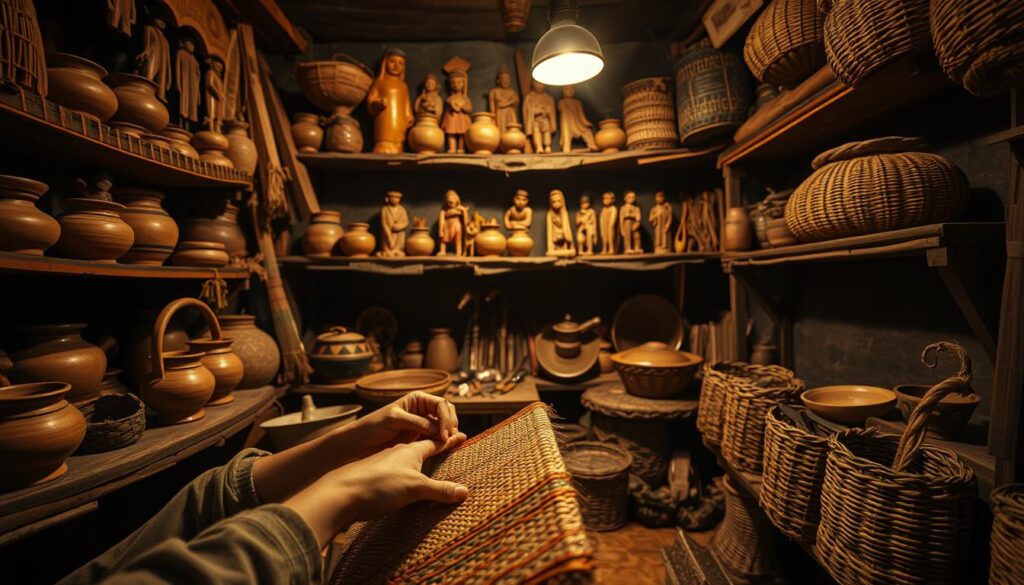
In conclusion, the techniques for making handmade cultural artifacts showcase our artisanal skills and traditions. By keeping these techniques alive, we ensure our cultural heritage remains rich and diverse.
Tools You Need for Crafting
To bring cultural crafts to life, artisans use a variety of specialized crafting tools. These tools are often handmade or designed with specific techniques in mind.
The tools needed can change a lot based on the craft and materials. For example, woodworking needs chisels and carving tools. Textile crafts might require looms or embroidery needles. These artisan techniques are passed down through generations, with each tool being key to the crafting process.
The craftsmanship in making these tools is impressive. Many artisans create their own tools or get them made by local craftsmen. This adds another layer of traditional crafts to the process.
Knowing the tools needed for different crafts improves the crafting experience. It also increases one’s appreciation for the artisanal skill involved.
Learning From Cultural Artisans
Cultural artisans are more than just craftspeople. They are the keepers of cultural traditions. They play a key role in keeping traditional crafts alive, sharing their knowledge with the next generation.
The role of cultural artisans is critical. They ensure cultural practices continue. By mastering artisanal skills, they greatly contribute to cultural preservation.
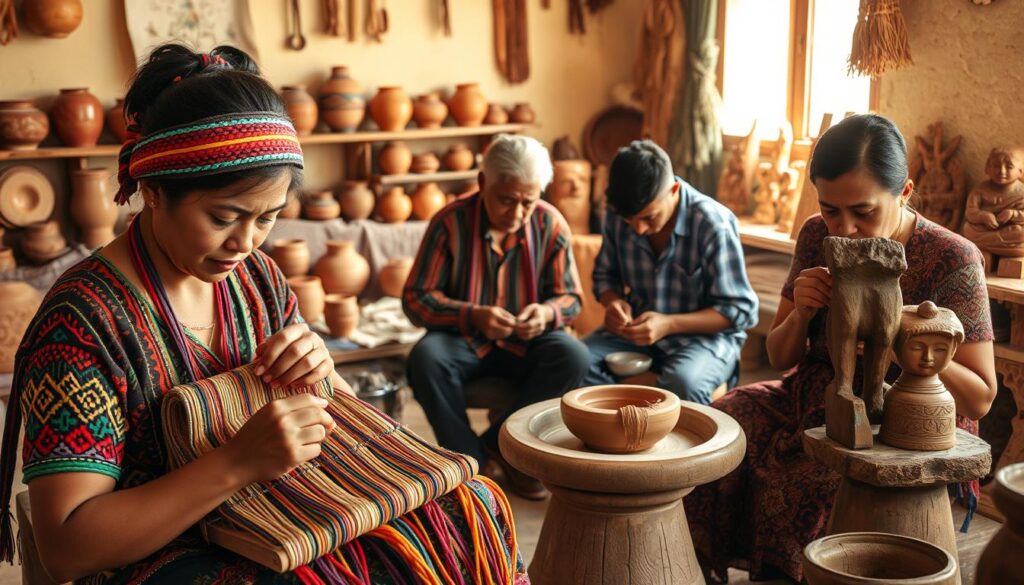
Learning from cultural artisans offers deep insights into traditional crafts. It shows the challenges artisans face in a fast-changing world.
Supporting cultural artisans helps keep cultural heritage alive. We can do this by promoting their work and preserving their traditional techniques.
The Economic Impact of Handmade Crafts
Handmade crafts are key in boosting local economies and keeping cultural heritage alive. When we buy from local artisans, we help our communities grow.
Artisans earn money from making and selling their crafts. This helps them and the whole community. It’s a win-win for everyone.
But, artisans sometimes struggle to get their crafts seen. Online shops and local fairs can help them sell more. This way, more people can enjoy their work.
Supporting handmade crafts also helps keep our culture alive. This can draw tourists, which helps local businesses even more. It’s a cycle of growth for both the economy and culture.
In short, handmade crafts have a big impact. They help local economies and keep our culture rich. By helping artisans, we ensure these traditions continue for the future.
Preserving Cultural Crafts Through Generations
Cultural crafts are a big part of who we are. Keeping them alive is a job we all must do together. Passing down traditional art from one generation to the next is key to keeping our cultural heritage alive.
One important way to save cultural crafts is through documentation. By writing down, taking pictures, and filming the craft’s techniques, materials, and stories, we create a treasure for the future. This can be in the form of written notes, photos, or videos.
Education is also very important. Teaching traditional crafts in schools and community centers helps young people learn these skills. Workshops, apprenticeships, and online classes are great ways to share this knowledge and keep these crafts alive.
Getting the community involved is another key part of saving cultural crafts. Community events like craft fairs and festivals let artisans show their work and teach others. These events help spread the word about our cultural heritage and build community pride.
The Role of Cultural Institutions
Cultural institutions, like museums and cultural centers, are also very important. They offer a place for artisans to display their work, teach classes, and document traditional crafts. By teaming up with communities and artisans, these institutions help protect our traditional art forms for the future.
In summary, saving cultural crafts for future generations needs a mix of documentation, education, and community involvement. By working together, we can make sure our cultural heritage stays vibrant.
Engaging with Cultural Craft Communities
Joining cultural craft communities helps people understand the cultural significance of handmade items better.
Being part of these groups helps us see the value of different cultural traditions. It lets artisans share their talents and knowledge. This way, everyone learns more about each other’s cultures.
More and more, we see local events celebrating cultural crafts. Craft fairs and workshops are great examples. They bring together makers and fans, helping everyone feel connected.
These gatherings are not just about seeing beautiful crafts. They’re also where people share their stories and keep cultural traditions alive.
“Crafting is not just about making things; it’s about sharing stories and preserving cultural heritage.”
Being part of these communities is very rewarding. You get to learn from skilled artisans and help keep cultural traditions alive. As these groups grow, they help us all understand and appreciate different cultures more.
Celebrating Crafting Events and Festivals
Crafting events and festivals bring cultural crafts to life. They engage communities and celebrate heritage. Artisans get to show their work, share techniques, and meet fans.
These events are key for keeping traditional crafts alive. They let artisans show off their skills. People get to see the craftsmanship and learn about the culture behind it. This helps artisans financially and deepens our appreciation for cultural heritage.
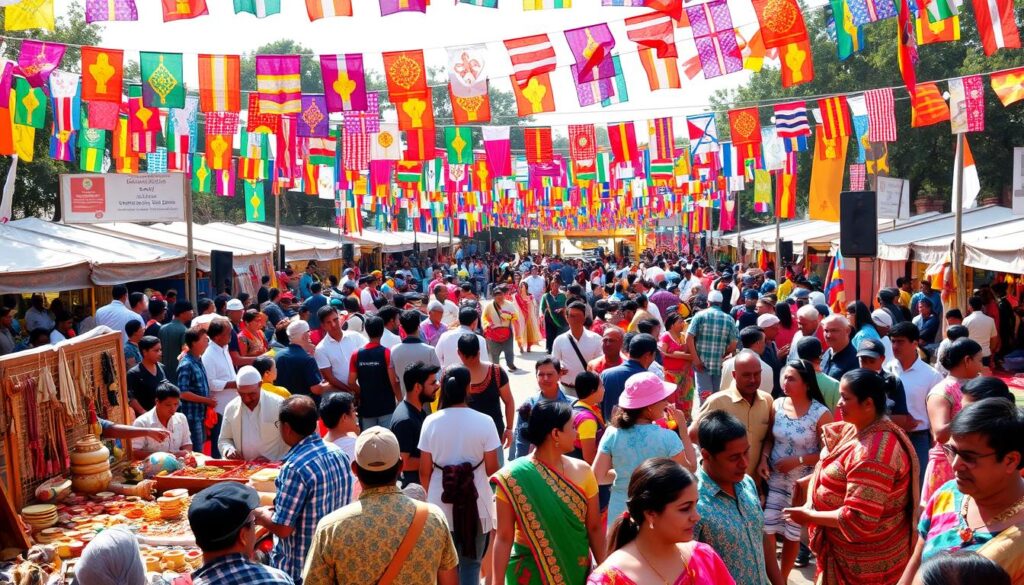
Events and festivals do more than just show off crafts. They also focus on keeping traditional techniques and stories alive. Festivals often have workshops, demos, and stories. This helps pass down knowledge from one generation to the next.
These events also help the local economy and tourism. They draw visitors from everywhere, helping local businesses and promoting cultural exchange. This boost is vital for keeping traditional crafts going, as it gives artisans the support they need.
In short, crafting events and festivals are essential for preserving and promoting culture. They celebrate cultural crafts and help keep them alive. These events are vital for fostering appreciation, understanding, and support for traditional crafts.
The Future of Cultural Crafts
In today’s fast-changing world, cultural crafts must adapt while keeping traditional skills alive. Many things shape the future of cultural crafts, like globalization, new tech, and changing tastes.
Cultural heritage is key in defining who we are and our communities. Keeping artisanal skills alive is more important than ever. A famous artisan once said, “The future of cultural crafts depends on our ability to innovate and stay true to our roots.”
“The key to the future of cultural crafts lies in our ability to innovate while staying true to our roots.”
Globalization affects cultural crafts in many ways. It opens doors for craftspeople to reach more people. But, it also makes it hard to keep traditional practices alive when cheaper, mass-produced items are everywhere.
Technology is both a blessing and a curse for cultural crafts. Digital platforms help artisans show and sell their work. Yet, it’s easy for crafts to be copied and sold online, leading to copyright and cultural appropriation issues.
To tackle these problems, many efforts are underway. There are workshops on keeping traditional skills alive, online spaces for artisanal goods, and programs to get communities involved in cultural crafts.
Looking ahead, finding a balance between new ideas and old traditions is key. By embracing change and respecting our heritage, cultural crafts can flourish. They will keep their traditions alive for generations to come.
Resources for Aspiring Craftspeople
Aspiring craftspeople have many resources to improve their skills and meet others who share their interests. Online tutorials and workshops make learning traditional crafts easy. Community programs offer hands-on learning and guidance from experts.
Crafting communities, both online and offline, are key in supporting crafters. They are places to share knowledge, show off work, and learn from others. By joining these communities, crafters can get valuable tips and keep up with new trends in traditional crafts.
For skill development, there are many resources like crafting books, YouTube channels, and social media groups. Many organizations also run classes and workshops. These are taught by skilled artisans who share their knowledge in traditional crafts.
By using these resources, aspiring craftspeople can improve their craft, grow in confidence, and join a community that values handmade cultural crafts.