
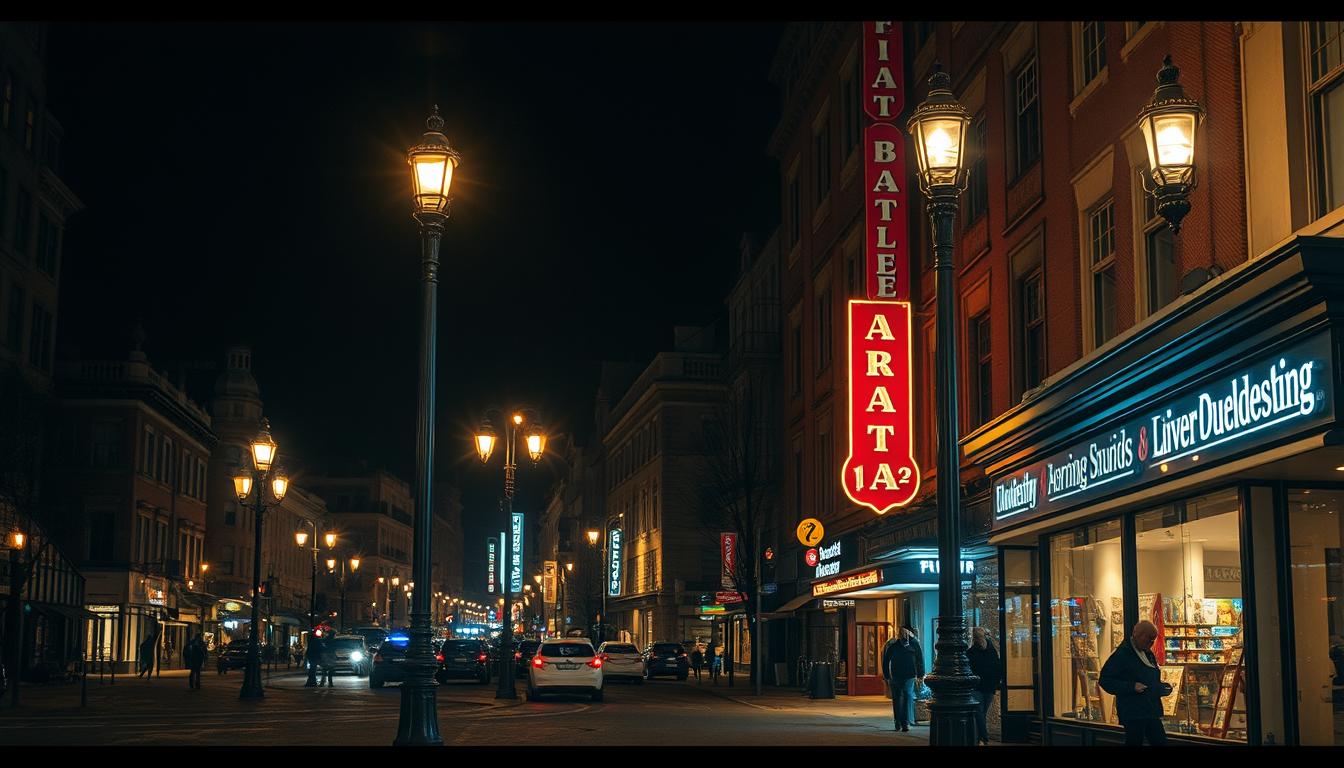
The glow of urban illumination has silently watched our progress and stories through history. It has lit up everything from grand religious buildings to the magic of movies. Lighting has been key in shaping our culture and daily lives.
City Lights mean more than just light. They are a big part of our cities. Looking into lighting history shows how it has changed our lives. It affects how we live, work, and see the world.
The Birth of Urban Illumination
The history of city lighting is filled with innovation and hard work. Cities like Philadelphia and Boston led the way. They tried out different lighting technologies to make streets safer and more welcoming at night.
Boston’s lamplighters were key in the city’s lighting journey. They kept the gas lamps lit, showing great dedication and work ethic.
Boston’s Historic Lamplighters
The lamplighters did more than just light the streets. They symbolized Boston’s drive for progress. The switch from gas lamps to electric lighting was a big step forward in urban illumination.
Philadelphia and Boston’s efforts in lighting set a standard for other cities. Their early work in lighting technology helped shape today’s cityscapes.
City Lights: A Symbol of American Progress
City lights are a big part of what makes America special. They show progress and new ideas. The lights that light up cities at night show how far the country has come.
In the early 1900s, electric lights changed how cities looked at night. This was the start of a new time. Cities like New York and Las Vegas became famous for their bright lights. They drew people from everywhere.

As cities got bigger, city lights became even more important. The lights on tall buildings and in public areas made cities look better. They also helped cities grow economically. “The city is a jungle, but at night, it’s a spectacle,” said urban historian John Smith. He showed how lighting changes a city.
“Light is a powerful symbol, and in the context of American cities, it represents hope, progress, and the relentless pursuit of innovation.”
City lights have a big effect on American culture. They have inspired many artists, writers, and musicians. They show the hopes and dreams of Americans. As cities keep changing, city lights will keep showing American progress.
In short, city lights are more than just city features. They stand for American progress and urban development. As America keeps growing and coming up with new ideas, city lights will keep being important.
The Cultural Impact of Nighttime Illumination
Nighttime lighting has greatly shaped American cities. It turns streets into lively spectacles, creating a unique urban vibe. The lighting of cities deeply affects their culture and entertainment scenes.
Jazz Age Harlem After Dark
In the Jazz Age, Harlem was a beacon of African American culture. Its nightlife was a major attraction. The bright lights of jazz clubs and dance halls showed the era’s energy and helped spark a cultural rebirth.
Places like the Savoy Ballroom and the Cotton Club were filled with light. They created an electrifying and welcoming atmosphere.
“The Savoy Ballroom was known as ‘the Home of Happy Feet’ due to its lively atmosphere and the energetic dance styles that flourished there.”
Los Angeles Nightclub Scene
Los Angeles also has a rich nightlife history. Its nightclubs are key spots for cultural expression and fun. These clubs, with their fancy lighting, have shaped music and dance scenes. They’ve hosted famous performers and influenced culture.
Nighttime lighting does more than just look good; it turns cities into cultural centers. As cities grow, the mix of lighting, culture, and fun will keep defining their identity.
The Golden Age of Neon
Neon signs started appearing in cities, marking a new era of lighting. The Golden Age of Neon brought a burst of color to city skylines. Neon lighting became a key part of urban beauty.

In the early 20th century, neon lighting changed city nights. It was more than just light; it was an art that made cities unique. Neon signs became symbols of cities, showing their culture and creativity.
Neon’s effect on urban aesthetics was huge. It turned city streets into colorful scenes, making nights better. Cities tried to outdo each other with their neon displays, making it a key part of their look.
The Golden Age of Neon was a time of big change and cultural impact. It shaped how cities look and feel today. Its influence is seen in urban design and lighting even now.
When the Lights Went Out: Blackouts and Their Stories
When city lights fade, a community’s true character is tested. Blackouts, though unexpected and often inconvenient, unite people. In the dark, communities show their strength and support for each other.
During big blackouts, like those from severe weather or infrastructure failures, neighborhoods become close-knit. People check on neighbors, share light, and gather in public spaces. These moments show the human side of resilience in tough times.
The stories from these events show the power of community bonds. From the Great Northeast Blackout of 2003 to recent ones, darkness brings unity and cooperation. Even without city lights, people come together.
These experiences teach us about past and future challenges. By looking at blackouts stories, we learn about resilience and community unity.
City Lights as Beacons of Hope
City lights shine as beacons of hope, showing resilience and community spirit. This was clear after two big disasters: Hurricane Katrina in New Orleans and the blackout in Puerto Rico.
New Orleans After Katrina
Hurricane Katrina hit New Orleans hard. Bringing back the city lights was key to recovery. As lights came back, so did hope for the future.

The lights in New Orleans were more than just light. They showed the community’s will to rebuild. A resident said, “The lights coming back felt like a warm hug. It made us feel we’d be okay.”
Puerto Rico’s Long Road to Illumination
Puerto Rico struggled with blackouts after Hurricane Maria. Slowly, electricity and lights came back. The twinkling lights of San Juan’s skyline became a symbol of hope.
The return of lights in New Orleans and Puerto Rico shows their importance. They represent not just physical recovery but also emotional and psychological strength. City lights are key in the story of recovery and hope.
The Environmental Challenge of Urban Lighting
Urban lighting poses a big challenge to both wildlife and the night sky. As cities grow, the impact of lighting on the environment gets worse.
Urban lighting greatly affects urban wildlife. Birds, turtles, and insects use natural light to navigate and breed. Artificial light can mess with these natural cues, causing confusion and behavior changes. For instance, sea turtles in coastal cities get lost because of beachfront lights.
In American cities, efforts are underway to lessen the harm of urban lighting on wildlife. They use wildlife-friendly lighting that’s less intense and warmer. This helps reduce the disruption to natural behaviors.
The Vanishing Night Sky
Too much urban lighting also causes light pollution, hiding our view of the night sky. This affects not just astronomy but also our culture and spirituality. The night sky has inspired and guided us for centuries.
Cities are using smart lighting technologies to fight light pollution. They dim or turn off lights when not needed. They also use shields to direct light downwards, cutting down on skyglow.
Finding a balance between beautiful urban lighting and its environmental impact is a big challenge. Cities are working to use more sustainable lighting. This way, they can lessen their environmental impact while keeping their unique charm.
Smart City Illumination: The Digital Revolution
Cities are moving into a new era of lighting technology. This change is not just about saving energy. It’s about making cities more sustainable, livable, and connected.
The digital revolution in city lighting brings smart LED systems. These systems do more than just light up the night. They can be controlled and adjusted in real-time. This lets cities manage energy better and meet various urban needs.

San Francisco’s Bay Bridge Light Installation is a great example. It made the Bay Bridge look better and used less energy. It also improved safety with advanced LED technology.
Denver’s Smart Street Lighting Program
Denver’s Smart Street Lighting Program is another great example. It replaced old streetlights with smart LED ones. This cut down energy costs a lot. Plus, the lights can change intensity based on the time and other factors, saving even more energy.
San Francisco and Denver show how smart city lighting can change cities. By using new technologies, cities can become more sustainable and efficient. They can also better meet the needs of their people.
The future of urban lighting is exciting. It’s not just about new tech. It’s about making cities better places to live and connect. As more cities join this journey, we’ll see even more creative uses of smart lighting.
Iconic American Skylines After Dark
When the sun goes down, America’s cities light up, creating stunning skylines. The way lighting is used turns these cities into vibrant sights. They attract both locals and tourists.
City lights are key to the beauty of American skylines. Places like New York, Las Vegas, and San Francisco shine brightly. Their lighting designs make these skylines stand out after dark.
The lighted skylines are deeply meaningful to American cities. They show progress, innovation, and the country’s lively culture. People come to see these views, boosting tourism.
Also, new lighting tech makes cities’ displays better and greener. This change makes cities look better and helps the environment. It’s a win-win for both beauty and sustainability.
In short, the American skylines at night show the beauty of city lights. As tech keeps improving, these views will only get more amazing. They will keep being important for culture and tourism.
The Enduring Glow: How City Lights Continue to Shape Our Future
City lights have long been a key part of urban life, showing progress and new ideas. Looking ahead, these lights will keep shaping our places and stories.
New tech is changing how cities light up. Places like Las Vegas and New York are using digital lights to make cities look great. These lights also help cities grow and improve.
The future of city lights is about being green. Cities are working to use less energy and cut down on light pollution. They’re switching to LED lights and smart systems to be more eco-friendly.
As cities get bigger, city lights will mean even more. By using new lighting tech, cities can become lively and green. The light of city lights will guide us into a brighter future.