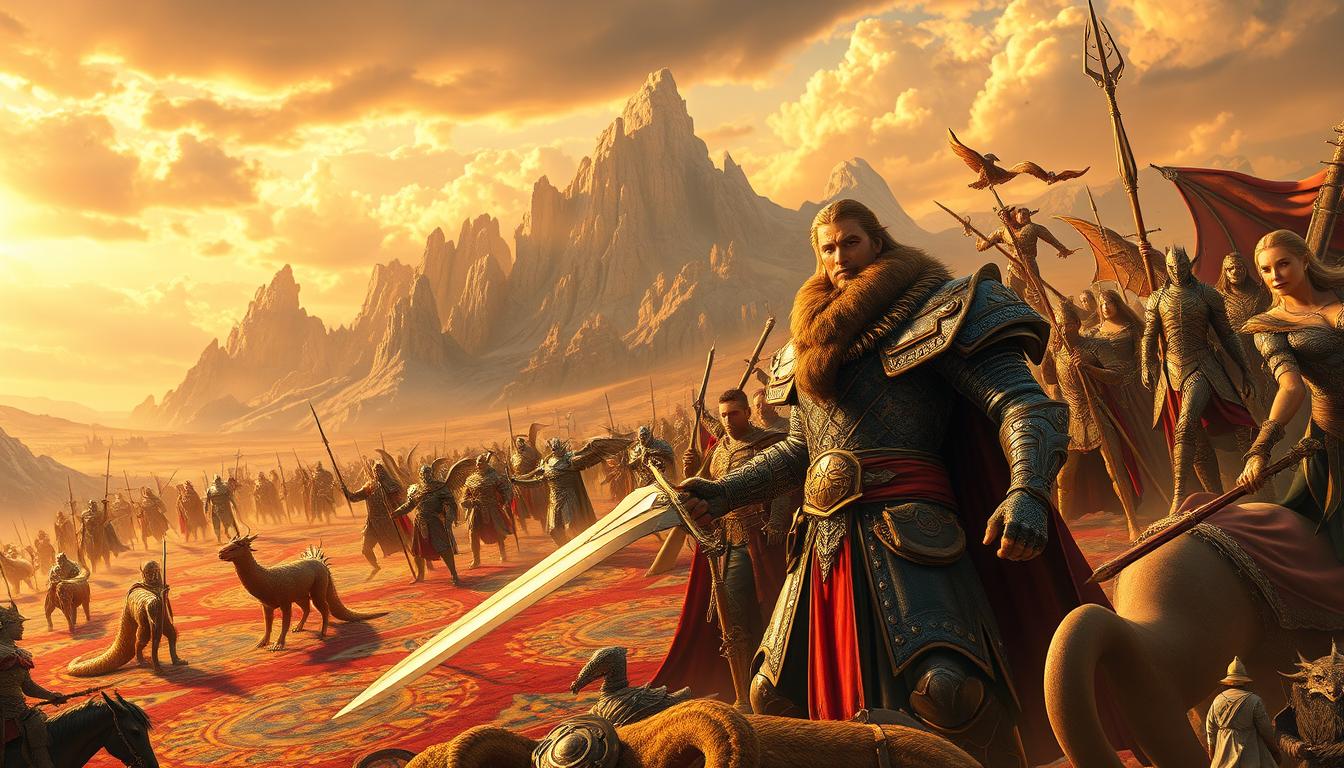
For centuries, legends and stories of heroes have been passed down. They shape our understanding of the world and our place in it.
These sacred tales, often called myths, teach, inspire, comfort, and warn us. They carry the wisdom of a culture and connect us to the past.
Exploring these stories helps us understand the values and traditions passed down to us. We learn about courage, perseverance, and what it means to be human.
This journey into the world of heroes and legends reveals their importance. It shows how these tales are relevant to our lives today.
Understanding the Concept of Myths
Myths have shaped cultures and explained the world for ages. They are stories filled with magic and passed down through generations.
These mythological stories do many things. They tell us about the world’s creation, heroes, and natural wonders. For example, Greek myths say Demeter and Persephone’s story explains the seasons. This shows how myths help us understand our world.
Myths also show us what ancient cultures believed and valued. They often tell of heroes who lived by certain moral codes. Like King Arthur in British myths, who stood for honor and chivalry.
The cultural significance of myths goes beyond history. They shape today’s culture, literature, and art. Knowing about mythology helps us understand our cultural heritage and how values have changed.
Looking at mythological stories from different cultures deepens our appreciation for human experience. Myths connect us, showing our shared human heritage, despite our differences.
The Origin of Heroic Myths
The roots of heroic myths lie in ancient cultures. Here, legendary figures were seen as demi-gods. In Greek mythology, heroes like Hercules and Perseus were celebrated for their incredible feats. These feats were seen as embodying the values and ideals of their time.
These heroic legends captivated the ancient Greeks. They played a key role in shaping their cultural identity. The worship of Greek heroes was a way to connect with their divine heritage.
Ancient Cultures and Their Heroes
Oral myths say most Greek heroes were demi-gods. This means they were half-human, half-immortal, being the offspring of Greek gods. Their unique status made their stories compelling and instructive.
“The hero is the one who kindles a great light in the world, who sets up the shining towers in the darkness of existence.” –
The reverence for these heroes shows the importance of heroic legends. They help us understand the values, beliefs, and history of past civilizations. By studying these myths, we learn about the cultural and historical roots of human societies.
In conclusion, studying heroic myths gives us a peek into the collective psyche of ancient cultures. It shows the lasting appeal of heroism and the legendary figures that represent it.
Common Myths About Heroes
The idea of heroes is often mixed with myths and misconceptions. This makes it hard to tell what’s real and what’s legend. These heroic misconceptions can change how we see what it means to be a hero.
Perseus, the son of Zeus and Danae, is a famous hero in Greek myths. His story shows how myths can both honor and confuse our view of heroism. His bravery, like beheading Medusa, is seen as a symbol of courage and cleverness.
But Perseus’s story also shows the complex side of heroes. His divine blood and help from gods like Athena and Hermes make us question his heroism. Is he truly a hero because of his own efforts, or because of his connections to the gods?
Myths about heroes like Perseus remind us of the importance of myth-busting. By looking into the stories and legends of heroes, we can understand the values and ideals they stand for.
The Role of Flaws in Heroic Stories
Heroism is often seen as perfect, but flaws are key to a hero’s story. Heroes in myths and stories have amazing abilities. But their flaws make them relatable and human.
Heracles, or Hercules, is a famous hero in Greek myths. He was the son of Zeus and a mortal, Alcmene. Even as a baby, he showed great strength. But his story also shows his heroic flaws that make him more like us.
Heracles’ flaws, like his temper and hubris, show the human side of heroes. Despite his strength, he was vulnerable to his emotions. This led to mistakes and tragic outcomes. His vulnerability makes him a complex and relatable character, showing the value of character development in heroic tales.
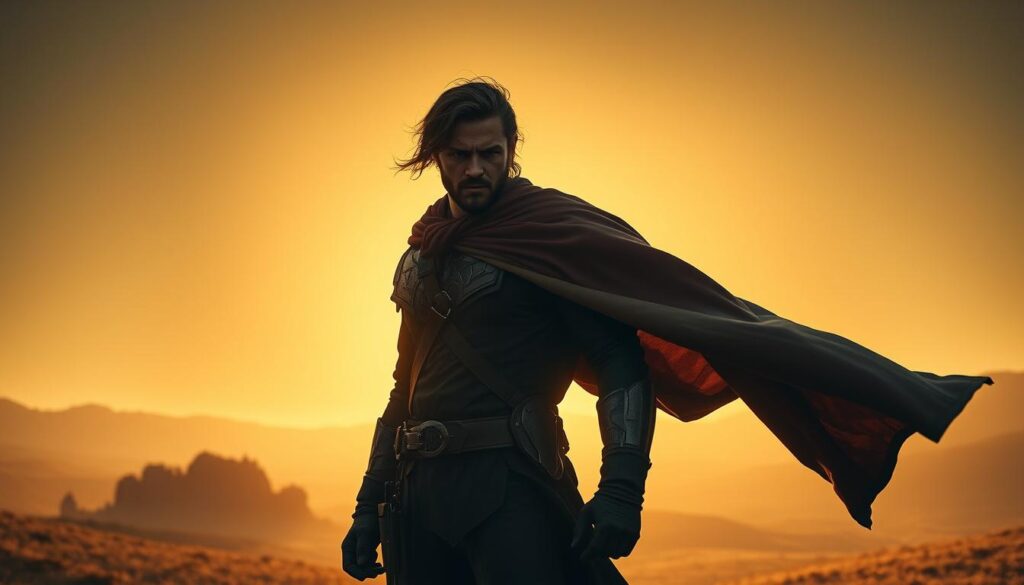
Flaws in heroic stories make these characters more relatable and lovable. By looking at heroes like Heracles, we learn more about being human and the true meaning of heroism.
Women in Heroic Myths
In heroic myths, women often play key roles. They shape the stories and the heroes. Andromeda, a princess from Ethiopia, is a great example. She was chained to a rock to be eaten by sea beasts.
Perseus fell in love with Andromeda while she was in danger. This shows Perseus’s bravery and Andromeda’s impact on him. It shows how women in myths can drive the story and influence heroes.
Andromeda is important because she fits the archetype of the damsel in distress. But she’s more than that. She shows how women can change the story. Her story with Perseus shows the complex relationships between heroes and women.
The story of Andromeda and Perseus shows the importance of female figures in heroic narratives. Women are not just passive. They are active and can change the story. In myths, women often represent qualities that heroes must face or strive for.
Women in myths have many roles. They are not just the hero’s goal. They can be wise, strong, and even the reason for the hero’s quest. By looking at mythological women, we understand heroic stories better and the cultures that created them.
Myths About Heroism and Sacrifice
Old stories are full of tales of heroism and sacrifice. They show the costs of doing great deeds. These stories have been passed down for generations, showing the lasting power of myth.
One famous story is that of Odysseus. He went on a long journey to get back home to Ithaca and his wife Penelope. Homer’s Odyssey tells this epic tale of heroic acts and the sacrifices made.
Odysseus faced many challenges on his journey. He battled mythical creatures and navigated dangerous seas. His story shows the sacrifice he made to reclaim his home.
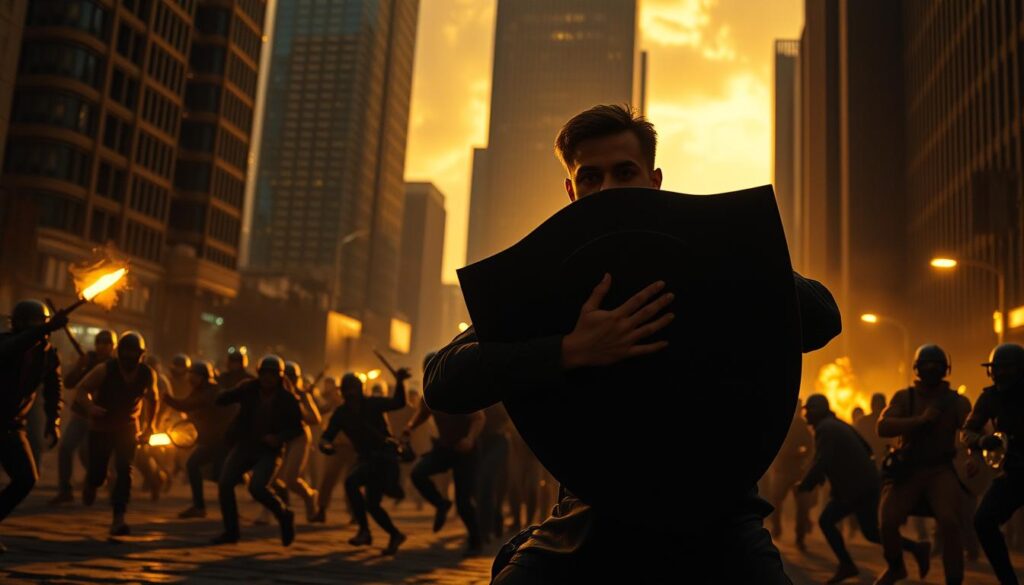
The story of Odysseus is more than just personal sacrifice. It shows the broader theme of heroism. It teaches us that heroes make tough choices and face hardships. This story has captivated people for centuries, giving us insights into heroism and humanity.
Looking at myths of heroism and sacrifice helps us understand human values and ideals. These stories inspire and shape our views on heroism today. They remind us of the value of courage, perseverance, and sacrifice.
Cultural Variations of Heroes
Cultural variations of heroes show the complex nature of heroism. Around the world, different cultures have their own heroes. Each hero reflects the values, beliefs, and dreams of their society.
Heroes everywhere share traits like courage, selflessness, and a readiness to sacrifice for others. But how these traits show up can differ a lot. For example, Hercules from Greece is known for his strength. On the other hand, Lei Feng from China is celebrated for his kindness.
Comparative mythology shows that many hero stories share common themes, despite cultural differences. The hero’s journey, as Joseph Campbell described, is a story found in many cultures. It tells of a hero who goes on a journey, faces challenges, and grows a lot.
The way a hero is seen can change based on the culture. In some places, heroes are seen as gods or semi-gods. In others, they are just ordinary people who did great things.
Commonalities among heroes across cultures include their bravery and commitment to a higher purpose. These shared traits show the universal appeal of heroism and how it inspires people everywhere.
In conclusion, the different ways heroes are seen in cultures show the richness and diversity of human culture. By exploring these differences, we can better understand the complexities of heroism and its impact on our values and beliefs.
Heroes in Modern Media
Heroes in today’s media are more than just characters. They show our hopes and fears. How heroes are shown has changed a lot, thanks to our society and culture.
The Percy Jackson series is a great example. It brings ancient myths to life for today’s readers. It makes classic stories exciting again for a new audience.

Modern heroism is complex and varied. It mixes old heroic qualities with today’s issues. Modern heroes often have flaws, making them easier to connect with.
The reimagining of heroic stories brings us different characters and stories. This variety is key in modern media. Heroic tales are found in books, movies, and TV shows.
Looking at heroes in today’s media helps us understand our society. Heroic stories remain important. They help us see what we value and hope for.
The Impact of Social Media on Hero Myths
In today’s world, social media is changing how we see heroism. Platforms like Twitter, Instagram, and Facebook have altered how we share and interact with hero stories.
Social media is a key tool for sharing brave tales. It lets stories of courage and sacrifice reach people all over the world. Hero myths are being reshaped as more voices are heard, challenging old ideas of heroism.
Social media lets us share heroic moments instantly. This makes it possible for anyone to become a hero quickly. As Joshua Greene, a psychologist, said, “Our moral compass is not fixed; it is shaped by the stories we tell and the actions we witness.” Social media plays a big role in shaping our moral compass.
“The true hero is not one who is never afraid, but one who faces their fears and emerges stronger.” –
Modern heroism is not just about big acts. It’s also about the small actions that inspire others. Social media shows these stories, broadening our view of heroism. By engaging with these tales, we help evolve modern hero myths.
As we move forward in the digital world, social media’s role in shaping heroism is clear. By embracing this change, we can create a more inclusive and diverse view of heroism.
Debunking the Hero Myth
The idea of heroism has long been wrapped in myth. It’s time to redefine what it means to be a hero. The myths of Greek heroes were key in Ancient Greek culture, bringing people together in a shared history. Yet, these myths often obscure the complexities of heroism, making it seem simple.
Challenging heroism means looking beyond the usual stories. It’s about seeing heroes’ flaws and weaknesses. It shows that heroism is not just about big acts but also about small, everyday choices.

Debunking hero myths helps us redefine heroes in a more real way. We see the true heart of heroism. It’s not about superhuman feats but about human courage, resilience, and kindness.
In the end, redefining heroes means seeing them in a more varied and real way. It’s about understanding that heroism can take many forms, reflecting the diversity of human experiences.
Conclusion: Redefining Heroism Through Myths
Myths inspire and teach us, showing us the cultures and values of the past. By looking at heroic stories, we learn about the lasting importance of heroism. We see how it has changed over time.
Myths help us value our cultural heritage. Heroic tales have shaped our views on bravery, sacrifice, and being human. They are key to understanding our culture.
Studying heroic myths helps us see the depth of heroism. It makes us think more about what it means to be a hero. As we keep using these stories for inspiration, we can rethink our own views of heroism.