Understanding different cultures is key in today’s world. Erin Meyer’s “The Culture Map” helps us navigate these differences. It uses a cultural map to show how cultures vary.
A cultural map lets us see and compare cultural differences. This makes communication and working together easier across borders.
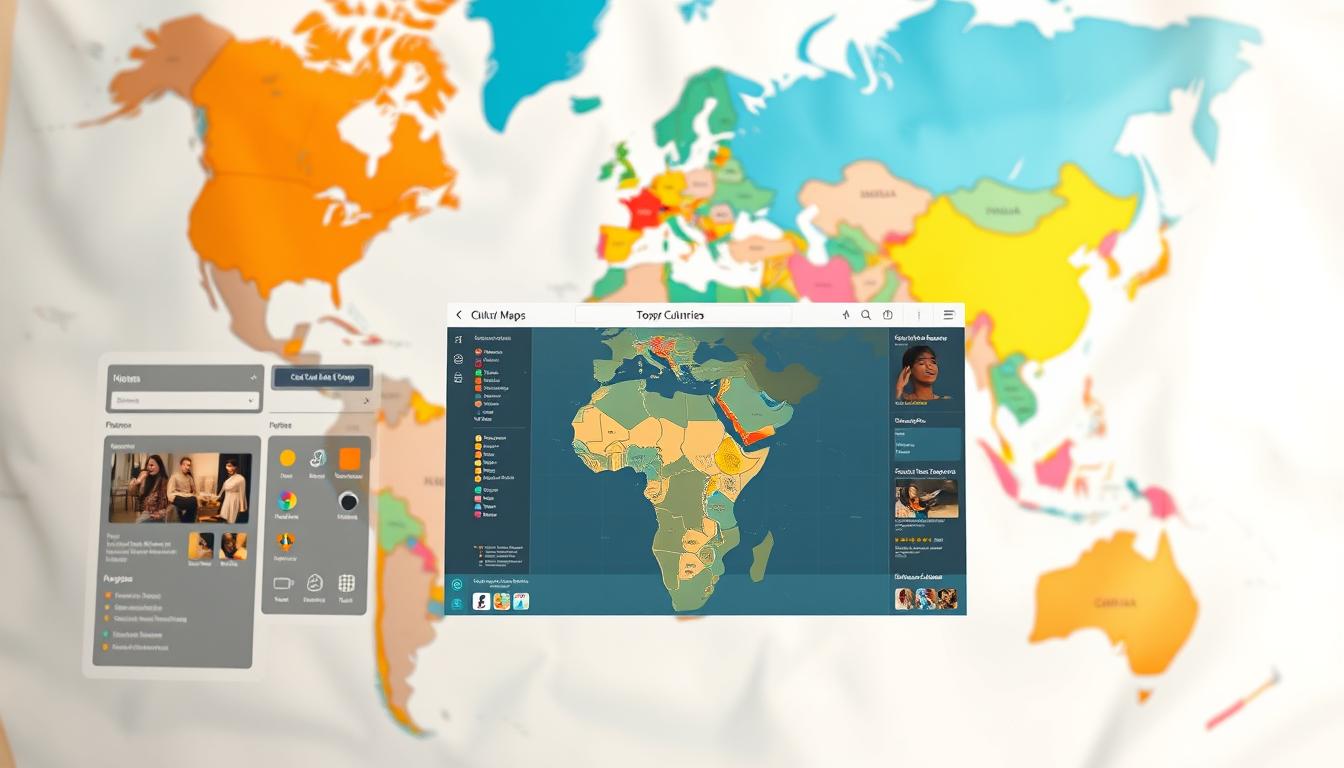
Tools like the Country Mapping Tool help us grasp cultural differences. They show how culture affects business, communication, and leadership.
Exploring cultural mapping opens doors to better global understanding and cooperation.
What Is a Cultural Map?
Understanding cultural maps is key to grasping global cultural diversity. A cultural map is a visual tool that shows cultural differences and similarities worldwide.
Cultural mapping is about creating these visual tools to compare and contrast cultural practices and values. It helps us see what makes each culture unique and how they interact.
The culture map definition goes beyond just where cultures are found. It includes the depth of cultural nuances like language, customs, and norms. This gives us a deeper understanding of cultural differences.
Cultural maps are great because they clearly show cultural differences. They help people and organizations work better in multicultural settings. This leads to better communication and teamwork.
In short, cultural mapping connects different cultures, making our world more harmonious and respectful. As our world gets more connected, knowing and valuing cultural differences through maps will become even more important.
The Importance of Cultural Mapping
As the world gets more connected, cultural mapping is key for understanding different cultures. It’s not just a tool; it’s a way to build global understanding and work together.
“Cultural mapping is a powerful way to show cultural diversity,” says a cultural mapping expert. This shows how important cultural mapping is today.
The benefits of cultural maps are many. They help businesses understand different cultures, teachers teach cultural awareness, and people connect across cultures. Cultural maps give insights that help make decisions.
In business, they help companies know what consumers want in different places. In education, they make teaching cultural studies better. For individuals, they help understand and respect cultural differences, leading to more tolerance and cooperation.
Cultural mapping is vital because it helps connect cultures and promotes global understanding. As the world changes, cultural mapping will play an even bigger role in helping us communicate and work together.
Key Elements of a Cultural Map
Cultural maps are key to understanding cultural differences. They focus on trust-building and decision-making. These maps help us navigate diverse cultures, giving us valuable insights for personal and professional interactions.
The key elements of cultural maps include dimensions that analyze cultural differences. These dimensions cover trust-building, feedback systems, and decision-making processes. Knowing these elements helps us better understand cultural nuances, leading to more effective communication and collaboration.
Analyzing Cultural Differences
Understanding cultural differences is a key part of cultural mapping. It involves looking at the dimensions of cultural maps that show how cultures differ. This analysis goes beyond broad categories, focusing on how cultures build trust, handle feedback, and make decisions.
For example, some cultures value direct communication and quick decisions. Others prefer building trust through personal relationships before discussing business. Knowing these differences is vital for accurate and nuanced cultural analysis.
By using these insights in cultural maps, we gain a deeper understanding of cultural landscapes. This understanding helps us navigate cultural differences more effectively. It leads to better outcomes in both personal and professional settings.
How Cultural Maps Are Created
Making cultural maps is a detailed process. It uses a cultural mapping methodology to gather and analyze data. This data includes cultural practices, beliefs, and values.
To collect data, researchers use surveys, interviews, and existing cultural data. They pick the best data collection methods for their goals.
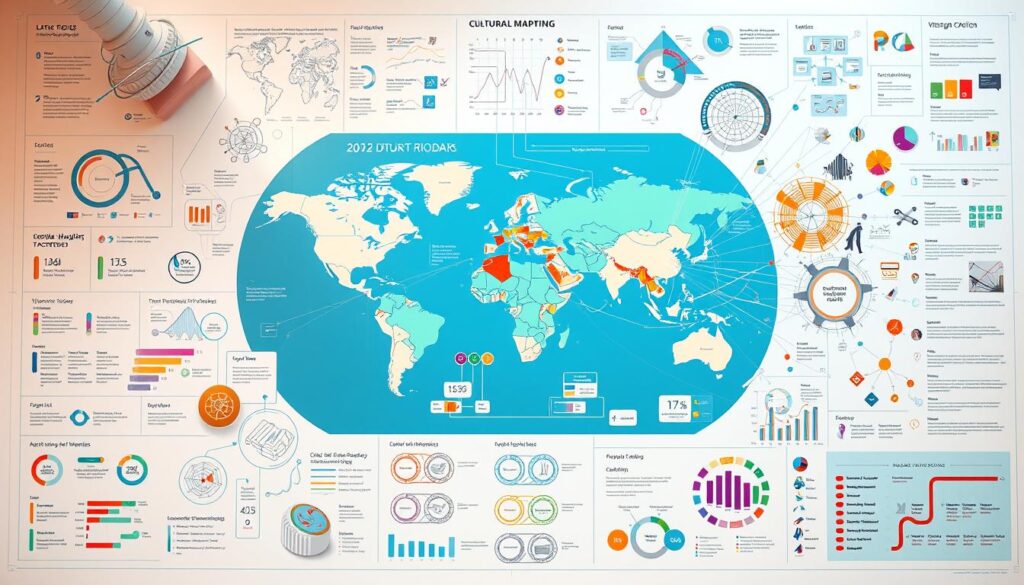
After collecting data, it’s analyzed to find patterns and trends. This is key to showing cultural differences on a map.
Key Steps in Data Analysis
The analyzed data is then used to create visual maps of cultural differences. Geographic Information Systems (GIS) and other mapping tools are used for this.
The last step is to refine the cultural map. It’s checked against known cultural knowledge and adjusted if needed.
This careful process helps create cultural maps. They offer insights into cultural diversity, promoting understanding and appreciation.
Technologies Used in Cultural Mapping
Digital mapping tools have changed how we see cultural landscapes. They help create detailed maps that show the complexity of cultural identities and practices.
Cultural mapping tools vary, from geographic information systems (GIS) to online platforms. These tools help show how cultural elements are spread out and connected.
Some important technologies in cultural mapping include:
Country Mapping Tool: This tool maps cultural elements at a national level. It gives insights into a country’s cultural landscape.
Personal Profile Tool: This tool lets people create a personal cultural profile. It shows their cultural affiliations and practices.
Corporate Culture Mapping Tool: This tool maps an organization’s internal culture. It helps find areas of strength and weakness.
These technologies have greatly improved cultural mapping. They help us understand cultural complexities better. By using these tools, researchers and practitioners can learn more about different regions and communities.
Examples of Cultural Maps Around the World
Cultural maps are everywhere, from local projects to global efforts. They help us understand and keep cultural heritage alive. They also promote sharing cultures with others.
The HonorShame.com map is a great example. It shows how different cultures practice around the world. These global cultural maps are key for researchers, teachers, and anyone who loves learning about cultures.
In the U.S., cities have their own cultural mapping projects. These involve local people to make sure the maps show the community’s true spirit.
Cultural mapping case studies show how maps can change things. They help in planning cities, teaching, and even in tourism.
The variety of examples of cultural maps shows how creative and innovative people can be. By looking at these maps, we learn more about the rich cultural scenes of our world.
Navigating the Cultural Map of the United States
The United States has a complex cultural landscape. It’s made up of history, geography, and societal values. To understand it, we must explore its many cultural sides.
The cultural map of the United States shows a mix of old and new. It reflects the country’s history of immigration and cultural exchange. From cities to countryside, America’s culture is rich and varied.
U.S. cultural mapping helps us see how different places and people shape American culture. It shows patterns and trends that define the nation.
American culture keeps changing. It’s influenced by new values, technology, and global trends. The cultural map of the United States helps us understand these shifts.
Looking at the cultural map helps researchers and policymakers. They can see the needs and views of various communities. This knowledge is key to building a more united and welcoming society.
The Role of Cultural Maps in Education
Cultural maps are a new way to teach, helping students become more aware of different cultures. They are used in schools to teach about the many cultures and places around the world. This helps students understand how different cultures shape our world.
The educational use of cultural maps does more than teach geography. It helps students understand and respect different cultures. This builds tolerance and empathy among students.
Cultural maps are used in schools of all levels to teach subjects like geography and history. They make learning fun and interactive, fitting different learning styles. This makes learning more engaging for everyone.
Using cultural maps also helps students think critically. They learn to compare and analyze different cultures. This deepens their understanding of their own culture and appreciation for global diversity.
In summary, cultural maps are key in teaching about different cultures and awareness. As educators look for new ways to teach, cultural maps will play a bigger role in education.
How to Read a Cultural Map
Understanding cultural maps is a skill that combines geography and culture. These maps offer deep insights into different societies’ practices, beliefs, and values. To read them well, you need to grasp the scales and dimensions used.
Cultural maps vary a lot, from simple outlines to detailed ones with cultural data. The scale shows how detailed the map is, from local to global. Knowing the scale helps you understand the cultural insights you can get from the map.
The dimensions of a cultural map show different aspects of culture. This can include demographics, cultural practices, and historical events. For example, a map might show where languages or religions are found. To understand these, you need to know the cultural context and how these factors work together.
When looking at a cultural map, pay attention to the symbols and legends. These are key to understanding the map’s data. Symbols can represent cultural practices or demographics, and legends explain what they mean.
Also, it’s important to analyze cultural maps critically. Think about the data source, how the map was made, and any biases. This careful analysis helps ensure the insights from the map are accurate and useful.
“Cultural maps are not just representations of geographical areas; they are windows into the soul of a culture, revealing the complexities and nuances that define human societies.”
Challenges in Cultural Mapping
Creating cultural maps is tough, with issues like data accuracy and cultural subtleties. One big challenge in cultural mapping is making sure the data is correct and trustworthy.
Cultural mapping deals with complex data, shaped by cultural complexity and personal views on culture. This can lead to maps that don’t fully capture the cultural scene.
Another big limitation of cultural maps is bias in data collection and interpretation. The people making the maps might bring their own cultural biases, which can skew how cultural info is shown.
The cultural complexity of a place is also a hurdle. Areas with many cultures, languages, and histories need detailed and accurate maps. This complexity makes it hard to create maps that are both detailed and easy to understand.
To tackle these issues, cultural mapping projects need to use careful methods and listen to many viewpoints. By recognizing the limitations of cultural maps and aiming for accuracy and inclusivity, cultural mapping can help us understand and keep cultural heritage alive.
Future Trends in Cultural Mapping
Cultural mapping is set to change a lot thanks to new tech. Artificial Intelligence (AI) and Machine Learning (ML) will make analyzing and showing data much better.
Using big data is a big trend in cultural mapping. It helps make cultural maps more detailed and accurate. This is done by using lots of data from places like social media.
“The future of cultural mapping lies in its ability to incorporate diverse data sources and technologies, providing a more complete understanding of cultural landscapes.”
New tech like Geographic Information Systems (GIS) and Virtual Reality (VR) are also changing cultural mapping. They help make cultural maps that you can explore and interact with. These maps are great for learning and keeping cultural heritage alive.
Cultural mapping is becoming more diverse, mixing in ideas from sociology, anthropology, and geography. This will help us understand cultures and their places better.
The future of cultural mapping looks bright. It will be more connected, advanced, and easy to use. This will help us learn more about cultures and protect our heritage.
How to Get Started with Your Own Cultural Map
Creating a cultural map can be very rewarding. It’s great for personal growth or for improving your organization. Start by figuring out what you want to include, like cultural practices or historical events.
Use tools and methods to make your map. You can use digital platforms like Google Maps or special software for cultural mapping. Think about what kind of map you want to make. It could be a personal map of your heritage or a map for your company.
For personal maps, focus on what’s important to you, like family traditions or cultural festivals. For company maps, look at your company’s culture, values, and practices.
By following these steps, you can learn more about your cultural identity or your company’s culture. Start making your own cultural map today. It’s a great way to discover the rich cultural world around you.